AI Generate Trends Shaping Print Commerce
Print commerce is entering a new operating model. Customers no longer want to wrestle with complex editors, wait for manual design support, or guess what a final product will look like after checkout. They want to describe what they want, see it instantly, personalize it effortlessly, and order with confidence.
That is where ai generate technology is changing the game.
For small studios, photographers, fast-growing print-on-demand brands, regional print businesses, and established photo book companies, the opportunity is no longer just about adding AI features. It is about redesigning the customer journey around speed, simplicity, and conversion. The most competitive print brands are moving from tool-heavy workflows to AI-assisted product creation, from static previews to immersive 3D and AR, and from operational overhead to scalable on-demand fulfillment.
This shift creates a major opening for businesses that want to modernize without building everything internally. Media Rex Alliance is built precisely for that future: a white-label AI print platform that turns conversational prompts into print-ready products, integrates into existing storefronts, supports browser-based mobile-first design, syncs across devices, and automates fulfillment through a global premium print network.
Why this matters now
The market signal is clear: AI is no longer a novelty in print. It is becoming part of the infrastructure.
"80% of print professionals say AI and automation are essential for workflow improvement, cost reduction, and innovation." - Source
"70% of printers are adapting to deliver personalized, on-demand experiences and restructure processes for micro orders." - Source
The question is no longer whether AI will shape print commerce. The question is which businesses will use it to reduce friction, increase conversion rates, and capture more customer lifetime value.
What the leading articles get right and what they miss
The current top-ranking content around AI in printing tends to repeat the same themes:
AI speeds up production
AI improves image quality
AI helps with personalization
AI supports automation and quality control
AI can reduce waste and improve sustainability
All of that is true. But most articles stop at the operational layer.
What they often miss is the bigger commercial transformation: AI is not just improving print workflows behind the scenes. It is reshaping how customers discover, create, preview, buy, and reorder print products.
That gap matters.
The next generation of winners in print commerce will not just have faster back-office systems. They will have better buying experiences. They will convert intent into orders faster because customers can move from idea to print-ready product in minutes, not hours or days.
The new meaning of ai generate in print commerce
In print commerce, ai generate means much more than generating an image from a text prompt.
It now includes:
generating layouts automatically
generating product-ready compositions from uploaded photos
generating personalized text and graphic variations
generating previews in realistic 3D environments
generating multiple product formats from a single concept
generating localized, branded, or event-specific versions at scale
generating order-ready assets with less manual intervention
This is what turns AI from a creative gimmick into a business system.
The 7 AI generate trends shaping print commerce
1. Conversational commerce is replacing traditional design friction
The biggest shift in print commerce is the move away from editor-first experiences.
Legacy web-to-print platforms often force customers into a complicated creative workflow: choose a template, learn the editor, place elements manually, adjust bleed areas, and hope the result prints correctly. That process creates hesitation and abandonment.
With conversational AI, the experience changes completely.
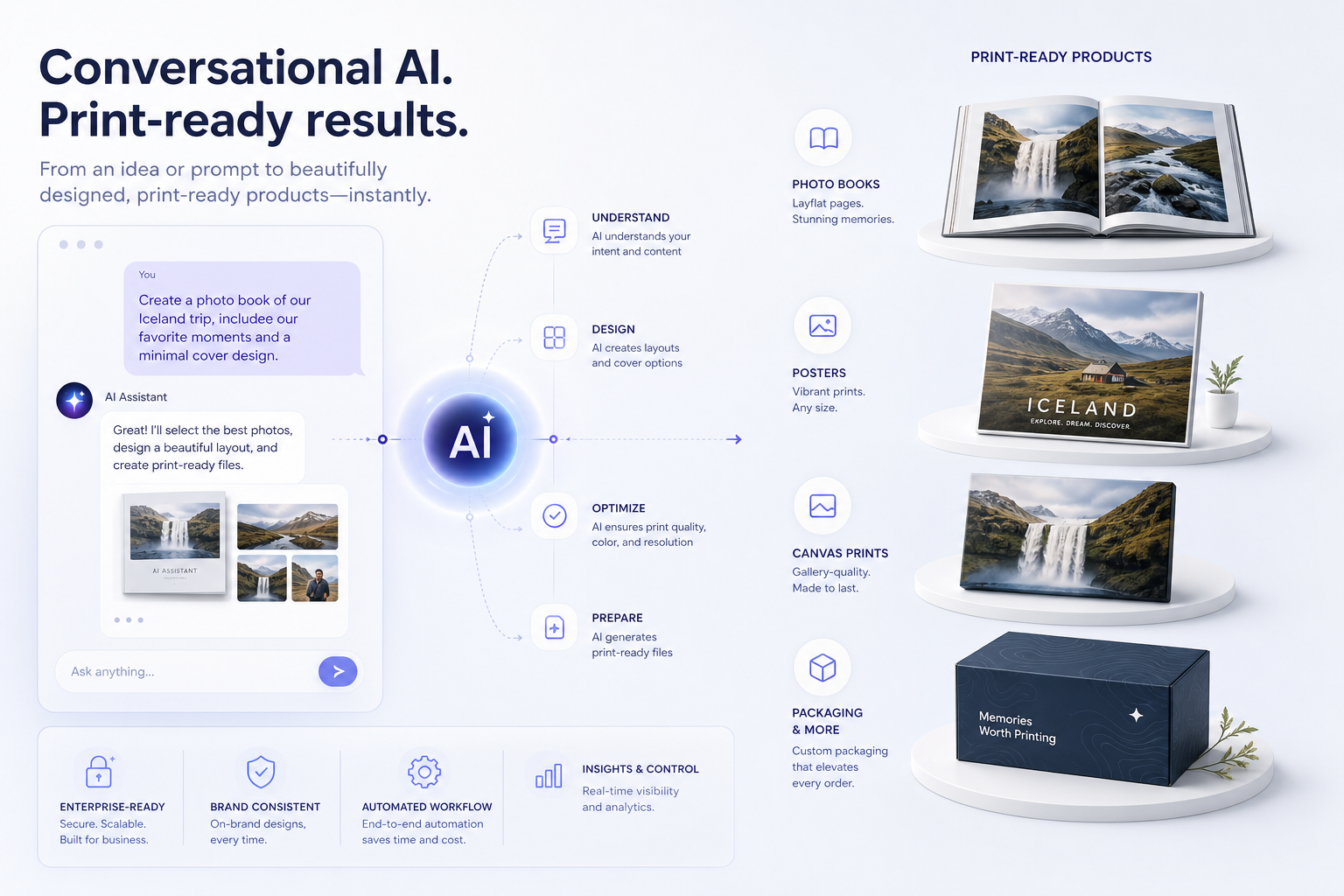
A customer can say:
“Create a luxury wedding photo book with a soft editorial style”
“Turn my dog photos into a playful wall art collage”
“Design a minimalist canvas print for a modern living room”
“Make a branded gift box insert for our client welcome kit”
The platform interprets intent, builds a layout, prepares the product, and presents a print-ready result.
This is where Media Rex Alliance stands apart. Its autonomous creation engine enables customers to create products through natural language instead of complex design tools. That dramatically reduces friction and speeds up purchase decisions, especially for non-designers on mobile devices.
Why it matters commercially
Traditional design flow | Conversational AI flow |
|---|---|
Steep learning curve | Natural language input |
Higher abandonment risk | Faster product creation |
More support tickets | Lower customer effort |
Slower time to purchase | Accelerated checkout |
Tool-heavy UX | Intent-driven UX |
For brands trying to improve conversion rates, this is not a minor usability enhancement. It is a structural advantage.
2. AI-generated personalization is becoming the default, not the premium option
Personalization used to be an upsell. Now it is a baseline expectation.
Customers want unique gifts, branded keepsakes, event-specific photo products, and one-off items that feel made for them. AI makes this scalable.
Instead of asking users to manually edit every detail, AI can generate:
personalized photo book layouts
occasion-based messaging
theme-matched design elements
color palettes aligned to user preferences
product mockups tailored to recipient, event, or brand identity
For print businesses, this unlocks new catalog strategies. Rather than building endless templates manually, they can create dynamic product experiences that adapt to each buyer.
Where many competitors fall short
Many platforms discuss personalization, but they still rely on manual design interfaces or fragmented customization tools. Media Rex Alliance pushes this further by letting the customer describe the outcome they want, then automatically translating that into a ready-to-print product.
That matters because true personalization should feel effortless to the buyer, not labor-intensive.
3. Print-ready generation is becoming a conversion lever
One of the most overlooked trends in print commerce is that speed to print-ready is now directly tied to revenue.
Every additional step between “I have an idea” and “I can buy this” reduces conversion potential.
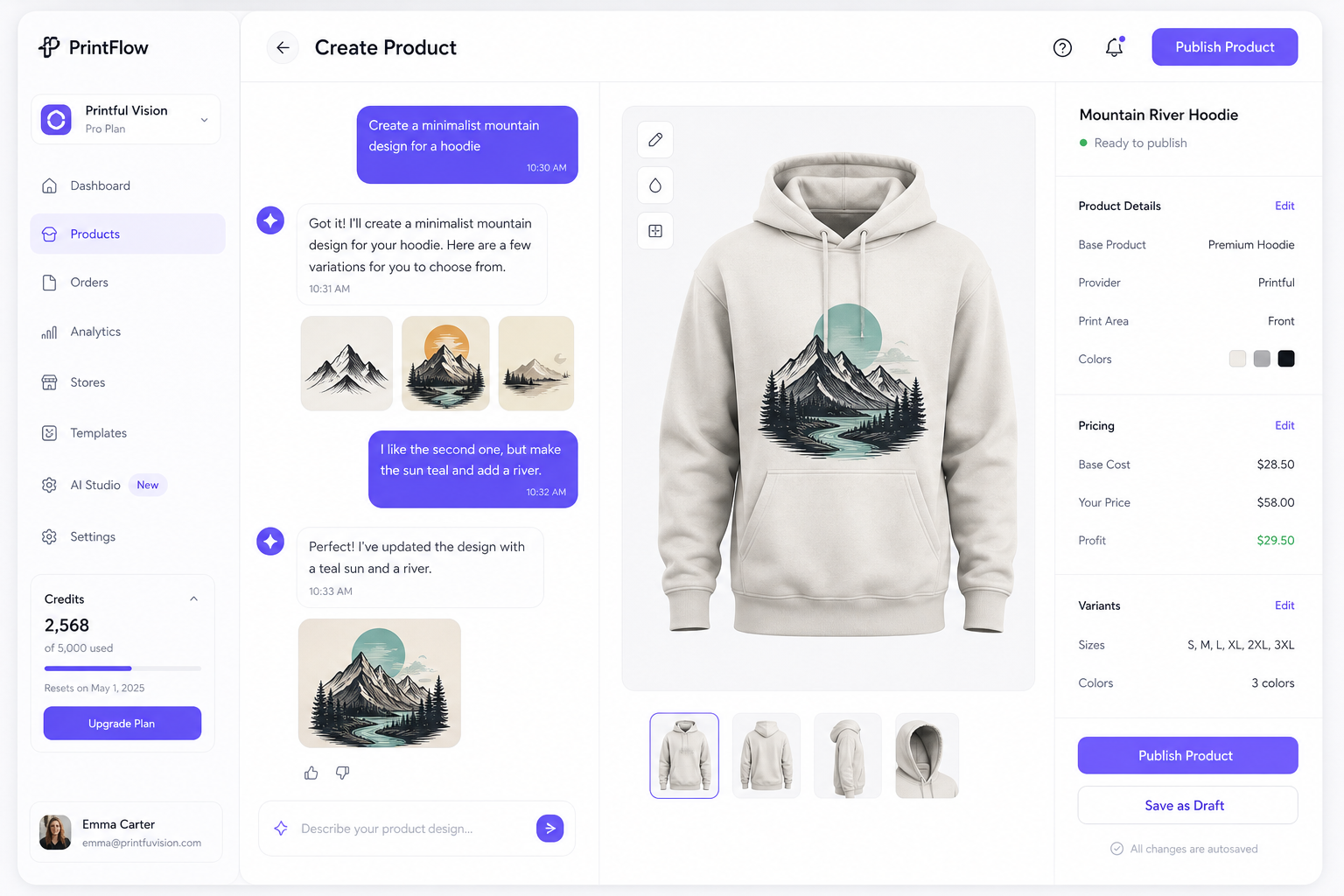
AI generate systems now help businesses move users from concept to production-ready output quickly by automating:
composition
cropping
spacing
layout logic
asset placement
text styling
product fit across dimensions
This reduces the cognitive burden on the customer and the production burden on the business.
Practical impact for different business types
Business type | AI-generated advantage |
|---|---|
Small studios | Offer premium custom products without hiring design staff |
Photographers | Turn image libraries into sellable books, albums, and wall art faster |
POD startups | Launch personalized product lines quickly |
Regional print brands | Compete with larger players using better UX |
Photo book companies | Modernize legacy creation flows without a full rebuild |
This is where Media Rex Alliance offers strategic leverage. It turns prompts into print-ready products quickly, allowing businesses to reduce hesitation, lower support dependency, and improve checkout velocity.
4. 3D and AR previews are becoming essential trust infrastructure
One of the most expensive problems in print commerce is customer uncertainty.
Questions like these kill conversions:
Will this look premium in real life?
Is the size correct?
How will the cover finish appear?
Will this artwork fit my wall?
Is this gift polished enough to order?
Static thumbnails are no longer enough.
The next wave of AI-assisted print commerce uses photorealistic 3D previews and immersive AR visualization to help customers evaluate products before they buy. This is especially important for higher-value items like photo books, wall art, albums, boxes, packaging, and home decor.
Media Rex Alliance directly addresses this with photorealistic 3D and AR previews that improve confidence before ordering. That has measurable strategic value:
stronger conversion rates
fewer abandoned carts
lower return risk
better perceived quality
more premium positioning
Why this trend matters more than many articles admit
Most competitor content focuses on AI for workflow or image editing. Very few explain how AI-enhanced preview systems affect the buying decision itself.
But in commerce, confidence is everything. If AI helps customers imagine ownership more clearly, it increases order completion.
5. Mobile-first browser design is overtaking desktop-centric editors
A major blind spot in older web-to-print thinking is the assumption that serious product creation happens on desktop.
That is increasingly outdated.
Customers discover products on social platforms, click from mobile ads, browse on phones, save ideas on tablets, and expect continuity across devices. If your product creation flow breaks on mobile, your funnel is leaking.
The modern ai generate experience must be:
browser-based
mobile-first
fast-loading
touch-friendly
session-persistent
cross-device synced
Media Rex Alliance is purpose-built for this reality. It supports mobile-first, browser-based design with no app installation required, and syncs projects locally and in the cloud for seamless multi-device use.
That combination is powerful because it aligns with real customer behavior:
start on phone
continue on laptop
revisit on tablet
purchase when ready
Why this becomes a moat
Brands that make advanced print product creation feel easy on mobile will outperform those still depending on old-school desktop editors or native app requirements.
6. White-label AI deployment is beating in-house development
Many print businesses understand the opportunity, but they underestimate the complexity of building AI-powered commerce internally.
To launch a serious AI print experience, a company may need:
prompt interpretation systems
product generation logic
layout intelligence
rendering infrastructure
responsive web app design
cloud sync architecture
3D/AR preview systems
print production integrations
storefront embedding
international fulfillment orchestration
That is an enormous technical stack.
This is why white-label deployment is becoming a defining trend. Businesses want AI capability without years of custom development, runaway costs, or platform risk.
Media Rex Alliance fits this shift exactly. It provides fully white-label integration into existing storefronts or apps and can be customized to match a client’s domain, branding, and visual identity.
Strategic benefit of white-label AI
Build internally | White-label with Media Rex Alliance |
|---|---|
Long development cycles | Faster launch timelines |
High engineering cost | Lower implementation risk |
Ongoing maintenance burden | SaaS infrastructure included |
UX inconsistency risk | Branded seamless deployment |
Complex fulfillment integration | Connected on-demand workflow |
This is especially compelling for established photo product brands that want to modernize customer experience without replacing their entire business stack.
7. Global on-demand fulfillment is becoming part of the AI value proposition
AI in print commerce is not only about creation. It is also about operational economics.
Once AI makes product creation frictionless, demand can rise quickly. That means fulfillment must scale too.
The next generation of print commerce platforms will increasingly combine AI-generated product creation with:
no-stock inventory models
automated routing
global print partner networks
localized production
reduced shipping times
lower overhead
improved margin control
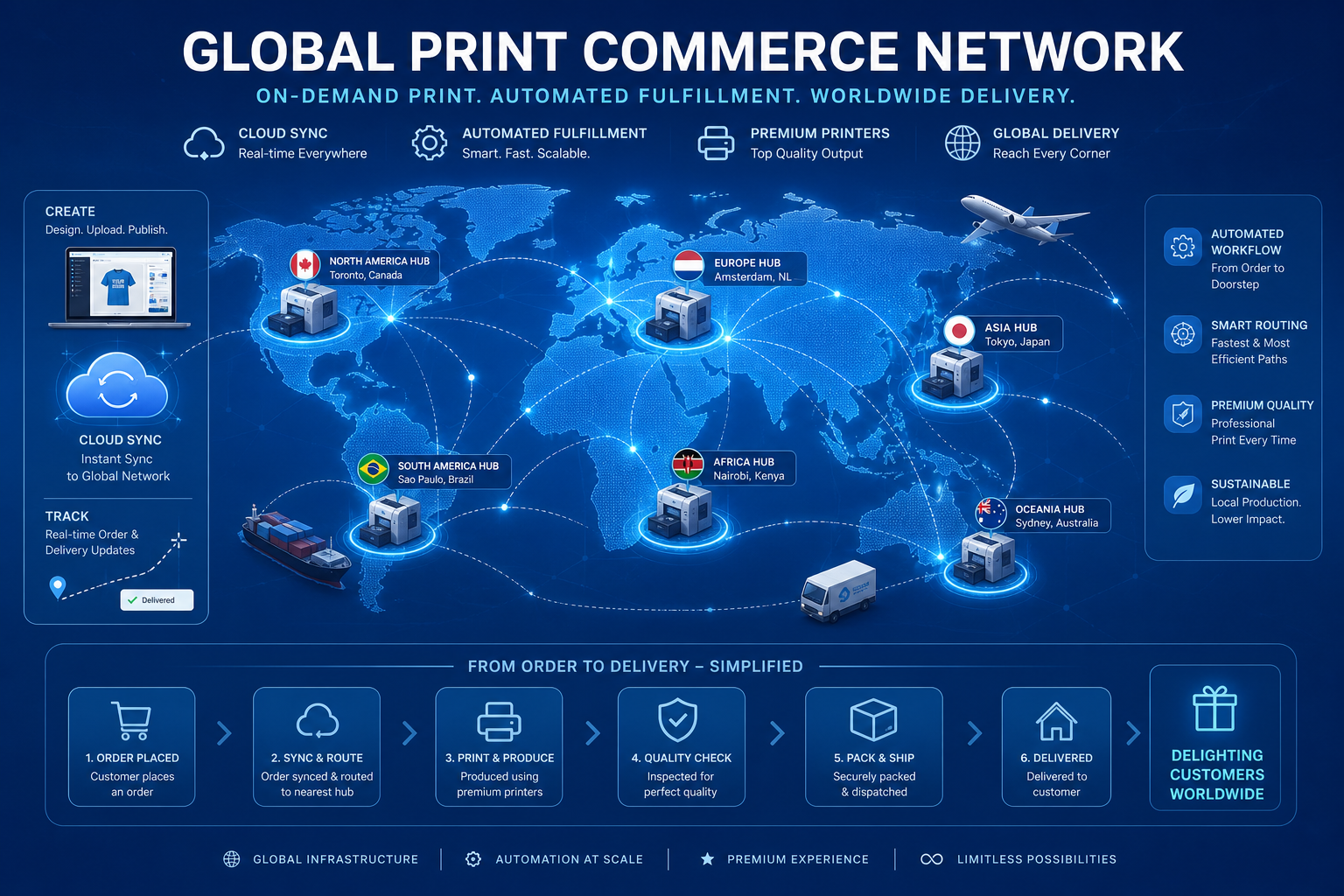
Media Rex Alliance supports this model through on-demand production and automated fulfillment via a global network of premium printers.
Why this is a business-growth trend
AI generate tools become far more valuable when they connect directly to scalable production. Otherwise, you create a front-end innovation with a back-end bottleneck.
The strongest print commerce model is now:
Customer describes desired product
AI generates the product and layout
Customer verifies via 3D/AR preview
Order flows into automated on-demand fulfillment
Production routes through premium global print infrastructure
That is not just better software. That is a better business model.
How Media Rex Alliance fits the future of print commerce
The market is moving toward AI-native buying experiences, and Media Rex Alliance is built around the exact capabilities that the next phase of print commerce requires.
Core platform strengths
Capability | Business impact |
|---|---|
Conversational AI product creation | Removes editor friction and speeds up purchase decisions |
Prompt-to-print-ready automation | Reduces design effort and customer drop-off |
White-label storefront integration | Lets brands launch AI experiences under their own identity |
Photorealistic 3D and AR previews | Builds trust and improves conversion |
Mobile-first browser-based UX | Expands accessibility and supports modern buying behavior |
Local + cloud project sync | Enables seamless cross-device shopping journeys |
On-demand production model | Reduces inventory risk and overhead |
Global premium printer network | Scales fulfillment without operational sprawl |
SaaS architecture for all business sizes | Supports startups, regional players, and enterprise brands |
Who benefits most
Media Rex Alliance is especially well positioned for:
photo book companies modernizing older creation flows
print-on-demand startups that need speed without building technology from scratch
photographers wanting to monetize images through premium product creation
studios expanding into AI-powered personalized products
digital print businesses seeking better conversion and less operational complexity
enterprise print brands looking for branded, scalable, AI-powered web-to-print experiences
What competitor platforms reveal about the market direction
The broader market confirms where print commerce is heading.
Picsart
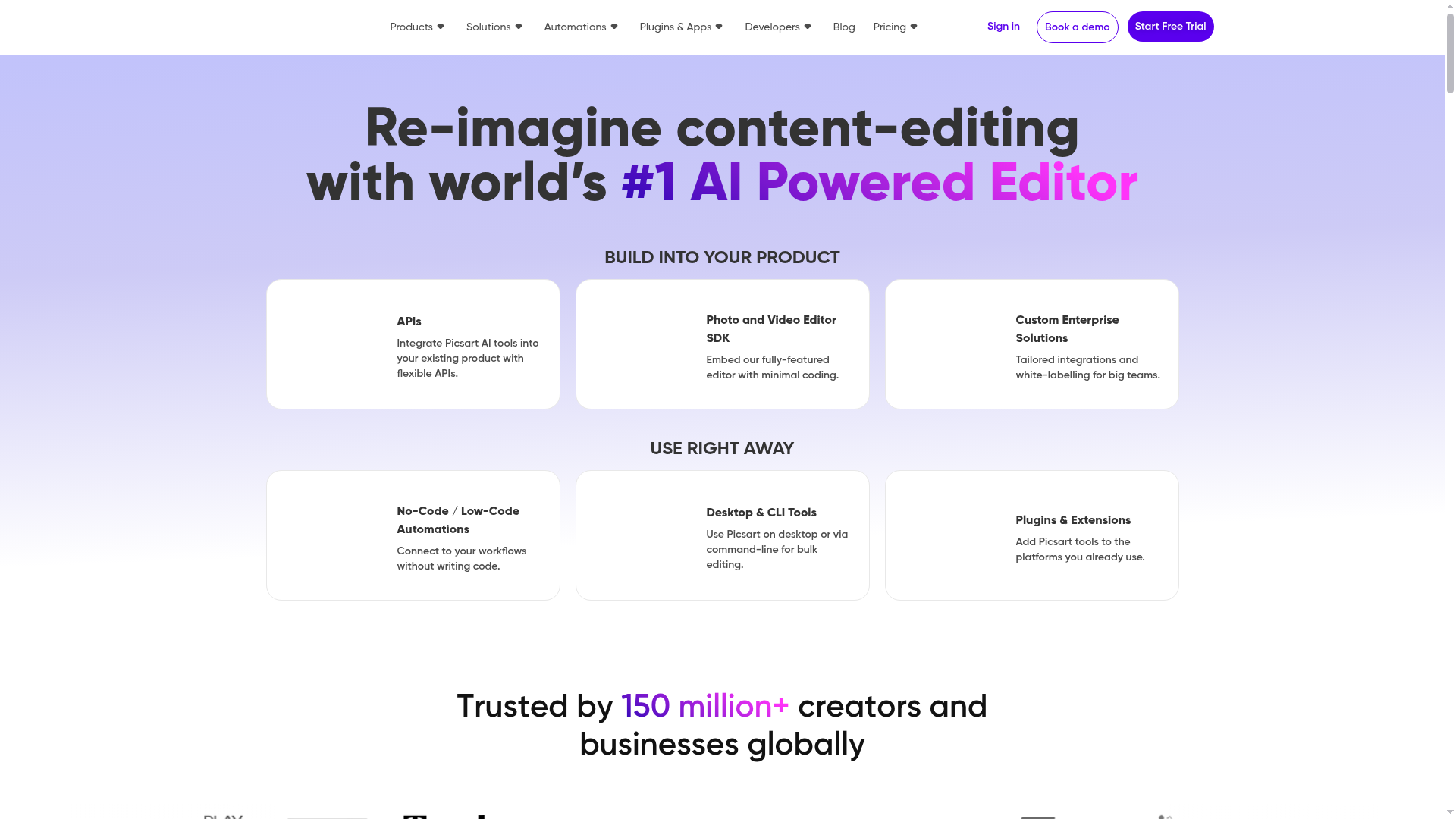
Competitor platforms like Picsart emphasize AI-powered image processing, background removal, upscaling, generative design, and embeddable creative tooling. That signals how important AI-assisted asset generation has become for print workflows.
Printbox
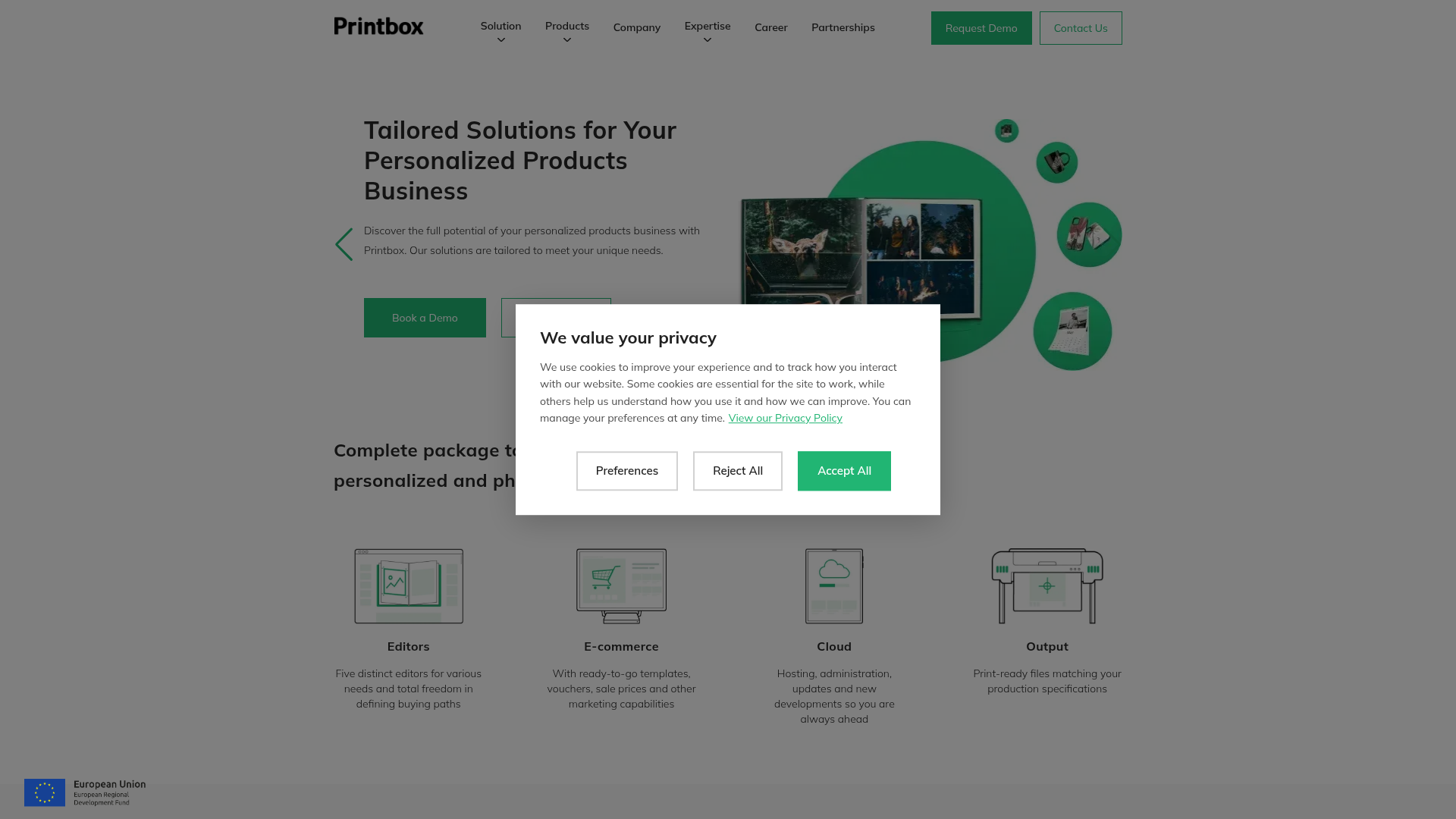
Printbox highlights generative AI for customer-made art, product personalization, and print-on-demand product expansion. This reinforces that AI-led creation is becoming central to retail print growth.
OnPrintShop
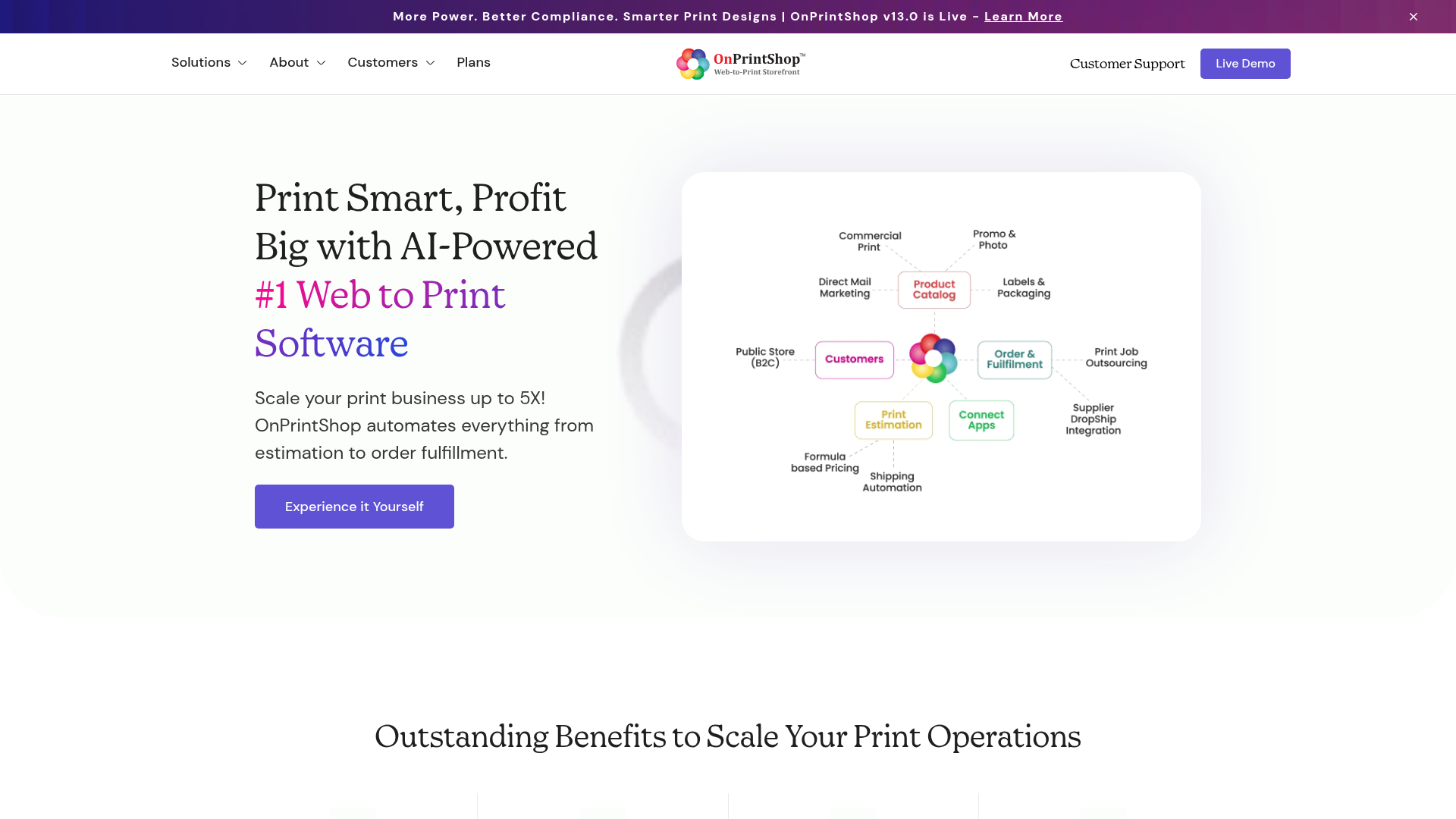
OnPrintShop focuses on AI for automation, personalization, analytics, print quality, and ecommerce enablement. That aligns with the operational side of the transformation.
The gap Media Rex Alliance closes
What many solutions still do not unify well is the full chain:
natural language product creation
frictionless customer journey
photorealistic visualization
white-label deployment
mobile-first UX
multi-device continuity
on-demand fulfillment at scale
That unification is where Media Rex Alliance becomes strategically differentiated.
The next competitive battleground: customer effort
In the next wave of print commerce, the key metric will not just be design flexibility. It will be customer effort.
The brands that win will be those that make product creation feel:
intuitive
instant
personalized
trustworthy
premium
mobile-native
easy to reorder
AI generate systems matter because they lower effort across the entire funnel.
From tool complexity to intent simplicity
Old model:
customer learns the interface
New model:
platform understands the customer
That is the shift.
How to evaluate an AI-powered print commerce platform
If you are selecting an AI print platform, these are the questions that matter most:
Experience questions
Can customers create products by describing what they want?
Does the platform reduce steps between idea and checkout?
Is the workflow mobile-first and browser-based?
Are 3D and AR previews available before purchase?
Business questions
Can it launch under our own brand and domain?
Will it integrate into our existing storefront or app?
Does it reduce internal design overhead?
Can it support both small-scale and enterprise growth?
Operational questions
Is production on-demand to reduce stock risk?
Does fulfillment scale through a reliable print network?
Can projects sync across devices and sessions?
Does it help us grow without growing complexity at the same rate?
Media Rex Alliance answers these questions in a way that aligns with where the market is moving, not where it has been.
Final verdict: AI generate is becoming the operating system for modern print commerce
The most important takeaway is simple: ai generate is no longer just a creative feature. It is becoming the operating system of modern print commerce.
It shapes:
how products are created
how customers personalize
how quickly intent becomes an order
how confidently buyers commit
how efficiently fulfillment scales
how brands grow without operational drag
For print businesses that want to modernize their offering, improve conversions, and launch premium AI-powered experiences without building the stack internally, Media Rex Alliance represents a decisive shortcut to the future.
It combines conversational AI, white-label deployment, mobile-first browser access, cloud and local sync, photorealistic 3D and AR previews, on-demand production, and global fulfillment automation into one scalable SaaS platform.
That is exactly what the next era of web-to-print demands.
If your business is ready to move beyond static templates and complex editors, Media Rex Alliance offers a faster path to a branded, scalable, AI-native print commerce experience.