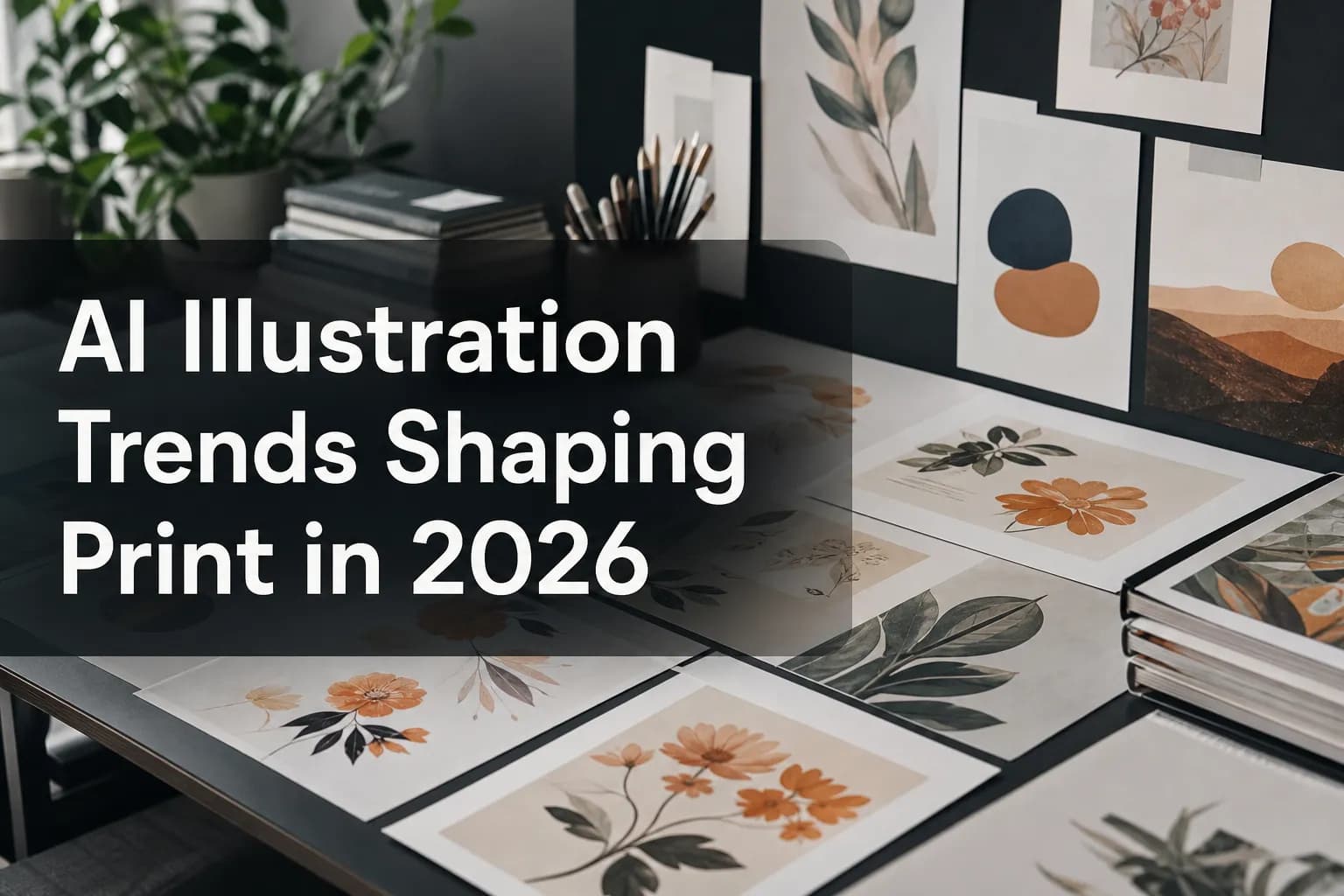
AI Illustration Trends Shaping Print in 2026
Print businesses entering 2026 are facing a very different market than they were even two years ago. Customers want personalization faster, expect premium visuals before they buy, and increasingly prefer intuitive creation flows over traditional design interfaces. For small studios, photographers, photo book brands, and print-on-demand operators, the challenge is no longer just producing great products. It is delivering them through a buying experience that feels instant, intelligent, and frictionless.
That is exactly why AI illustration matters now.
The biggest shift is not that visuals can be generated faster. It is that AI-powered creation is changing how printed products are imagined, customized, previewed, and ordered at scale. Illustration is moving from a static asset into a dynamic commerce layer - one that can respond to prompts, adapt to brand guidelines, personalize layouts, and accelerate the path from idea to checkout.
For digital print businesses, this creates both pressure and opportunity. Pressure, because legacy web-to-print workflows feel increasingly slow and technical. Opportunity, because platforms like Media Rex Alliance now enable brands to turn conversational prompts into print-ready products without forcing end customers into complex design tools. That means faster creation, lower abandonment, stronger conversion potential, and a more scalable foundation for modern personalized commerce.
What the Top Trend Reports Agree On
Across leading design, illustration, and creative-industry coverage, several clear themes are emerging for 2026:
Human-made aesthetics are becoming more valuable as AI-generated visuals become common.
Tactile texture, imperfection, and expressive linework are replacing sterile polish.
3D surrealism and immersive visual systems are growing in branding and digital commerce.
Narrative illustration is gaining traction because brands need storytelling, not just decoration.
AI is increasingly used as a collaborator in ideation and production, not simply as a final-output engine.
Motion, modular graphics, and cross-platform visual systems are becoming essential.
These themes appear consistently because they reflect a broader market truth: customers want speed, but they also want soul. They want digital convenience without losing emotional resonance.
The Content Gap Competitors Miss
Most competitor articles do a strong job identifying visual trends, but they often stop at aesthetics. They talk about style directions without fully addressing what matters to modern print operators:
They rarely connect illustration trends to commerce performance
Knowing that hand-drawn textures are popular is useful. Knowing how those textures influence conversion, perceived value, personalization, and product differentiation is far more valuable.
They overlook operational implications
Few trend reports explain how businesses can actually deploy these styles at scale without adding design overhead, slowing production, or breaking brand consistency.
They treat AI as a creative issue, not a business model shift
The real disruption is not only what AI can generate. It is how AI transforms the entire web-to-print journey - from prompt input to automated layout generation, preview rendering, fulfillment, and delivery.
They underplay the role of white-label infrastructure
Print brands do not just need inspiration. They need systems they can launch under their own brand, domain, and storefront, without building an AI creation engine from scratch.
That is where this article goes deeper.
Why AI Illustration Is Becoming a Print Growth Lever
In print, visuals do not live in a gallery. They live inside products, campaigns, storefronts, gifting flows, packaging systems, seasonal launches, and personalized merchandise. That changes how trends should be interpreted.
AI illustration becomes commercially powerful when it helps businesses do five things better:
Business Need | Traditional Workflow | AI-Driven 2026 Workflow |
|---|---|---|
Product creation | Manual design or template editing | Conversational prompt-to-product generation |
Personalization | Labor-intensive customization | Dynamic text, image, and layout adaptation |
Pre-purchase confidence | Static mockups | Photorealistic 3D and AR previews |
Speed to launch | Weeks of setup and creative ops | Rapid rollout across product lines |
Scaling fulfillment | Fragmented vendor workflows | Automated on-demand global production |
For growing print brands, the strategic value is clear: better visuals matter, but lower friction matters just as much.
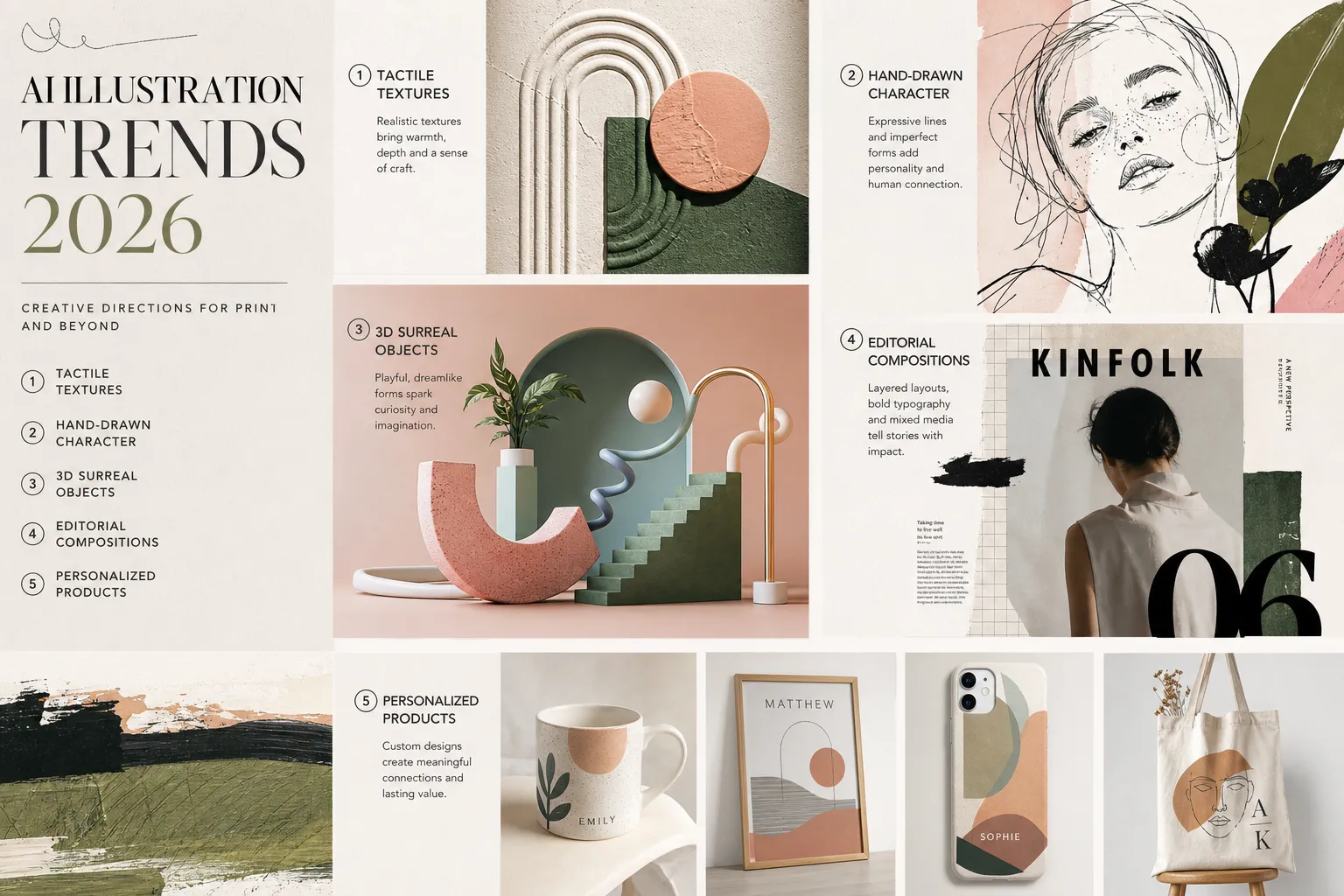
The 7 AI Illustration Trends Shaping Print in 2026
1. Prompt-Led Product Creation Replaces Tool-Led Design
The most important shift is foundational. Customers no longer want to learn design software just to create a photo book, wall print, calendar, or branded keepsake. In 2026, the interface itself is changing.
Instead of dragging layers and tweaking templates, users increasingly describe what they want in natural language:
“Create a modern wedding album with soft editorial tones.”
“Turn these travel photos into a bold coffee-table book.”
“Make a playful family calendar with handwritten captions.”
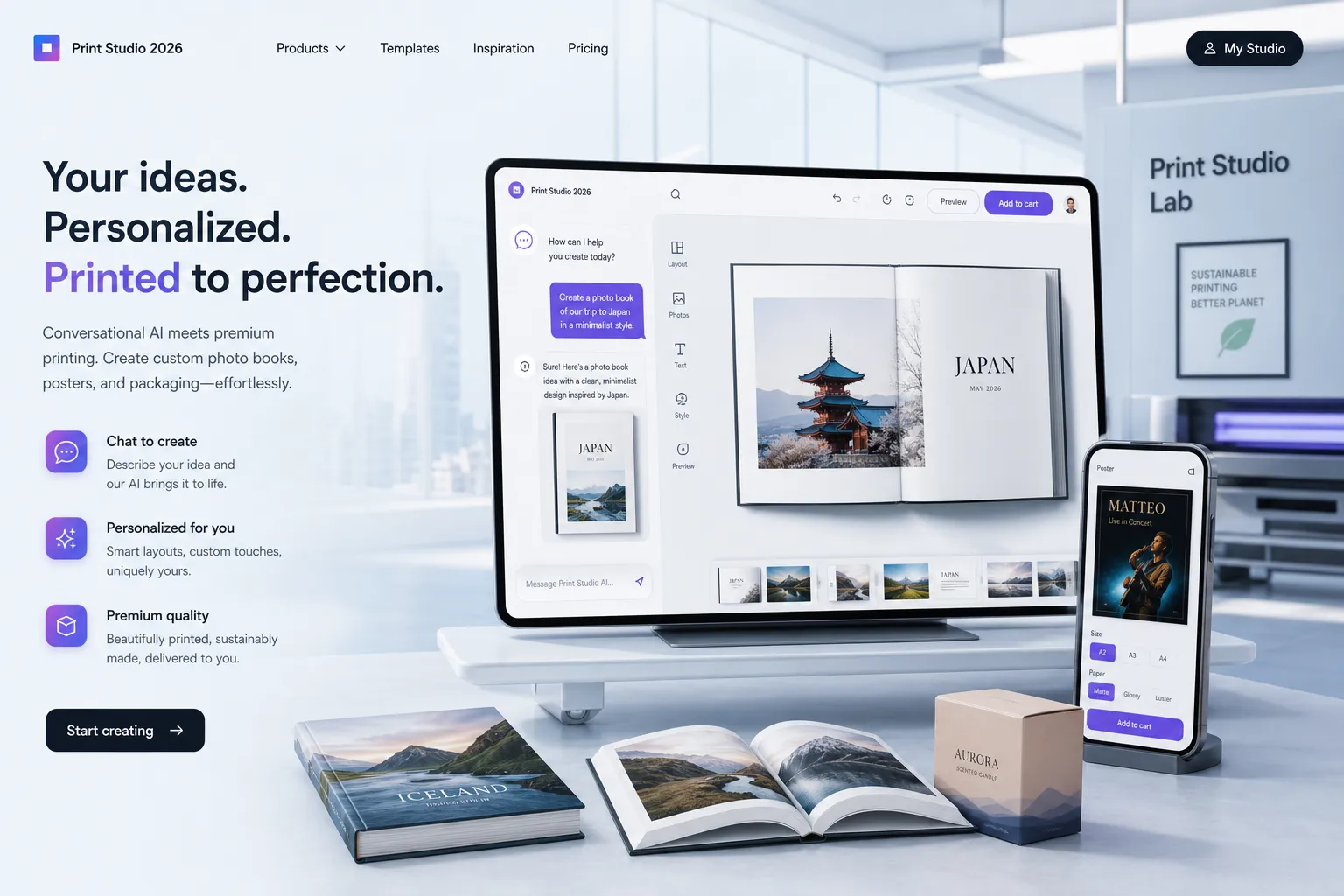
This is where Media Rex Alliance becomes especially relevant. Its conversational AI layer allows end customers to create products through prompts rather than complex design tools, turning intent into ready-to-print output quickly. That removes friction from the buying process and helps brands reduce the drop-off that often happens when users face rigid editors.
Print implication: The design experience becomes part of the conversion funnel, not a barrier inside it.
2. Tactile Digital Aesthetics Add Premium Value
As digital imagery becomes more abundant, buyers respond more strongly to visuals that feel crafted. Grain, paper-like surfaces, imperfect edges, brush textures, and analog-inspired layering all signal care and authenticity.
For print businesses, this matters because tactile-looking illustration translates especially well into physical formats:
photo books
art prints
premium packaging
greeting cards
journals
limited-edition merchandise
These aesthetics help products feel less generic and more giftable. They also align with rising demand for boutique-quality print experiences.
Print implication: Tactile visual language raises perceived product value without requiring luxury production complexity.
3. Narrative Illustration Is Expanding Personalized Commerce
Narrative visuals are gaining momentum because they do more than decorate a cover or spread. They organize memory, identity, and emotion into a coherent experience.
In print, narrative illustration works particularly well for:
milestone photo books
children’s books
family history albums
travel keepsakes
brand storytelling inserts
creator merchandise collections
Rather than simply dropping images into a grid, the product becomes a guided story. AI can accelerate the structure - sequencing, captioning, thematic styling, visual pacing - while brand teams or end users retain creative direction.
Print implication: Narrative design increases emotional attachment, which is especially valuable in high-margin personalized products.
4. 3D Surrealism Is Influencing Product Merchandising
Soft surrealism, inflated forms, dreamlike objects, and hybrid 2D/3D aesthetics are no longer confined to design blogs. They are actively influencing ecommerce presentation and product merchandising.
This is especially powerful in categories like:
custom packaging
wall décor
creator-led merchandise
event print collateral
premium seasonal collections
The value is not just style. It is differentiation. In crowded storefronts, 3D-forward illustration systems can make product lines feel more contemporary, immersive, and brand-distinctive.
Print implication: Surreal 3D aesthetics help print brands escape template sameness and create more memorable merchandising moments.
5. Human-Visible Imperfection Becomes a Trust Signal
One of the biggest 2026 reversals is the decline of overly polished visuals. Brands are intentionally preserving the markers of human authorship: loose linework, uneven forms, handwritten typography, layered collage, and playful asymmetry.
Why? Because perfection now often reads as automated.
In print, that matters deeply. Personalized products are emotional purchases. Whether someone is ordering a baby book, memorial print, wedding album, or creator gift set, they want the final result to feel considered, not mass-manufactured.
Print implication: Strategic imperfection can make AI-assisted output feel more personal, not less.
6. Mobile-First Visual Creation Is Becoming Mandatory
Many design and trend articles still assume desktop-centered workflows. The market is moving faster than that.
In reality, a large share of users now discover, personalize, and purchase from mobile devices. That means modern print creation must work in-browser, without downloads, app installs, or complex UI patterns.
Media Rex Alliance is built for exactly this environment: mobile-first, browser-based, and accessible across devices with local and cloud syncing. That means users can start a project on one device, continue on another, and complete the purchase without losing progress.
Print implication: If AI illustration cannot be deployed in a fast, mobile-first buying flow, it will struggle to convert at scale.
7. AI-Generated Visual Systems Are Fueling On-Demand Product Expansion
The real power of AI illustration in print is not one-off image generation. It is systematized output.
In 2026, the strongest operators are using AI to expand product catalogs without multiplying manual design labor. A single brand system can now support:
multiple visual themes
seasonal variations
localized product versions
creator-specific editions
campaign-based drops
personalized user outputs
When connected to an on-demand production model, this becomes operationally transformative. Media Rex Alliance pairs conversational creation with automated fulfillment through a global network of premium printers, reducing inventory risk and allowing brands to scale without holding stock.
Print implication: AI illustration is becoming a catalog expansion engine, not just a creative experiment.
From Trend to Transaction: What Print Businesses Should Actually Do
Trend awareness is useful, but execution determines whether it produces revenue. Here is how different print businesses can apply these shifts.
For photographers and small studios
Focus on prompt-based premium storytelling products. Offer albums, framed prints, and giftable collections that feel handcrafted but are generated and assembled faster behind the scenes.
For new print-on-demand brands
Use AI illustration to launch differentiated micro-collections quickly. Instead of competing on commodity products, compete on style systems, personalization, and fast ideation.
For mid-size regional print players
Modernize the storefront experience. Add conversational creation, browser-based editing, and stronger product previews to remove friction from legacy order flows.
For established photo book companies
The opportunity is not to replace your catalog. It is to layer AI-powered creation on top of it, giving customers a simpler path to high-quality output while preserving brand equity and production expertise.
For enterprise print platforms
White-label deployment is the unlock. Rather than building a full prompt-to-product stack internally, integrate a proven SaaS layer that supports custom branding, scalable infrastructure, and automated fulfillment orchestration.
What Winning Print Brands Will Prioritize in 2026
1. Fewer tools, more guidance
Customers do not want more controls. They want better outcomes with less effort.
2. Better previews before purchase
Static mockups are no longer enough for premium products.
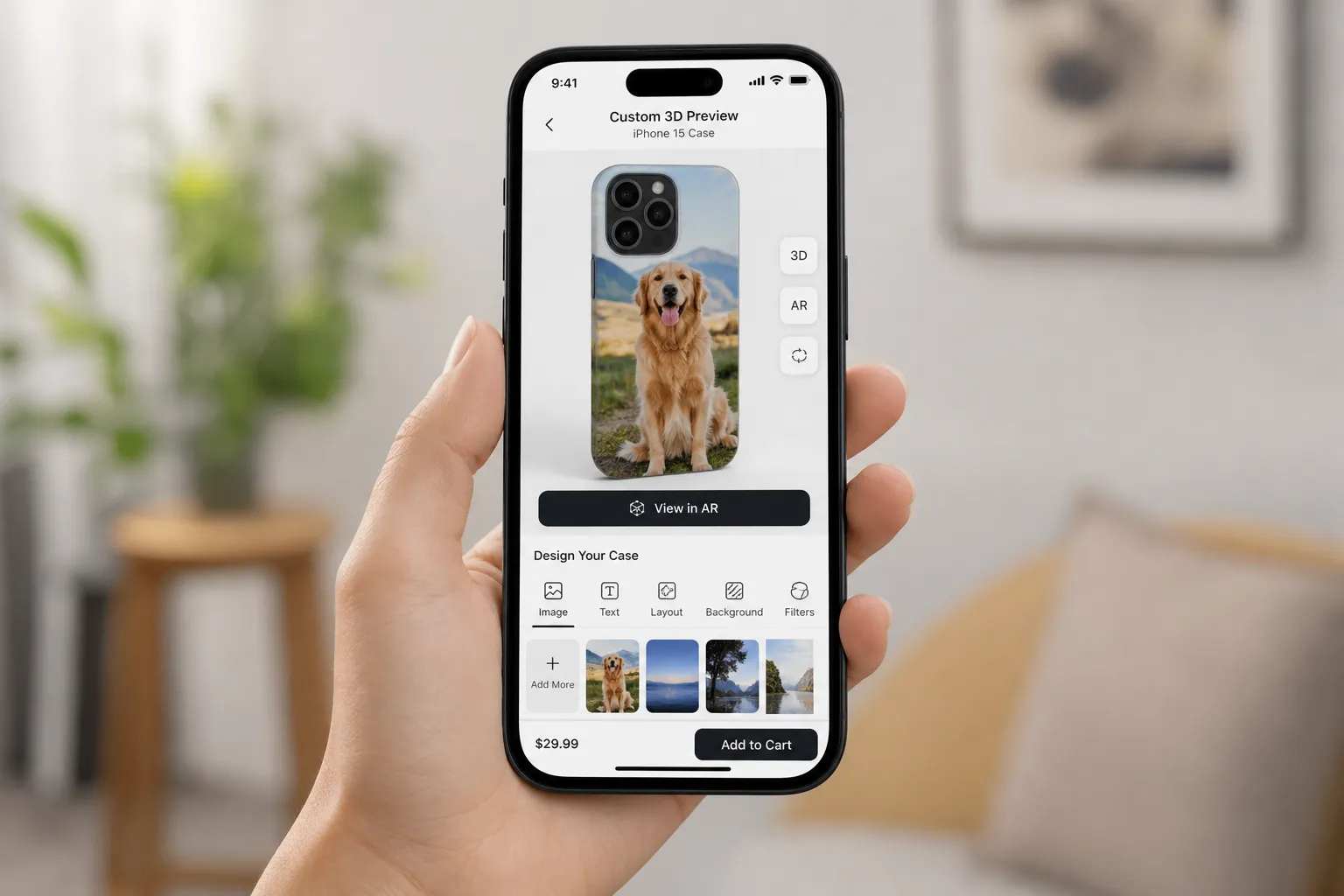
Photorealistic 3D and immersive AR previews help customers feel confident about what they are ordering. That confidence matters most in personalized and premium print categories where returns, hesitation, and abandoned carts can erode margin.
3. Scalable uniqueness
The brands that win will be the ones that feel customized without becoming operationally chaotic.
4. On-demand economics
Inventory-heavy models will look increasingly outdated where dynamic creation and automated fulfillment can reduce overhead.
5. White-label speed
Owning the customer relationship matters. So does launching fast under your own brand.
Where Media Rex Alliance Fits in This Shift
Many platforms can help users edit a design. Far fewer can help businesses reimagine the entire AI-powered print journey.
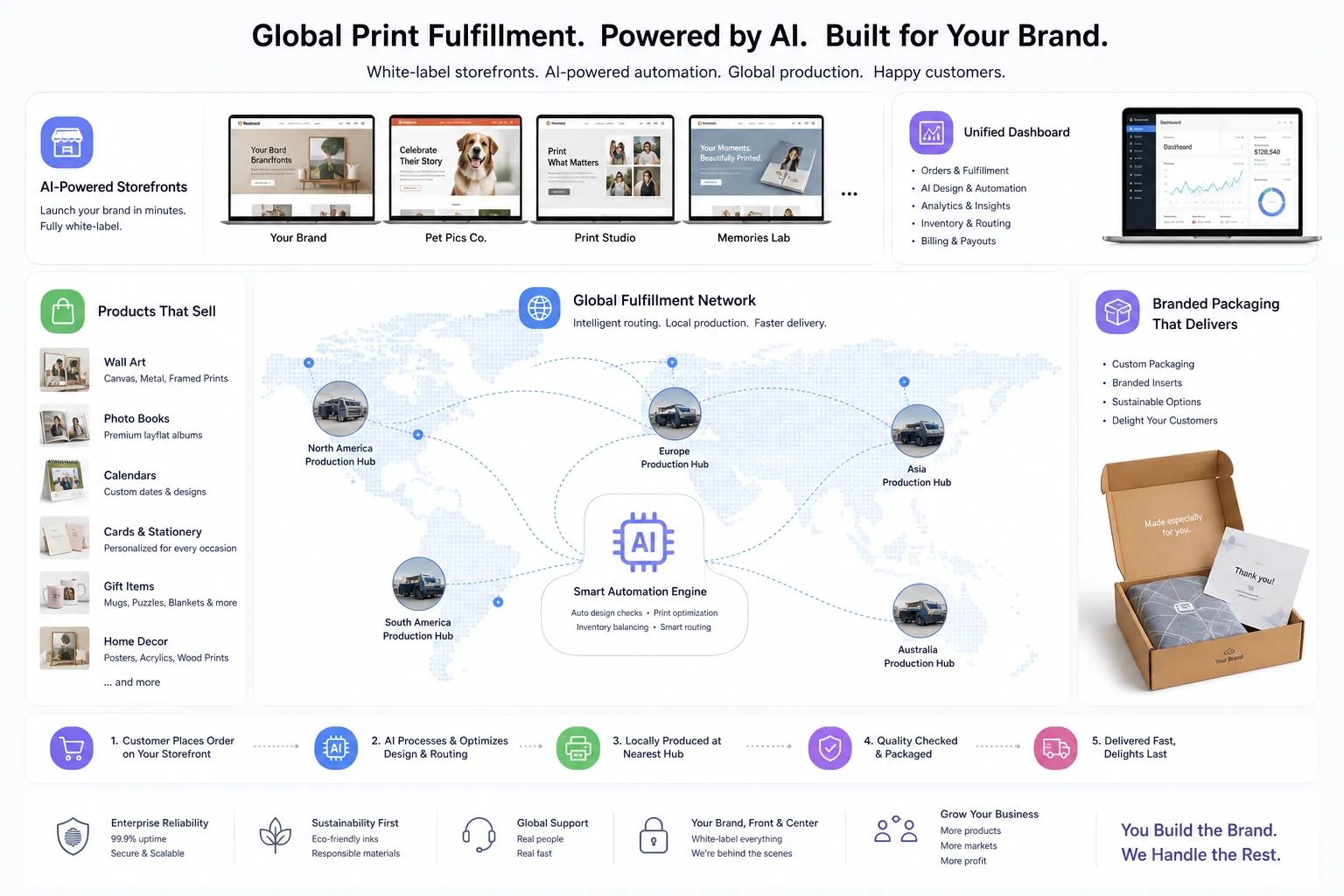
Media Rex Alliance stands out because it is not just an illustration tool or mockup layer. It is a white-label AI print platform designed for modern web-to-print businesses that need speed, scalability, and brand control.
Core advantages for modern print operators
Capability | Why It Matters |
|---|---|
Conversational AI creation | Lets customers create products through natural language instead of learning design software |
Prompt-to-print workflow | Turns ideas into print-ready products quickly, reducing creation friction |
White-label integration | Launch under your own brand, domain, and customer experience |
3D and AR previews | Improves purchase confidence before checkout |
Mobile-first browser access | No app installation required, better fit for modern commerce behavior |
Cross-device sync | Supports seamless continuation across devices |
On-demand production model | Reduces inventory, waste, and overhead |
Automated global fulfillment | Scales production through premium print partners |
Flexible SaaS architecture | Works for startups, growing brands, and enterprise print businesses |
This is especially compelling for businesses that know the future of personalized print is AI-assisted, but do not want to spend years building the infrastructure themselves.
The Strategic Tension: Automation vs. Originality
One of the biggest concerns in the market is whether AI-generated visuals will flatten differentiation. It is a valid concern, and the answer depends on implementation.
The brands that underperform will use AI to produce more generic assets faster.
The brands that outperform will use AI to:
reduce design friction
increase personalization range
generate more starting points
automate layout and production tasks
preserve brand style through controlled systems
enhance customer confidence with rich previews
In other words, AI is most valuable when it expands creative throughput while keeping human taste, brand direction, and product quality intact.
What This Means for the Future of Web-to-Print
By the end of 2026, the most competitive print experiences will likely share the same characteristics:
conversational instead of tool-heavy
premium-looking without being production-heavy
personalized without requiring manual design labor
mobile-first by default
on-demand rather than stock-dependent
visually immersive before purchase
integrated into branded storefronts instead of disconnected apps
That future is already taking shape. The question is not whether AI illustration will influence print. It is whether print businesses will operationalize it before competitors do.
Final Verdict
AI illustration is no longer a side trend for designers to watch. It is becoming a core growth layer for print commerce.
For photo product brands, studios, web-to-print platforms, and on-demand operators, the real opportunity is not just generating better visuals. It is building faster, simpler, more scalable product creation journeys that customers actually complete. The 2026 leaders will be the brands that combine emotional visual storytelling with frictionless infrastructure.
Media Rex Alliance is positioned precisely for that next phase. It enables conversational product creation, turns prompts into print-ready output, delivers photorealistic 3D and AR previews, supports browser-based mobile-first design, syncs across devices, and automates fulfillment through a premium global network - all under your own brand.
If your business wants to modernize web-to-print without building the full AI stack from scratch, Media Rex Alliance offers a faster path to launch, stronger conversion potential, and a more scalable personalized print model.
FAQ
What are the trending illustration styles in 2026?
The strongest 2026 styles combine human authenticity with digital experimentation. Tactile textures, hand-drawn imperfections, narrative illustration, graphic minimalism, and soft 3D surrealism are all shaping how brands create more emotional and memorable visual systems.
What is the AI trend in 2026?
The biggest AI trend is the shift from isolated generation tools to workflow automation and conversational creation. In print and personalized commerce, AI is increasingly used to turn prompts into ready-to-produce products, speed up layout decisions, and simplify the customer journey.
What are the major art trends for 2026?
Major art trends in 2026 include tactile digital aesthetics, surreal 3D forms, narrative-driven composition, and intentionally imperfect handmade details. Across commercial design, these trends reflect a wider move away from sterile polish and toward more human, expressive visual storytelling.
What are the top graphic design trends for 2026?
Top graphic design trends include playful typography, collage layering, immersive color systems, organic textures, freeform editorial layouts, and maximalist compositions. In ecommerce and print, these are often paired with AI-assisted creation and richer 3D product presentation.
Which graphic design is in demand?
The most in-demand graphic design today is design that is adaptable, brand-distinctive, and conversion-friendly. Businesses want visual systems that work across mobile, ecommerce, social, packaging, and personalized products without losing consistency or slowing production.
Are graphic designers being phased out?
No - graphic designers are not being phased out, but their role is evolving. AI can accelerate production, yet taste, storytelling, brand judgment, and system thinking remain critical, especially when businesses need differentiated customer experiences rather than generic output.