AI Tools for Design: Top Trends Shaping 2026
The AI design wave has moved far beyond image generation. In 2026, the biggest shift is not just that creative teams have more AI tools available, but that design itself is becoming more conversational, automated, scalable, and commerce-ready.
For small studios, photographers, print-on-demand startups, regional print brands, and established photo product companies, this creates both opportunity and pressure. Customers now expect faster creation, more personalization, mobile-first experiences, and realistic previews before they buy. At the same time, brands need workflows that reduce friction without sacrificing quality, consistency, or margins.
This is where the current generation of AI tools for design becomes strategically important. The winners in 2026 will not be the businesses that simply add AI to a workflow. They will be the ones that redesign the workflow around AI from the start.
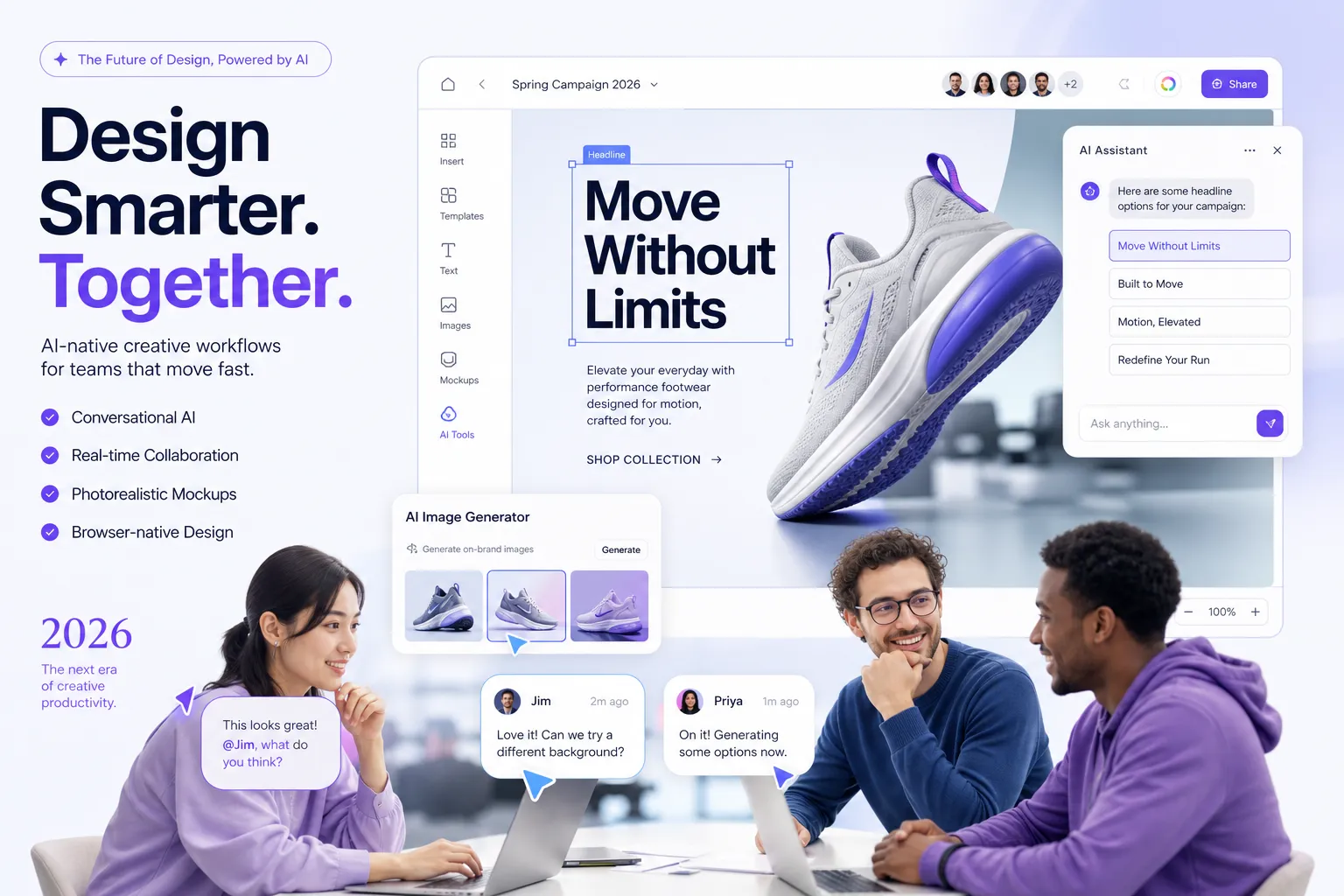
What changed in AI design in 2026
The market is no longer centered only on prompt-to-image tools. Competitor coverage consistently highlights platforms like Canva, Figma, Midjourney, Firefly, and Framer, but most articles stop at feature comparisons. The larger story is that AI is shifting from a creative assistant into a production layer.
That distinction matters.
In 2026, the real value of an AI tool design stack comes from its ability to:
shorten time from idea to output
maintain brand consistency at scale
personalize layouts and assets dynamically
integrate directly into commercial workflows
reduce dependence on specialist software knowledge
For businesses selling physical products, especially in web-to-print and photo commerce, the next frontier is even bigger: AI does not just help design the product, it helps sell the product by making creation easier for end customers.
The core trends shaping AI tools for design in 2026
1. Conversational design replaces traditional tool-first workflows
The most important trend of 2026 is the move from interface-heavy creation to prompt-led creation.
Instead of asking customers or internal teams to master layers, alignment tools, masks, bleed settings, and export specs, modern platforms increasingly start with intent. A user describes what they want, uploads photos if needed, and the system builds a polished result.
This is the clearest evolution in ai tools design: less manual assembly, more intelligent orchestration.
For creative commerce, this is transformative. Media Rex Alliance is built around that exact shift, enabling users to create premium print products through conversational AI rather than complex design software. That means a customer can move from idea to print-ready output quickly, which reduces abandonment and accelerates purchase decisions.
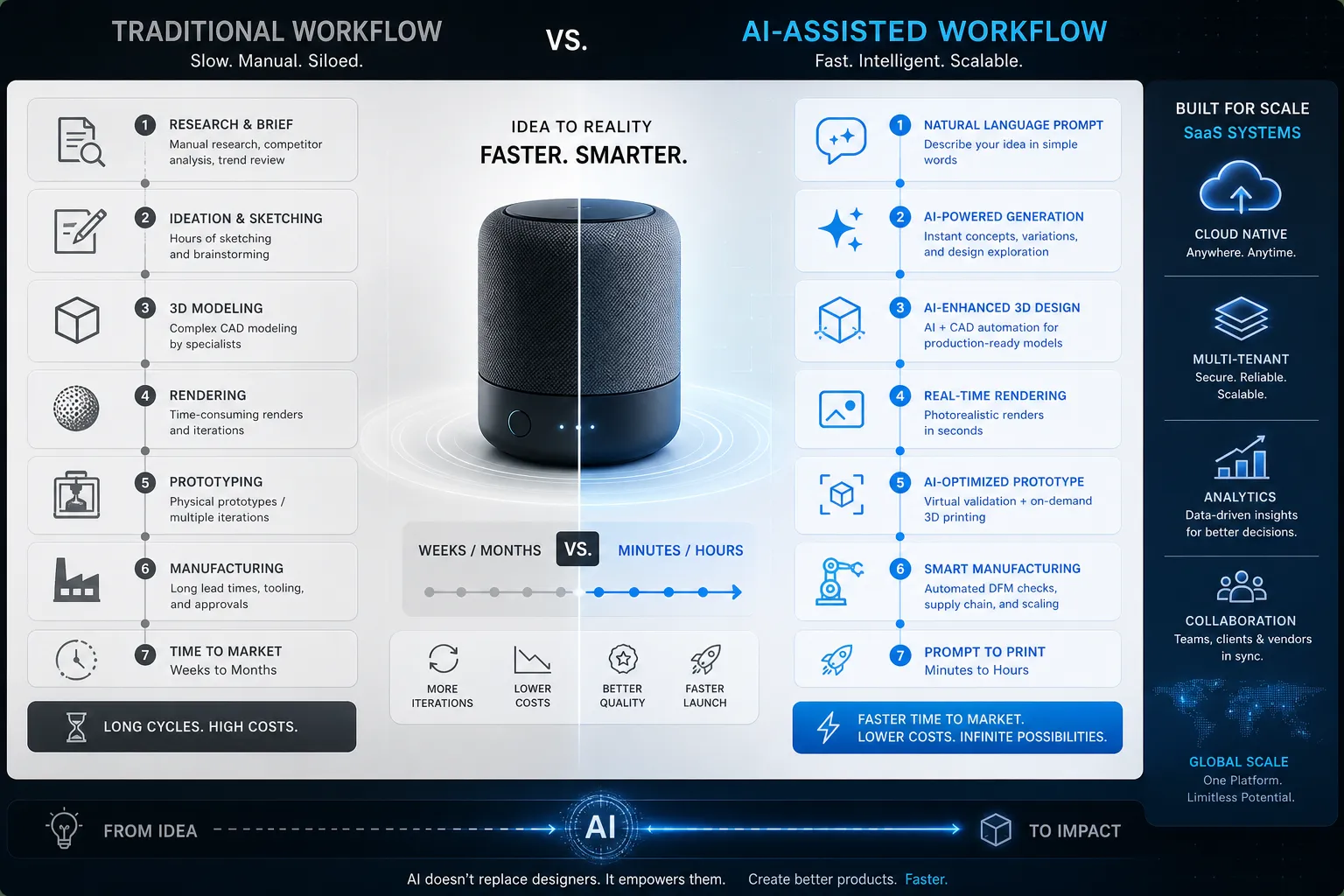
2. AI is moving from asset creation to full workflow automation
Most content in this space focuses on generating visuals. But the bigger trend is workflow automation across the entire lifecycle:
Workflow Stage | Old Model | 2026 AI Model |
|---|---|---|
Ideation | Manual brainstorming | Prompt-assisted concept generation |
Layout | Drag-and-drop assembly | Automated layout composition |
Personalization | Manual edits per variation | Dynamic, AI-generated personalization |
Proofing | Static previews | Photorealistic 3D and AR review |
Production handoff | Manual export and prep | Print-ready automated output |
Fulfillment | Separate vendor coordination | Integrated on-demand fulfillment |
This is a major content gap in most competitor articles: they review tools, but not systems.
The businesses gaining the most from AI in 2026 are not just generating better images. They are compressing the entire path from concept to sale.
3. Personalization becomes the default, not the premium add-on
Customers increasingly expect products and content tailored to them. In design, that means AI is being used not only to create assets, but to assemble individualized outputs at scale.
Examples include:
personalized photo books
tailored product covers and themes
region-specific print campaigns
dynamic layouts based on uploaded content
AI-curated style variations based on customer prompts
For print commerce brands, this has huge implications. Traditional customization flows often create friction because they ask users to do too much. Media Rex Alliance solves this by turning simple prompts and photo uploads into ready-to-print products, combining automation with personalization without forcing customers into a pro-designer workflow.
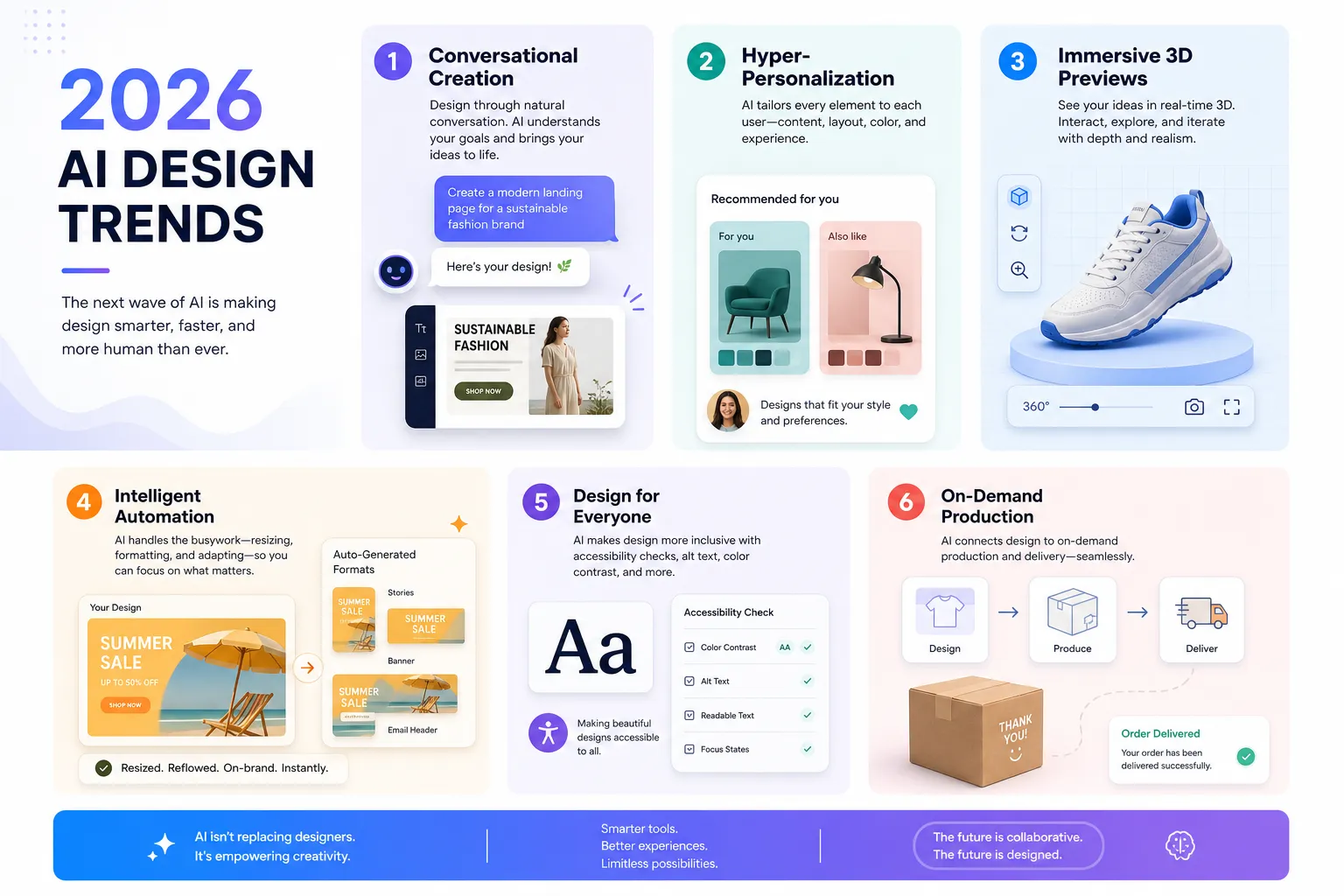
4. 3D and AR previews are becoming conversion tools
One of the most overlooked 2026 trends is the role of visualization in buying confidence.
Many AI articles talk about generated mockups, but fewer address immersive proofing. For physical products, static flat previews are increasingly insufficient. Buyers want to understand what they are ordering before they commit.
Photorealistic 3D and AR previews are rising because they:
reduce uncertainty
lower return risk
increase perceived product quality
make digital design feel tangible
improve mobile commerce conversion
This is where Media Rex Alliance stands apart from generic design platforms. Its photorealistic 3D and immersive AR previews help customers validate a design before placing an order, which is especially valuable in premium print, photo books, and personalized physical goods.
5. White-label AI is replacing one-size-fits-all creative platforms
A major trend competitors mention only indirectly is the demand for ownership.
Brands no longer want to send traffic to third-party design tools if they can avoid it. They want AI capabilities embedded into their own storefronts, domains, and customer journeys.
That is why white-label deployment is emerging as a critical strategic advantage in 2026.
Instead of adopting a generic external app, businesses want to:
retain full brand control
keep customer data within their ecosystem
create a seamless checkout flow
differentiate the buying experience
launch faster without building infrastructure from scratch
Media Rex Alliance is built for exactly this environment. Its fully white-label integration model allows print businesses and photo product brands to deploy AI-powered creation under their own brand identity, domain, and storefront experience.
The 2026 design stack is becoming browser-based and mobile-first
Another major shift is that users no longer want software bottlenecks.
The best AI tools now win not just on output quality, but on accessibility. In practical terms, that means:
no app installation
responsive browser-based creation
seamless multi-device continuity
fast load times on mobile
reduced learning curves for casual users
This matters even more in print commerce than in traditional design. A customer creating a product on a phone is much less likely to tolerate a complex editor.
Media Rex Alliance aligns with this behavior by offering a mobile-first, browser-based experience with no app required. Projects can sync locally and in the cloud, making it easier for users to start on one device and continue on another without friction.
Where most AI design articles fall short
After synthesizing the competitor landscape, several recurring gaps appear.
They focus on tools, not outcomes
Many articles compare Canva vs. Figma vs. Midjourney, but do not answer the higher-level question: what business model does each trend support?
In 2026, businesses need AI that improves conversion, speed, and operational efficiency, not just creative experimentation.
They underplay commerce applications
Most roundups discuss social graphics, UI mockups, or image generation. Few explore how AI tool design affects product creation, checkout behavior, or fulfillment economics.
That is a serious blind spot for print businesses and personalized product brands.
They ignore infrastructure and scalability
A flashy AI feature is not the same as a scalable platform.
What matters in real-world deployment is whether the system can support:
branded rollout
on-demand production
global fulfillment
enterprise reliability
cost-efficient operations
They rarely connect design to manufacturing
This is perhaps the biggest missed opportunity. In physical product businesses, the winning AI tool is not the one that makes the prettiest concept. It is the one that converts intent into a production-ready output with minimal human intervention.
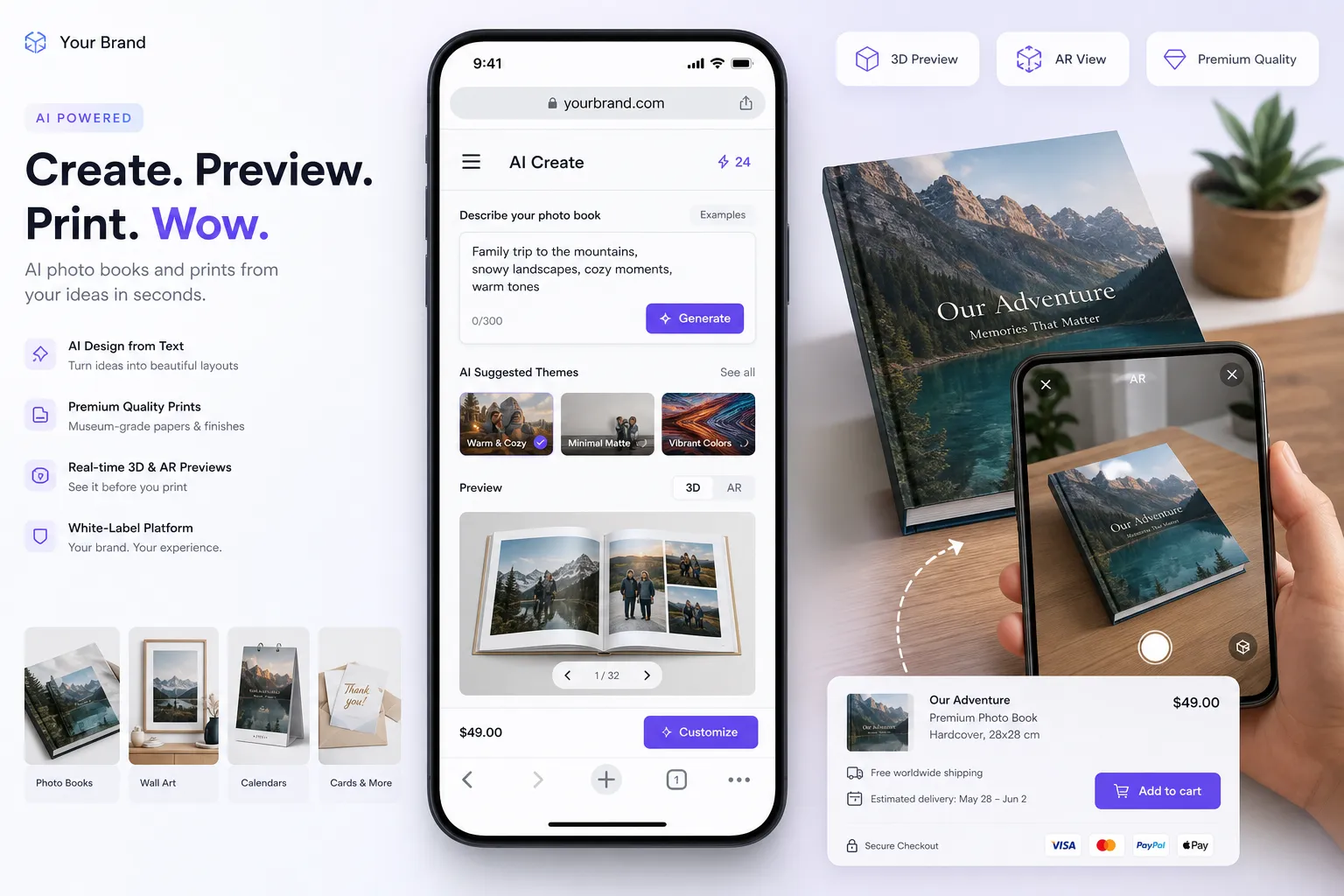
The top AI design trends that matter most for print and product businesses
Prompt-to-product creation
This is the most commercially significant trend for design-led commerce. Instead of designing manually, users describe the product they want and let AI generate layouts, styling, and structure.
For brands, this means fewer abandoned sessions and more completed orders.
AI-assisted product storytelling
Design is no longer isolated from merchandising. AI can now help shape the product narrative itself, suggesting themes, compositions, text, and visual hierarchy that make a product more emotionally resonant.
That is especially relevant in photo gifts, books, stationery, and premium personalized print.
On-demand production with low inventory risk
AI creation becomes far more powerful when combined with a no-stock model. The ability to create only what is ordered reduces waste, overhead, and operational drag.
Media Rex Alliance supports this through on-demand production and automated fulfillment across a global network of premium printers.
Intelligent layout automation
As uploaded content varies, layouts need to adapt. Modern systems are getting much better at arranging text, images, spacing, and visual emphasis automatically while preserving quality.
This is one of the most practical advances in ai tools for design because it directly reduces manual labor.
Cross-device continuity
A fragmented journey kills conversion. The design experiences that win in 2026 support fluid movement between desktop, tablet, and mobile.
This is no longer a nice-to-have. It is baseline infrastructure.
Comparing 2026 AI design trends by business impact
Trend | Creative Value | Commerce Value | Operational Value | Strategic Priority |
|---|---|---|---|---|
Conversational creation | High | Very high | High | Critical |
AI-generated images | High | Medium | Low | Moderate |
Layout automation | High | High | Very high | Critical |
3D and AR previews | Medium | Very high | Medium | High |
White-label deployment | Medium | Very high | High | High |
Mobile-first browser design | Medium | High | High | High |
On-demand fulfillment automation | Low | High | Very high | Critical |
This comparison reveals a pattern competitors often miss: the most valuable trends are not always the most glamorous. For growth-stage and enterprise print businesses, workflow intelligence often matters more than visual novelty.
How to evaluate AI tools in 2026
When assessing any new platform, decision-makers should look beyond feature lists and ask deeper questions.
Does it reduce customer friction?
If users still need training, the AI is not solving enough.
Does it create production-ready output?
Beautiful drafts are useful, but conversion happens when designs can move into manufacturing without heavy rework.
Can it be branded as your own?
In an increasingly competitive market, white-label control is a revenue asset.
Does it work for mobile users?
If the experience is clumsy on mobile, it will lose a growing share of potential buyers.
Does it support scalable fulfillment?
Without connected production, AI remains isolated from the actual business engine.
Why Media Rex Alliance fits the direction of the market
Many platforms are adding AI features. Media Rex Alliance is different because it is purpose-built around the full commercial design journey.
It enables brands to:
create products via conversational AI rather than traditional design editors
turn simple prompts into print-ready products quickly
deploy a fully white-label experience inside existing storefronts or apps
show photorealistic 3D and AR previews before purchase
support mobile-first, browser-based design with no installation required
sync projects across devices through local and cloud continuity
reduce inventory needs through on-demand production
automate fulfillment through a global network of premium printers
scale from startups to enterprise-level print businesses
That is not just an AI feature set. It is a modern web-to-print growth engine.
What the next 12 months will likely bring
Looking ahead, expect these shifts to accelerate:
AI-native product creation will outperform editor-first systems
Interfaces built around prompts, recommendations, and automation will continue to replace manual composition-heavy workflows.
Specialized vertical platforms will beat generic creative suites
Broad tools will remain useful, but industry-specific systems will win where production, compliance, and fulfillment matter.
Preview realism will become a competitive standard
Customers will increasingly expect realistic, confidence-building product visualization before purchase.
More brands will bring AI in-house through white-label deployment
Owning the experience will matter more than borrowing innovation from external tools.
Design and operations will merge
The biggest AI breakthroughs in design will happen where creation connects directly to commerce, manufacturing, and delivery.
Final verdict
The biggest story in AI design in 2026 is not that there are more tools. It is that the best tools are becoming platforms, and the best platforms are becoming revenue systems.
For businesses in print, photo products, and personalized commerce, this changes the game. The future belongs to brands that make creation easier, previews richer, production smarter, and fulfillment more automatic.
Media Rex Alliance is positioned precisely at that intersection. It helps businesses modernize web-to-print without building the stack from scratch, replacing slow, tool-heavy design journeys with conversational creation, white-label deployment, immersive previews, and scalable on-demand fulfillment.
If you want to move beyond generic AI experiments and launch a branded, conversion-focused product creation experience built for 2026, Media Rex Alliance is the platform to watch.
FAQ
What are the top 10 AI tools in 2026?
The most discussed platforms include Canva, Figma, Adobe Firefly, Midjourney, Framer, DALL·E, Uizard, Galileo AI, V0, and Stable Diffusion. However, for print commerce and personalized products, specialized platforms like Media Rex Alliance matter more because they connect design directly to production and fulfillment.
What are the top AI trends in 2026?
The leading trends are conversational design, workflow automation, hyper-personalization, photorealistic 3D and AR previews, white-label AI deployment, and mobile-first browser-based creation. The biggest shift is AI moving from a creative assistant to a full business workflow layer.
What is the best AI for development in 2026?
For software and interface development, tools like Figma, V0, Cursor, and Framer are strong options because they bridge design and code. For product creation businesses, the best AI is one that also supports production readiness, branding, and fulfillment, which is where Media Rex Alliance stands out.
What are the best AI tools for designers?
The best choice depends on the workflow: Canva for fast marketing assets, Figma for UI and product design, Midjourney for image generation, and Adobe Firefly for commercially safer creative output. Designers working in print and commerce should also consider platforms like Media Rex Alliance that turn prompts into print-ready products.
Is there a ChatGPT for design?
Yes, the industry is moving toward a ChatGPT-style design experience where users describe what they want and AI generates the output. Media Rex Alliance follows this model by letting customers create premium physical products through conversational AI instead of traditional design tools.