
All In One Web2Print for Print Business Growth
Print businesses are under pressure from every angle: rising customer expectations, fragmented software, slow quoting, manual proofing, disconnected fulfillment, and outdated design experiences that create friction before the sale even happens. For small studios, photographers, emerging print-on-demand brands, regional print players, and established photo book companies, growth no longer comes from adding more people to the workflow. It comes from removing complexity.
That is why the market is moving toward the all in one web2print model: a unified platform that connects storefronts, customization, pricing, ordering, production, and fulfillment in one scalable system.
Media Rex Alliance represents the next evolution of that model. Instead of forcing customers through traditional design tools, it enables product creation through conversational AI, transforms prompts into print-ready products, delivers photorealistic 3D and AR previews, integrates fully into existing branded storefronts, and supports a mobile-first, browser-based experience with no app download required.
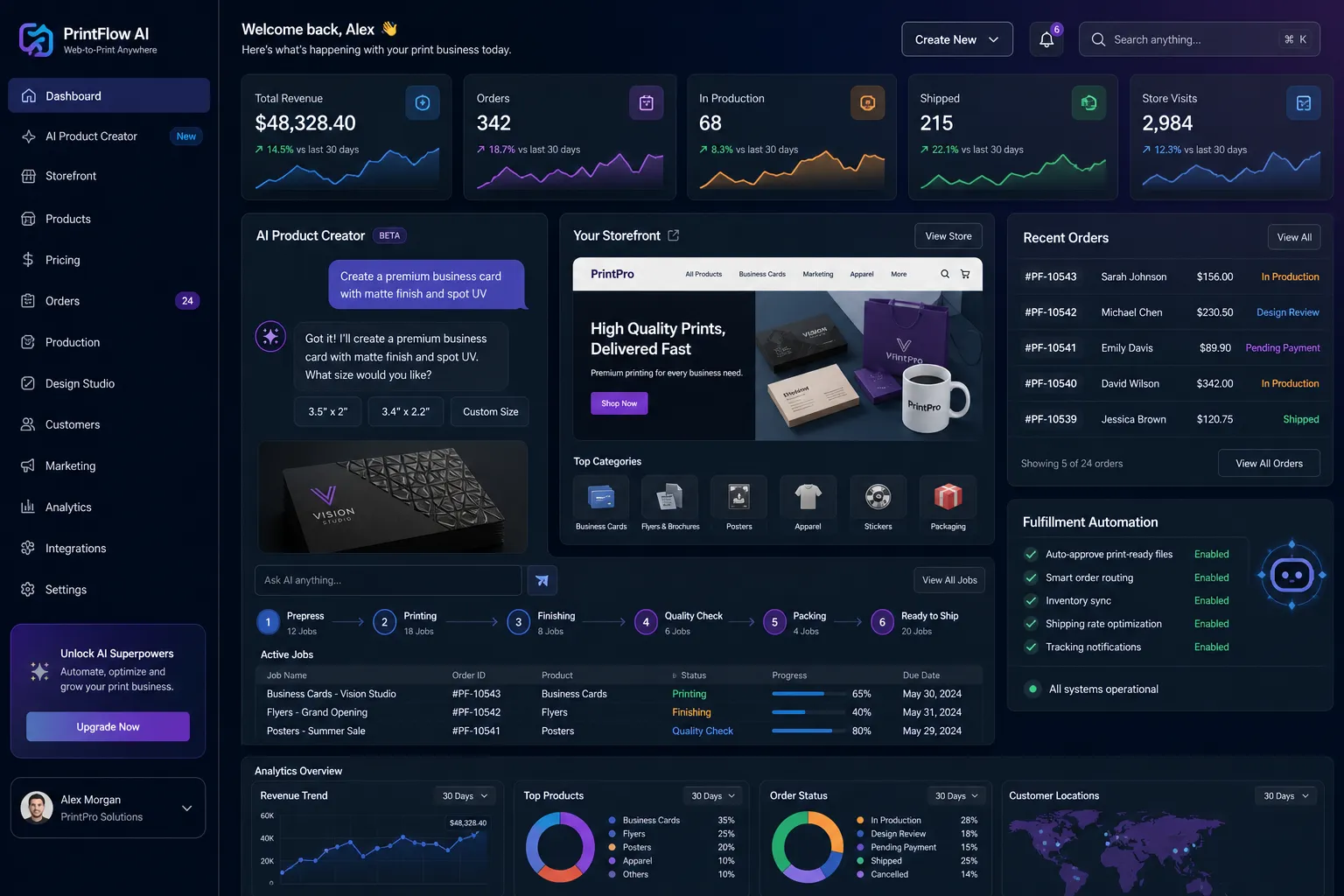
Why Print Businesses Are Moving to Unified Web-to-Print Platforms
Most print businesses did not intentionally build a messy tech stack. It happened over time. One tool handles design. Another manages pricing. A plugin covers uploads. Someone tracks production in spreadsheets. Fulfillment is managed through email, Slack, or vendor portals. The result is slower operations and a weaker customer experience.
A unified platform changes that by centralizing the full customer and production journey.
The old model creates friction at every stage
In a fragmented workflow, customers often run into:
confusing design interfaces
unclear pricing rules
slow approvals
limited mobile usability
lack of confidence before purchase
delayed proofs and fulfillment updates
Internally, teams face:
repetitive manual setup
inconsistent file quality
poor visibility across jobs
more support tickets
higher labor cost per order
bottlenecks between sales and production
The new model is designed around speed and conversion
An integrated web-to-print platform makes the experience faster for both buyer and operator. Customers can discover, personalize, preview, and order in a single flow. Teams can automate file generation, route orders intelligently, and scale output without scaling headcount at the same rate.
"The global web-to-print (W2P) market was valued at $36.3 billion in 2025 and is projected to reach $52.9 billion by 2034." - IMARC Group
What an All-in-One Web2Print Platform Actually Includes
The term gets used broadly, but not every platform is truly all-in-one. Many tools only solve one layer of the process. A real end-to-end platform should unify customer experience, business logic, and production automation.
Core components of a true end-to-end system
Capability | What it does | Why it matters |
|---|---|---|
Storefront integration | Connects with your ecommerce site or app | Preserves your brand and existing traffic |
Product creation | Lets customers personalize products | Drives engagement and conversion |
Pricing engine | Calculates pricing dynamically | Reduces quoting delays and margin errors |
Proofing and preview | Shows realistic product outcomes | Builds buying confidence |
Order management | Centralizes incoming jobs | Improves visibility and control |
Print-ready automation | Generates production files automatically | Cuts manual prep time |
Fulfillment routing | Sends jobs to production partners | Scales output efficiently |
Multi-device sync | Saves progress locally and in cloud | Supports modern buyer behavior |
Where competitors are strong - and where gaps remain
Current market leaders commonly emphasize:
online design editors
storefront support for B2B and B2C
pricing automation
order and production management
integrations with ecommerce platforms
vendor or marketplace workflows
But there are still major content and product gaps in the category:
Too much focus on editing tools, not enough on buying friction
Most platforms still assume customers want to “design.” Many customers actually want to describe what they want and purchase quickly.Weak emphasis on mobile-first behavior
Legacy design tools often feel desktop-native, even when labeled responsive.Not enough attention to visual trust signals
Simple mockups are no longer enough. Modern buyers expect immersive, realistic previews.Limited discussion of white-label deployment
Many print companies need a solution that looks fully native to their brand.Insufficient focus on inventory-free scaling
Operational efficiency today depends on on-demand production and intelligent routing, not just ecommerce features.
Media Rex Alliance closes those gaps by combining conversational AI creation, white-label deployment, photorealistic previews, browser-based mobile usability, and automated global fulfillment into a single platform strategy.
The Biggest Growth Lever: Replacing Complex Editors With Conversational AI
This is where the category is changing fastest.
Traditional product customization assumes the customer is willing to learn a mini design application. That works for some users, but it creates drop-off for everyone else. Many buyers want a simple outcome: a premium product based on a clear idea, photo, or moment.
From design tools to intent-driven creation
Media Rex Alliance enables customers to create products by typing or speaking what they want in natural language. Instead of manually arranging every element, they can describe the concept, upload photos if needed, and let the autonomous creation engine generate layouts, compositions, and print-ready outputs.
That shift matters because it:
reduces time-to-product
lowers abandonment
shortens decision cycles
opens customization to non-designers
improves conversion on mobile
Why this matters for photo books, studios, and POD brands
For photographers, memory brands, and photo product companies, conversational creation solves a major problem: the product is emotionally important, but the creation workflow is often tedious. By turning a prompt into a polished product, the experience feels premium rather than technical.
That is especially valuable for:
photo books
wall art
calendars
gift products
studio albums
branded merchandise
personalized keepsakes

Customer Experience Is the New Competitive Advantage
Price still matters in print. But experience often determines whether the customer completes the order, comes back, or recommends your brand.
Faster creation leads to faster purchase decisions
When customers can go from idea to preview quickly, hesitation drops. The longer they spend fighting the interface, the more likely they are to abandon the process.
A modern web-to-print experience should help them:
start instantly
personalize without training
view realistic results
trust the final product
order from any device
3D and AR previews increase confidence before checkout
Most competitor platforms mention preview functionality, but many stop at standard 2D mockups or basic product views. Media Rex Alliance moves further with photorealistic 3D and immersive AR previews, letting customers see what they are buying with far more confidence.
This is not just a visual upgrade. It is a conversion tool.
When customers can better visualize the final product:
return risk goes down
approval speed increases
purchase confidence rises
support questions decrease
Mobile-first is no longer optional
Many print purchases start on a phone, even if they finish later on another device.
"As of 2025, mobile commerce accounts for approximately 59% of global e-commerce sales." - Soax
A platform that is genuinely mobile-first must do more than shrink the desktop interface. It should be browser-based, fast, intuitive, and require no app install. Media Rex Alliance is designed exactly for that environment, while also syncing projects locally and in the cloud so customers can move across devices without losing progress.
White-Label Integration: Critical for Brand-Led Growth
Print businesses do not want to send customers to someone else’s platform experience. They want ownership of the brand relationship.
Why white-label matters
A white-label deployment means the technology works behind the scenes while your brand stays front and center. That includes:
your domain
your visual identity
your product presentation
your conversion flow
your customer relationship
For mid-size and enterprise print businesses, this is essential. It protects brand equity and supports differentiated positioning in crowded markets.
Media Rex Alliance fits into your existing ecosystem
Rather than forcing a rebuild, Media Rex Alliance can integrate into existing storefronts or apps. That allows businesses to modernize the creation and production experience without discarding their current ecommerce investment.
This is especially useful for businesses that already have:
established traffic channels
SEO-performing storefronts
customer accounts and CRM flows
existing product catalogs
embedded commerce apps
Streamlining Operations From Order to Fulfillment
Growth breaks weak systems. If a business increases order volume without automation, margins shrink under operational load. That is why the backend matters as much as the frontend.
What operational efficiency should look like
A modern web-to-print workflow should automate:
project creation
file prep
order intake
job routing
production handoff
tracking updates
reordering workflows
That means fewer manual touches, fewer production mistakes, and more predictable throughput.
On-demand production reduces inventory risk
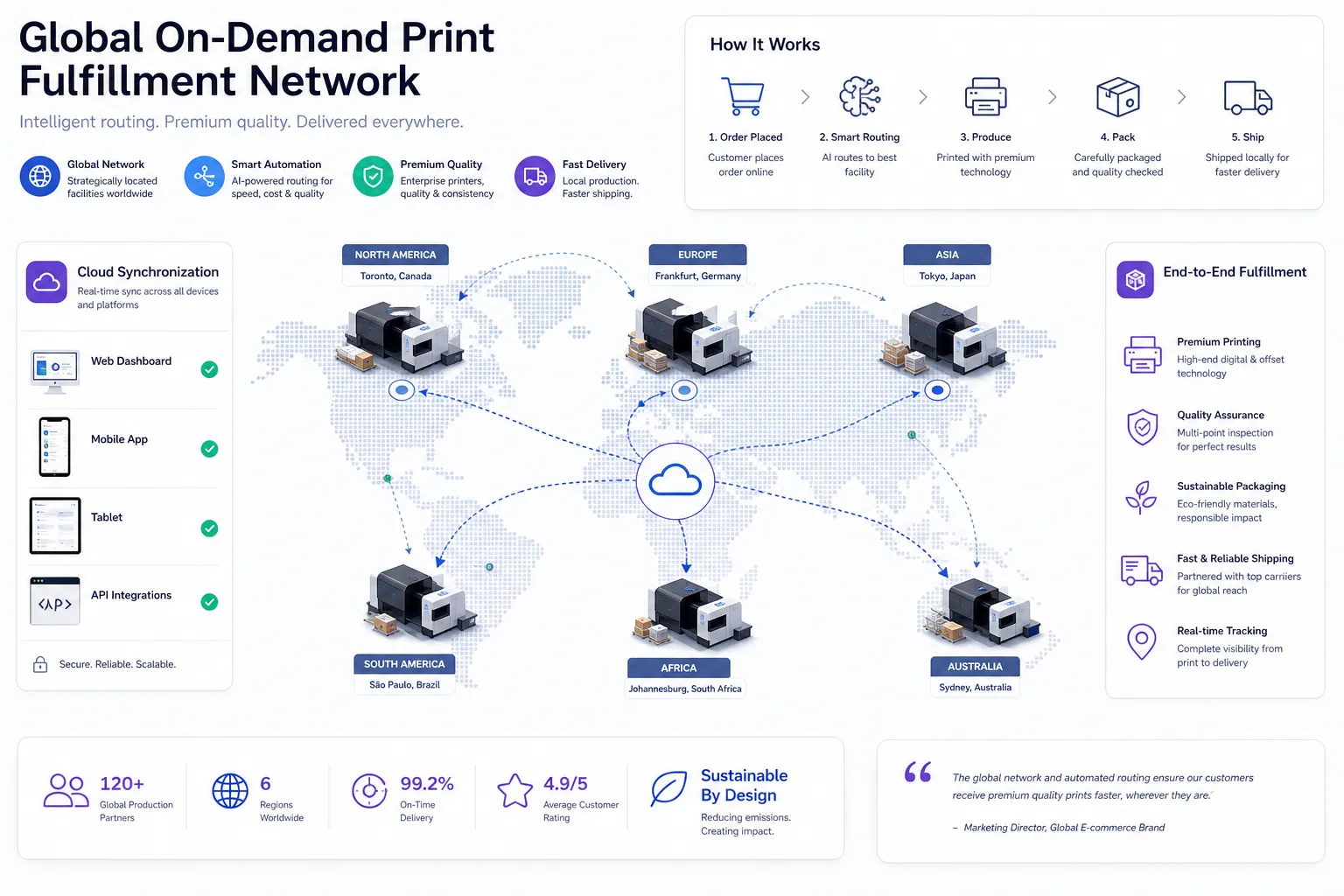
One of the strongest strategic benefits of a modern print SaaS is the ability to run a no-stock, low-overhead model. Instead of tying up capital in inventory, businesses can produce on demand and fulfill through a distributed network.
This reduces:
warehousing costs
dead stock risk
forecasting pressure
complexity from SKU sprawl
Global fulfillment enables scale without local infrastructure
Media Rex Alliance automates fulfillment through a global network of premium printers. That allows businesses to expand product reach and geographic coverage without building their own production footprint in every market.
Benefits include:
faster regional delivery
lower shipping friction
more flexible expansion
scalable production capacity
lower operational overhead
What Competitor Platforms Get Right
The current leaders in the space have helped define buyer expectations. Across the competitor landscape, several themes repeatedly appear.
DesignNBuy: comprehensive workflow breadth
DesignNBuy strongly emphasizes:
online design and personalization
B2B and B2C storefronts
production and pricing automation
template workflows
wide product-category coverage
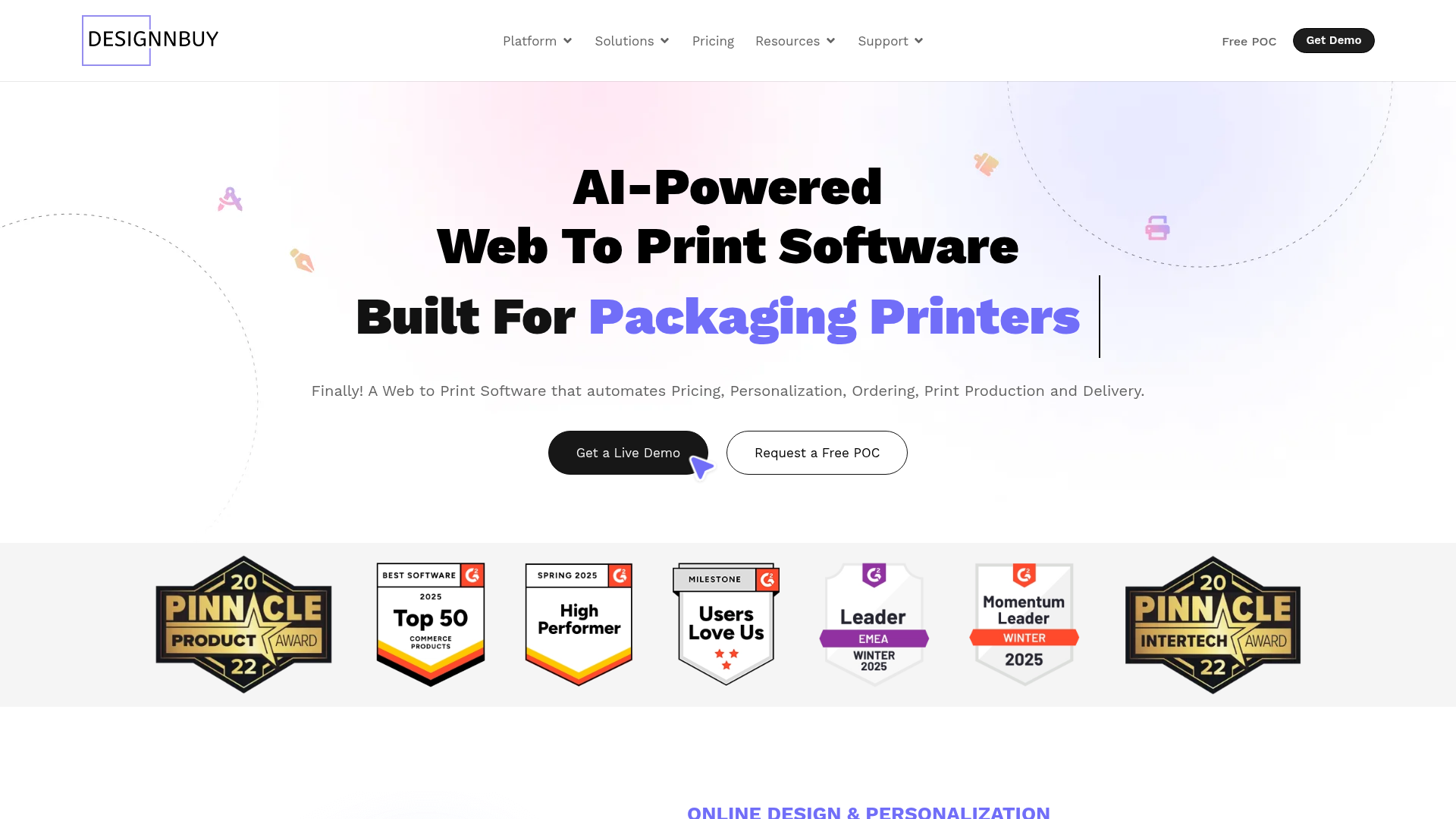
Its strength is operational completeness. Its opportunity gap is that the experience still revolves heavily around traditional editors and feature density.
Cmsmart: ecommerce flexibility and customization
Cmsmart focuses on:
WooCommerce and Magento ecosystems
online designer capabilities
multivendor marketplace support
printshop development services
customizable store builds
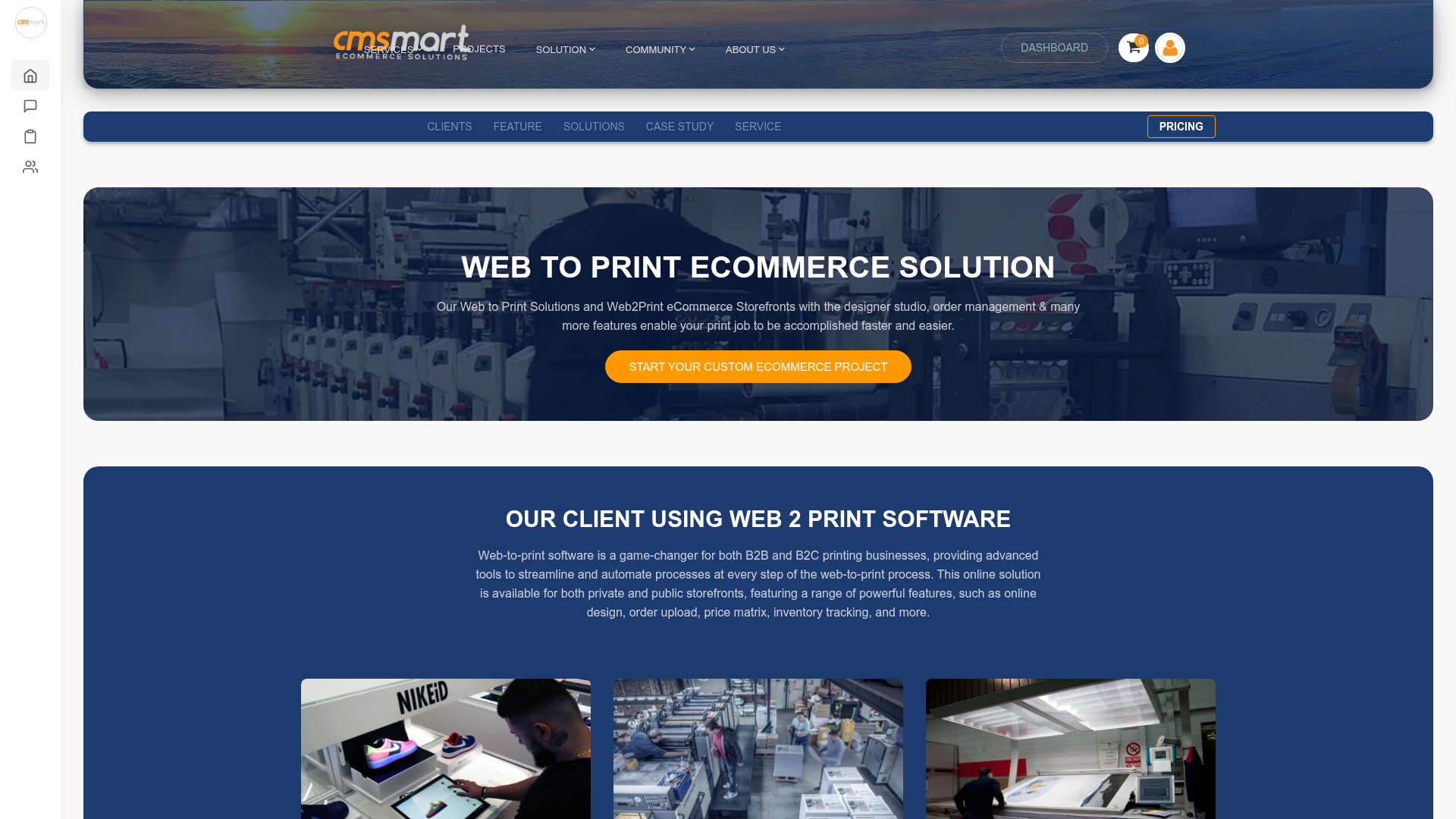
Its strength is extensibility. Its gap is that businesses still need to architect a lot of the experience and workflow around the platform.
ImprintNext: configurators, production, and market breadth
ImprintNext highlights:
design studio and configurators
production workflow automation
sales and quotation tools
multivendor and fulfillment scenarios
strong support for decorators and specialty printers
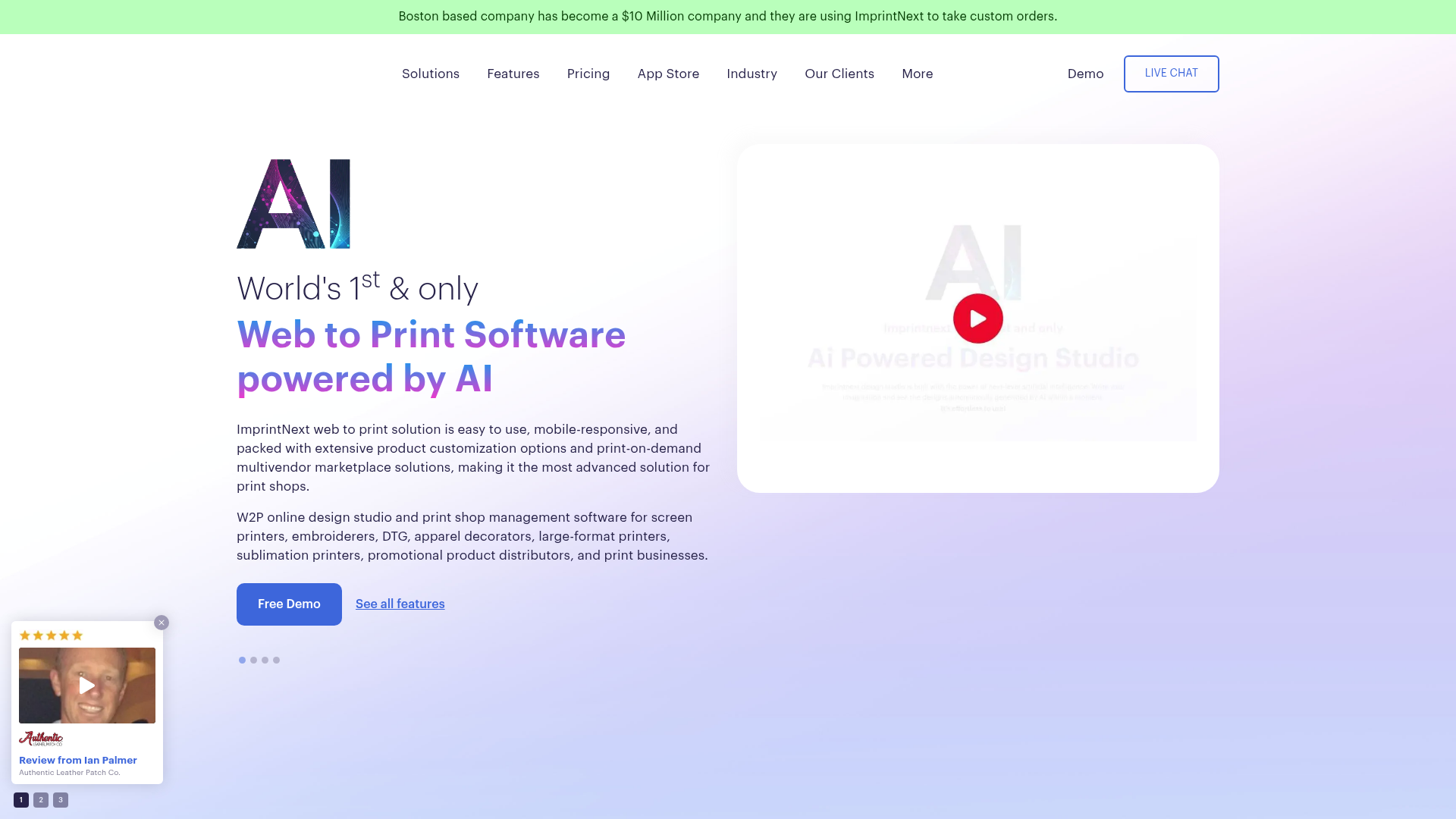
Its strength is category depth. Its gap is similar: a strong tooling environment, but less emphasis on radically simplifying creation for mainstream buyers through conversational AI.
Where Media Rex Alliance Takes the Category Further
Media Rex Alliance is not just another design layer. It reframes what web-to-print can be when AI is placed at the center of the buying journey.
1. Prompt-to-product instead of tool-heavy customization
Customers can describe what they want rather than build it manually from scratch. That fundamentally lowers friction and opens premium customization to a broader audience.
2. Print-ready output created faster
Instead of slowing orders with complex composition work, the platform turns prompts and uploaded media into ready-to-print products quickly. That helps businesses convert inspiration while purchase intent is still high.
3. Premium previews built for confidence
Photorealistic 3D and AR give customers a much clearer sense of the final product than static mockups. That improves confidence before purchase and supports premium pricing perception.
4. Fully white-label deployment
The platform can be embedded inside an existing storefront or app experience while preserving full brand control.
5. Browser-based, mobile-first access
No app install. No download barrier. Just a fast, modern, multi-device product creation flow that works where customers already are.
6. Local and cloud sync for cross-device continuity
Customers can start on one device and continue on another, which is increasingly important in longer-consideration product categories like photo books and premium gifts.
7. On-demand fulfillment through a global print network
By reducing dependence on owned inventory and fixed production infrastructure, businesses can scale more profitably.
Who Benefits Most From an All-in-One Web-to-Print Stack
Not every print business has the same growth constraints. But nearly all benefit from reducing friction and increasing automation.
Small studios and photographers
These businesses often need premium output without building technical infrastructure. A white-label platform lets them offer polished branded products without hiring a full product team.
Best-fit use cases include:
client album sales
framed prints
event keepsakes
personalized gifts
seasonal collections
New print-on-demand brands
POD startups need speed, low overhead, and differentiation. Conversational AI and on-demand fulfillment help them launch quickly while offering a more modern customer experience than template-heavy competitors.
Mid-size print brands
These businesses often have real traction but struggle with disconnected systems and scaling inefficiencies. A unified platform helps standardize processes and improve throughput.
Regional print players
For regional operators, growth often depends on expanding reach without overextending infrastructure. A platform with distributed fulfillment and white-label deployment can accelerate that transition.
Established photo book companies
Legacy photo book brands face a modernization challenge. Their customers expect smarter, faster creation experiences than old-school layout editors provide. AI-assisted product creation helps preserve premium quality while improving conversion.
How to Evaluate a Platform Before You Commit
Choosing a platform is not just about feature count. It is about which system best supports conversion, margin, and long-term adaptability.
Questions to ask during evaluation
Evaluation Area | What to ask |
|---|---|
Customer UX | Can non-designers create products quickly without training? |
Mobile performance | Is the experience truly mobile-first, not just mobile-compatible? |
Visual proofing | Are previews photorealistic and immersive enough to increase confidence? |
Branding | Can the solution be fully white-labeled? |
Integration | Does it fit your existing storefront or require a rebuild? |
Automation | How much manual order preparation remains? |
Fulfillment | Can it scale without requiring local inventory and production expansion? |
Flexibility | Can it support both current products and future categories? |
Warning signs of a platform that may slow growth
Be cautious if the solution:
depends on heavy manual setup for each new product
feels desktop-centric
treats AI as a feature add-on instead of a workflow foundation
lacks serious visual preview quality
requires customers to leave your branded environment
does not address fulfillment scalability
A Modern Web-to-Print Strategy for the Next 3 Years
The next wave of category winners will not just offer customization. They will offer instant product creation, confidence-rich previews, and inventory-light fulfillment within a branded customer experience.
That means the strategic priorities for print businesses are shifting toward:
reducing customer effort
increasing mobile conversion
automating backend operations
preserving brand ownership
scaling through distributed production
The businesses that move first will be positioned to capture more demand with fewer operational constraints.
Final Verdict
If your print business is still operating across separate tools for design, proofing, ordering, and fulfillment, you are not just carrying operational drag. You are likely losing conversions at the exact moment customers are most ready to buy.
A true all in one web2print platform should do more than centralize features. It should reduce friction, accelerate purchase decisions, automate production, and scale with your business model.
Media Rex Alliance stands out because it aligns with where the market is going, not where it has been. Its conversational AI creation engine, white-label deployment, photorealistic 3D and AR previews, mobile-first browser experience, cloud sync, and global on-demand fulfillment model make it a strong choice for print businesses that want to modernize without building everything from scratch.
If you want to launch a smarter, faster, more scalable print experience under your own brand, Media Rex Alliance is the platform to watch - and the partner to try.
FAQ
Is the printing industry growing or declining?
The industry is evolving, not disappearing. Traditional segments may face pressure, but digital print and web-to-print continue to grow as businesses adopt automation, personalization, and on-demand production.
How do I grow my printing business?
Growth comes from reducing friction and improving efficiency. A modern platform should help you offer faster customization, better previews, automated fulfillment, mobile-first ordering, and white-label branded experiences that convert more customers.
What are the top 5 print-on-demand companies?
The answer depends on your business model, product category, and region. Many brands evaluate leaders based on product quality, integration options, fulfillment speed, white-label flexibility, and automation, then choose the platform or network that best fits their growth strategy.