Best Web to Print Online Designer Features
If you are evaluating a web to print online designer, you are not just shopping for another design widget. You are choosing the layer that determines how quickly customers can create products, how confidently they place orders, and how efficiently your team can turn those orders into print-ready output.
For small studios, photographers, emerging print-on-demand brands, regional printers, and established photo book companies, the stakes are high. Legacy design tools often create friction, especially on mobile, while generic ecommerce plugins rarely solve the full workflow from personalization to production. The best modern platforms do far more: they combine customization, automation, commerce, and fulfillment into one scalable customer experience.
At Media Rex Alliance, we believe the next generation of web-to-print is not about forcing customers to learn complex design software. It is about enabling them to create premium physical products through conversational AI, photorealistic previews, mobile-first workflows, and fully white-label storefront experiences.
"The web-to-print software market is projected to reach USD 1,905.1 million in 2026." - Source
"79% of smartphone users made an online purchase via their device in the last six months." - Source
Why Businesses Are Re-Evaluating the Web to Print Online Designer
The core search intent behind this topic is clear: businesses want to know which features actually matter before investing in a web-to-print platform.
Most competitor content focuses on the obvious basics like templates, previews, and file uploads. Those features matter, but they are no longer enough. Today, buyers should also evaluate:
How fast customers can move from idea to order
Whether the experience works beautifully on mobile
If the platform generates truly print-ready files automatically
How easily it integrates into an existing storefront or app
Whether it supports low-inventory, on-demand production
How well it scales across product categories, markets, and customer types
That is where many traditional tools fall short. They were designed around manual setup and desktop-heavy workflows. Modern buyers need a system built for speed, automation, and conversion.
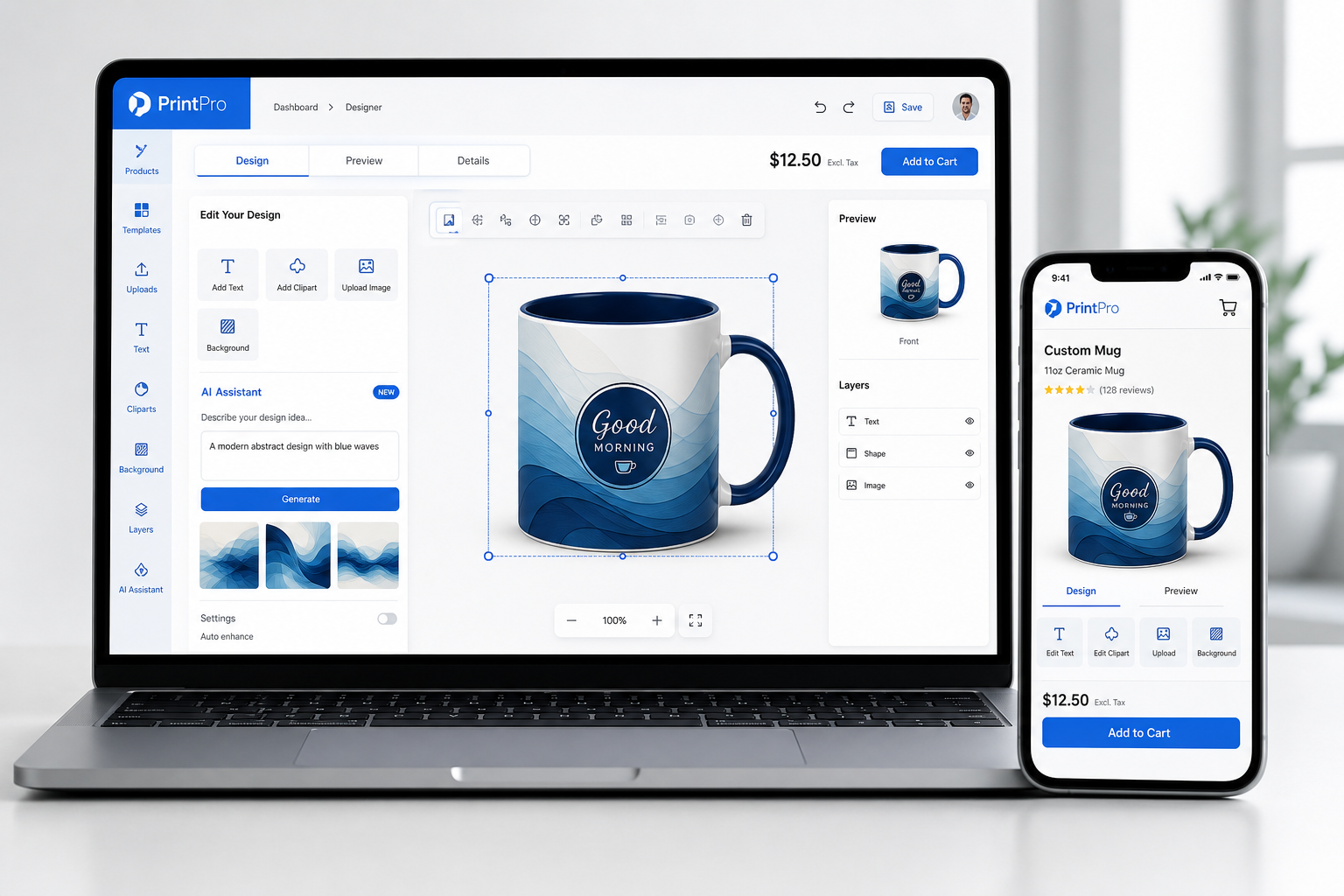
What the Best Web to Print Online Designer Should Actually Do
A high-performing platform should do more than let users edit text on a template. It should reduce friction at every stage of the buying journey.
It should simplify product creation
Customers should be able to start with:
A prompt
A photo upload
A guided layout flow
A reusable template
A product configurator
The less effort required to create something attractive and print-ready, the more likely visitors are to convert.
It should bridge design and production
Your online designer must connect front-end personalization with back-end execution. That includes:
Automated layout generation
Resolution awareness
Bleed and trim handling
Color-safe output preparation
Proofing and approval logic
Export to production workflows
It should improve confidence before purchase
The biggest conversion killer in personalized print is uncertainty. Customers need to feel sure about what they are buying. The strongest platforms solve this with:
Live previews
3D product views
AR previews in context
Accurate material and finish representation
Clear pricing updates
It should fit your brand, not replace it
Especially for growing print businesses, the ideal solution should be fully white-label, allowing it to live inside your existing domain, visual identity, and customer journey.
That is one of the strongest differentiators of Media Rex Alliance: businesses can launch AI-powered print creation inside their own storefront or app without rebuilding everything from scratch.
The 10 Best Web to Print Online Designer Features to Look For
1. Conversational AI Product Creation
The most important shift in web-to-print is moving from manual design complexity to natural language simplicity.
Instead of requiring users to understand layers, text boxes, and alignment tools, a modern platform should let them describe what they want. For example:
“Create a premium wedding photo book with a minimalist black cover”
“Design a real estate brochure with modern typography and uploaded property photos”
“Make a personalized gift box for a skincare launch with soft pastel branding”
The system should then generate a usable, attractive composition automatically.
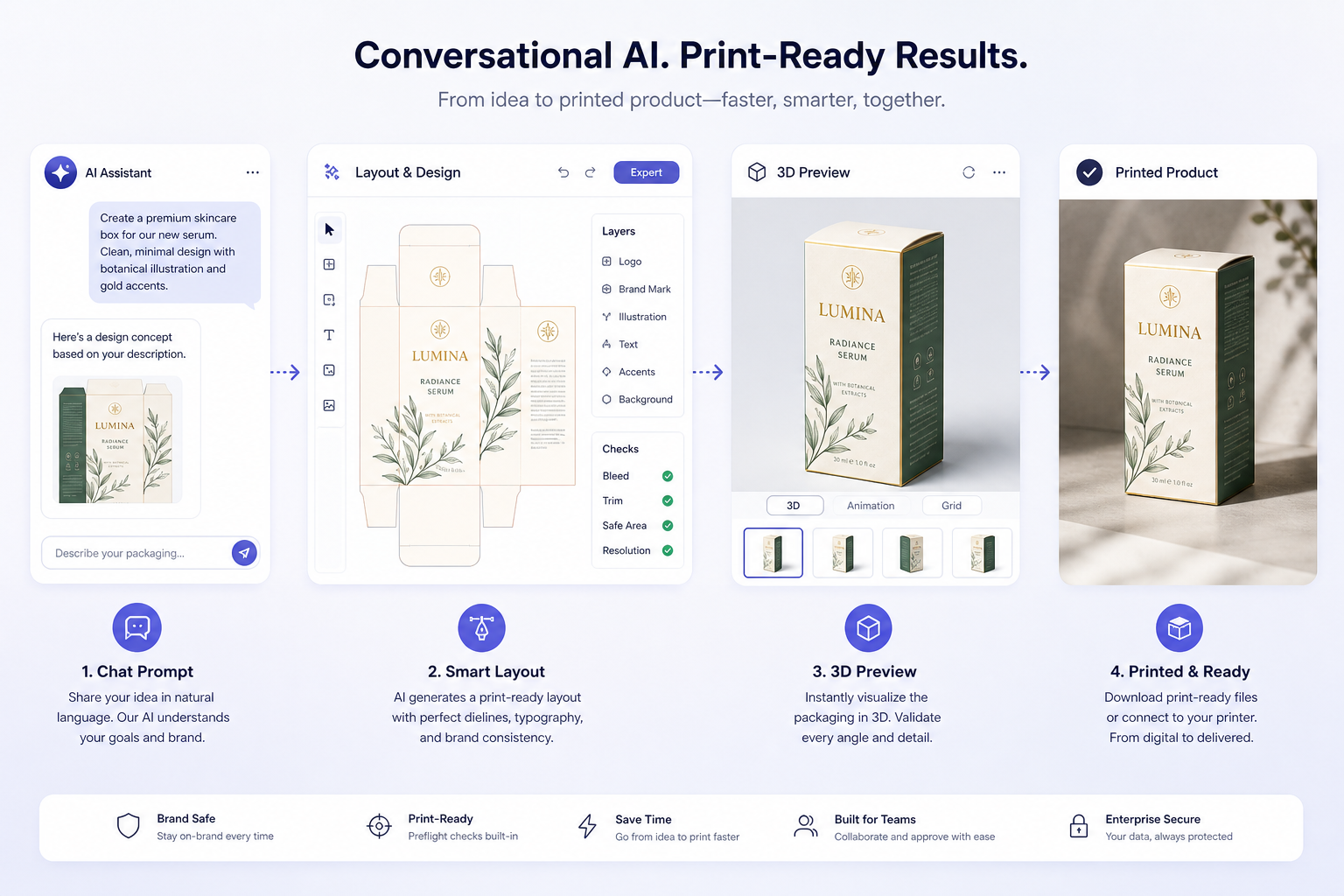
Why it matters
This dramatically reduces friction for non-designers and shortens time to purchase. For brands targeting consumers, creators, photographers, or busy B2B buyers, conversational AI can unlock a much wider audience than traditional online editors.
What to check
Prompt-based product generation
AI-assisted layout suggestions
Style and theme controls
Automatic text and image placement
Editable output after generation
Media Rex Alliance is built around this exact model, helping customers create premium physical products through natural language instead of complex design tools.
2. Real-Time Customization With Instant Visual Feedback
Customers should never have to guess what their product will look like after checkout.
The best web to print online designer offers immediate visual updates as the user changes:
Text
Fonts
Colors
Images
Layouts
Product options
Quantities and finishes
Why it matters
Real-time feedback reduces abandonment and support requests. It makes the buying process feel intuitive and premium.
What to check
Capability | Why It Matters |
|---|---|
Live canvas updates | Eliminates guesswork |
Dynamic price recalculation | Prevents checkout surprises |
Smart validation | Catches issues early |
Editable previews | Encourages experimentation |
Fast rendering | Keeps momentum high |
When customers can see results instantly, they stay engaged longer and purchase with greater confidence.
3. Mobile-First Browser-Based Usability
A web-to-print experience that works only on desktop is already behind.
Today’s customers browse, compare, upload photos, and place orders from phones. A strong platform must be built for mobile-first, browser-based design with no app installation required.
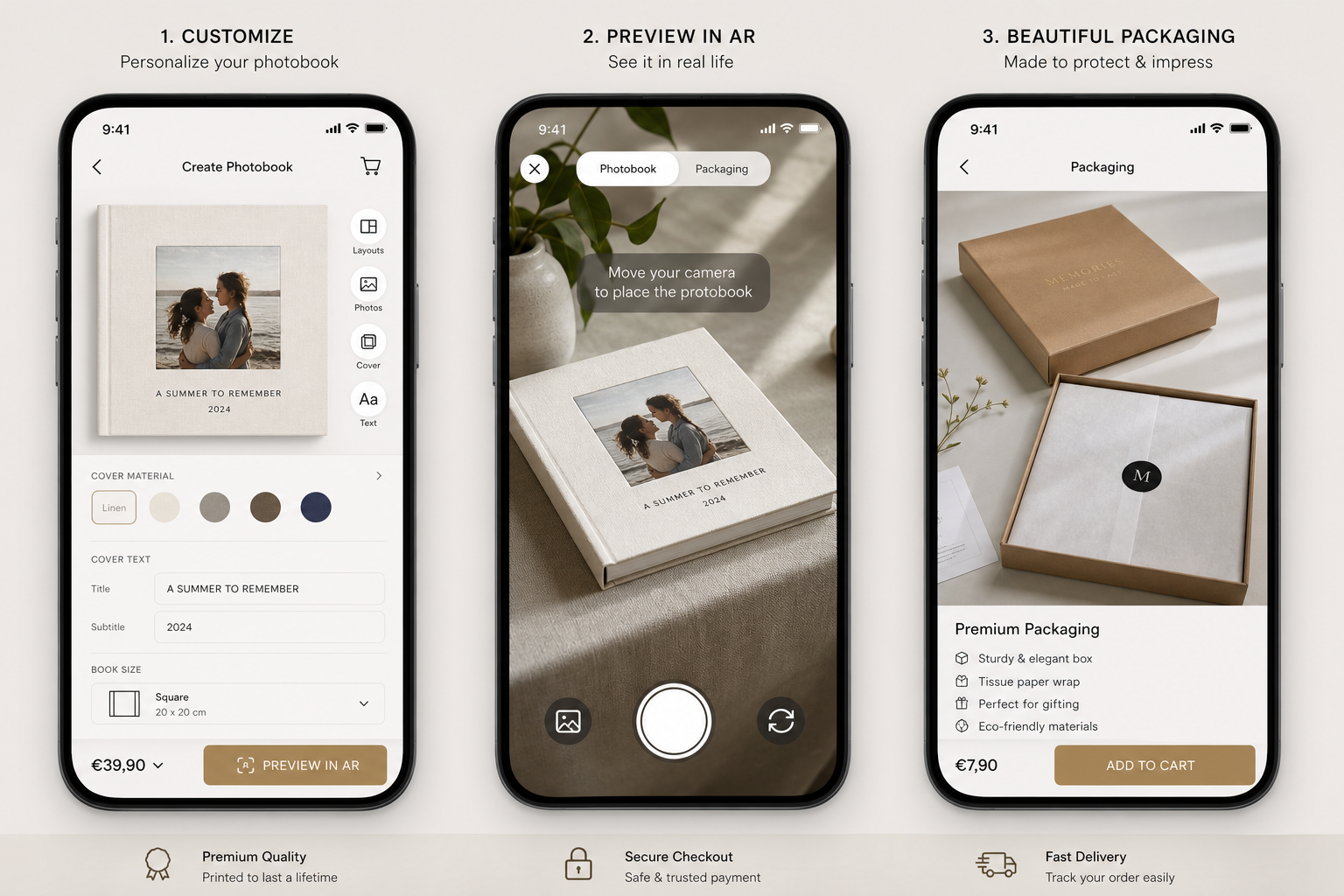
Why it matters
If your online designer pinches, breaks, or slows down on mobile, conversion suffers. This is especially relevant for photo products, personalized gifts, social-commerce driven brands, and time-sensitive B2B ordering.
What to check
Responsive interface
Touch-friendly controls
Mobile-safe editing tools
Camera roll and photo upload support
Fast performance in browser
No mandatory download or installation
Media Rex Alliance supports a mobile-first web app experience, so customers can create and order from any device without app friction.
4. Automatic Print-Ready Output
This is non-negotiable. If your online designer cannot reliably produce print-ready files, the workflow breaks downstream.
A strong system should automatically generate output that is ready for production, including:
High-resolution files
Proper bleed
Trim lines
Color-safe formatting
Layer flattening where required
Output mapped to specific print specs
Why it matters
Without automation here, your team ends up manually fixing files, delaying orders, increasing prepress costs, and risking print errors.
What to check
Automated PDF generation
Bleed and trim handling
DPI checks
Color mode controls
File packaging for multiple product types
Output consistency across SKUs
The best platforms do not just capture the design; they translate it into a dependable production asset.
5. Photorealistic 3D and AR Previews
Static mockups are no longer enough for premium print ecommerce.
Modern buyers want to see the product in a realistic way before they buy it, especially for photobooks, packaging, wall art, branded merchandise, and gift products.
Why it matters
Photorealistic 3D and AR previews reduce hesitation. They help users understand scale, texture, orientation, and final appearance before they commit.
What to check
3D product rendering
Multi-angle preview
Material and finish simulation
AR view in real-world space
Accurate representation of personalized elements
Media Rex Alliance offers photorealistic 3D and immersive AR previews, helping businesses improve customer confidence and reduce the uncertainty that often blocks conversion.
6. White-Label Integration Into Existing Storefronts
Many businesses do not want to rip out their ecommerce stack just to launch better personalization.
The best web to print online designer should integrate cleanly into your current site, app, or storefront while preserving your:
Branding
Domain
Checkout flow
Customer accounts
Product catalog logic
Why it matters
This reduces launch time, protects brand equity, and allows a smoother customer journey.
What to check
White-Label Feature | Business Benefit |
|---|---|
Custom domain support | Stronger trust and consistency |
Brand styling controls | Seamless visual identity |
Embedded designer modules | Faster rollout |
API or storefront integration | Lower rebuild cost |
Flexible deployment | Better fit for different business models |
Media Rex Alliance is purpose-built as a fully white-label AI print platform, making it especially attractive for studios, print brands, and photo product companies that want innovation without losing control of the customer experience.
7. Cloud and Local Sync Across Devices
Customers do not always finish personalized purchases in one session or on one device.
They may start on mobile, continue on desktop, and return later from a tablet. A modern online designer should keep projects synchronized across environments.
Why it matters
Cross-device continuity protects conversion momentum and creates a premium, convenient user experience.
What to check
Draft auto-save
Cloud project storage
Local progress protection
Account-linked resume support
Multi-device editing continuity
Media Rex Alliance supports local and cloud sync, helping users move seamlessly across devices without losing work.
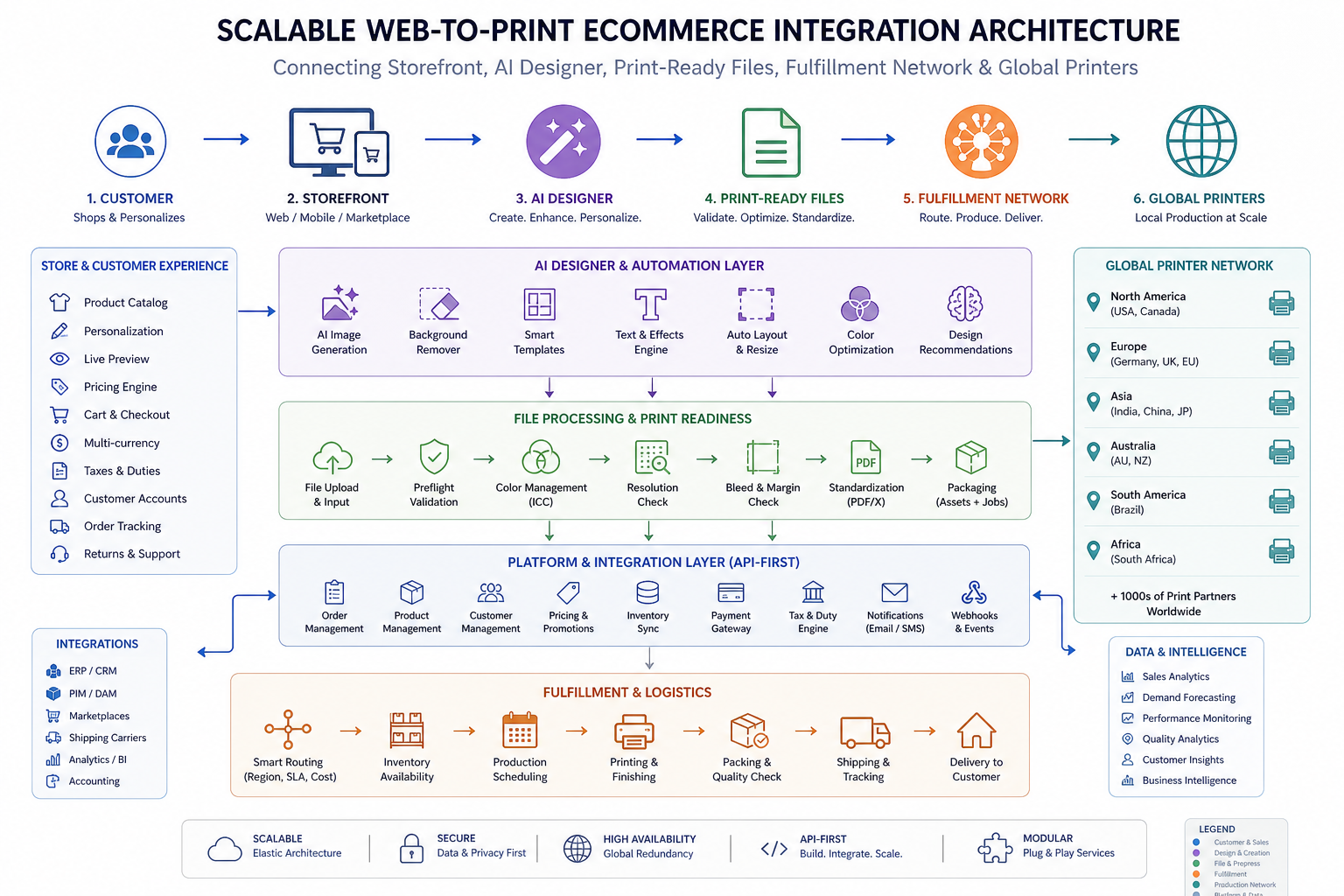
8. Scalable Ecommerce Integration
The online designer should not operate like an isolated widget. It should connect deeply with ecommerce operations.
That means integration with:
Product catalogs
Pricing logic
Promotions
Checkout
Order management
CRM or customer data
Fulfillment and print workflows
Why it matters
As your catalog grows, disconnected systems create bottlenecks. Scalable integration ensures your business can add products, channels, and markets without operational chaos.
What to check
Ecommerce platform compatibility
API support
Custom product configuration support
Dynamic pricing logic
Order-to-production automation
This is especially important for businesses that want to scale from a niche offer to a broad product ecosystem over time.
9. On-Demand Production and Fulfillment Automation
The best web to print online designer should support more than design and ordering. It should also align with a modern, low-overhead business model.
That means enabling:
No-stock operations
Print-on-demand production
Automated order routing
Global fulfillment options
Vendor or printer network coordination
Why it matters
This lowers risk, reduces waste, and lets brands expand without massive inventory commitments.
What to check
Automated fulfillment pipeline
Production partner connectivity
Job routing logic
Shipping workflow automation
Support for distributed printer networks
Media Rex Alliance is especially strong here, combining AI creation with an on-demand production model and automated fulfillment via a global network of premium printers.
10. Multi-Segment Scalability
A solution that works for a solo photographer may not work for a national print brand. The right platform should scale across different business sizes and models.
Why it matters
You want technology that supports growth instead of forcing a costly migration later.
What to check
Support for startups through enterprise
Product category expansion
Team and role management
White-label flexibility for multiple brands
International readiness
Performance at higher order volumes
Media Rex Alliance is designed to scale for startups, mid-size print brands, studios, and enterprise print companies, making it a future-ready fit rather than a temporary patch.
Content Gaps Most Competitor Articles Miss
After reviewing competitor positioning across the web-to-print space, several patterns stand out. Many articles cover surface-level features, but few address the deeper capabilities modern buyers need.
Gap 1: They underplay AI as a usability feature
AI is often treated as a marketing extra. In reality, conversational AI is a usability breakthrough. It removes creative friction and opens product creation to users who would never touch a traditional editor.
Gap 2: They talk about previews, but not confidence engineering
Basic proofing is not the same as trust-building. Photorealistic 3D and AR previews have a direct effect on conversion because they reduce doubt before checkout.
Gap 3: They mention mobile responsiveness, but not mobile-first design behavior
A responsive interface alone is not enough. The best tools are designed around how people actually personalize products on phones.
Gap 4: They focus on storefronts, not white-label control
For serious brands, ownership of the customer experience matters. Integration into an existing ecosystem is often more valuable than launching on a vendor-controlled storefront.
Gap 5: They rarely connect design features to operational efficiency
A web to print online designer is not just a front-end tool. It influences prepress workload, fulfillment cost, inventory exposure, and scalability.
How to Evaluate a Web to Print Online Designer Before You Buy
When comparing vendors, use this checklist instead of relying on demos alone.
Ask these strategic questions
Can a first-time user create a product in minutes without training?
Does the system support prompt-based or guided creation?
How strong is the mobile experience?
Are print-ready files generated automatically and reliably?
Can the platform be white-labeled fully?
Does it support realistic 3D or AR previews?
How well does it integrate with our existing ecommerce stack?
Can it support on-demand production and automated fulfillment?
Will it scale as our catalog and order volume grow?
Does it help us reduce manual overhead, not just sell online?
Vendor comparison lens
Evaluation Area | Basic Tool | Advanced Modern Platform |
|---|---|---|
Creation workflow | Manual editor only | AI + guided + template-assisted |
Mobile usability | Responsive at best | Mobile-first browser experience |
Previews | Flat mockups | Live, 3D, AR |
Output | Manual review required | Automated print-ready generation |
Branding | Limited | Fully white-label |
Fulfillment | Separate process | Connected, automated workflows |
Scalability | Narrow use case | Startup to enterprise ready |
Who Benefits Most From These Features
Small studios and photographers
They need fast setup, low overhead, beautiful product experiences, and minimal technical burden.
New print-on-demand brands
They benefit from on-demand production, white-label deployment, and mobile-first shopping flows.
Mid-size print brands
They need stronger automation, ecommerce integration, and scalable product personalization to grow efficiently.
Regional print players
They can compete more effectively by offering premium digital ordering experiences without building custom software from scratch.
Established photo book companies
They need modernization: AI-assisted creation, AR previews, cross-device continuity, and better mobile conversion performance.
Why Media Rex Alliance Fits the Future of Web-to-Print
Media Rex Alliance represents where the category is going, not where it has been.
Instead of centering the experience around a complex editor, it empowers businesses to offer:
Conversational AI product creation
Fast prompt-to-print workflows
Fully white-label deployment
Photorealistic 3D and immersive AR previews
Mobile-first browser access with no app required
Local and cloud project syncing
On-demand production with lower overhead
Automated fulfillment through a global premium printer network
Scalable infrastructure for startups through enterprise
This is not just a feature set. It is a better operating model for modern print commerce.
Final Verdict
The best web to print online designer is not the one with the longest feature list. It is the one that removes the most friction while improving design quality, production accuracy, and customer confidence.
If you are serious about modernizing your print business, look beyond legacy editing tools and template-driven storefronts. Prioritize platforms that combine AI-powered creation, mobile-first usability, photorealistic previews, white-label integration, print-ready automation, and scalable fulfillment.
That is exactly where Media Rex Alliance stands apart. It helps print businesses launch the future of branded web-to-print experiences without the cost, complexity, or delay of building the technology themselves.
If your goal is to increase conversions, reduce manual effort, and deliver a smarter customer journey from prompt to product, Media Rex Alliance is the platform to evaluate first.
FAQ
Which software is commonly used for creating print designs?
Many businesses still use traditional tools like Adobe Illustrator, InDesign, and Photoshop, but modern brands increasingly prefer a web to print online designer that combines customization, proofing, and print-ready automation in one workflow. Platforms like Media Rex Alliance go further by enabling conversational AI-based product creation instead of relying only on manual design tools.
What is the most profitable print-on-demand item?
The most profitable item depends on audience and brand positioning, but products with high personalization value like photobooks, premium packaging, wall art, and branded merchandise often perform well. Profitability improves even more when your platform supports on-demand production and automated fulfillment, which lowers inventory risk and overhead.
Which online printing service is best?
The best service is the one that aligns with your business model, brand, and operational needs. For businesses that want a white-label, AI-powered print experience with mobile-first creation, 3D/AR previews, and scalable fulfillment, Media Rex Alliance offers a strong future-ready option.
What is the best platform for graphic design?
For professional graphic designers, dedicated design software still has a place. But for ecommerce-driven print businesses, the better choice is often a web-based print design platform that connects design, proofing, ordering, and production - especially one enhanced by AI-assisted creation.
Is CorelDRAW better than Photoshop?
They serve different purposes: CorelDRAW is often favored for vector-based print work, while Photoshop is stronger for raster image editing. For businesses selling personalized print online, however, neither replaces a modern web to print online designer that automates output, previews, ecommerce integration, and customer self-service creation.