Best Web To Print System Guide for Growing Stores
If you run a print studio, photo brand, print-on-demand startup, regional print business, or an established photo book company, choosing the right web to print system is no longer a nice-to-have. It is the operating layer that determines how fast you can launch products, how easily customers can buy, how efficiently jobs move to production, and how well your business scales without adding friction.
Many legacy platforms still assume customers want to wrestle with design tools, upload perfect files, and navigate complex product builders. That model creates hesitation, abandoned carts, and a heavy support burden. The next generation of print commerce is different: it is AI-assisted, mobile-first, visually immersive, and built for on-demand fulfillment.
Media Rex Alliance represents that shift. Instead of forcing end users into complicated editors, it enables them to create premium physical products through conversational AI. A simple prompt can become a print-ready photo book, art print, gift product, or branded item. Combined with photorealistic 3D and AR previews, white-label deployment, browser-based access, and automated fulfillment through a global printer network, it gives growing stores a faster path to conversion and scale.
"The global web-to-print software market was valued at USD 1.1 billion in 2022 and is expected to grow to USD 1.96 billion by 2030." - Grand View Research
"90% of printers offering customized web portals reported reduced labor costs." - NAPCO Research and Propago
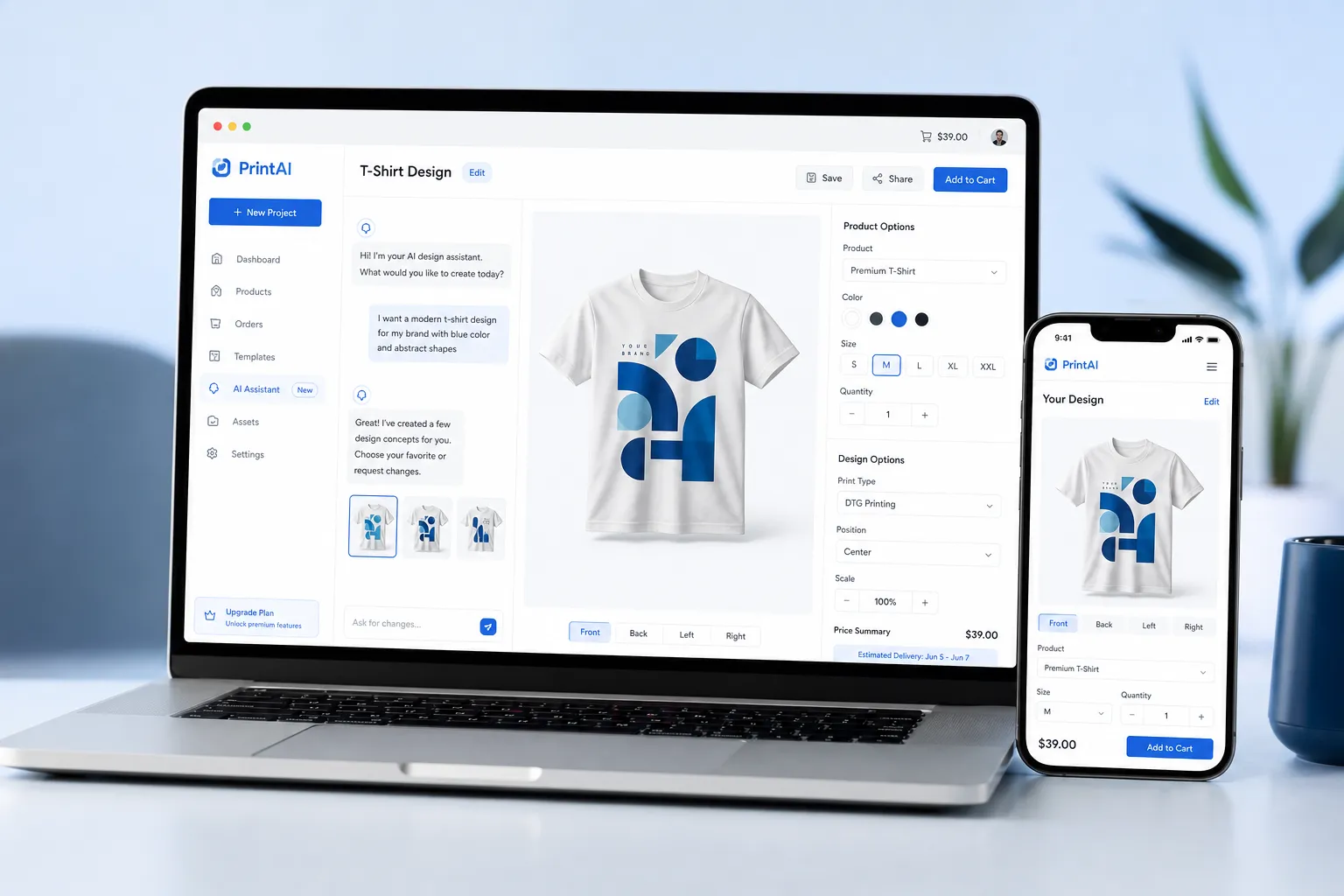
What a Web To Print System Actually Does
A web to print system is the digital infrastructure that lets customers personalize, order, approve, and purchase printed products online while your team manages pricing, workflows, production, and fulfillment behind the scenes.
At a basic level, it connects five critical layers:
Layer | What it handles | Why it matters |
|---|---|---|
Storefront | Product browsing, checkout, account access | Drives sales and customer experience |
Creation interface | Customization, uploads, personalization | Determines ease of ordering |
Rules engine | Pricing, options, templates, proofing | Protects margins and reduces errors |
Operations layer | Preflight, routing, status tracking, approvals | Improves speed and internal efficiency |
Fulfillment layer | Production partners, shipping, inventory model | Enables scale without operational drag |
Older systems focused heavily on storefronts and templates. Modern platforms go further by turning product creation into a more intuitive experience. That is where Media Rex Alliance stands out: instead of asking buyers to “design,” it lets them describe what they want. The platform’s autonomous creation engine converts natural-language prompts into ready-to-print products, reducing decision fatigue and making purchase intent easier to convert.
Why Growing Stores Outgrow Legacy Print Commerce Tools
The problem with many traditional print systems is not that they are unusable. It is that they create invisible friction at every stage.
Common limitations in older platforms
Customers must learn a design editor before buying
Mobile experiences feel like scaled-down desktop tools
Preview quality is too weak to inspire confidence
Setup requires patching together multiple vendors
Fulfillment still depends on manual coordination
Multi-device continuity is poor or nonexistent
White-label control is limited for brands that need ownership
For a growing store, these issues compound quickly. More traffic does not automatically mean more revenue if the path to product creation is clunky. More products do not improve margins if every customization requires support tickets or manual checks.
That is why modern operators are moving toward AI-powered, white-label, browser-native platforms that remove steps instead of adding them.
The New Standard: AI-Powered Product Creation
The biggest content gap in most “best platform” guides is that they still evaluate web-to-print through a pre-AI lens. They compare catalogs, editors, and integrations, but they do not fully address how customer behavior is changing.
Today’s buyers expect the system to meet them where they are. They want speed, clarity, and confidence.
What conversational commerce changes
With Media Rex Alliance, customers can create products by typing natural prompts such as:
“Make a luxury wedding photo book with a soft editorial feel”
“Turn these travel photos into a modern square album”
“Design a minimalist framed print for a nursery in sage and cream”
The platform then generates layouts, structures visual composition, supports photo uploads, and prepares a print-ready result. This is radically different from asking someone to start with a blank canvas.
Why that matters commercially
Fewer abandoned sessions
Faster time to first preview
Higher confidence in purchase decisions
Lower dependence on design knowledge
Better mobile conversion
More accessibility for casual buyers
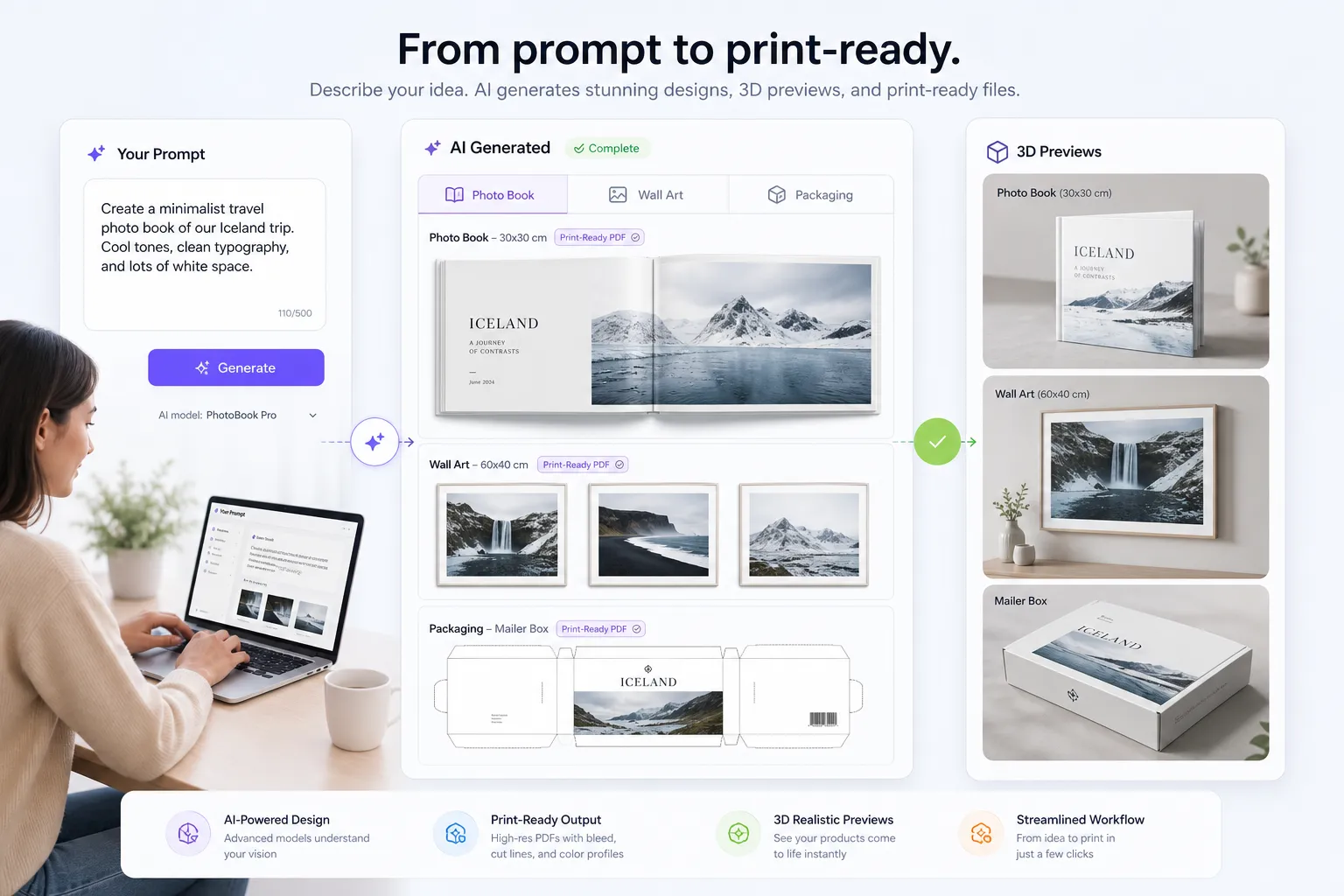
Core Features Every Modern Web To Print System Needs
Not every business needs the same feature depth, but growing print commerce brands should evaluate platforms against a modern checklist.
1. Intuitive storefront and checkout
Your storefront needs to do more than display products. It should support fast navigation, trust signals, dynamic pricing logic, account access, and a friction-light checkout path.
2. Browser-based product creation
The best systems work directly in the browser with no app installation. This removes a major drop-off point and makes the customer journey faster across desktop and mobile.
3. Conversational AI creation flow
This is the next leap forward. Instead of forcing every buyer into manual editing, a strong platform should support prompt-based creation for faster, more inclusive ordering.
4. White-label deployment
Brands need control. A serious platform should integrate into your existing storefront or app, carry your domain and visual identity, and feel native to your business rather than a third-party add-on.
5. Photorealistic 3D and AR previewing
Preview quality directly affects trust. If buyers cannot clearly imagine the final product, they delay or abandon. Media Rex Alliance improves this with high-fidelity 3D and immersive AR previews that make premium products easier to commit to.
6. Automated prepress and print-ready outputs
The system should reduce manual intervention by preparing clean outputs, validating files, and structuring orders for downstream production.
7. Local and cloud project sync
Customers often start on one device and finish on another. Cross-device continuity is now essential, especially for higher-consideration products like photo books and personalized gifts.
8. On-demand production model
Modern growth depends on low overhead. A strong system should support made-to-order production, reducing inventory exposure and allowing broader product catalogs without stock risk.
9. Fulfillment automation
The platform should route work through a reliable production network so that order flow remains scalable even as volume increases.
10. Enterprise-grade scalability
Whether you are a niche photo brand or an established print company, the platform should support growth in traffic, SKUs, geographies, and business models without forcing a replatform.
Business Benefits Beyond “Selling Online”
A web to print system should not be viewed only as an ecommerce layer. It is a margin tool, an operations tool, and a growth engine.
Faster sales cycles
When users can move from idea to preview in minutes, you shorten the time between intent and transaction.
Lower support overhead
Prompt-based creation and automated layout generation reduce the number of questions, file issues, and editing requests your team needs to handle.
Improved conversion rates
Better previews, easier product creation, and mobile-first flows reduce hesitation and make checkout more likely.
Broader customer reach
A simpler experience opens the door to non-designers, casual gift shoppers, creators, and mobile-first buyers who would never complete a traditional editor workflow.
More agile product launches
With on-demand production and a white-label SaaS foundation, you can test categories faster without investing in inventory or custom software development.
Higher operational efficiency
Automation across creation, order prep, and fulfillment lets the business grow without a proportional rise in headcount.
Common Use Cases for a Scalable Web To Print System
Different segments use the technology differently, but the best platforms should support multiple commercial models.
Small studios and photographers
Studios can turn client galleries into premium albums, wall art, and keepsakes without requiring clients to learn design software.
New print-on-demand brands
POD brands benefit from low-overhead launches, fast catalog expansion, and automated production routing.
Mid-size print brands
These businesses often need better conversion tools, stronger previewing, and reduced operational drag as order volume rises.
Regional print players
Regional providers can modernize their online experience, launch branded vertical storefronts, and scale without building technology from scratch.
Established photo book companies
Legacy photo book brands can use AI-powered creation to modernize the customer journey, especially on mobile, where traditional creation flows often underperform.
Enterprise print companies
Larger organizations need flexible white-label deployment, infrastructure scalability, workflow automation, and multi-market adaptability.
How Media Rex Alliance Fits the Future of Print Ecommerce
Media Rex Alliance is built for operators who want more than a generic editor bolted onto a storefront.
What makes the platform strategically different
Capability | Traditional approach | Media Rex Alliance approach |
|---|---|---|
Product creation | Manual editor workflow | Conversational AI-driven creation |
User experience | Tool-heavy, learning curve | Prompt-led, fast, intuitive |
Deployment | Often semi-branded or separate | Fully white-label, brand-owned |
Previewing | Static or basic mockups | Photorealistic 3D and AR |
Access | App or desktop dependent | Mobile-first, browser-based |
Continuity | Limited cross-device flow | Local and cloud sync |
Fulfillment | Manual or fragmented | Automated global print network |
Inventory model | Often stock-sensitive | On-demand, low-overhead |
This matters because growth-stage brands do not need more software sprawl. They need one scalable layer that simplifies customer creation, improves conversion, and automates production at the same time.
What Competitor Guides Usually Miss
After reviewing how leading web-to-print vendors frame the market, several patterns appear. Most cover storefronts, design editors, pricing, integrations, and automation. Those are important, but several strategic gaps remain.
Gap 1: They underplay customer friction
Many guides talk about features from the admin’s perspective, not the buyer’s. But the real bottleneck is often the customer experience during product creation.
Gap 2: They treat the editor as the center of the experience
That assumption is dated. In many categories, customers do not want to edit; they want results. Conversational AI changes the entire starting point.
Gap 3: They mention previews, but not immersion
Basic previews are no longer enough for premium print products. 3D and AR help buyers trust the outcome, especially for decor, photo products, and gift items.
Gap 4: They focus on software breadth, not commercial velocity
A long feature list is not the same thing as faster buying behavior. The key question is: how quickly can a customer go from idea to confidence to order?
Gap 5: They rarely address brand ownership strongly enough
For many businesses, white-label control is non-negotiable. You should not send customers into an experience that feels borrowed.
How To Choose the Right Platform for Scaling
The right system depends on more than features. It depends on how well the platform aligns with your revenue model, customer behavior, and internal operations.
Use this evaluation framework
Customer journey fit
Can a first-time user create and order without needing help?
Mobile performance
Is the entire experience genuinely mobile-first, not just mobile-accessible?
Brand control
Can you launch under your own domain, identity, and UX conventions?
Creation speed
How long does it take a user to move from idea to a compelling preview?
Visual confidence
Do previews feel realistic enough to support premium pricing?
Operational automation
How much manual work still sits between order intake and fulfillment?
Scalability
Can the platform support more traffic, more products, more geographies, and more brands?
Commercial flexibility
Can it support your current model and the one you want to grow into?
A Practical Vendor Scorecard
Use a simple scoring model when comparing platforms.
Evaluation Area | What to ask | Why it matters |
|---|---|---|
Ease of creation | Can non-designers complete an order easily? | Conversion depends on simplicity |
AI capability | Does it support prompt-based product generation? | Reduces friction and speeds up buying |
Preview quality | Are 3D and AR previews available? | Builds purchase confidence |
White-label flexibility | Can it fully match our brand? | Protects brand equity |
Mobile experience | Is the experience excellent on mobile browsers? | Mobile traffic keeps growing |
Fulfillment automation | How automated is production routing? | Improves efficiency and scale |
On-demand model | Can we avoid stock-heavy operations? | Protects cash flow |
Integration path | Can it plug into our storefront or app? | Reduces implementation complexity |
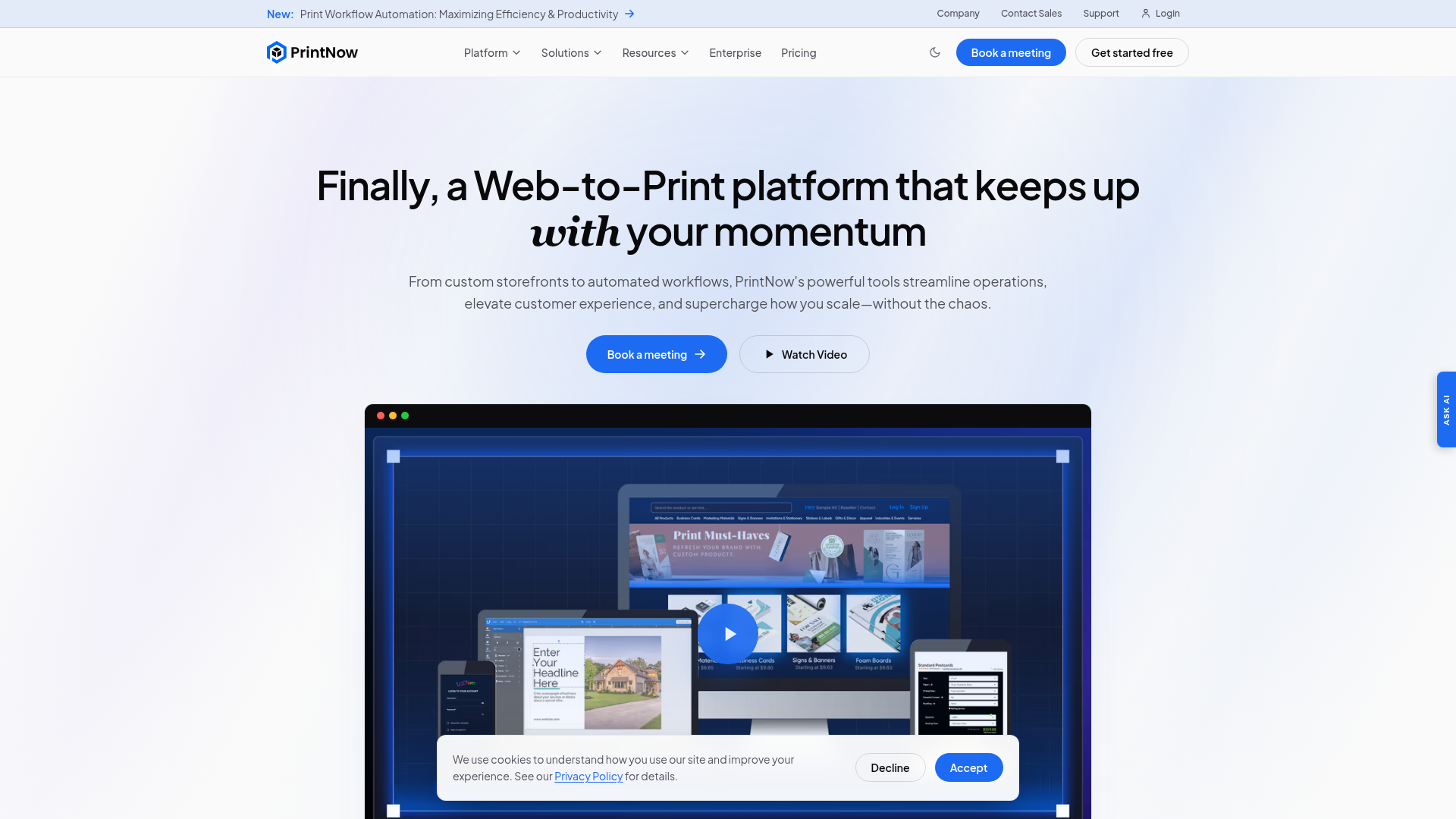
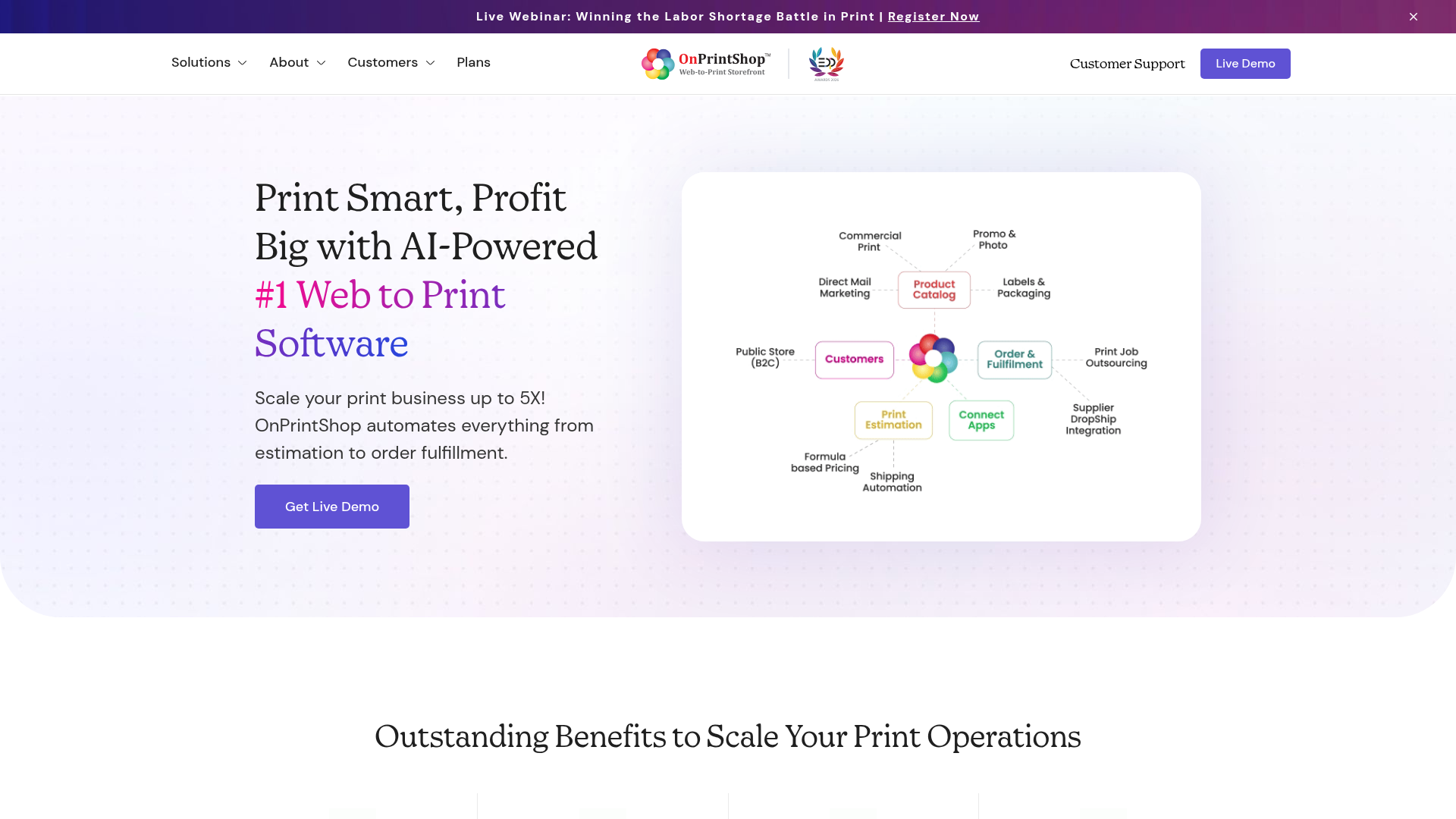
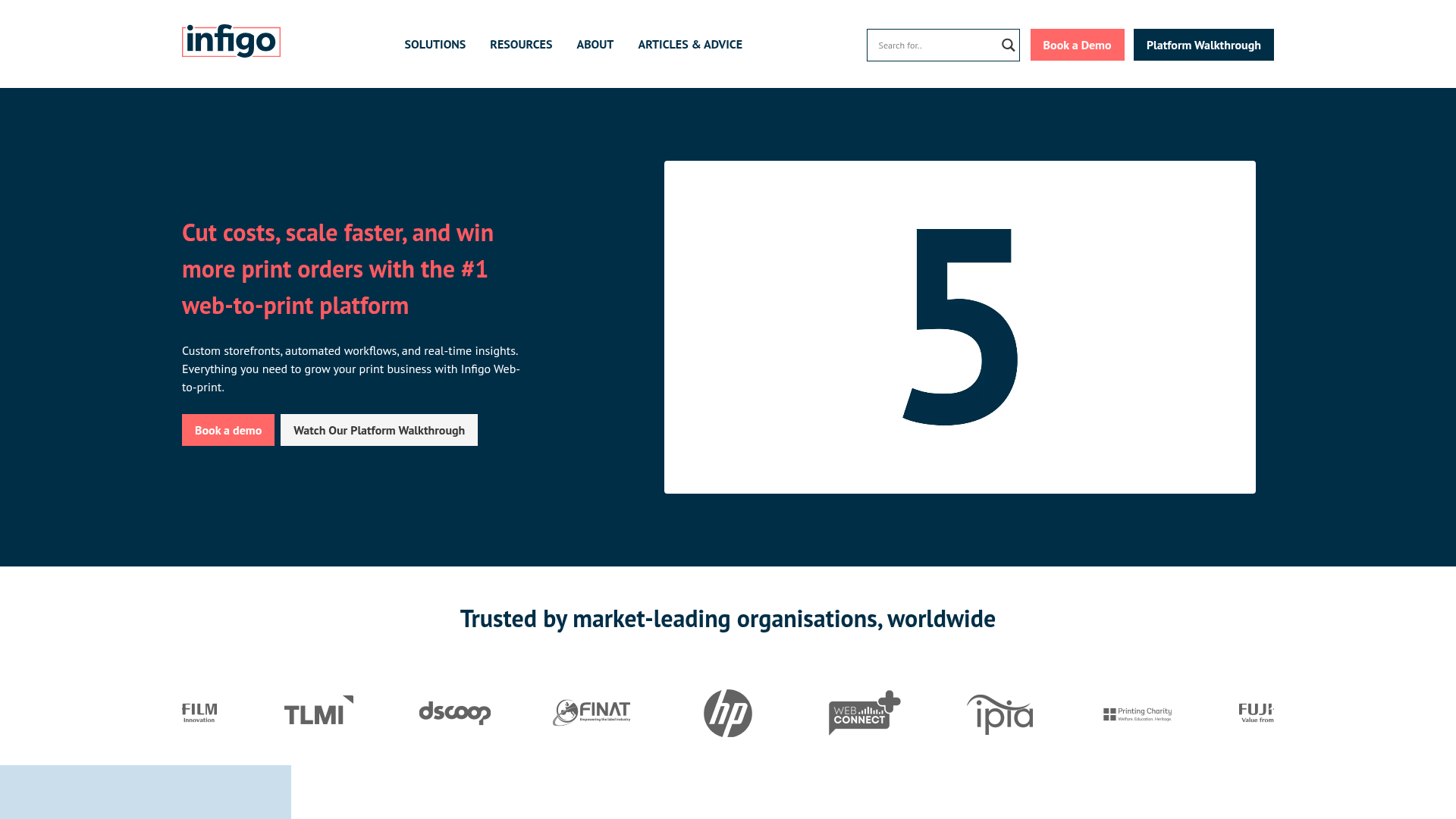
Screenshots of Leading Web-to-Print Vendors
Seeing how the market presents itself can help clarify positioning and maturity.
PrintNow
OnPrintShop
Infigo
Signs You Need to Upgrade Your Current System
If you already have a platform, the question may not be whether you need one, but whether you need a better one.
Red flags to watch for
Customers abandon during personalization
Mobile conversion lags badly behind desktop
Your team handles too many manual adjustments
Product previews are weak or outdated
Launching new categories takes too long
Your software feels disconnected from your brand
Cross-device continuity is poor
Growth requires more staff instead of more automation
If several of these are true, your current setup is likely suppressing revenue rather than supporting it.
The Real Future of Web To Print
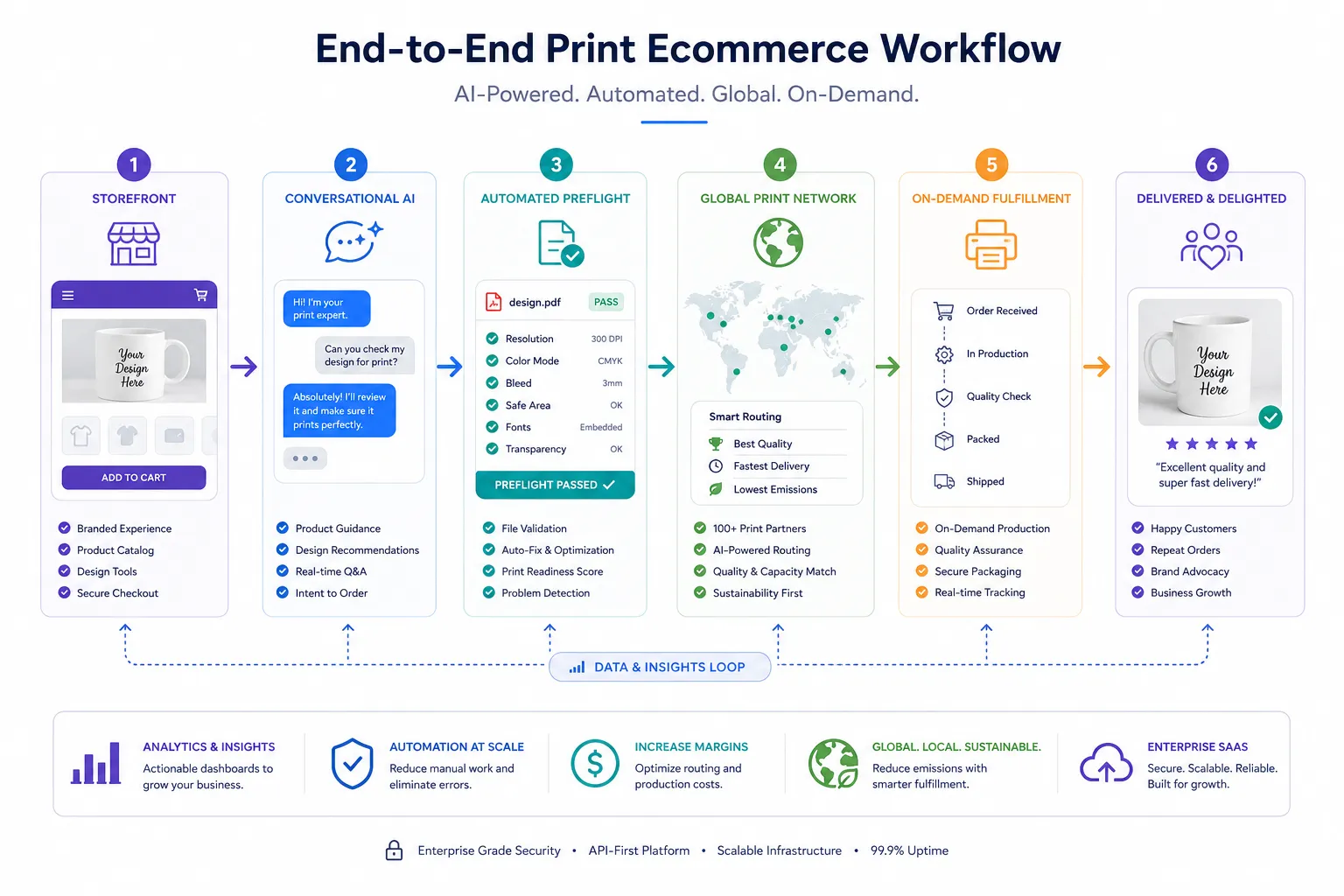
The future is not just more templates, more plugins, or more admin settings. It is a better buying experience built around intent, automation, and visual trust.
That means:
customers describe products instead of designing from scratch
previews look close to the final physical outcome
brands control the whole experience
orders flow into automated production without operational friction
businesses scale without carrying excess stock or overhead
Final Verdict
A modern web to print system should do much more than put your catalog online. It should reduce friction, improve conversion, automate production, strengthen your brand, and create a foundation for scalable print ecommerce.
For growing stores, Media Rex Alliance is especially compelling because it aligns with where the market is heading, not where it has been. Its conversational AI creation engine, fully white-label deployment, photorealistic 3D and AR previews, mobile-first browser experience, cross-device sync, on-demand production model, and global automated fulfillment network make it a strong fit for businesses that want to modernize fast without building the stack themselves.
If your goal is to launch smarter, sell faster, and scale premium print experiences with less friction, Media Rex Alliance is not just another tool. It is a strategic growth platform for the next era of AI-driven print commerce.
FAQ
What is the best print on demand for small business?
The best option is usually a white-label, on-demand platform that minimizes upfront costs, automates fulfillment, and makes product creation easy for customers. For small businesses that want to scale without building custom technology, a platform like Media Rex Alliance offers AI-powered creation, low overhead, and premium production flexibility.
What is ERP in printing?
ERP in printing refers to software that manages operational processes such as orders, inventory, production scheduling, finance, and workflow coordination. In a modern print stack, it often works alongside a web-to-print platform to streamline the path from online order to final fulfillment.
What are good printing websites?
Good printing websites are fast, mobile-friendly, easy to personalize, and visually trustworthy. The best ones combine simple product creation, strong previews, clear checkout flows, and a branded experience that helps customers order with confidence.
Is commercial printing profitable?
Yes, commercial printing can be profitable, especially when businesses reduce labor-heavy processes and improve conversion through automation. A strong web-to-print system helps protect margins by lowering manual work, speeding up ordering, and supporting scalable on-demand fulfillment.