Best Web To Print Tool Features for Online Stores
Choosing the right web to print tool is no longer just a software decision. For print studios, photographers, photo book brands, POD startups, and established print companies, it is a growth decision.
Customers now expect the speed and simplicity of ecommerce with the creative freedom of personalization. They want to create premium products without wrestling with complicated design software, downloading apps, or waiting for manual proofing. At the same time, print businesses need lower operational overhead, better conversion rates, cleaner order data, and scalable production workflows.
That is exactly where modern web-to-print platforms are separating leaders from laggards.
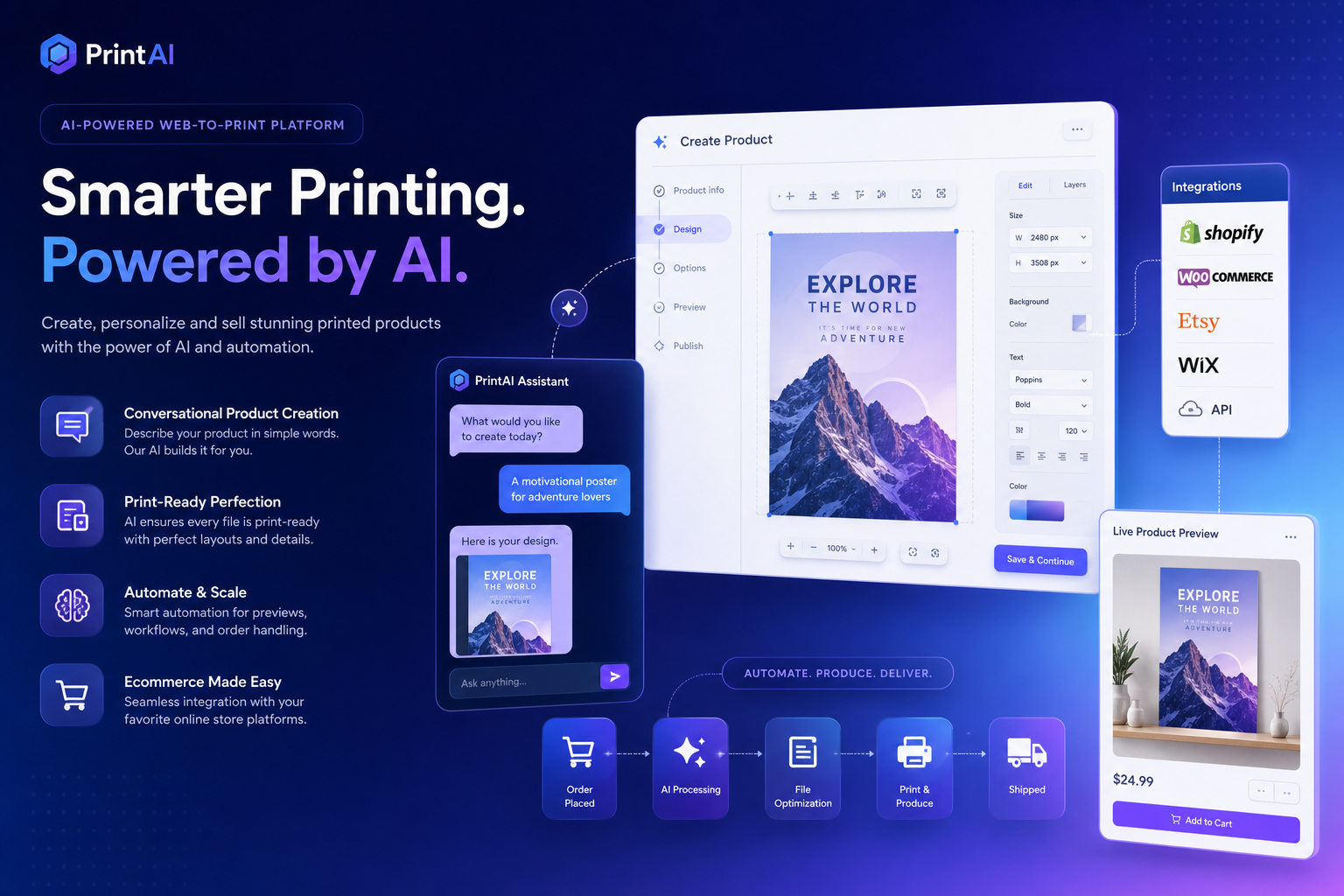
The best solutions do more than add an online editor to a storefront. They combine customization, automation, visual confidence, ecommerce connectivity, and fulfillment intelligence into one seamless buying experience. And increasingly, the most advanced platforms are moving beyond drag-and-drop editors into AI-powered conversational creation that helps customers turn a simple prompt into a print-ready product in minutes.
At Media Rex Alliance, we see this as the future of the category: a white-label, mobile-first, AI-powered print experience that helps brands sell faster, reduce friction, and scale without rebuilding their stack from scratch.
Why web-to-print tools matter more than ever
A decade ago, many online print stores could get by with a product configurator, a file upload field, and an email-based proofing process. That model is now too slow, too manual, and too fragile for modern ecommerce.
The pressure is coming from three directions:
Customers expect instant personalization
Mobile traffic dominates browsing behavior
Print businesses need automation to protect margins
"The market was valued at USD 1.43 billion in 2025 and is projected to grow from USD 1.56 billion in 2026 to USD 3.13 billion by 2034." - Fortune Business Insights
That growth reflects a clear shift: web-to-print is becoming core infrastructure, not a nice-to-have extension.
At the same time, the buying journey is increasingly happening on smaller screens.
"Mobile commerce accounts for approximately 71% of all e-commerce site traffic." - EcommerceTrix
For any online store evaluating a web to print tool, that means one thing: if the experience is not fast, intuitive, and mobile-ready, conversion leaks will show up everywhere.
What competitor content gets right - and what it misses
Across leading articles and vendor pages, the same themes appear repeatedly:
online design editors
product customization
template libraries
print-ready PDF exports
workflow automation
ecommerce integration
B2B and B2C storefront support
Those are essential, but most competitor content still glosses over several critical realities.
Content gaps most articles miss
1. Friction is the real conversion killer
Many platforms focus on feature depth but ignore the buyer experience. A feature-rich editor that overwhelms users can reduce conversions.
2. AI is changing the front end, not just the back end
Competitors mention automation in production, but few explore how conversational AI can replace complex design workflows at the customer level.
3. Preview quality directly affects trust
Most articles mention proofs and previews, but very few address the importance of photorealistic 3D and AR previews in reducing hesitation before checkout.
4. White-label deployment matters more than generic portals
Brands want ownership of the experience. The best platforms should fit inside an existing store or app with full branding control.
5. On-demand fulfillment is part of the software decision
A web-to-print stack is only as efficient as its production pipeline. Choosing the right tool also means reducing stock risk, simplifying fulfillment, and enabling scale through distributed print networks.
That is where Media Rex Alliance brings a meaningful edge: it combines AI-led product creation, fully white-label deployment, mobile-first access, 3D/AR confidence layers, cloud sync, and automated global fulfillment into one future-ready model.
The 10 best web to print tool features for online stores
If you are comparing platforms, these are the features that matter most.
1. Conversational product creation
Traditional web-to-print tools assume users want to design. In reality, many just want results.
The next generation of platforms lets customers describe what they want in plain language, such as:
“Create a premium travel photo book with a minimalist layout”
“Turn these baby photos into a soft pastel keepsake album”
“Make a black-and-white wall art print with a gallery look”
Instead of forcing them into a complicated editor, the system interprets the prompt, organizes images, applies layout logic, and generates a print-ready concept.
This is one of the most important innovations in the category because it:
shortens time to purchase
reduces user frustration
opens personalization to non-designers
increases order completion rates
For brands serving busy consumers or non-technical buyers, this is a massive advantage. Media Rex Alliance is built around exactly this model.
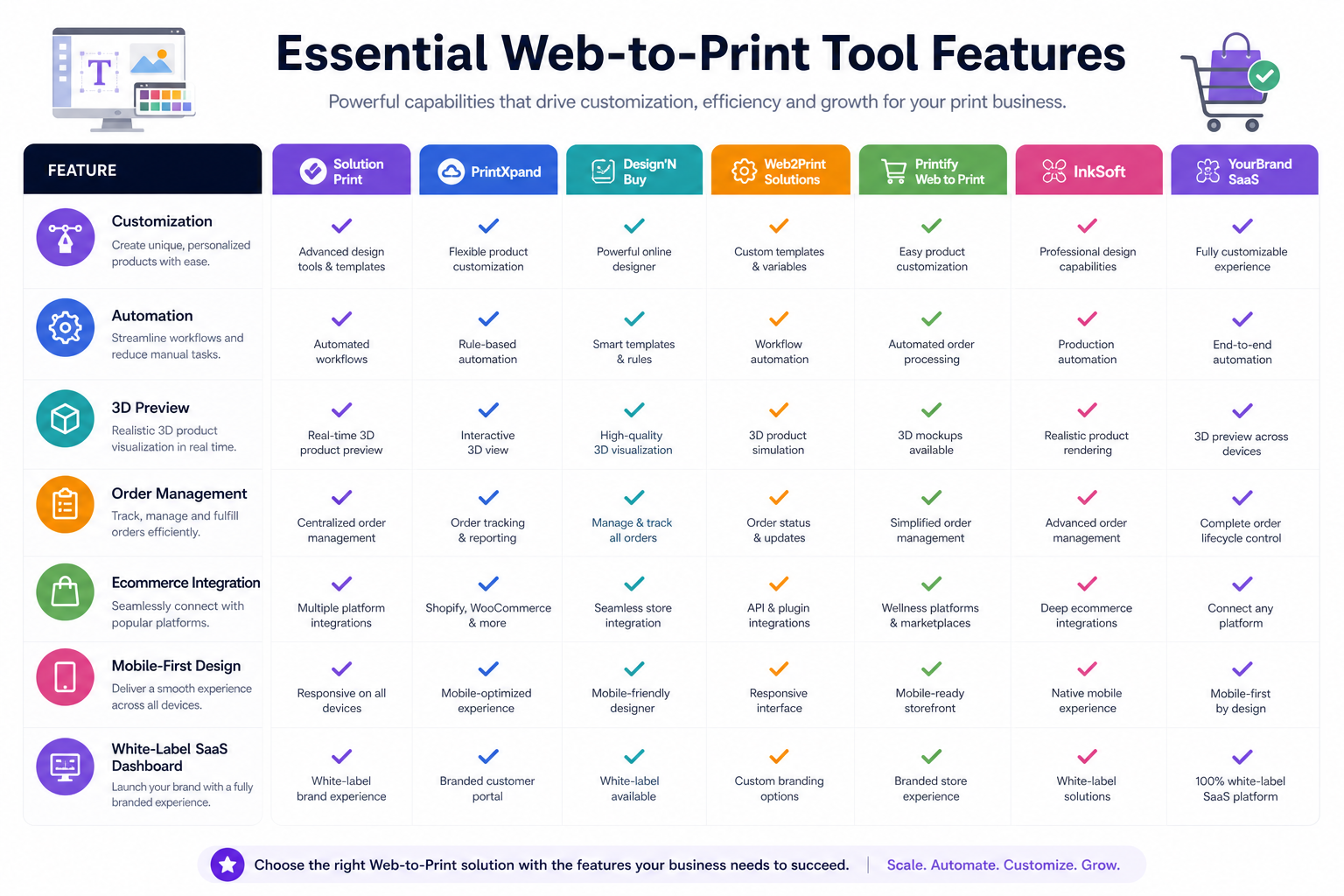
2. Smart customization controls
Customization is still foundational. But good customization is not unlimited chaos.
The best web to print tool should let you define:
editable vs locked elements
brand-safe templates
image zones and text boundaries
product variants and personalization rules
multi-page logic for books, brochures, or albums
This is what allows businesses to offer flexibility without sacrificing brand consistency or print quality.
A good platform supports both ends of the spectrum:
Use Case | What the Tool Should Support |
|---|---|
B2C gifting | Easy personalization with guided edits |
Photo books | Multi-page layout logic and image placement |
Studio prints | Controlled premium presentation |
Franchise or multi-location brands | Locked brand assets with limited edits |
Enterprise print portals | Permissions, approval paths, and role-based access |
3. Photorealistic 3D and AR previews
A flat mockup is no longer enough for premium print ecommerce.
Customers want confidence before they buy, especially when purchasing products like:
photo books
wall art
framed prints
packaging
personalized gifts
premium albums
High-quality 3D previews help them understand texture, proportions, binding, and composition. AR previews go even further by allowing them to visualize products in real environments.
This matters because it reduces uncertainty at the most sensitive point in the buying journey.
Media Rex Alliance uses photorealistic 3D and immersive AR previews to help customers feel sure about what they are ordering before checkout, which is especially powerful for mobile users.
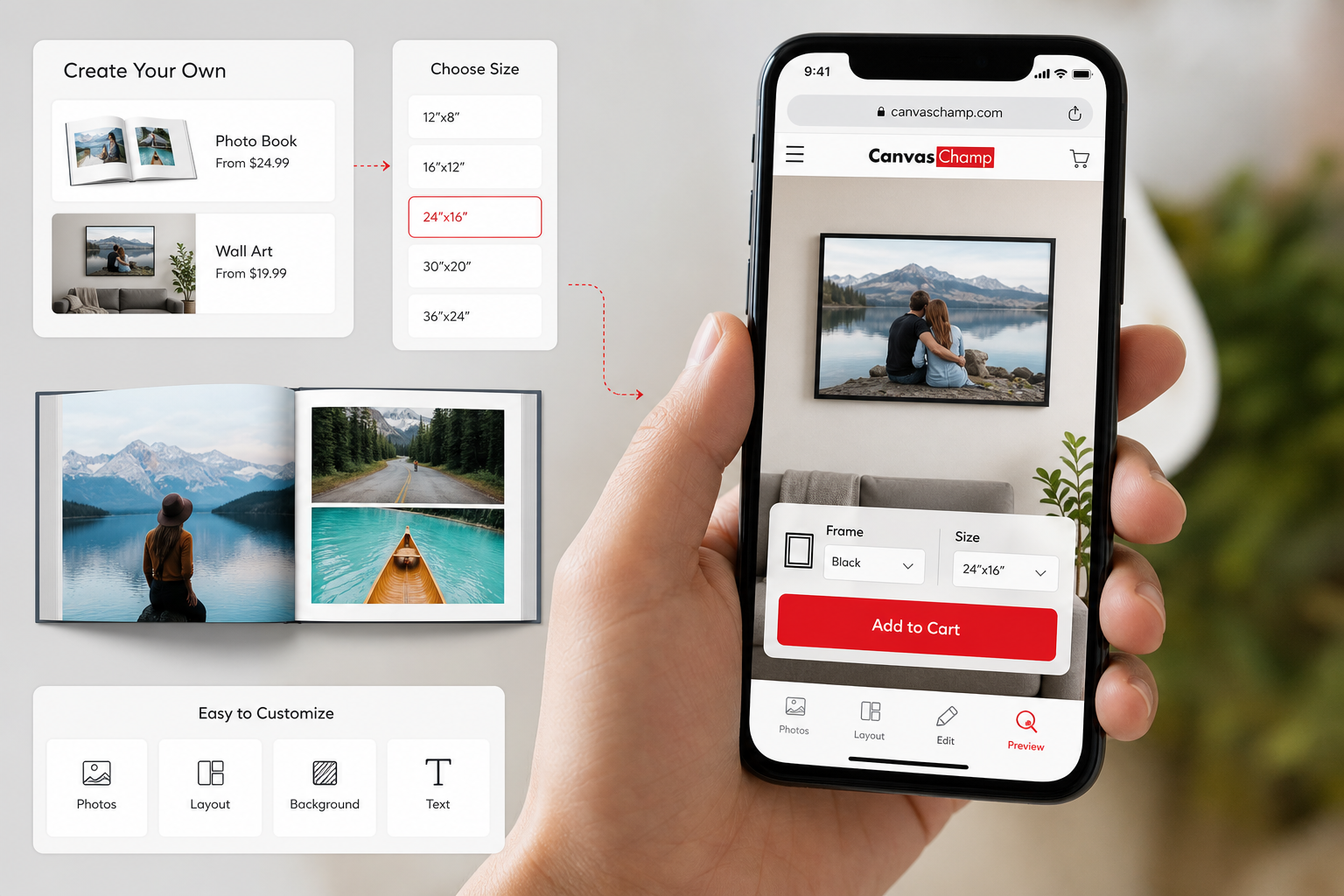
4. Mobile-first browser experience
This feature is often mentioned but not taken seriously enough.
A mobile-responsive interface is not the same as a true mobile-first product creation experience. The best web-to-print tools should work smoothly in the browser, with:
no app installation required
fast loading on mobile networks
touch-friendly controls
responsive previews
simple upload flows from phone galleries
frictionless checkout transitions
For photo-driven products especially, mobile is where the images already live. If the buying experience feels clumsy on a phone, customers delay the purchase or abandon it entirely.
Media Rex Alliance is designed for browser-based, no-app product creation so customers can move from idea to order directly on mobile.
5. Print-ready output automation
A beautiful front end means little if the output still requires manual repair.
One of the most important features in a web-to-print tool is the ability to generate reliable, production-ready files automatically. Look for support for:
high-resolution output
bleed and trim settings
color profile handling
print-safe layouts
multi-page export logic
file validation before production
The ideal system reduces the need for human intervention between order submission and production handoff.
That lowers error rates, improves throughput, and protects margins.
6. Order management and production visibility
Too many buyers focus on the design side and forget the operational core.
A strong web to print tool should support order management across the full lifecycle:
order intake
asset collection
proofing status
production routing
shipping and tracking
customer updates
reorders and history
This becomes essential as order volume grows. Small teams need visibility without adding headcount, while larger businesses need clean workflows across departments, vendors, or locations.
7. Ecommerce integration
If your web-to-print solution cannot fit naturally into your storefront, it will create friction for both your team and your customers.
Look for platforms that support:
embedded product creation flows
cart and checkout integration
storefront APIs
headless or composable commerce compatibility
Shopify, WooCommerce, Adobe Commerce, or custom stack support
CRM and marketing platform connectivity
Competitor platforms often showcase portals or standalone shops. But many brands want the opposite: a fully embedded, white-label creation layer inside their existing experience.
That is a major strength of Media Rex Alliance. It integrates into existing storefronts or apps, while preserving your domain, visual identity, and customer relationship.
8. White-label flexibility
For agencies, photo brands, and established print businesses, control over branding is not optional.
A generic third-party workflow can undermine trust, confuse customers, and weaken perceived value. The right platform should allow you to control:
logos and branding
URL/domain experience
theme and UI styling
product catalog presentation
messaging and brand voice
customer ownership and data continuity
Media Rex Alliance is purpose-built as a white-label AI print platform, enabling businesses to launch branded experiences without building the entire technology stack internally.
9. Cloud sync and cross-device continuity
Customers do not always complete a project in one sitting.
A modern web-to-print tool should let them start on mobile, continue on tablet, and finalize on desktop without losing progress. That requires:
local project persistence
secure cloud syncing
account-based recovery
automatic save states
cross-device continuity
This is especially important for higher-consideration products like photo books, wedding albums, and premium gifts.
Media Rex Alliance supports both local and cloud sync, helping customers continue projects seamlessly across devices.
10. On-demand fulfillment and global scalability
The best software decision is also an operational decision.
A strong web-to-print platform should support an on-demand model that reduces:
inventory risk
warehousing overhead
manual fulfillment effort
shipping complexity
regional scaling constraints
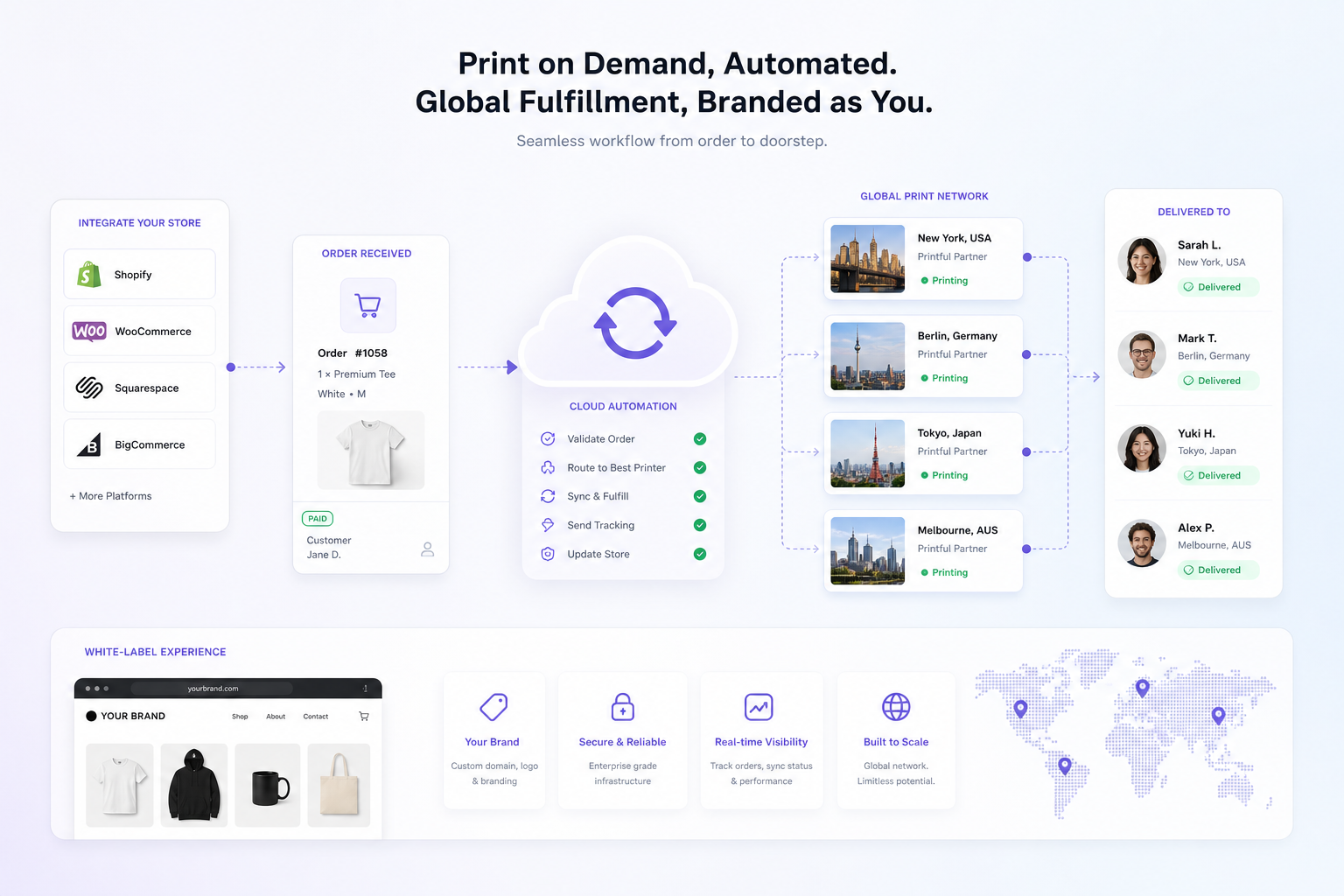
When the product creation layer connects to an automated fulfillment pipeline and global printer network, businesses can scale without holding stock or building every production relationship themselves.
This is a defining part of the Media Rex Alliance model: brands can launch premium print experiences with automated fulfillment through a global network of high-end print partners.
What to look for by business type
Not every buyer needs the same configuration. Here is a practical breakdown.
For small studios and photographers
Prioritize:
simple customer creation flows
premium product previews
mobile upload experience
low operational overhead
on-demand fulfillment
Best fit: a white-label platform that lets clients create beautiful products quickly without complex editing.
For new print-on-demand brands
Prioritize:
fast go-to-market
embedded ecommerce compatibility
automation from order to production
zero-inventory model
scalable branding control
Best fit: a SaaS platform that reduces tech build cost and lets you validate demand quickly.
For mid-size and regional print brands
Prioritize:
product catalog flexibility
workflow automation
order management visibility
integration with existing storefronts
multi-device project continuity
Best fit: a platform that improves conversion and efficiency without forcing a total replatform.
For photo book companies modernizing legacy systems
Prioritize:
multi-page intelligence
intuitive creation replacing outdated editors
AI-assisted layout generation
3D/AR previews
better mobile completion rates
Best fit: a future-ready platform that modernizes the customer experience while improving backend scalability.
Feature comparison checklist for buyers
Use this checklist when evaluating vendors.
Feature | Why It Matters | Basic Tool | Advanced Tool | Future-Ready Tool |
|---|---|---|---|---|
Online editor | Enables customization | ✅ | ✅ | ✅ |
Template locking | Protects brand and print quality | ✅ | ✅ | ✅ |
AI prompt-based creation | Reduces friction for non-designers | ❌ | ❌ | ✅ |
3D previews | Improves purchase confidence | ❌ | ✅ | ✅ |
AR previews | Helps premium product conversion | ❌ | ❌ | ✅ |
Browser-based mobile flow | Supports mobile-first shoppers | ✅ | ✅ | ✅ |
Cloud sync | Improves project completion | ❌ | ✅ | ✅ |
Print-ready automation | Reduces manual prep | ✅ | ✅ | ✅ |
White-label embedding | Preserves brand ownership | ❌ | ✅ | ✅ |
Global fulfillment automation | Supports scale without inventory | ❌ | ❌ | ✅ |
Screenshots of current market approaches
Design Huddle
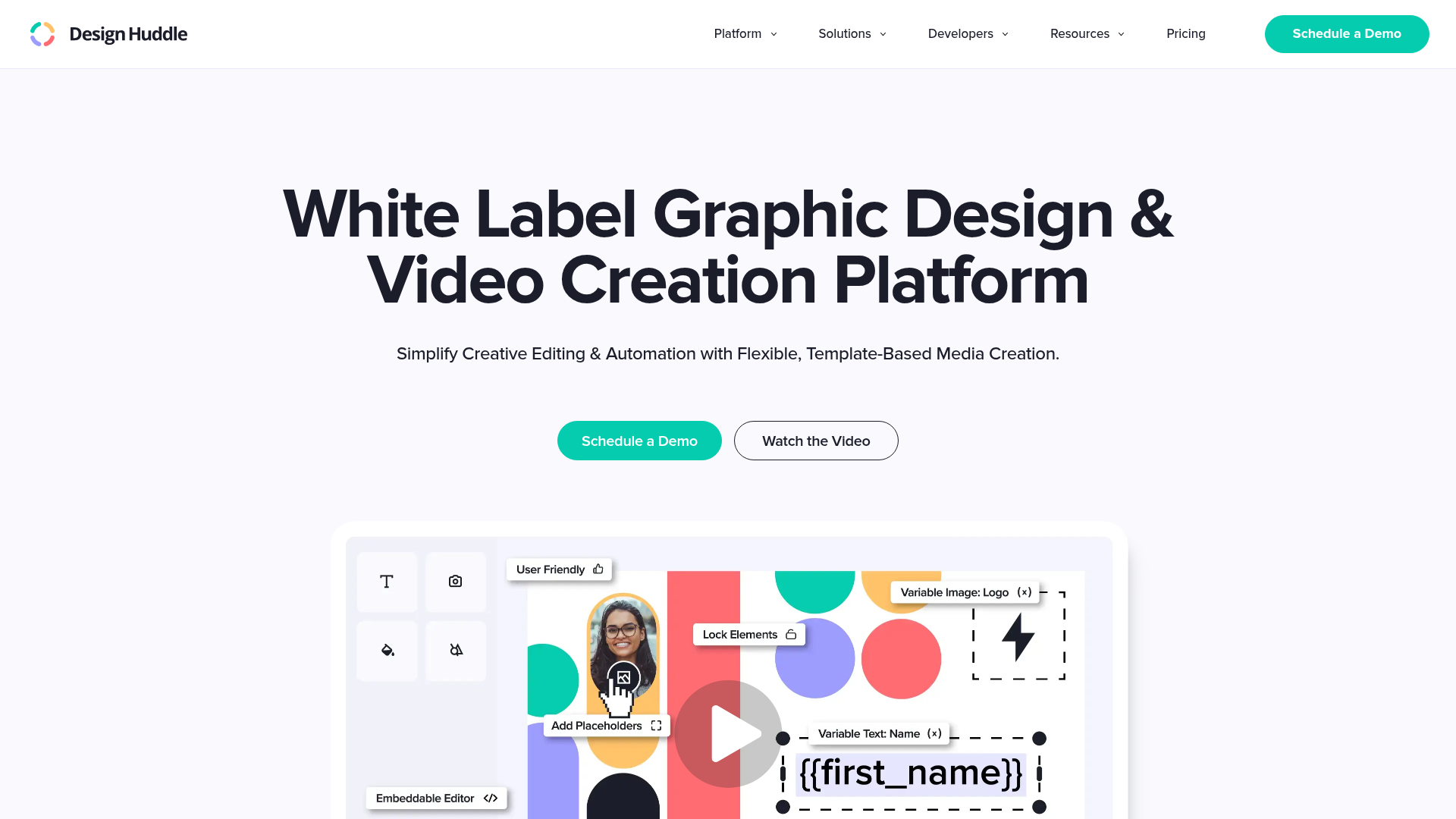
Design Huddle emphasizes embeddable editing, smart templates, print-ready PDF output, and developer flexibility. It is a strong example of how the market is moving toward modular, embedded creation experiences.
printQ
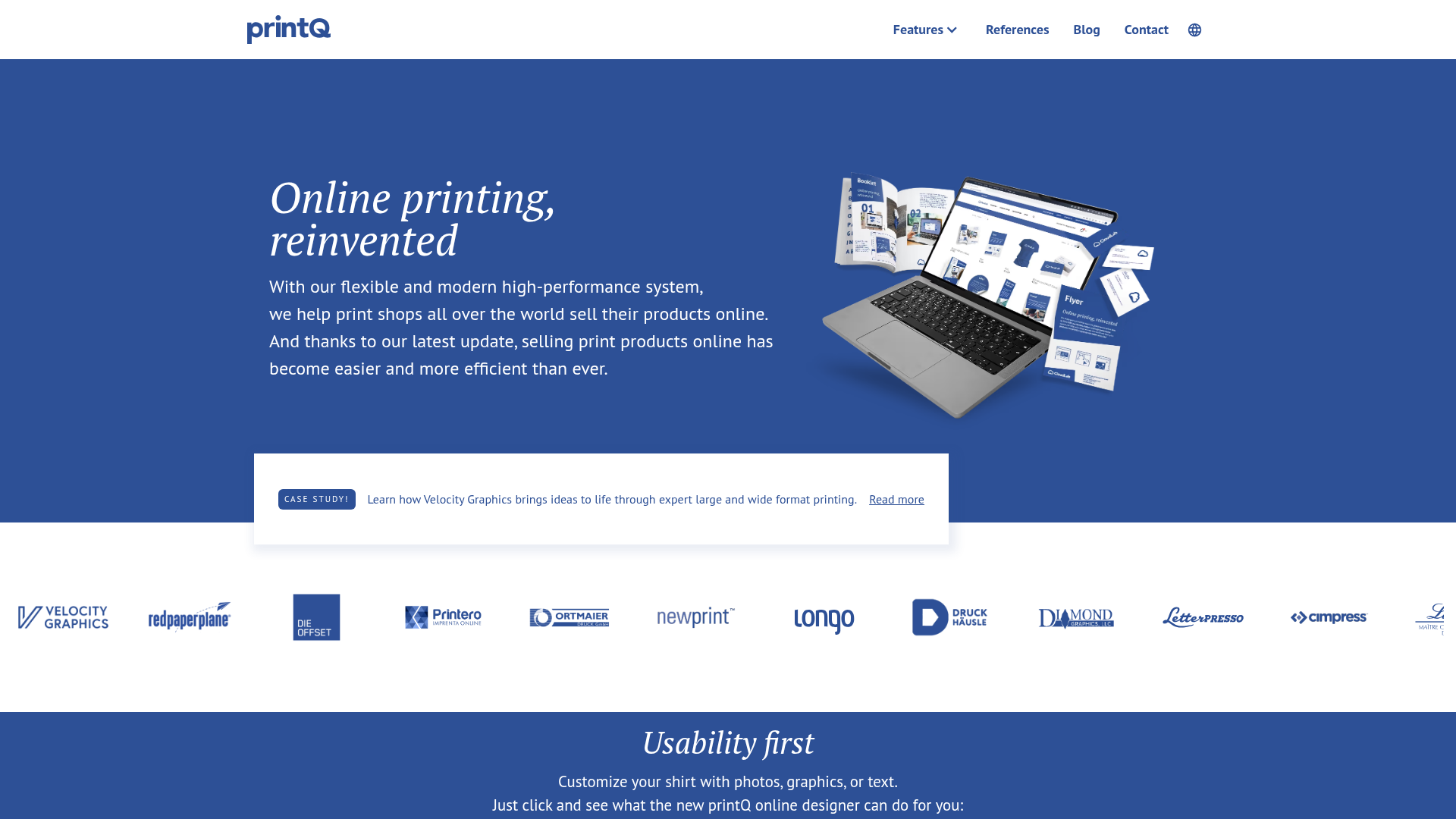
printQ highlights ecommerce infrastructure, online editing, and production automation. It reflects the category’s strong focus on scalable storefronts and workflow connectivity.
The biggest mistake buyers make
The most common mistake is choosing a tool based on feature count rather than purchase flow quality.
A web-to-print platform can look impressive in a demo and still underperform if:
the editor overwhelms customers
mobile interactions feel clunky
previews do not build trust
checkout integration is awkward
file handling still requires manual cleanup
fulfillment is not scalable
In other words, the right question is not “Does this tool have customization features?”
It is:
“Does this tool remove friction from idea to order while preserving quality, brand control, and operational efficiency?”
That is the lens serious buyers should use.
Why Media Rex Alliance is a future-ready choice
Media Rex Alliance is not just another web-to-print layer. It is a modern, AI-first infrastructure for brands that want to sell premium print experiences faster.
What makes it different
Conversational AI creation turns prompts into ready-to-print products
White-label deployment integrates into your storefront or app under your brand
Photorealistic 3D and AR previews improve confidence before purchase
Mobile-first, browser-based flow removes app friction
Cross-device sync keeps projects moving
On-demand production reduces stock and overhead
Automated fulfillment connects to a global network of premium printers
Scalable architecture supports startups, regional players, and enterprise print brands
For businesses looking beyond static editors and into the future of AI-driven commerce, this combination is exceptionally compelling.
Final verdict
The best web to print tool for an online store should do more than enable editing. It should help customers move from intention to purchase with less friction, more confidence, and better output.
That means prioritizing:
conversational or guided creation
smart customization rules
photorealistic 3D and AR previews
mobile-first browser usability
print-ready automation
order and workflow visibility
ecommerce and white-label integration
cloud sync
scalable, on-demand fulfillment
If you are building or upgrading a print commerce experience, this is the standard to aim for.
Media Rex Alliance is built for exactly that next chapter: AI-powered, fully branded, mobile-first, operationally efficient web-to-print at scale. For photo brands, print companies, studios, and POD businesses that want to modernize without building everything from scratch, it offers a faster path to a smarter product.
Want to launch a premium AI-powered print experience under your own brand? Media Rex Alliance gives you the infrastructure to do it.
FAQ
What is the most profitable print on demand item?
High-margin personalized products such as photo books, wall art, premium albums, and custom gifts are often the most profitable because they combine emotional value with strong perceived quality. They become even more profitable when produced on demand with automated fulfillment and no inventory overhead.
What is the best print shop software?
The best software is the one that combines easy product creation, automation, ecommerce integration, and reliable print-ready output. For brands that want a future-ready approach, platforms like Media Rex Alliance stand out by adding conversational AI, white-label deployment, and photorealistic previews.
What is the best platform for print on demand business?
A strong print-on-demand platform should support white-label branding, no-stock production, mobile-first shopping, and scalable fulfillment. The best options also reduce friction with AI-assisted creation and integrate smoothly into existing storefronts or apps.
What kind of prints sell the most?
Personalized prints tend to sell the most, especially wall art, framed photos, photo books, cards, and gift-oriented products. Products that are easy to customize, preview in 3D, and order quickly on mobile usually perform best in modern ecommerce environments.