Create Your Own Tee: Why Custom Apparel Wins
The demand to create your own tee is no longer a niche trend. It reflects a broader shift in commerce: buyers now expect products to feel personal, fast to customize, and easy to purchase without learning complex design software. For small studios, photographers, emerging print-on-demand brands, and established print companies, this creates a major opportunity - but also a challenge. If your customization flow still feels slow, technical, or desktop-era, customers will drop before they buy.
That is why the modern custom apparel experience is being redefined around simplicity, mobility, and intelligent automation. Shoppers want to make your own tee in minutes, not wrestle with layers, margins, and upload errors. And brands need a way to deliver that experience without spending years building proprietary web-to-print infrastructure.
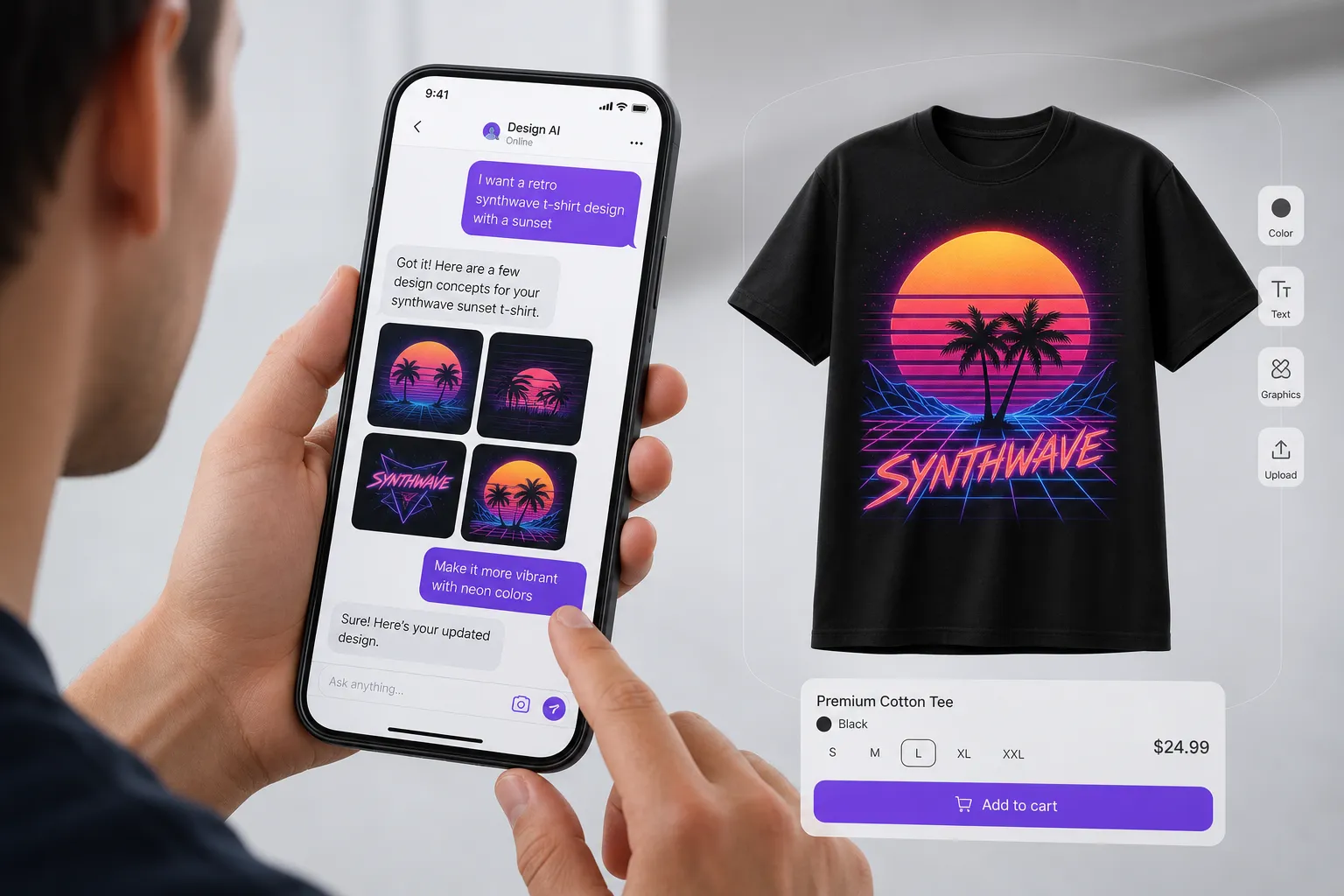
In this guide, we’ll break down why self-designed apparel keeps outperforming generic merchandise, what today’s buyers expect from a premium customization journey, what leading competitors do well, where they fall short, and how Media Rex Alliance helps print businesses leap ahead with conversational AI, white-label deployment, photorealistic previews, and scalable on-demand fulfillment.
Why custom apparel continues to outperform generic merchandise
Custom apparel wins because it sits at the intersection of identity, utility, and emotion. A t-shirt is never just a shirt when the buyer helped create it. It becomes a statement piece, a memory marker, a team asset, a gift, a campaign tool, or a brand extension.
People buy meaning, not only fabric
The strongest conversion driver in custom apparel is ownership. A buyer who personalizes a product invests psychologically before checkout. That makes a custom tee more valuable than a mass-produced equivalent, even if the base garment is similar.
This is why custom apparel performs across multiple use cases:
creator merchandise
branded team wear
event shirts
family trip or reunion tees
sports and community apparel
creator-led microbrands
photo-based keepsakes
giftable one-off designs
Personalization is now a baseline expectation
Customers increasingly expect brands to adapt to them, not the other way around.
"As of 2026, 71% of consumers expect personalized interactions, and 76% feel frustrated when brands fail to deliver them." - VOVV.AI
For print brands, this matters because the custom t-shirt purchase is one of the clearest personalization use cases in ecommerce. If the path to personalization feels friction-heavy, the entire value proposition weakens.
A larger market rewards better experiences
Custom apparel is growing, but growth alone does not guarantee success. The winners will be the businesses that reduce the time between inspiration and checkout.
"The market is expected to grow by $2.45 billion from 2024 to 2029, with a compound annual growth rate (CAGR) of 8.4%." - Technavio
That growth creates space for both new entrants and modernization plays. Startups can launch fast with better UX. Established printers can protect market share by replacing outdated design flows with AI-assisted creation.
What top-ranking competitors get right
A review of leading pages from RushOrderTees, VistaPrint, and Printful reveals a shared playbook. They all understand that custom t-shirt buyers want confidence, speed, and visible choice.
Common strengths across competitor pages
What they do well | Why it works |
|---|---|
Offer clear product variety | Buyers quickly see styles, fits, and price points |
Highlight bestsellers | Reduces decision fatigue |
Surface reviews and ratings | Builds trust early |
Explain printing methods | Educates buyers and sets expectations |
Emphasize no-minimum or fast shipping | Removes common objections |
Showcase categories by use case | Helps different buyer segments self-identify |
The recurring message across the market
The competitors consistently focus on:
ease of creating custom shirts
broad garment choice
affordability at multiple tiers
low or no minimum quantities
quick delivery windows
helpful templates or simple design tools
These themes resonate because they speak to real buying intent. Someone searching for custom tees is often comparing convenience as much as price.
The content gaps competitors still leave open
This is where the next wave of growth lives. The market leaders explain products well - but most still center the experience around traditional visual editors, filters, and template browsing.
That is no longer enough.
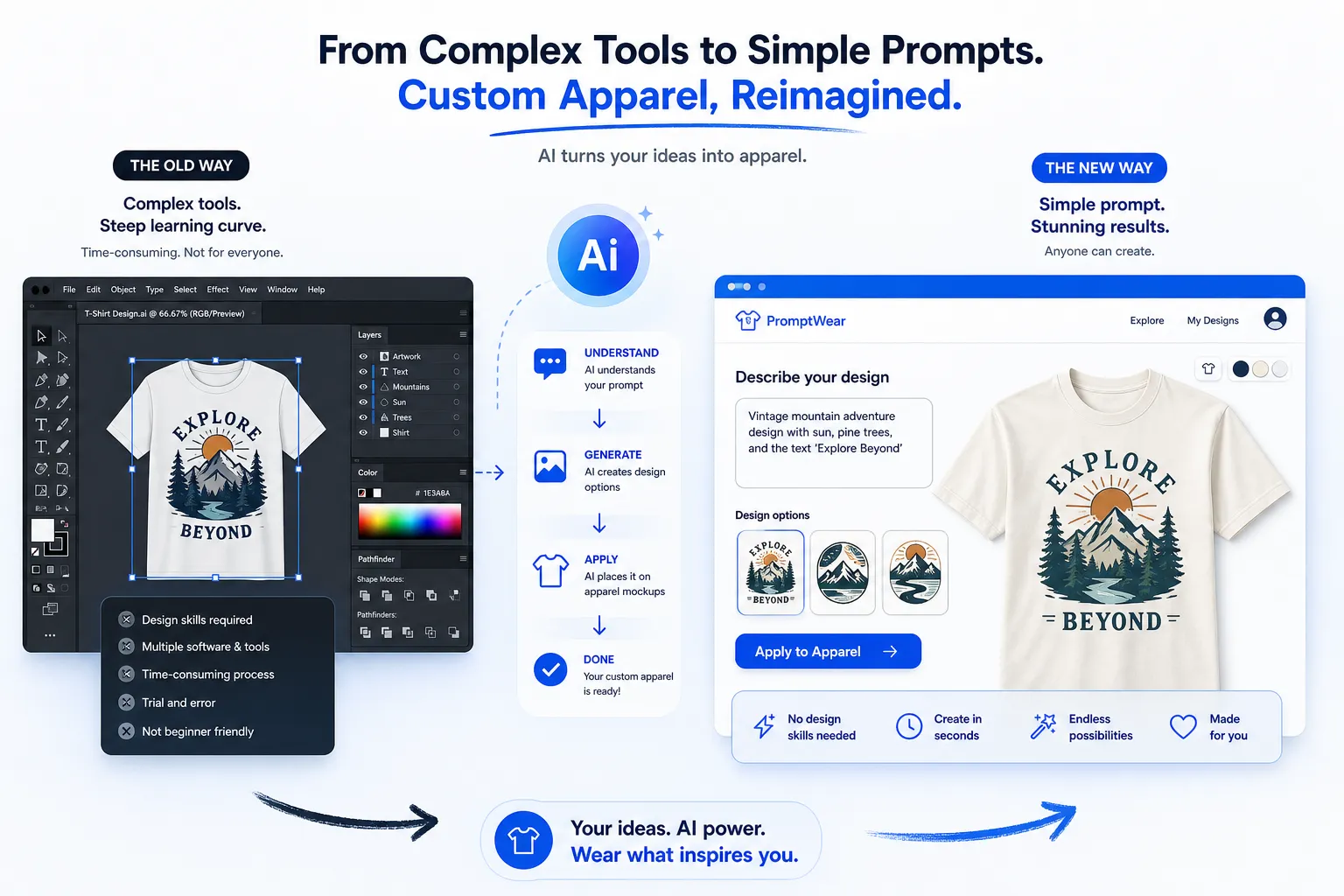
Gap 1: They still assume users want to design manually
Most custom apparel platforms still make the customer do too much work:
choose product
upload art
position elements
adjust scale
test colors
review placements
fix print issues
That flow may be acceptable for skilled users, but it creates friction for casual shoppers and mobile users. Many people do not want to “design.” They want to describe an outcome and see it materialize.
Gap 2: Few platforms truly lead with conversational creation
A buyer should be able to say:
“Create a vintage-style black tee for my coffee shop with a bold back print, small front logo, warm neutral colors, and a premium streetwear feel.”
Then the platform should turn that prompt into a production-ready concept.
This is exactly where Media Rex Alliance changes the game. Instead of forcing end customers through complex editors, it enables print businesses to offer conversational AI product creation directly inside their own storefronts or apps.
Gap 3: Preview quality is still often too flat
Most sites show static mockups. Helpful, yes. Persuasive enough, not always.
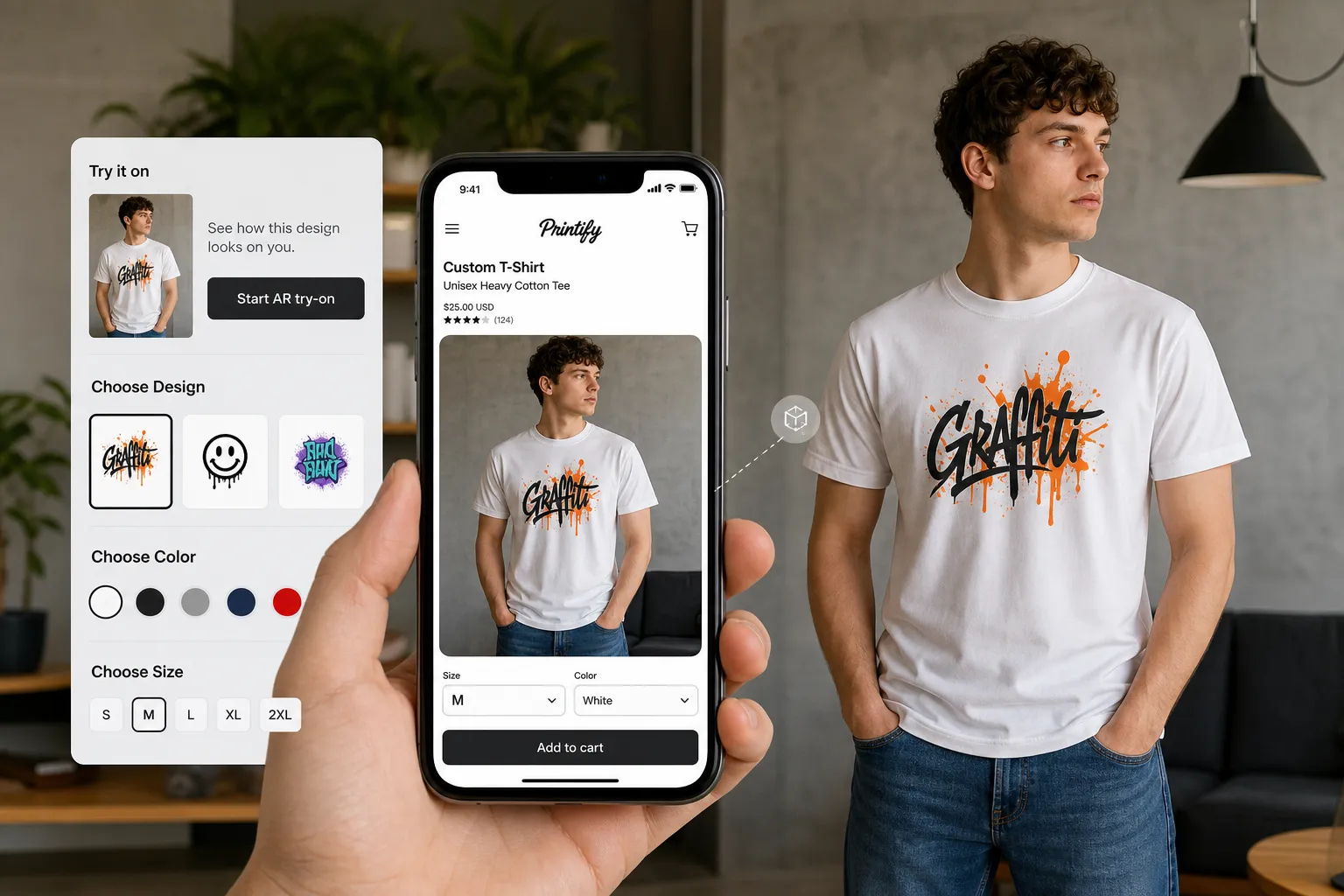
Modern shoppers want stronger purchase confidence before they commit - especially for higher-value or branded apparel. Media Rex Alliance addresses this with photorealistic 3D and AR previews, giving users a more tangible sense of the finished product before checkout.
Gap 4: Mobile-first still isn’t fully solved
Competitors talk about convenience, but the underlying creation experience often remains desktop-minded. Menus, drag tools, and fine adjustment controls are not ideal on a phone.
Media Rex Alliance is designed around mobile-first, browser-based product creation, with no app installation required. That matters because discovery increasingly happens on mobile, and checkout momentum disappears fast when creation becomes tedious.
Why “create your own tee” is really a UX challenge
The phrase sounds product-focused, but at its core it is a user-experience problem. The buyer already wants the shirt. The question is whether your platform makes creation feel easy enough to complete.
Friction kills custom apparel conversions
In standard ecommerce, friction might mean too many checkout fields. In web-to-print, friction starts much earlier:
blank-canvas anxiety
low-resolution upload errors
hard-to-understand print zones
weak mobile interactions
unclear pricing changes
flat previews
too many steps before a usable result appears
Every one of these adds cognitive load. The result is often abandonment - not because the customer changed their mind, but because the process felt too demanding.
Simplicity drives momentum
The best custom apparel journey compresses complexity behind the scenes while keeping the front-end experience intuitive. That is why AI-assisted creation is such a powerful unlock. It reduces the distance between idea and outcome.
With Media Rex Alliance, businesses can offer:
conversational prompt-based creation
automatic layout generation
print-ready outputs
browser-based editing with no software install
local and cloud project sync across devices
white-label storefront continuity
This creates a dramatically smoother path from idea to order.
What customers now expect from modern t-shirt customization
Today’s buyers have been trained by the best consumer apps. They expect speed, clarity, and responsiveness by default.
1. Fast idea-to-preview workflows
Customers want to see something good quickly. Not a blank editor. Not a setup wizard. A result.
2. Guidance without complexity
They want help making good design decisions, but they do not want to feel like they are using professional design software.
3. Mobile usability
They want to start browsing on a phone, continue editing later, and complete the purchase without losing progress.
4. Visual confidence before buying
A realistic preview reduces uncertainty and helps justify premium pricing.
"Products featuring 3D visualization have experienced conversion rate increases of up to 40%." - Eyedex
5. Reliable fulfillment after the click
The creation experience gets the sale, but fulfillment determines repeat business. Delays, quality inconsistency, or production bottlenecks erode trust fast.
Media Rex Alliance addresses both sides: creation and delivery. Its model supports on-demand production, reduced inventory overhead, and automated fulfillment through a global network of premium printers.
Traditional web-to-print vs AI-powered custom apparel creation
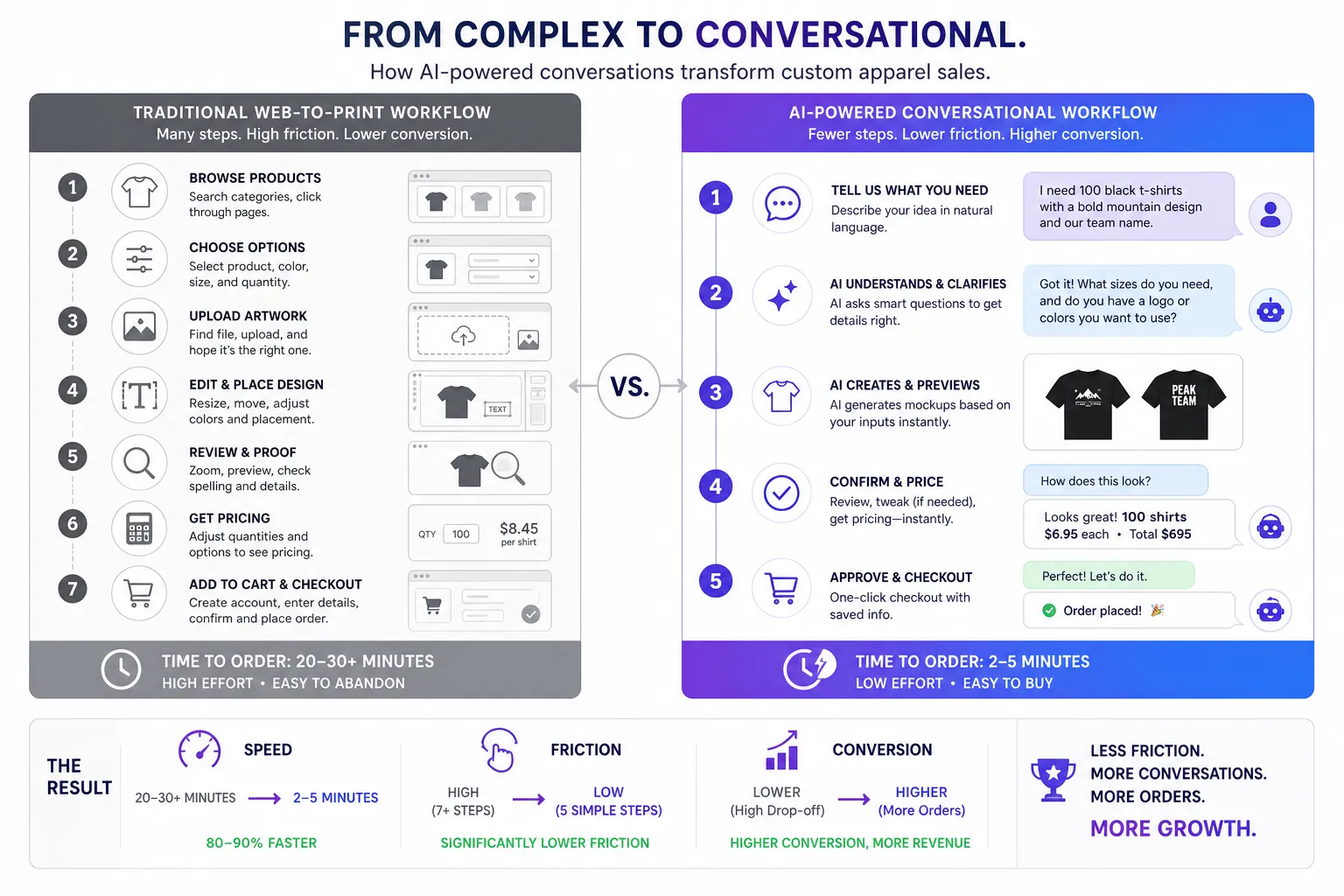
The difference between legacy and next-gen apparel customization is not subtle. It affects conversion rate, customer satisfaction, operational efficiency, and speed to market.
Capability | Traditional web-to-print | AI-powered model from Media Rex Alliance |
|---|---|---|
Design input | Manual editing | Natural language prompts |
Learning curve | Moderate to high | Low |
Mobile usability | Often limited | Mobile-first browser experience |
Product preview | Static mockups | Photorealistic 3D and AR previews |
Brand deployment | Often platform-branded | Fully white-label |
Inventory model | Can require stock planning | On-demand, low-overhead production |
Fulfillment | Often fragmented | Automated via global printer network |
Scalability | Tool-dependent | Built for startup to enterprise scale |
Cross-device continuity | Inconsistent | Local and cloud sync |
Why this matters for different types of print businesses
The value of AI-powered custom apparel is not limited to one business model. Different operators benefit in different ways.
Small studios and photographers
For creatives selling niche or memory-driven products, speed and polish matter. If you can turn a simple concept or photo upload into a premium tee without adding software complexity, you create a stronger buying experience and spend less time on manual assistance.
New print-on-demand brands
Emerging brands need to move fast, validate ideas quickly, and avoid inventory risk. On-demand fulfillment plus conversational creation lowers the barrier to launching product lines and testing demand.
Mid-size and regional print brands
These businesses often have production strength but aging front-end tools. Media Rex Alliance helps modernize the buying experience without forcing a full rebuild of their brand identity, domain structure, or ecommerce presence.
Established photo book and print companies
These companies already understand personalized commerce. The opportunity is to extend that trust into apparel by offering a faster, more intuitive creation layer - especially one that works beautifully on mobile and supports branded deployment at scale.
What makes Media Rex Alliance strategically different
Media Rex Alliance is not just another design widget. It is a white-label AI print platform designed for the future of web-to-print.
Conversational AI instead of complex editors
The core innovation is simple but transformative: end customers can create products through natural language. This reduces friction, shortens time-to-design, and helps more users complete purchases.
Print-ready automation
The platform turns prompts into ready-to-print products quickly, which helps reduce abandonment caused by overly technical creation steps. It also minimizes internal production cleanup.
White-label integration
Print businesses can deploy the experience under their own branding, domain, and visual identity. This is critical for preserving trust and building long-term customer equity.
Premium previews that sell
Photorealistic 3D and immersive AR previews improve confidence and reduce guesswork. That is increasingly important in online apparel, where fit, layout, and visual impact influence purchase intent.
Mobile-first browser access
No app install. No workflow disruption. Customers can create directly in a browser, on any modern device.
Seamless continuity across devices
Projects can sync locally and in the cloud, which means a customer can start on mobile and finish on desktop without losing momentum.
Scalable on-demand infrastructure
By reducing stock requirements and automating fulfillment through a global print network, the platform helps businesses scale efficiently without carrying unnecessary operational weight.
The rise of preview-driven apparel buying
Preview quality is becoming a competitive advantage, not a nice-to-have.
Static mockups are losing persuasive power
When a customer customizes a shirt, they are making aesthetic decisions in real time. They want reassurance that placement, scale, and style all work together. Static thumbnails often fall short.
3D and AR help close the trust gap
If the buyer can rotate, inspect, or visualize the product more realistically, uncertainty drops. That improves conversion potential and can also reduce post-purchase disappointment.
For brands selling premium custom apparel, preview quality supports stronger perceived value and better pricing power.
How to build a custom apparel experience that converts
If you are a print business rethinking your custom t-shirt offering, focus on the sequence below.
Start with intent, not tools
Most users do not begin with software goals. They begin with outcomes:
“I need staff shirts for an event.”
“I want a gift with an inside joke.”
“I need a branded tee for my café.”
“I want to launch a merch drop.”
Design your flow around these outcomes.
Reduce blank-canvas friction
Instead of forcing every user into full manual creation, give them fast starting points:
prompt-based generation
smart templates
photo-led product creation
use-case-based presets
Optimize for mobile first
Assume the first interaction happens on a phone. Menus, previews, edits, and checkout should all support that reality.
Make the preview do selling work
The more realistic the preview, the fewer mental leaps the customer has to make.
Eliminate operational drag behind the scenes
Front-end simplicity only works long term if back-end fulfillment is dependable. That is why the combination of AI creation and automated production matters so much.
Lessons from the current leaders - and how to go beyond them
RushOrderTees excels at merchandising breadth and trust-building through reviews. VistaPrint is strong on guided category structure and price accessibility. Printful clearly connects t-shirt creation to print-on-demand entrepreneurship and fulfillment.
But the next advantage will not come from adding more product tiles or more template categories alone.
It will come from replacing friction-heavy design experiences with:
prompt-led creation
smart automation
stronger previews
fully branded deployment
seamless mobile performance
scalable, low-overhead fulfillment
That is the gap Media Rex Alliance is positioned to fill.
Final verdict: custom apparel wins because the experience is becoming smarter
Custom apparel keeps winning because it delivers something generic products cannot: personal relevance at scale. But the real growth story is not just in the product category. It is in the technology layer that powers the buying experience.
Businesses that make it easier for customers to create your own tee or make your own tee without friction will capture more attention, more conversions, and more loyalty. And the brands that modernize now will have a clear edge as AI-driven web-to-print becomes the new standard.
For print businesses that want to launch or upgrade a branded custom apparel experience, Media Rex Alliance offers a compelling path forward: conversational AI creation, white-label deployment, mobile-first browser access, photorealistic 3D and AR previews, cloud-enabled continuity, on-demand production, and global fulfillment automation - all designed to help you sell premium print products faster and more efficiently.
If your current t-shirt workflow still feels like software, not shopping, this is the moment to evolve it.
FAQ
Is making custom t-shirts profitable?
Yes - when supported by strong customization UX, efficient production, and healthy pricing. Profitability improves when brands reduce design friction, increase conversion rates, and use on-demand fulfillment to avoid inventory waste.
What are the benefits of custom clothing?
Custom clothing creates emotional value, brand identity, and higher engagement than generic apparel. It works well for events, teams, gifts, creators, and businesses because customers feel ownership over what they helped design.
Can Chatgpt create t-shirt designs?
ChatGPT can help generate concepts, prompts, slogans, and design direction, but a production-ready commerce experience requires more than text generation alone. Platforms like Media Rex Alliance connect conversational AI to product creation, layouts, previews, and fulfillment workflows.
How much should I sell a custom t-shirt for?
Your price should reflect the blank garment cost, decoration method, fulfillment, shipping, and brand positioning. In practice, successful sellers often price above commodity levels when the design experience, preview quality, and perceived uniqueness justify a premium.