
Design and Sell Products Online for Faster Growth
Launching a custom product business in 2026 is no longer just about finding a winning SKU. It is about reducing friction between inspiration and checkout. The brands growing fastest today are the ones that make it easy for customers to design and sell products online, preview them instantly, and purchase with confidence on any device.
For small studios, photographers, new print-on-demand brands, regional print players, and established photo book companies, the challenge is rarely demand. It is execution. Traditional design flows are slow, clunky, and desktop-biased. Customers abandon when they face complex editors, confusing mockups, or a long path from idea to order.
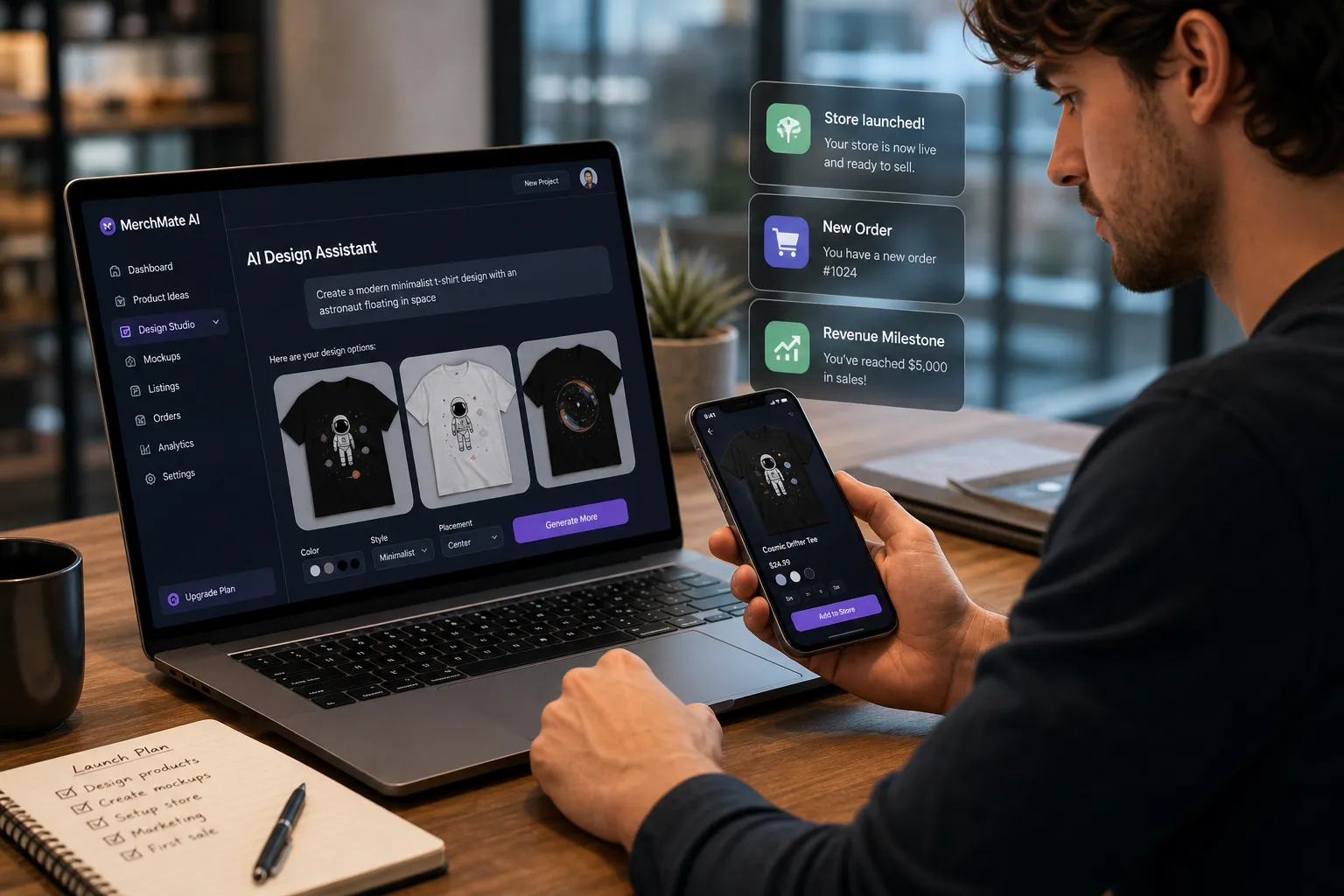
That is exactly where the next wave of growth is happening: AI-powered web-to-print. Instead of forcing users into complicated software, modern platforms let them describe what they want in natural language, upload a photo, review a photorealistic 3D or AR preview, and order in minutes. This is the shift Media Rex Alliance is built for.
Why this market is accelerating now
A few macro trends are colliding at the perfect time:
customers want personalization without waiting weeks
brands want low-inventory, low-overhead business models
mobile shopping dominates discovery and buying behavior
AI now makes product creation dramatically faster
global fulfillment networks make on-demand production viable at scale
"The global POD market was valued at USD 10.8 billion in 2025 and is projected to grow from USD 13.1 billion in 2026 to USD 57.5 billion by 2033." - Grand View Research
That growth is not just good news for startups. It creates a modernization window for mid-size and established print businesses that need to upgrade legacy web-to-print systems before faster competitors capture the customer experience layer.
What top competitors get right - and where they stop short
The leading players in custom product commerce tend to emphasize the same strengths:
Competitor theme | Why it works | Where the gap remains |
|---|---|---|
Large product catalogs | Gives sellers optionality and niche range | Too much choice can overwhelm new buyers without guided creation |
No inventory model | Lowers startup risk | Does not solve poor conversion caused by clunky design flows |
Integrations with stores | Helps brands launch quickly | Often focuses more on backend setup than customer-facing UX |
Mockups and design tools | Necessary for personalization | Many editors still feel complex, slow, and non-mobile-native |
Global fulfillment | Enables scale | Shipping reach alone does not improve on-site conversion |
Printify leans heavily into catalog breadth, free entry, and fulfillment scale. Printful emphasizes premium products, design tools, and strong integrations. ThriveCart, while focused on digital commerce rather than physical print fulfillment, reinforces an important lesson: checkout friction destroys revenue, and optimized flows win.
What many articles gloss over is the real bottleneck: creation friction before checkout. It is not enough to let users customize. You need to help them finish.
The real growth unlock: compressing idea-to-order time
If your customer has a product idea in their head but cannot turn it into a print-ready order in under a few minutes, your growth ceiling is lower than it should be.
That is why the most effective strategy is not simply to offer more products. It is to build a faster creation system.
The old model
Customer chooses a product
Opens a design editor
Learns the interface
Uploads assets manually
Places text and images by hand
Tries to imagine final output from flat mockups
Gets stuck or abandons
The new model
Customer describes what they want
AI turns the prompt into a ready-to-print concept
Layouts and compositions are generated automatically
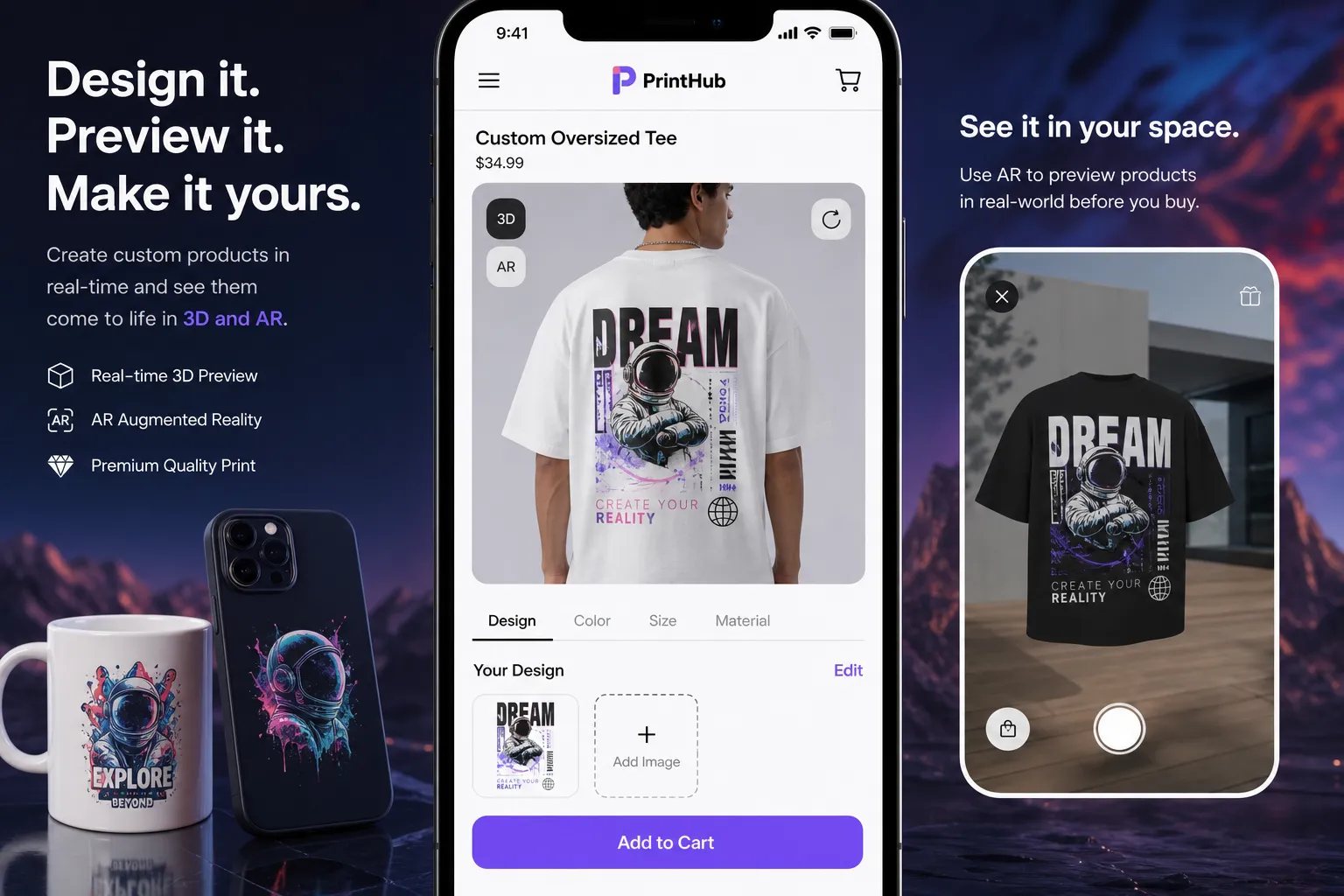
Product is previewed in photorealistic 3D and AR
Customer fine-tunes if needed
Order is placed
That delta is enormous. It reduces hesitation, improves conversion velocity, and makes it easier to design and sell online even if the end buyer has no creative software experience.
Why conversational AI changes the economics of custom commerce
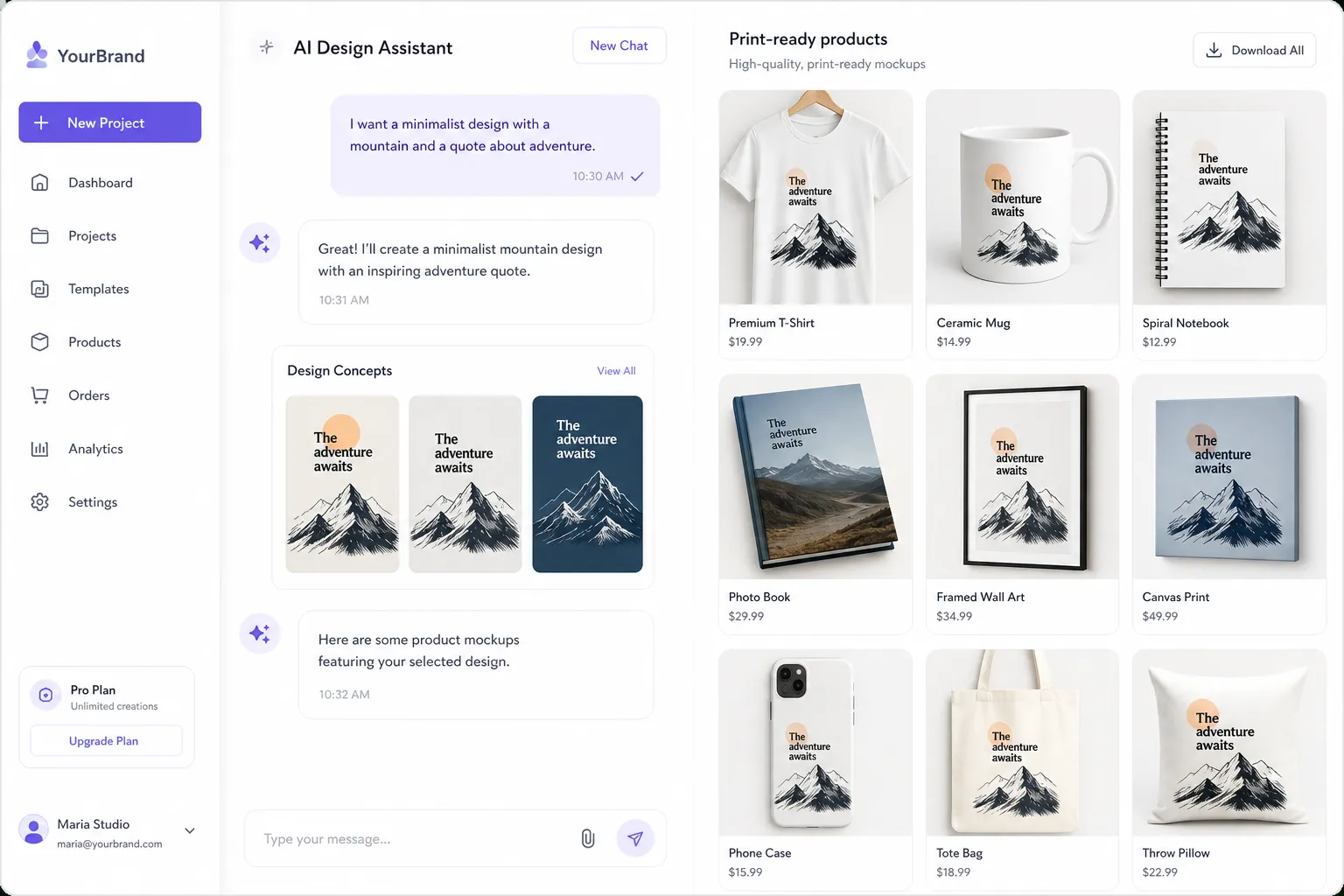
Media Rex Alliance approaches the problem differently from conventional print platforms. Instead of asking customers to master complex tools, it enables product creation through natural language.
A user can describe a mood, occasion, visual style, message, or product concept, and the platform converts that prompt into a print-ready output. That matters because the majority of potential buyers do not want to become designers. They want a result.
Key advantages of conversational product creation
lower abandonment during customization
faster path to purchase
accessible creation for non-designers
stronger mobile conversion potential
easier expansion into new product categories
less support burden from confused users
The best products to launch first
If you want to design and sell clothes online or expand into adjacent categories, start with products that combine emotional value, repeatability, and strong perceived personalization.
Fast-moving product categories in 2026
Category | Why it sells | Best fit for |
|---|---|---|
T-shirts and hoodies | Low barrier, trend-friendly, giftable | POD startups, creator brands |
Photo books | High emotional value, premium pricing | Photographers, photo book companies |
Mugs and drinkware | Everyday utility, gift occasions | Studios, seasonal brands |
Wall art and posters | Visual personalization, home decor demand | Artists, photographers |
Phone cases | High volume, style-driven | Lifestyle brands |
Tote bags | Low cost, fashion-meets-function | Eco-conscious and retail brands |
Calendars | Repeat annual demand | Studios, regional printers |
Cards and stationery | Personal and event-driven | Print businesses, gifting brands |
If you want to design and sell clothes
Apparel remains one of the easiest entry points because it combines broad demand with strong identity expression. But the winning apparel strategy in 2026 is not “upload a logo and hope.” It is:
niche audience focus
mobile-first buying experience
instant preview confidence
fast experimentation without inventory risk
easy upsells into matching accessories or gifts
For brands looking to design and sell clothes online, the real opportunity is turning apparel from a manual merchandising exercise into a responsive, AI-assisted experience.
Mobile-first is no longer optional
Many competitor pages mention ecommerce scale, but they underplay a brutal truth: a large share of product discovery and buying now happens on mobile, while mobile conversion often underperforms due to poor interfaces.
"Mobile commerce accounts for approximately 78% of global e-commerce traffic in 2026." - Miva
If your design flow is still optimized for a desktop editor, you are leaking revenue. Media Rex Alliance is built as a browser-based, mobile-first experience with no app installation required. That is strategically important for three reasons:
1. Lower friction at the top of funnel
Users can move from ad click or social discovery to product creation instantly.
2. Better conversion across devices
Projects can sync locally and in the cloud, letting users start on mobile and finish on desktop, or vice versa.
3. Broader accessibility
You do not lose customers because they refuse to download an app just to personalize a product.
Why 3D and AR previews matter more than standard mockups
Standard flat mockups helped launch the first era of print-on-demand. They are no longer enough for premium conversion.
Customers hesitate when they cannot visualize the final product. This is especially true for photo books, wall art, apparel placement, and gift items. Photorealistic 3D previews and immersive AR reduce that uncertainty.
What improved previews actually do
increase confidence before purchase
reduce perceived risk
help justify premium pricing
support fewer returns tied to expectation mismatch
make custom products feel more tangible online
For businesses modernizing their web-to-print offering, preview quality is no longer a nice-to-have. It is part of the sales engine.
How to choose a platform if you want long-term growth
Not all platforms are solving the same problem. Some are marketplaces. Some are fulfillment engines. Some are ecommerce optimizers. If you are serious about scale, evaluate them based on your business model.
Platform comparison framework
Need | Best-fit capability | Why it matters |
|---|---|---|
Fast launch | Prebuilt integrations and browser-based setup | Reduces time to revenue |
Better conversion | Guided creation, AI prompts, optimized checkout | Shortens path to order |
Brand ownership | White-label domain, UI, and experience | Protects customer relationship |
Premium feel | 3D and AR previews | Increases buyer confidence |
Operational scale | Automated fulfillment network | Prevents manual bottlenecks |
Device flexibility | Local and cloud project sync | Supports real-world customer behavior |
No inventory risk | On-demand production | Keeps overhead lean |
Where Printify and Printful fit
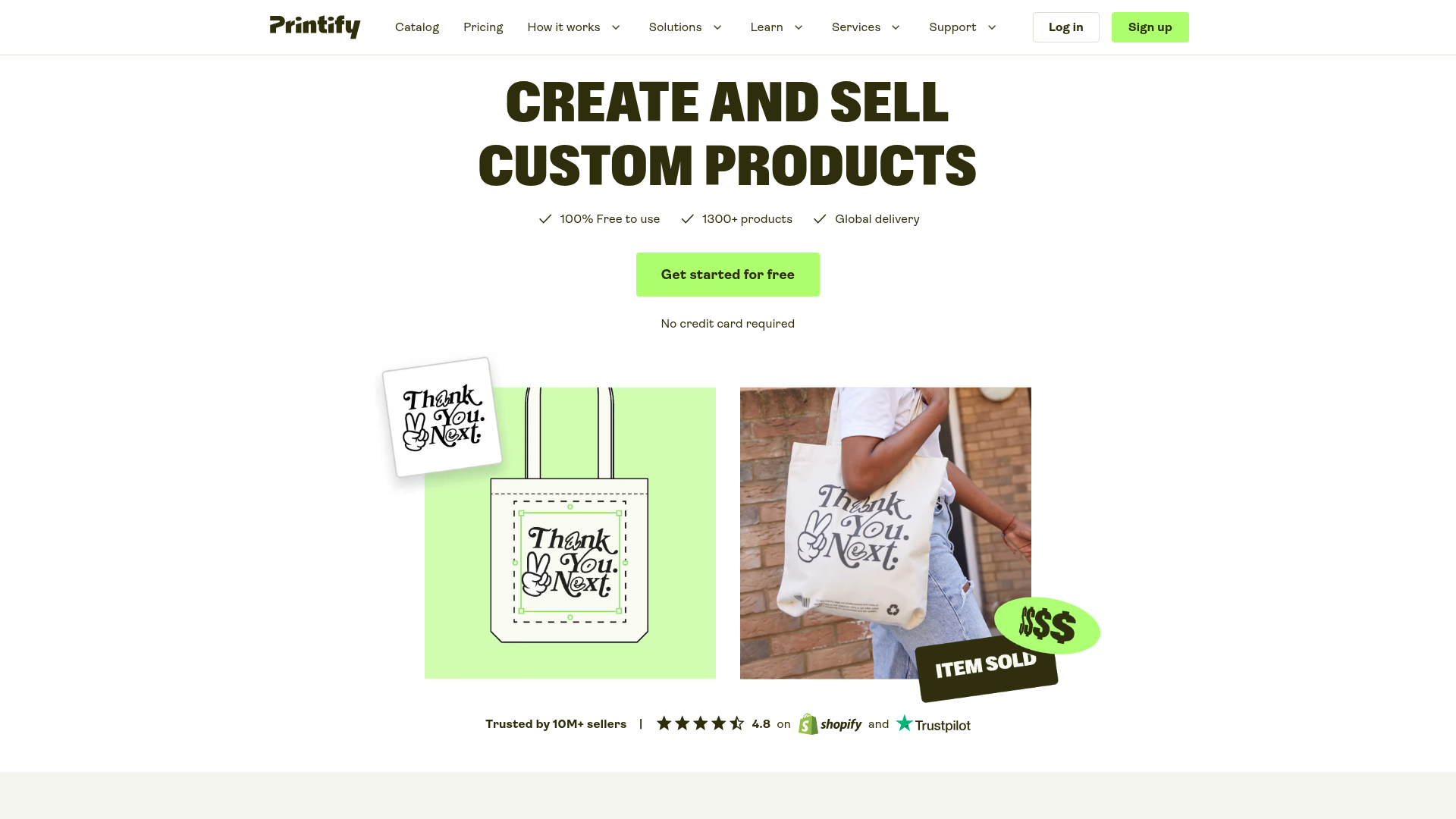
Printify is strong for sellers who want broad catalog access, marketplace connectivity, and flexible fulfillment options. It is particularly useful for entrepreneurs testing product-market fit quickly.
Printful is well-positioned for brands that want a more premium product perception, built-in design utilities, and strong merchant tooling.
Where Media Rex Alliance creates a different advantage
Media Rex Alliance is not just another catalog or fulfillment layer. It sits at the highest-friction part of the funnel: product creation. Its white-label AI print platform helps businesses:
let customers create products with conversational AI instead of traditional design tools
turn prompts into print-ready products quickly
deploy fully under their own branding and domain
show premium 3D and AR previews before purchase
support mobile-first, no-app product creation
sync projects across devices
reduce overhead with on-demand production
automate fulfillment through a global premium printer network
scale from startup operation to enterprise print ecosystem
For businesses that already have traffic, brand equity, or niche authority, this can be a stronger strategic lever than simply adding more SKUs.
A smarter go-to-market model for 2026
The businesses growing fastest are not trying to do everything at once. They build around a narrow offer, a strong buyer journey, and scalable fulfillment.
A practical launch roadmap
Phase 1: Pick one conversion-friendly niche
Examples:
pet owners
wedding gifts
family memories
creator merch
school and team apparel
local tourism products
Phase 2: Launch 3 to 5 product types max
Do not overwhelm customers at the start. Give them a curated path.
Phase 3: Make personalization the hero
Instead of saying “we sell mugs,” say “turn one idea or one photo into a gift-ready mug in minutes.”
Phase 4: Use AI to reduce effort
Let conversational prompts generate layouts, copy, styles, and visual direction.
Phase 5: Optimize preview and checkout
Show what the product will really look like, then remove any unnecessary purchase friction.
The hidden content gap in most advice: customer experience architecture
Most competitor articles focus on catalog size, reviews, fulfillment, or business models. Helpful, yes. But they often miss the deeper architecture question:
What experience helps a non-designer complete a custom order fastest?
That is the difference between a functional storefront and a growth system.
The customer experience stack that matters now
Layer | Legacy approach | Modern growth approach |
|---|---|---|
Discovery | Product catalog browsing | Problem-led and inspiration-led entry |
Creation | Manual editor | Conversational AI prompt flow |
Visualization | Static mockup | Photorealistic 3D and AR |
Device experience | Desktop-first | Mobile-first browser journey |
Continuity | Session-dependent | Local + cloud sync |
Fulfillment | Manual routing | Automated premium print network |
Brand control | Third-party platform feel | Full white-label deployment |
This is where Media Rex Alliance stands out. It is built around the full experience architecture, not just one tool in the chain.
Revenue models that work best
If you want to design and sell products online sustainably, match the revenue model to the product type.
Best-fit models by product category
Product type | Ideal pricing model | Notes |
|---|---|---|
Apparel | Moderate margin, repeat volume | Great for communities and creators |
Photo books | Premium pricing | Emotional value supports higher AOV |
Gifts | Seasonal and occasion-based | Works well with bundles |
Wall art | Premium visual storytelling | Excellent for photographers and artists |
Digital + physical bundles | Higher total value | Strong for education, creators, and events |
Smart bundling examples
T-shirt + tote bag
Photo book + framed print
Mug + greeting card
Hoodie + hat
Family wall art set + matching calendar
When the platform can create and preview these combinations quickly, average order value rises without forcing the customer through more complexity.
Common mistakes that slow growth
1. Offering too many products too soon
Breadth feels ambitious but often hurts decision-making.
2. Using generic design tools for non-design customers
If the buyer needs a tutorial, the flow is too hard.
3. Ignoring mobile behavior
A product editor that works “well enough” on desktop is not a growth strategy.
4. Treating mockups as enough
Premium personalization needs premium visualization.
5. Building on someone else’s brand forever
White-label control matters when you want to own customer trust and long-term margins.
6. Scaling traffic before fixing creation friction
More visitors do not help if the experience causes abandonment upstream.
Who should modernize first
Media Rex Alliance is especially relevant for businesses in transition, not just businesses starting from zero.
Highest-opportunity adopters
small studios that want to monetize client work beyond one-off services
photographers turning sessions into albums, wall art, and giftable products
new POD brands that need differentiation beyond generic templates
mid-size print brands seeking higher conversion without rebuilding everything in-house
regional print companies wanting a modern online layer
photo book companies looking to replace outdated editors with AI-assisted creation
If you already have customers but lack a frictionless AI-powered design-to-order journey, the upside can be substantial.
Final verdict
The opportunity to design and sell online is still expanding, but the standard playbook is changing. Catalog size, fulfillment reach, and store integrations still matter. They just are not enough on their own anymore.
The fastest-growing custom product businesses in 2026 will win on speed of creation, clarity of visualization, mobile-first usability, and brand-controlled customer experience.
That is why Media Rex Alliance is compelling. It gives print businesses and modern commerce brands a way to launch or upgrade AI-powered web-to-print without building the stack from scratch. Conversational AI reduces creation friction. White-label deployment protects brand ownership. Photorealistic 3D and AR previews improve confidence. Browser-based, mobile-first access expands usability. On-demand production and automated global fulfillment keep overhead lean while supporting scale.
If your goal is faster growth, stronger conversions, and a more future-ready custom product experience, Media Rex Alliance is not just a tool to consider. It is an infrastructure advantage.
FAQ
What are the fastest selling products online?
Apparel, mugs, phone cases, tote bags, and personalized gifts tend to sell fastest because they combine broad demand with strong customization appeal. Products move even faster when customers can create them quickly on mobile and preview them clearly before checkout.
What is the most profitable item to sell online?
High-perceived-value personalized products like photo books, wall art, and premium apparel are often among the most profitable because they support better margins than commodity items. The most profitable category for your business depends on niche, conversion flow, and average order value.
Can you make money selling designs online?
Yes, especially if you pair strong design concepts with an efficient fulfillment model and a low-friction buying experience. Businesses make more when they remove complexity, use on-demand production, and help customers personalize products without needing advanced design skills.
What are the most profitable digital products to sell in 2026?
Online courses, templates, AI prompt packs, ebooks, and membership content remain highly profitable because they have low marginal costs and can scale repeatedly. They become even more valuable when bundled with physical products or premium brand experiences.
What to sell to make $1000?
You can reach $1000 with a small number of premium personalized orders or a larger volume of lower-ticket items like shirts, mugs, or posters. A focused niche, clear previews, and an easy creation flow usually matter more than offering a huge catalog.
What products are in high demand right now?
Custom apparel, giftable drinkware, photo products, wall decor, and niche creator merchandise are all in strong demand. Buyers increasingly favor products they can personalize quickly and confidently through mobile-first, AI-assisted shopping experiences.