Designing AI Products for Business Growth
Designing AI products is no longer about adding a chatbot and hoping it lifts engagement. For growth-focused businesses, the real opportunity is to turn AI into a faster path from customer intent to customer value. That means better workflows, lower friction, more relevant personalization, and experiences that help users complete high-intent actions with less effort.
For print businesses, studios, photographers, photo-book brands, and print-on-demand companies, the stakes are especially clear: every extra design step creates drop-off, every unclear preview weakens confidence, and every manual process limits scale. The winners will be the brands that turn complexity into simplicity without sacrificing quality, control, or brand identity.
Media Rex Alliance is built for exactly that shift. Instead of forcing end customers into traditional design software, it enables product creation through conversational AI, transforms prompts into print-ready outputs, supports white-label deployment, and pairs it all with photorealistic 3D and AR previews that help customers commit faster.
Why AI Product Design Matters More Than Ever
The strongest competitor content agrees on one core idea: AI only matters when it creates measurable value. Not novelty. Not hype. Not vague “innovation.” Value.
Across the current landscape, the most useful discussions on designing AI products emphasize a few recurring truths:
AI features must solve real user problems
Scope beats sprawl
Prompting needs assistance, not assumptions
User trust depends on transparency and predictable outcomes
Great AI experiences combine automation with human-centered design
Where many articles stop, however, is the jump from theory to business architecture. They explain principles, but they often underplay how AI should fit into conversion paths, commerce systems, fulfillment operations, and branded customer experiences. That is the gap businesses need help closing.
The real business question
The question is not “How do we add AI?”
It is:
How do we design an AI-powered product experience that improves conversion, reduces operational drag, and scales profitably?
For digital print businesses, that can mean:
Traditional Workflow Problem | AI-Powered Opportunity |
|---|---|
Complex editors intimidate casual buyers | Conversational product creation lowers the barrier to entry |
Manual layout work slows ordering | Automated layouts turn ideas into ready-to-print products fast |
Weak confidence before purchase | 3D and AR previews improve clarity and reduce hesitation |
Inventory risk and production overhead | On-demand fulfillment reduces stock and waste |
Slow expansion across brands or regions | White-label deployment accelerates launch across storefronts |
What Competitor Articles Get Right - and What They Miss
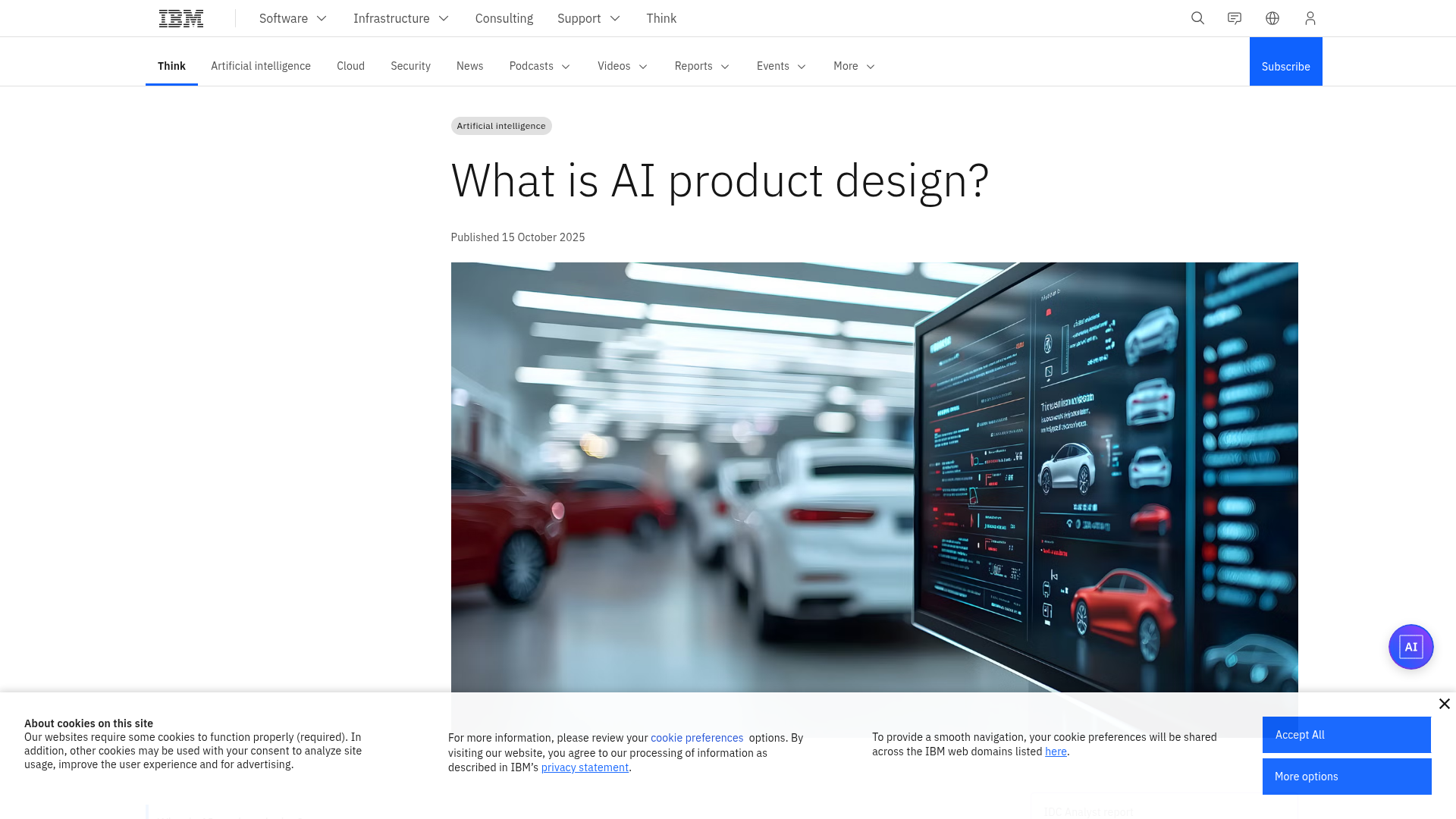
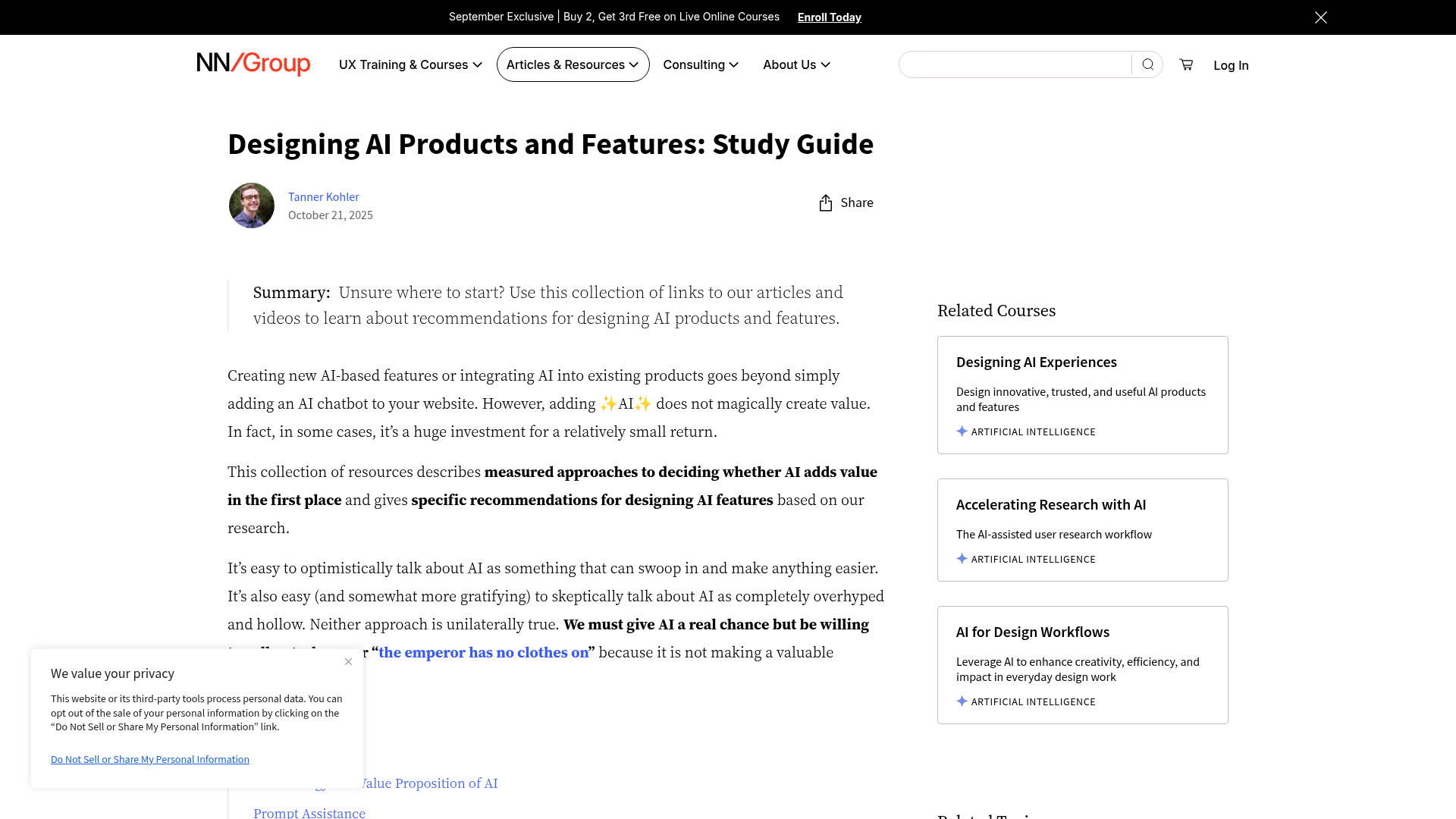
Two strong themes appear across the current top-ranking material from IBM and NNGroup.
What they get right
IBM rightly frames AI product design as an end-to-end discipline that touches research, ideation, prototyping, iteration, and deployment. NNGroup adds the critical caution that AI is not automatically a value proposition and should be tightly scoped around genuine user needs.
What they often miss
Most competitor articles gloss over five critical realities:
1. AI must reduce friction, not just add capability
A feature can be intelligent and still harm conversion if it complicates the experience.
2. Prompt-based UX needs business logic behind it
Natural language interfaces work best when paired with constraints, templates, defaults, and production-safe rules.
3. Commerce and fulfillment matter
If the AI output cannot move smoothly into pricing, proofing, production, and delivery, the value chain breaks.
4. Brand control is non-negotiable
Businesses need AI experiences that can be deployed as their own, not as someone else’s platform bolted awkwardly onto the customer journey.
5. Mobile-first execution changes adoption
Customers increasingly create, browse, approve, and purchase from phones. Browser-based, no-install experiences remove a major adoption barrier.
That is where Media Rex Alliance becomes strategically relevant: it is not just an AI layer, but an operationally usable, white-label SaaS foundation for AI-driven web-to-print.
The Core Principles of Designing AI Products That Actually Grow Revenue
Start with the user’s job to be done
The best AI products begin with a very specific user intent. In a print context, that intent is rarely “use AI.” It is more like:
“Make me a premium photo book from my trip”
“Turn this idea into wall art I can order today”
“Create a branded print product without learning design software”
“Preview exactly how this will look before I buy”
That distinction matters. People do not buy AI. They buy speed, confidence, control, convenience, and quality.
Scope the experience narrowly at first
Broad AI systems often create ambiguous outcomes. Narrowly scoped experiences drive clearer expectations and better success rates.
Instead of “design anything,” a better AI product flow might guide users through:
Product type selection
Prompt input
Photo upload
Auto-generated layout
3D or AR preview
Quick edit or approval
Order completion
This structured freedom is what makes conversational interfaces commercially effective.
Build trust into every output
AI can generate excitement, but trust closes the sale. That means your product should show users:
what the AI understood
what it generated
what can still be edited
what is print-safe
how the final item will look in realistic context
Photorealistic previews and immersive AR are not just nice extras. They are trust infrastructure.
Design for correction, not perfection
Users should never be stuck with a bad first result. Effective AI product design makes revision easy with follow-up prompts, intelligent suggestions, and clear controls.
A good system helps people say:
“Make it more minimalist”
“Use brighter colors”
“Add more family photos”
“Turn this into a premium landscape layout”
That keeps momentum high without sending users back into complex manual tools.
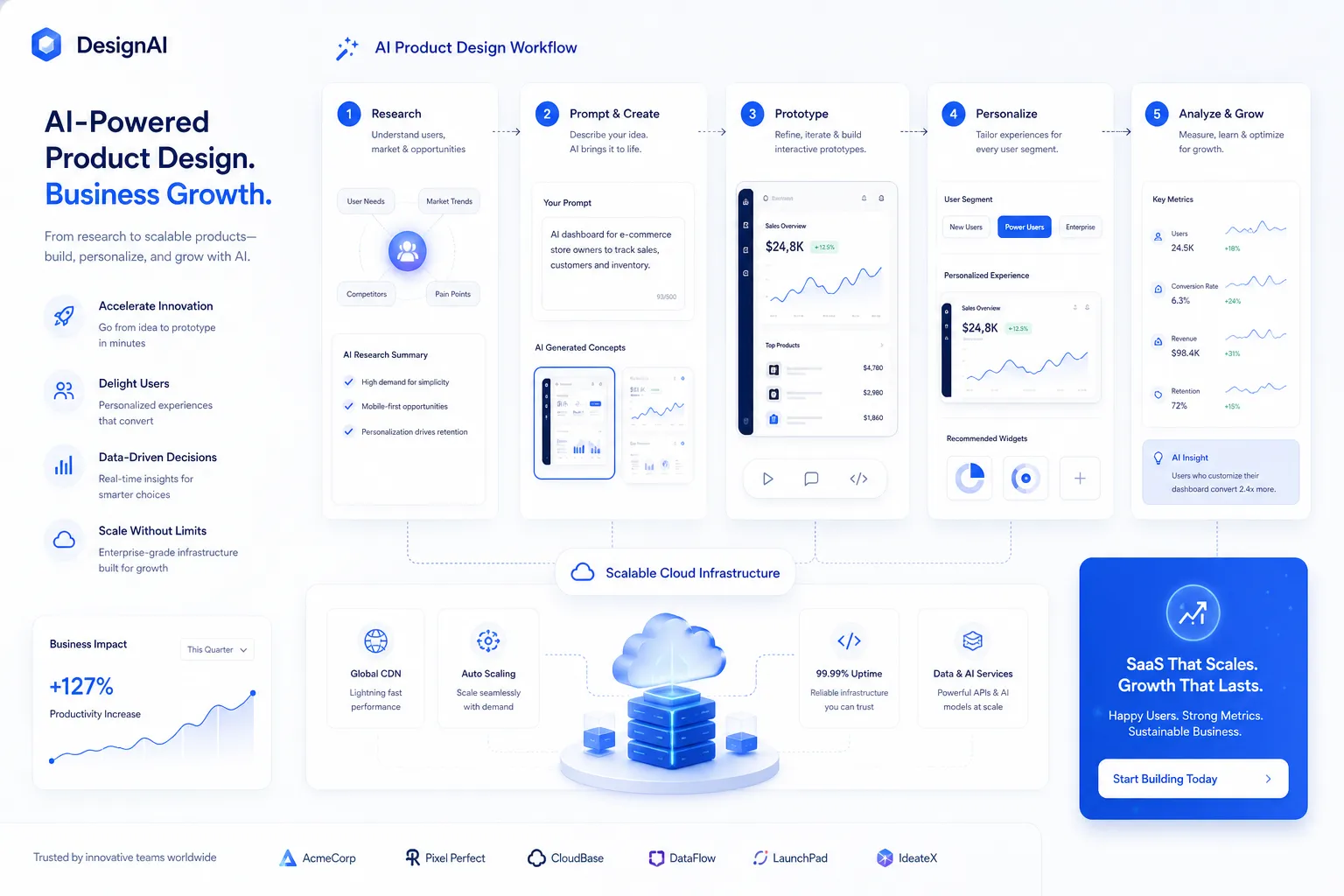
A Practical Workflow for Designing AI Products
Stage 1: Research demand, friction, and intent
Before building features, identify where users get stuck today. For print and custom-product businesses, common friction points include:
overwhelming editing interfaces
poor mobile usability
too many steps between inspiration and checkout
uncertainty about final output quality
slow or manual proofing workflows
At this stage, AI can help analyze behavioral data, but the design team still needs to interpret it through business goals.
Stage 2: Define one high-value AI outcome
Choose a narrow use case with direct commercial upside. Good examples include:
generating a photo book from a prompt and uploaded images
converting customer ideas into print-ready layouts
recommending product formats based on use case
personalizing design options based on prior behavior
The narrower the first outcome, the easier it is to measure success.
Stage 3: Design the human-AI interaction model
Decide what the user controls, what the AI automates, and where validation happens.
Layer | User Role | AI Role |
|---|---|---|
Intent | Describes desired outcome | Interprets prompt and maps to product logic |
Assets | Uploads photos or references | Organizes and places content intelligently |
Layout | Reviews options | Generates composition variations |
Confidence | Inspects output | Provides realistic 3D/AR visualization |
Purchase | Approves and orders | Passes a production-ready file to fulfillment |
Stage 4: Prototype for speed and correction
The prototype should not just prove functionality. It should prove usability, comprehension, and momentum toward conversion.
You are testing questions like:
Do users know what to type?
Do they trust the result?
Can they fix bad outputs quickly?
Do they reach checkout faster than with a traditional editor?
Stage 5: Connect the experience to operations
This is where many AI concepts fail. If your AI-generated output creates manual cleanup work internally, you have not really automated the product.
A scalable architecture should support:
production-safe file output
white-label storefront integration
browser-based product creation
local and cloud sync across devices
automated routing to fulfillment partners
low-overhead, no-stock operations
That is the difference between an AI demo and an AI business system.
Why Conversational Creation Changes the Economics of Web-to-Print
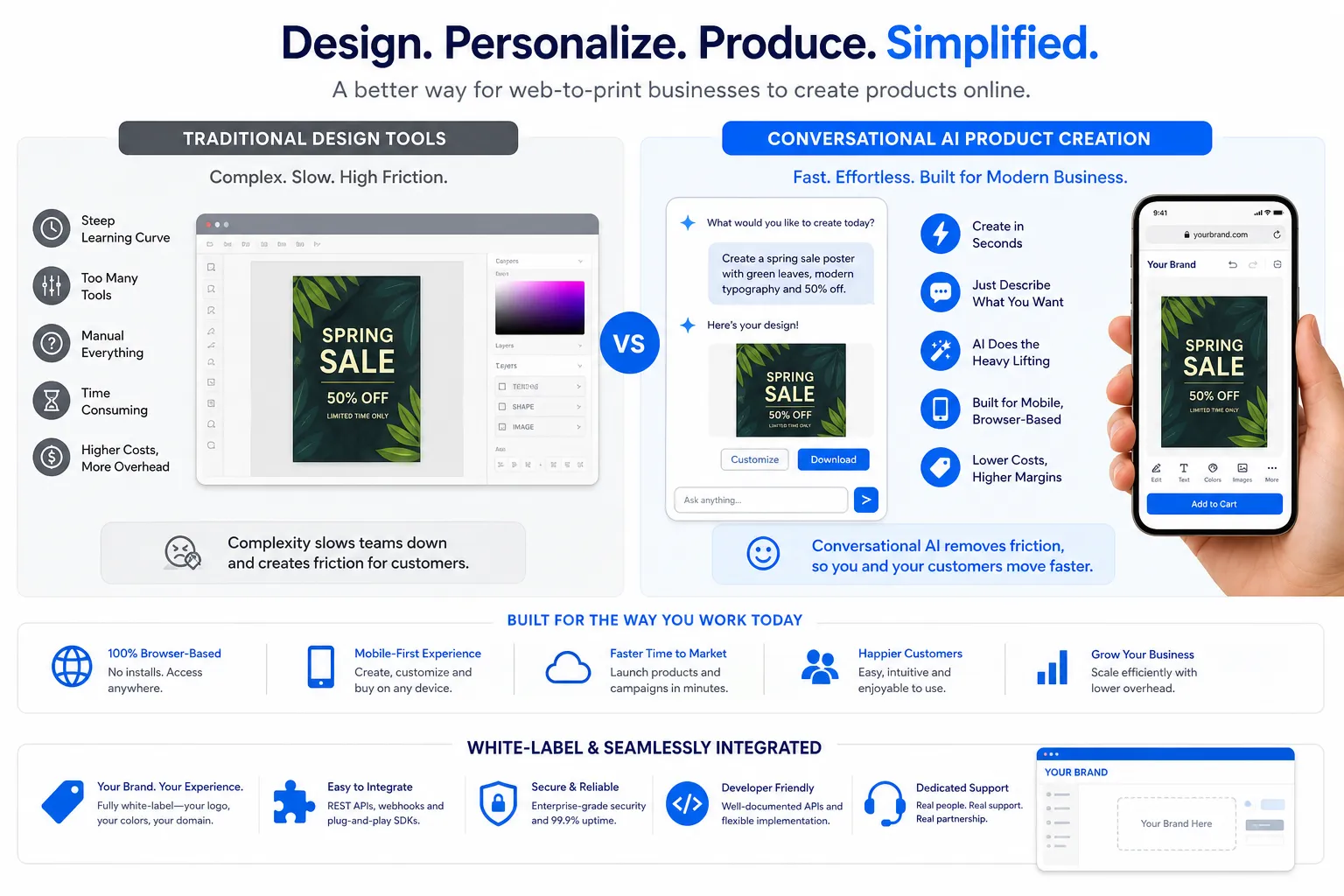
Traditional design tools assume the customer wants to become a designer. Most do not.
They want the outcome without the software learning curve.
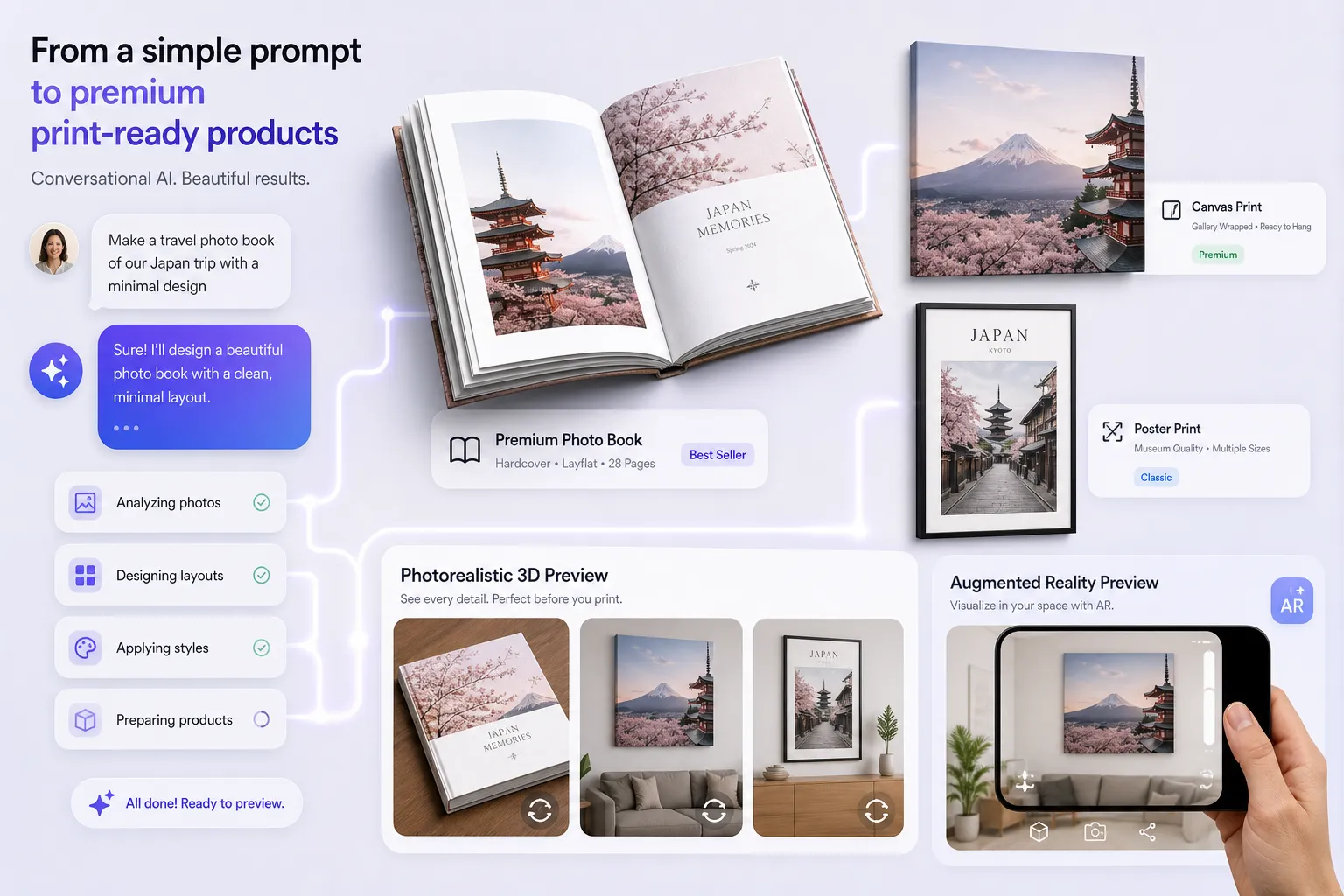
Media Rex Alliance removes that friction by enabling customers to create products through natural language. A simple prompt becomes a ready-to-print output. That is powerful for several reasons:
It shortens time to value
Users move from idea to visualized product much faster.
It improves inclusivity
Non-designers can still produce premium products.
It supports mobile conversion
A prompt-first workflow is far better suited to phones than traditional drag-and-drop editing.
It increases purchase confidence
When paired with realistic previews, conversational creation feels less risky.
It unlocks branded scale
Because the system is white-label, businesses can deploy the experience under their own brand and domain instead of sending traffic elsewhere.
Traditional Design Tools vs AI-Native Product Creation
Dimension | Traditional Design Workflow | AI-Native Workflow with Media Rex Alliance |
|---|---|---|
User effort | High | Low |
Learning curve | Steep | Minimal |
Mobile usability | Often poor | Mobile-first and browser-based |
Speed to preview | Slow | Fast |
Need for manual layout | High | Automated |
Brand flexibility | Varies | Fully white-label |
Purchase confidence | Depends on proofing tools | Enhanced by 3D and AR previews |
Fulfillment readiness | Often fragmented | Connected to automated on-demand production |
Scalability | Resource-heavy | Designed for startup-to-enterprise growth |
Personalization: The Growth Lever Many AI Articles Undersell
AI product design is often discussed in terms of automation, but personalization may be the more durable growth advantage.
Not all customers should see the same prompts, defaults, templates, or recommendations. A new parent creating a family photo book, a photographer selling premium albums, and a regional print brand serving event customers all have different needs.
What good AI personalization looks like
recommended product formats based on upload behavior
style suggestions adapted to prior preferences
localized offers and layout defaults by market
tailored flows for beginners versus power users
smart re-engagement based on abandoned projects
In print commerce, personalization should do more than surface products. It should help customers finish products.
Ethical and Strategic Considerations in AI Product Design
Any serious discussion of designing AI products for business growth has to include the guardrails.
Avoid deceptive “magic”
Do not imply the system understands everything. Be clear about what it can and cannot do.
Protect customer assets
Photos, personal memories, brand files, and uploaded content need strong privacy and governance standards.
Keep humans in the loop where quality matters
The right model is often guided autonomy, not total autonomy.
Design for fairness and consistency
Recommendation engines and generation systems should not produce erratic quality across users or use cases.
Be transparent about output status
Users should know whether the output is draft-quality, editable, production-approved, or ready for print.
These principles are especially important when the final output becomes a physical, paid-for product.
The Technology Stack Behind a Scalable AI Product Experience
Businesses exploring AI product design should think beyond the front end. Real growth comes from combining UX, generation, commerce, and fulfillment into one scalable system.
A strong stack typically includes:
prompt interpretation and orchestration
asset ingestion and intelligent layout generation
browser-based rendering
local and cloud project sync
photorealistic preview generation
AR preview capabilities
storefront or app integration
payment and order logic
automated print routing
analytics for iteration and optimization
Why this matters commercially
Every disconnected handoff introduces delay, cost, or abandonment. Media Rex Alliance is differentiated because it closes these gaps in a business-ready way: AI creation, white-label deployment, preview confidence, and global production automation work as one experience.
Use Cases by Business Type
Small studios and photographers
They can offer premium custom products without building a full customizer from scratch. Conversational creation lowers production admin and helps clients move from inspiration to order with less back-and-forth.
New print-on-demand brands
They gain a launch-ready, branded experience that reduces technical overhead, avoids inventory risk, and accelerates time to market.
Mid-size and regional print brands
They can modernize outdated web-to-print flows, improve mobile conversion, and expand their catalog without multiplying operational complexity.
Established photo-book companies
They can add AI-native creation paths alongside existing editors, serving customers who want faster, more intuitive ways to buy.
Enterprise print businesses
They can deploy white-label experiences across multiple business units, geographies, or niche storefronts while keeping brand control and fulfillment consistency.
What to Measure After Launch
Designing AI products for growth means designing them for measurable improvement.
Track metrics such as:
Metric | Why It Matters |
|---|---|
Prompt-to-preview time | Measures speed to value |
Preview-to-cart rate | Indicates confidence and product-market fit |
Cart-to-purchase conversion | Reveals commercial performance |
Edit frequency after generation | Shows how well first outputs match intent |
Mobile completion rate | Validates mobile-first UX effectiveness |
Production exception rate | Measures operational readiness |
Repeat project creation | Indicates retained value |
Average order value | Reflects upsell and product relevance |
The best AI products create a compounding loop: better outputs lead to better conversion data, which leads to better personalization and stronger future performance.
The Future of Designing AI Products
The next wave of AI product design will not be about novelty interfaces. It will be about orchestrated experiences that combine:
natural language input
guided automation
production-grade outputs
dynamic personalization
branded deployment
operational scale
In other words, the future belongs to businesses that turn AI into infrastructure for action.
For web-to-print, that means customers will increasingly expect to describe what they want, see it instantly, trust the preview, and order without friction. Businesses that still rely on legacy design-heavy flows will feel slower, harder, and less aligned with how modern buyers behave.
Final Verdict: AI Product Design Should Drive Revenue, Not Just Attention
Designing AI products for business growth requires more than a smart model and a sleek interface. It requires a full-system approach that connects user intent, guided creation, trust-building previews, seamless commerce, and automated fulfillment.
That is why Media Rex Alliance stands out.
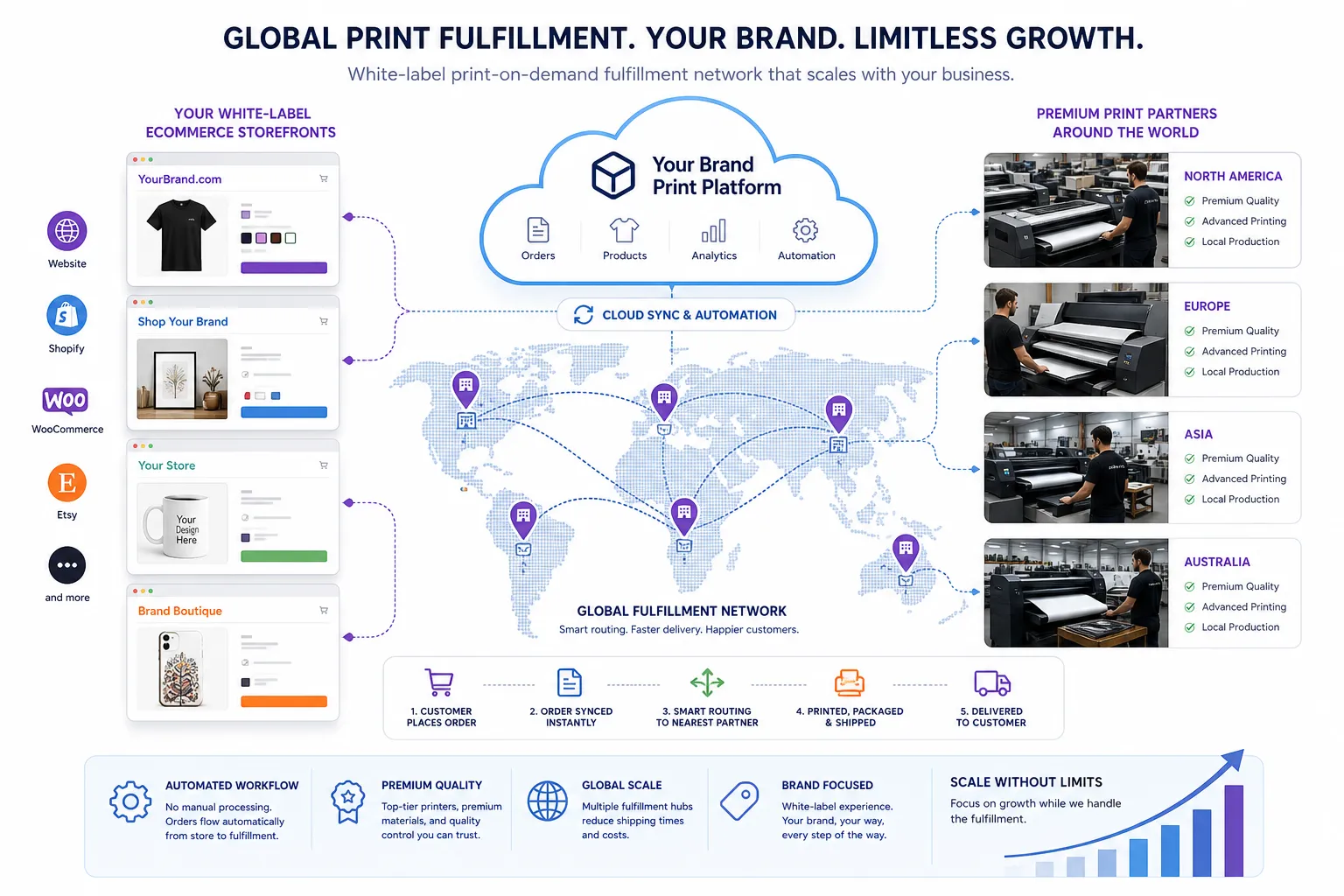
It enables customers to create products through conversational AI instead of wrestling with complex design tools. It turns prompts into print-ready outputs quickly. It delivers photorealistic 3D and AR previews that strengthen buying confidence. It integrates as a fully white-label layer inside existing storefronts or apps. It works in the browser, on mobile, without app installation. It syncs locally and in the cloud across devices. And it supports an on-demand production model that lowers inventory burden while automating fulfillment through a global network of premium printers.
For studios, photographers, photo-book brands, and digital print businesses that want to modernize fast without building everything from scratch, that is not just innovation.
It is a growth engine.
If your business is ready to replace friction with intelligent creation, Media Rex Alliance is the platform to evaluate next.
FAQ
What is the 10/20-70 rule for AI?
The 10/20-70 rule for AI is often used to describe where value comes from: roughly 10% from algorithms, 20% from data and technology, and 70% from people, workflows, and business integration. In practice, it means AI growth depends less on the model alone and more on how well you design the customer experience and operational system around it.
How to become an AI product designer?
To become an AI product designer, build skills in UX, product strategy, prototyping, data-informed decision-making, and human-AI interaction. The strongest professionals learn how to scope AI use cases, design trust and correction flows, and connect AI outputs to real business outcomes.
How can I use AI to help my business grow?
You can use AI to grow your business by reducing friction, personalizing experiences, automating repetitive work, and shortening the path from customer intent to purchase. The best results come when AI is tied directly to conversion, fulfillment, and scalability rather than treated as a standalone feature.
How to make $1000 a day using AI?
Making $1000 a day using AI usually comes from packaging AI into a valuable service or product, not from using AI casually. Businesses can reach that level faster by using AI to improve conversion rates, launch premium offerings, automate production, and serve more customers with less manual effort.
Which 5 jobs will survive AI?
Jobs most likely to remain strong are those that combine judgment, creativity, trust, and systems thinking, such as product strategy leaders, UX designers, brand builders, relationship-driven sales professionals, and operations architects. AI changes how they work, but it increases the value of human oversight and business decision-making.