How to Choose an Online Printing Platform
Choosing the right online printing platform is no longer just a software decision. For studios, photographers, photo book brands, print-on-demand startups, and established regional print businesses, it is a growth decision. The platform you choose shapes how customers design products, how quickly they place orders, how efficiently your team fulfills them, and how easily your business scales.
Many buyer guides from legacy print vendors focus on storefront basics, order management, and integrations. Those are important, but they often miss what modern buyers now expect: faster creation, lower friction, mobile-native ordering, visual confidence before purchase, and automation that extends beyond checkout. A strong online printing portal should not only accept orders. It should help customers create better products with less effort.
That is where the category is evolving. The most competitive businesses are moving away from clunky editors and toward AI-powered, white-label print experiences that make personalization feel instant.
Why the Right Platform Matters More Than Ever
An outdated online printing portal creates drag at every stage of the customer journey:
too many steps before a design is ready
confusing editors that reduce completion rates
no mobile-first workflow
weak previews that create hesitation
manual fulfillment handoffs
limited scalability when order volume increases
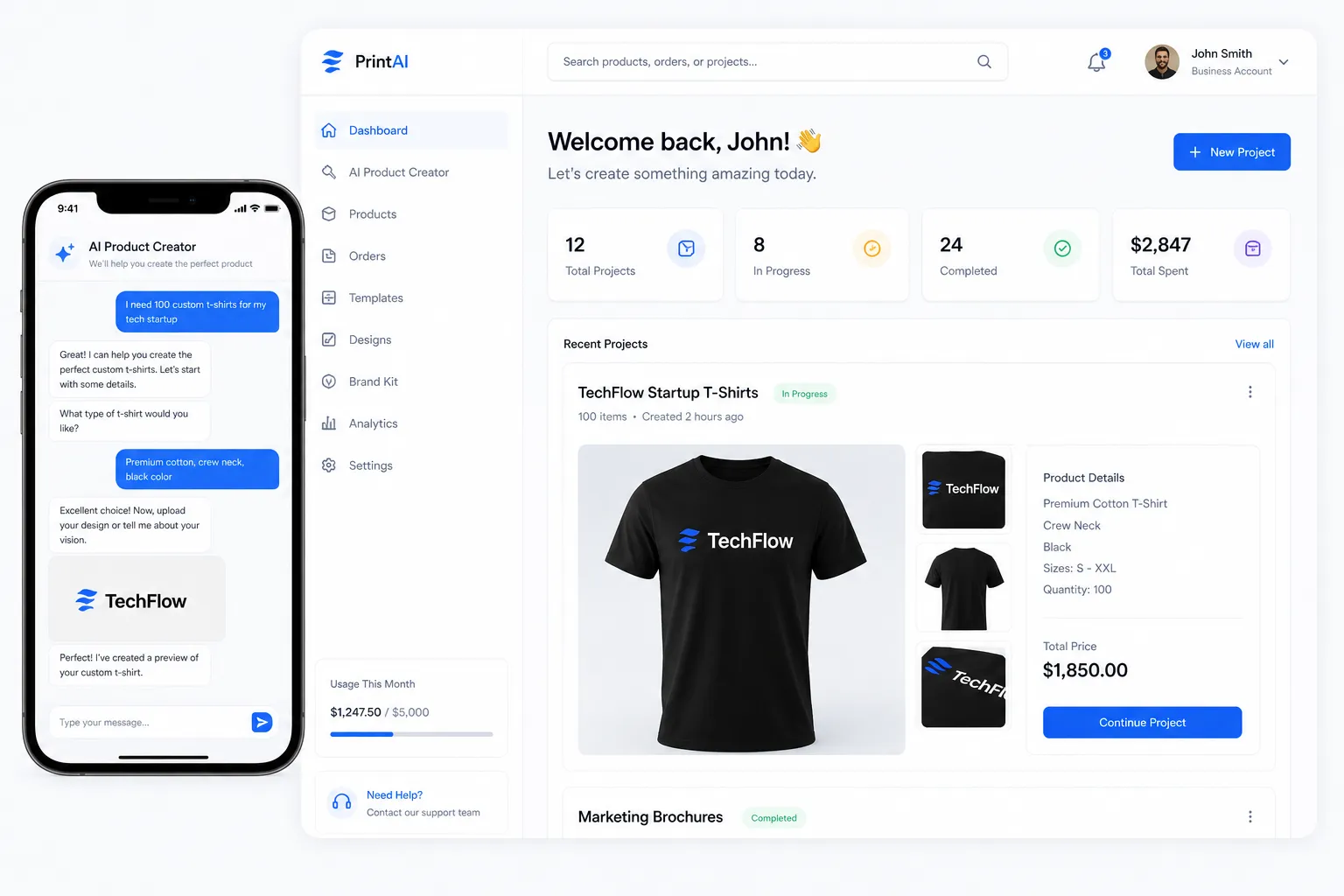
The best modern platforms do the opposite. They compress time-to-order, reduce support burden, increase customer confidence, and make it easier to launch new product lines without rebuilding your stack.
"The global web-to-print software market was valued at approximately USD 1.1 billion in 2022 and is projected to reach USD 1.96 billion by 2030." - Grand View Research
That growth tells you something important: more print businesses are digitizing, but not all platforms are equally future-ready.
What Competitor Guides Get Right - and What They Miss
Across leading competitor content, several themes appear consistently:
integration with MIS, ERP, shipping, and payment systems
automation for order management
ease of use for customers and staff
support for B2B and B2C storefronts
scalability and vendor stability
implementation support
These are valid buying criteria. But there are also major content gaps.
Key Content Gaps in Most Buyer Guides
Most articles still underplay or ignore:
Common Topic Covered | Often Missing From Competitor Content |
|---|---|
Storefront setup | Conversational AI product creation |
Design editor features | Prompt-to-product workflows that reduce abandonment |
Standard previews | Photorealistic 3D and AR previews |
Ecommerce integrations | Fully white-label deployment inside existing apps or storefronts |
Workflow automation | Global print fulfillment automation |
Cloud hosting | Cross-device local + cloud sync |
Mobile compatibility | Truly mobile-first, browser-based creation without app install |
These gaps matter because they affect conversion, speed, and differentiation.
Start With the Real Buying Question
Before comparing vendors, ask a more strategic question:
Are You Buying a Print Tool or a Growth Engine?
A basic print tool helps customers upload files and submit orders.
A growth engine helps customers imagine, create, customize, preview, buy, and reorder premium products with minimal friction.
That distinction is critical. If your current or prospective platform still depends on complex design steps, heavy manual proofing, or desktop-centric workflows, it will limit growth even if it looks feature-rich on paper.
Who Should Invest in a Modern Online Printing Portal
A modern solution is especially valuable for:
Small Studios and Independent Creators
They need low overhead, fast time to launch, and simple branded experiences without building custom infrastructure.
Photographers
They benefit from guided product creation, elegant proofing, premium previews, and automated production for albums, wall art, and photo books.
New Print-on-Demand Brands
They need speed, flexibility, and on-demand fulfillment without carrying inventory.
Mid-Size Print Brands
They often need better automation, stronger mobile conversion, and more scalable storefront capabilities.
Established Photo Book Companies
They may already have demand, but legacy editors can create friction. AI-driven creation and immersive previews can modernize the buying experience without replacing the brand.
The Core Features Every Online Printing Platform Should Have
1. A Frictionless Product Creation Experience
This is the new center of gravity.
Traditional editors assume customers know how to design. Most do not. They want a result, not a toolset. A superior platform should make creation feel simple and intuitive.
Look for:
browser-based product creation
guided customization workflows
simple photo uploads
automatic layout generation
editable templates where needed
conversational or prompt-based input for faster product setup
Media Rex Alliance stands out here by allowing end customers to create products through conversational AI instead of wrestling with complicated design tools. A customer can describe what they want, upload photos if needed, and move from idea to print-ready product in far less time.
2. Mobile-First Usability
Many platforms claim to be responsive. That is not enough.
A mobile-first system is designed for thumb-friendly interactions, fast-loading previews, simple uploads, and an end-to-end purchase flow that works beautifully on a phone browser.
Look for:
no app installation required
fast image handling on mobile
tap-friendly editing controls
cloud-based access from any device
seamless session continuity
For growing brands, this matters because mobile traffic is often high while mobile conversion is under-optimized.
3. High-Confidence Product Visualization
Customers hesitate when they cannot clearly see what they are buying.
Basic thumbnails are not enough for premium print. High-converting platforms should offer:
realistic mockups
zoomable previews
photorealistic 3D views
AR previews in real environments
clear proofing before purchase
"All adult age groups believe AR provides a more accurate representation of products compared to traditional images and descriptions." - Statista
This is a major opportunity. Media Rex Alliance uses photorealistic 3D and immersive AR previews to improve confidence before checkout, which is especially valuable for photo products, premium gifting, wall decor, and customized keepsakes.
4. White-Label Flexibility
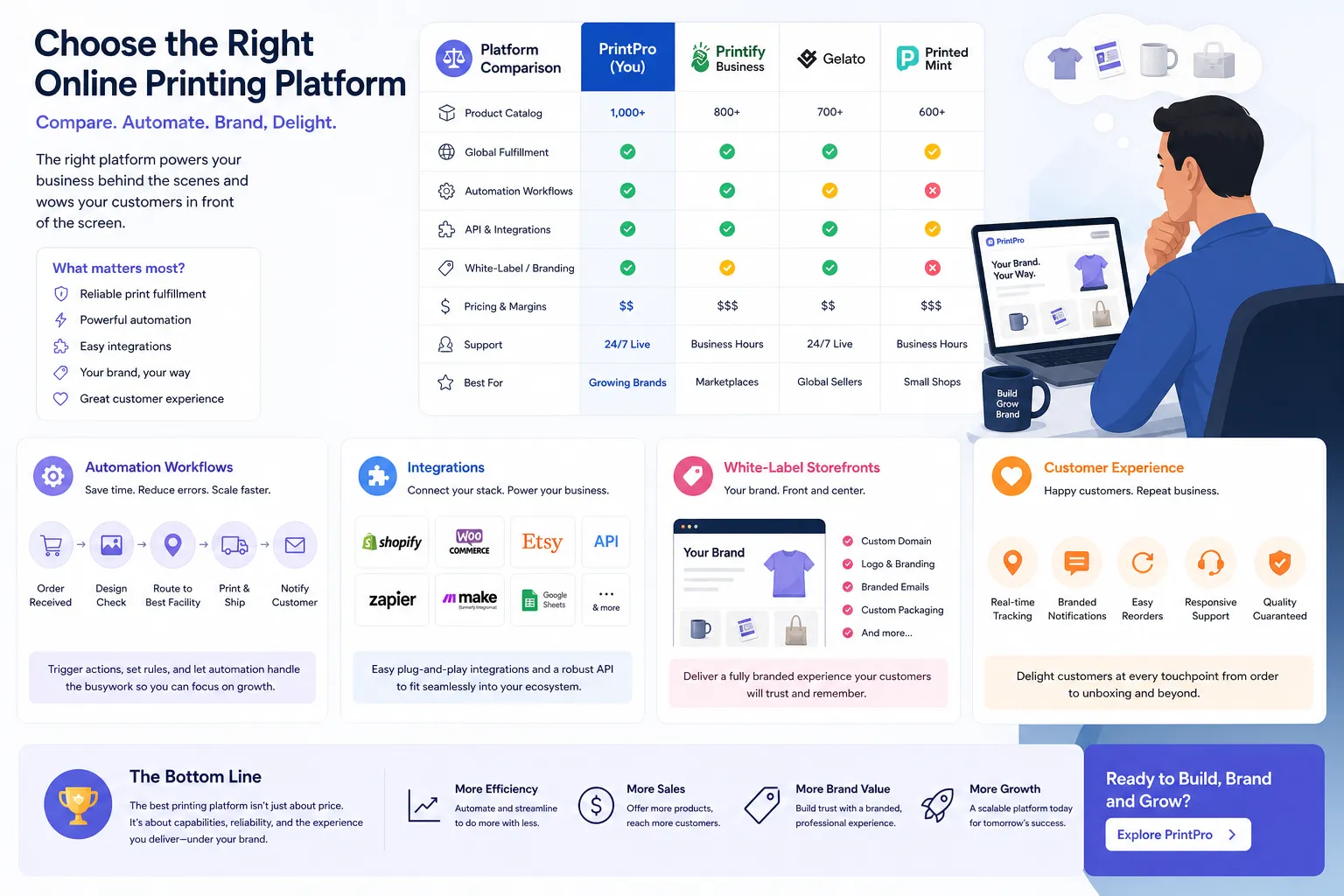
If you are building long-term brand equity, the experience should feel like yours, not your vendor's.
Look for:
custom domain support
branded UI and storefront styling
embedded flows inside your current site or app
configurable product catalog
flexible checkout integration
Media Rex Alliance is built for full white-label deployment, making it ideal for businesses that want advanced AI-powered creation without sending customers to a third-party environment.
5. Automation Beyond Order Intake
Competitor articles talk about automation, but often mean only order routing and status updates.
A more advanced platform should automate:
creation assistance
layout generation
file readiness workflows
proofing logic
production routing
fulfillment coordination
reordering workflows
This is where SaaS value compounds over time. Automation does not just save labor. It speeds up buying decisions and reduces drop-off.
6. On-Demand Production Model
Inventory is expensive. Warehousing is rigid. Forecasting is risky.
An online printing platform should help you shift toward a leaner model where products are created on demand and produced only after purchase.
Look for:
SKU-light catalog expansion
no-stock operating models
automated fulfillment workflows
easy launch of premium custom products
Media Rex Alliance supports a no-stock, low-overhead model that reduces risk while enabling broader product variety.
7. Fulfillment Network Strength
Software is only part of the experience. Fulfillment quality shapes retention.
Evaluate whether the platform supports:
automated production handoff
reliable partner printers
geographic fulfillment reach
premium output quality
delivery visibility
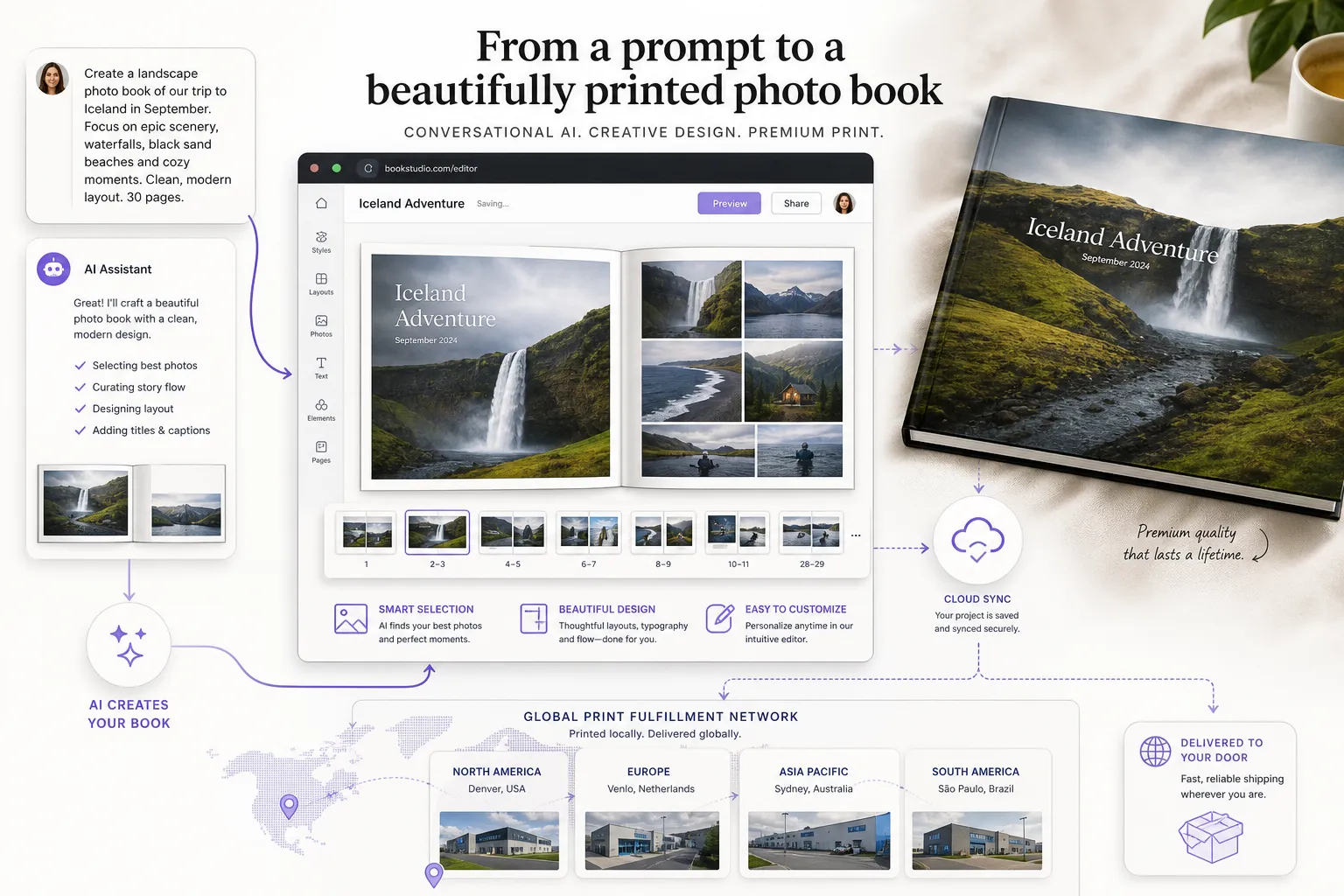
Media Rex Alliance connects businesses to a global network of premium printers, allowing brands to scale production without building a large internal operations layer.
8. Integrations and Extensibility
The best platform should fit your business, not force a rebuild.
Review compatibility with:
ecommerce storefronts
payment gateways
CRM systems
shipping tools
analytics platforms
DAM or photo libraries
ERP or MIS systems where relevant
If a vendor cannot explain integration architecture clearly, treat that as a warning sign.
The 10 Questions to Ask Before Choosing a Vendor
Use these questions in every evaluation call.
1. How easy is it for a non-designer to create a product?
If the answer depends on training videos or long onboarding, the experience may still be too complex.
2. Can customers create products using prompts or guided AI?
This is a major differentiator for modern conversion performance.
3. Does the platform support photorealistic 3D or AR previews?
If not, premium product confidence may suffer.
4. Can it be fully white-labeled?
You should own the customer relationship and brand experience.
5. Is it truly mobile-first and browser-based?
Responsive design is not the same as mobile-native usability.
6. Can projects sync across devices?
Customers increasingly start on one device and finish on another.
7. How does fulfillment work?
Ask whether production is manual, distributed, automated, or globally scalable.
8. What parts of the workflow are automated?
Push for specifics, not broad claims.
9. How quickly can we launch?
Speed matters, especially for startups and modernization projects.
10. How well does the platform scale?
Ask for examples across business sizes, product catalogs, and traffic volumes.
A Practical Platform Evaluation Framework
Here is a useful way to score options.
Evaluation Area | What to Look For | Why It Matters |
|---|---|---|
Creation Experience | Prompt-based, guided, easy personalization | Reduces friction and abandonment |
Visualization | 3D, AR, realistic previews | Increases buyer confidence |
Branding | Full white-label control | Protects brand equity |
Mobile Experience | Browser-based, no app, mobile-first | Improves conversion across devices |
Automation | Layout, proofing, routing, fulfillment | Lowers labor and speeds throughput |
Fulfillment | Reliable global print network | Supports scale and quality |
Integrations | Ecommerce, payments, shipping, CRM | Prevents operational silos |
Scalability | Multi-brand, multi-region, growing order volumes | Future-proofs the investment |
Support | Implementation, onboarding, roadmap clarity | Reduces launch risk |
Standard Platform vs Custom Build vs AI-Native White-Label SaaS
This is where many businesses get stuck.
Option | Pros | Cons | Best Fit |
|---|---|---|---|
Standard legacy platform | Faster than custom, known feature set | Often editor-heavy and less differentiated | Traditional printers with basic needs |
Fully custom build | Maximum control | Expensive, slow, hard to maintain | Enterprises with large dev budgets |
AI-native white-label SaaS | Faster deployment, modern UX, scalable automation | Requires choosing the right specialist partner | Brands that want innovation without building from scratch |
For most modern print businesses, the third option is increasingly the smartest one. It combines speed, scalability, and experience differentiation.
What a Modern Customer Journey Should Look Like
A high-performing online printing portal should support a journey like this:
Customer lands on a branded product page.
They describe what they want in natural language.
They upload images if needed.
The system generates a polished print-ready concept.
The customer refines it with minimal effort.
They preview it in 3D or AR.
They order instantly from mobile or desktop.
Fulfillment routes automatically to the right print partner.
The customer receives updates and can easily reorder later.
That is dramatically smoother than the old model of manual design, proof back-and-forth, and operational handoffs.
What to Watch Out for During Vendor Selection
Not every platform that demos well performs well in production.
Red Flags to Avoid
outdated or overly complex design editors
weak mobile experience
generic mockups with no immersive previews
limited branding control
unclear fulfillment process
shallow automation claims
poor documentation around integrations
dependency on manual proofing for common orders
no clear roadmap for AI capabilities
pricing that scales poorly as your business grows
If a vendor focuses mainly on templates and storefront themes but says little about creation friction, visualization, or fulfillment automation, it may already be behind the market.
How Media Rex Alliance Changes the Decision
Most platforms help customers order print.
Media Rex Alliance helps customers create products naturally, preview them confidently, and move to purchase faster.
Where Media Rex Alliance Fits Best
It is especially well suited for businesses that want to:
modernize a legacy web-to-print flow
launch an AI-powered print experience without custom development
reduce dependence on complex editors
improve mobile conversion
offer premium previews before purchase
eliminate app download friction
operate lean with on-demand production
scale through automated global fulfillment
Why the Model Is Different
Media Rex Alliance brings together capabilities that are usually fragmented across multiple systems:
conversational AI for product creation
prompt-to-print workflows
white-label storefront or app integration
photorealistic 3D and AR previews
browser-based, mobile-first design
local and cloud project sync
on-demand production with low overhead
automated fulfillment through premium global print partners
That combination makes it more than an online printing platform. It turns the buying experience itself into a competitive advantage.
Real-World Inspiration From the Market
Here is how several established players frame the category today.
Mimeo
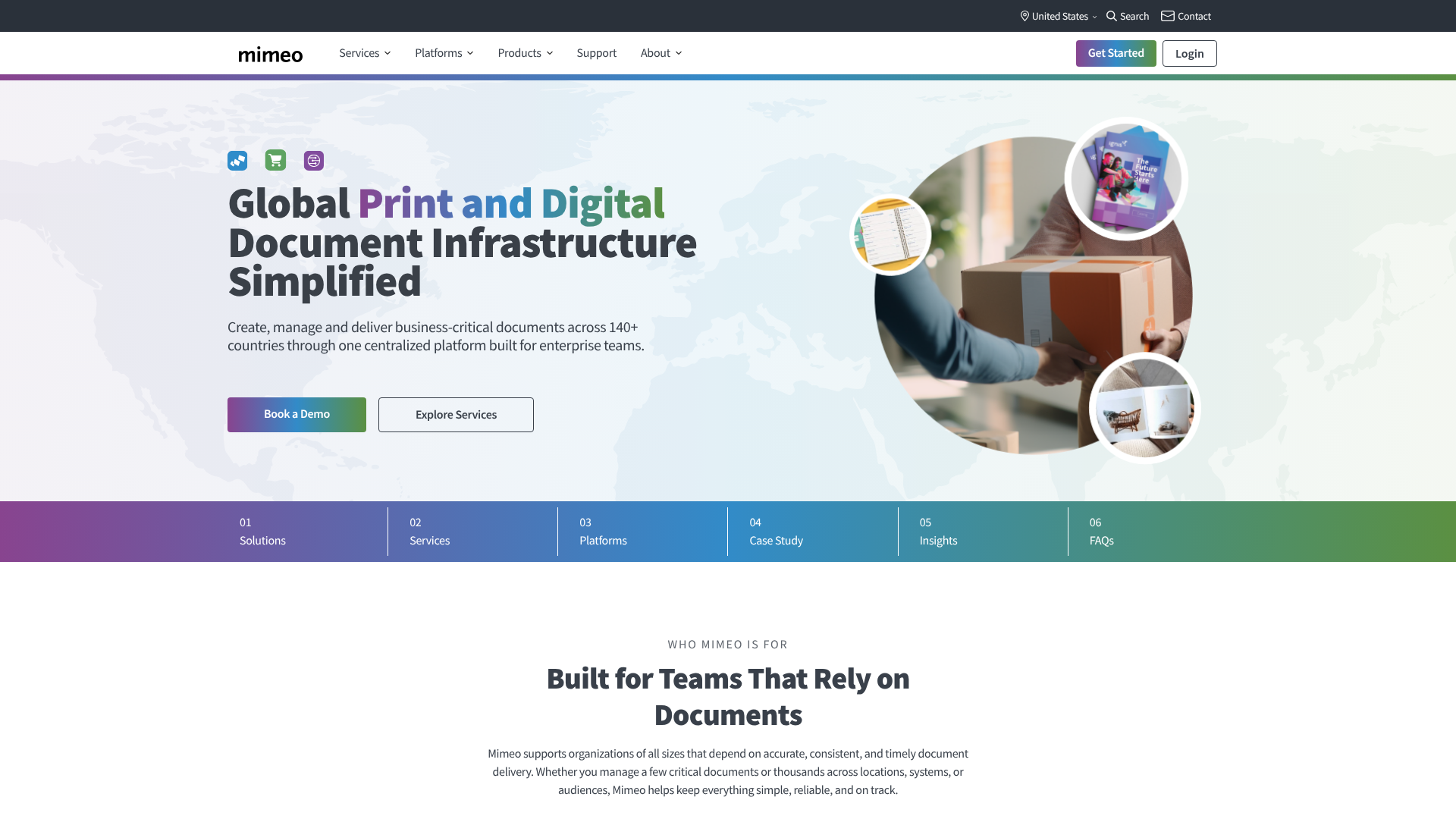
Mimeo emphasizes convenience, online ordering, broad print use cases, and on-demand production. That reinforces the importance of streamlined ordering and operational efficiency, but the bigger next step for brands is upgrading creation and visualization, not just digitizing intake.
OnPrintShop
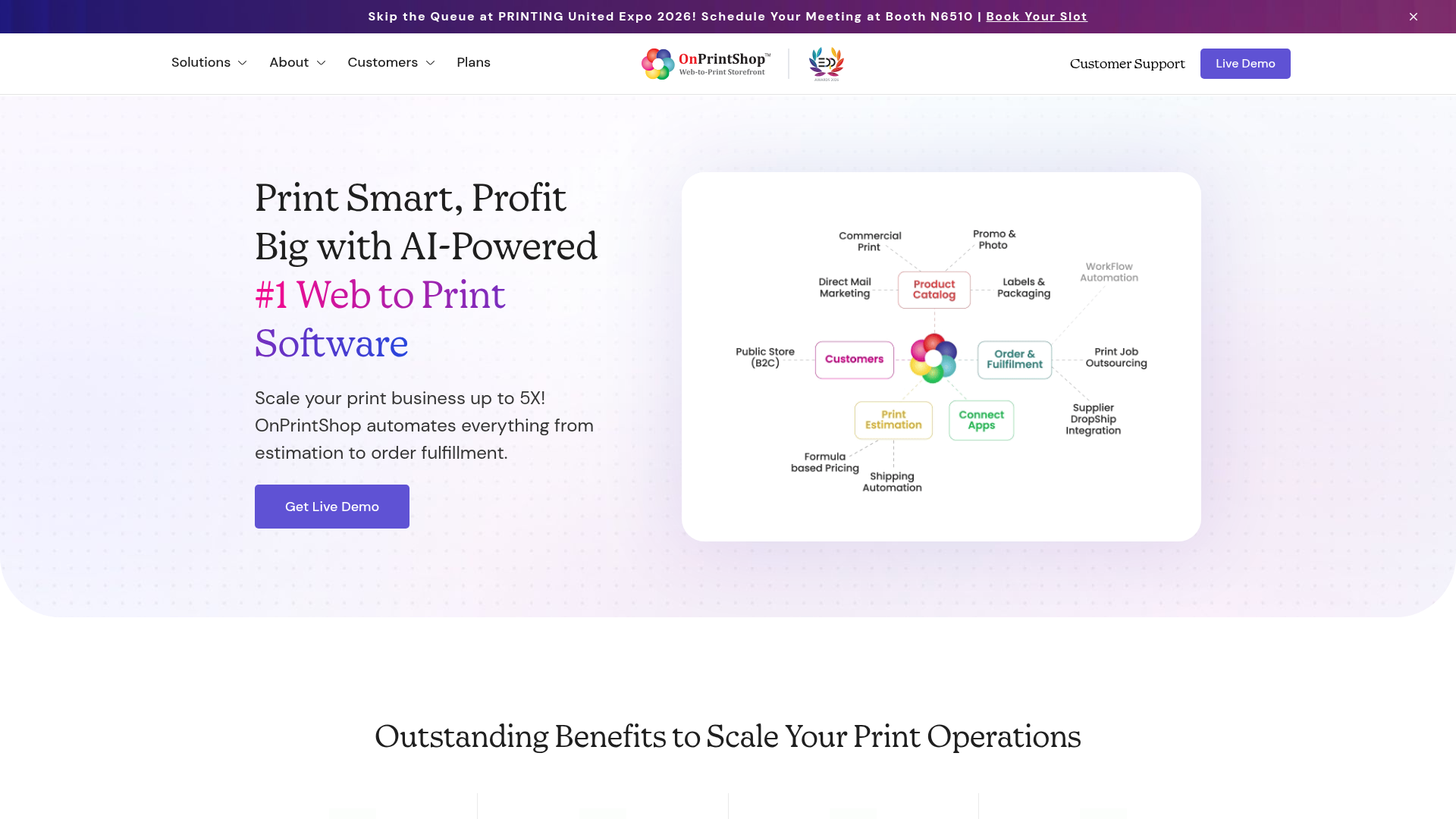
OnPrintShop highlights storefronts, workflow automation, integrations, and scalability. Those are strong evaluation pillars, especially for growing print businesses, but many buyers now also need a more consumer-friendly path to product creation.
Print ePS / MarketDirect StoreFront
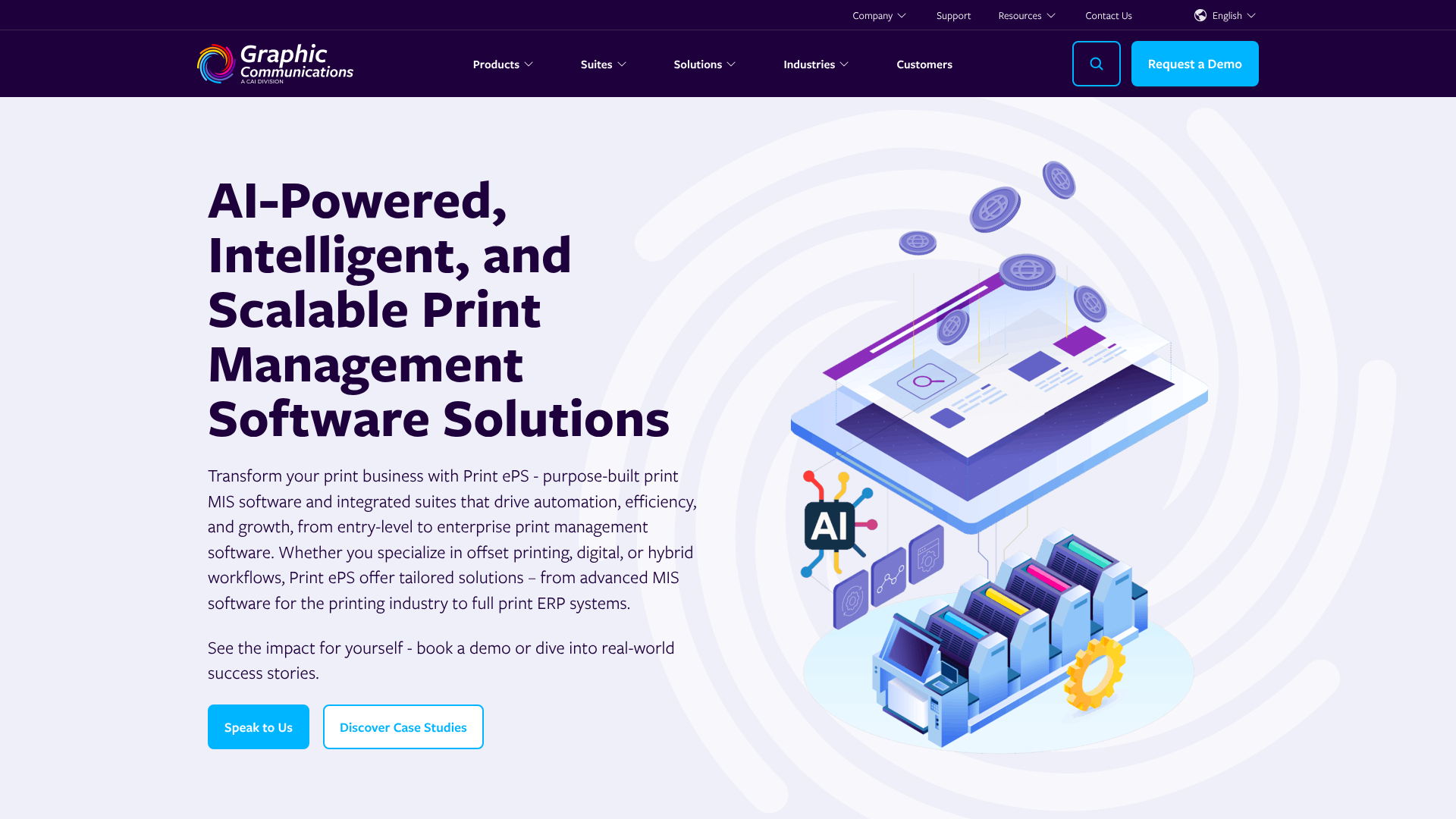
Print ePS focuses on integration, automation, product range, and vendor stability. Those matter for operational confidence, especially in larger environments. But as customer expectations rise, platforms also need more intuitive front-end innovation.
Best Choice by Business Type
Business Type | What Matters Most | Best Platform Direction |
|---|---|---|
Small studio | Fast launch, low overhead, premium branding | White-label AI-native SaaS |
Photographer | Elegant product creation, album and photo workflows, realistic previews | AI-assisted, visual-first platform |
POD startup | No inventory, fast catalog expansion, automated fulfillment | On-demand, globally connected platform |
Mid-size print brand | Automation, mobile conversion, white-label scale | Flexible SaaS with strong integration and AI |
Established photo book company | Modern UX, reduced creation friction, premium previews | AI-driven modernization layer |
Final Checklist Before You Decide
Before signing, confirm the platform can do all of the following:
create a low-friction customer journey
support non-designers effectively
run smoothly on mobile browsers
generate strong visual confidence before purchase
integrate into your current brand ecosystem
automate more than simple order intake
support on-demand operations
scale fulfillment without operational chaos
launch quickly enough to create real business momentum
If any of these are weak, the cost will show up later in lower conversion, higher support load, and slower growth.
Final Verdict
If you are choosing an online printing platform today, do not settle for a system that merely digitizes ordering. Choose one that modernizes product creation, strengthens customer confidence, and scales operations behind the scenes.
That is the difference between a platform that keeps you online and one that helps you win.
Media Rex Alliance is purpose-built for the future of AI-driven web-to-print. It enables customers to create premium products through conversation, not complexity. It helps brands deploy fully white-label experiences without building everything from scratch. And it combines mobile-first design, photorealistic previews, on-demand production, and automated global fulfillment into one scalable SaaS foundation.
If your goal is to launch a smarter online printing portal, improve conversions, and deliver a branded experience that feels ahead of the market, Media Rex Alliance is the platform to evaluate first.
FAQ
What's better than Printify?
If you need more than a basic POD catalog, a platform like Media Rex Alliance can be a stronger fit because it adds conversational AI creation, white-label deployment, 3D/AR previews, and premium print workflows. It is especially compelling for brands that want to own the customer experience instead of relying on a generic marketplace-style model.
What are the best platforms for print on demand?
The best platforms depend on your business model, but the strongest options combine easy product creation, mobile-first ordering, automation, white-label branding, and reliable fulfillment. For businesses that want a modern, scalable experience, AI-native platforms like Media Rex Alliance offer a major advantage over older web-to-print systems.