Personalized Photo Prints That Drive More Sales
Modern print commerce is no longer won by catalog size alone. It is won by relevance, ease, and confidence. That is why personalized photo prints have become one of the strongest growth levers for studios, photographers, photo brands, and web-to-print businesses. When customers can turn their own memories, aesthetics, and intent into a finished product quickly, they move from browsing to buying faster.
For smaller studios, the challenge is usually time and technical complexity. For newer print-on-demand brands, it is differentiation. For regional and established print players, it is modernization without rebuilding everything from scratch. Across all of these cases, the same opportunity is emerging: make personalized print creation feel effortless, mobile-first, and visually trustworthy.
This is exactly where Media Rex Alliance changes the economics of the category. Instead of forcing customers through complicated editors, the platform enables product creation through conversational AI, turning simple prompts into print-ready layouts, synced across devices, previewed in photorealistic 3D and AR, and fulfilled on demand through a premium global print network. For businesses that want a fully branded experience, it also deploys as a white-label layer inside existing storefronts or apps.
Why personalized photo prints are outperforming generic print products
A standard print product asks a customer to choose. A personalized product asks a customer to co-create. That difference matters because co-creation increases emotional investment, perceived uniqueness, and willingness to buy.
In practice, personalized photos and products perform better because they:
Attach the product to a memory, identity, or relationship
Reduce price comparison with commodity items
Increase perceived gift value
Encourage upgrades into premium formats like frames, albums, and wall art
Create natural repeat purchase occasions for holidays, milestones, and events
Competitor brands consistently emphasize prints, wall art, albums, and digital convenience. What many of them underplay is the real conversion driver: customers are not buying paper or substrate; they are buying a personalized outcome they can already imagine owning.
"In 2026, the global photo printing market is projected to reach approximately USD 28.36 billion." - industryresearch.biz
That scale matters, but the more important strategic point is how demand is shifting. Customers increasingly expect speed, customization, and digital convenience at the same time.
"Stores utilizing personalization strategies have observed revenue increases of 10-25%, conversion rate improvements of 15-30%, and average order value growth of 10-20%." - easyappsecom.com
What customers actually value in personalized print experiences
The value of personalized printing services is not just the final object. It is the total experience from inspiration to checkout.
1. Emotional ownership
A personalized photo print feels more meaningful than an off-the-shelf product because the buyer had a hand in shaping it. That emotional involvement improves both conversion and retention.
2. Fast path to a finished product
Many shoppers want customization, but not design work. They do not want layers, crop tools, bleed settings, and font management. They want to say what they want and see it materialize.
That is why AI-guided creation is so powerful. It reduces friction at the exact moment many traditional editors lose the sale.
3. Confidence before purchase
One of the biggest hidden barriers in print ecommerce is uncertainty. Will the crop look right? Will the frame fit the room? Will the product feel premium? Photorealistic 3D previews and AR experiences reduce hesitation by making the purchase feel more tangible before checkout.
4. Mobile convenience
A large share of personalization intent starts on a phone. If the experience is not browser-based, touch-friendly, and fast, conversions suffer. Customers want to upload, edit, preview, and purchase without installing software or moving to desktop.
The business case for offering personalized printing at scale
For print businesses, the upside goes beyond customer delight. Personalized print changes unit economics and customer lifetime value when implemented well.
Revenue advantages
Business lever | Why it improves |
|---|---|
Conversion rate | Customers see a product that feels uniquely theirs |
Average order value | Buyers are more likely to upgrade to framed, premium, or bundled formats |
Repeat purchases | Personalized products naturally fit seasonal and milestone buying |
Margin protection | Personalization reduces direct price competition |
Brand loyalty | A smoother custom experience creates stronger trust |
Operational advantages
Operational factor | Impact |
|---|---|
Inventory risk | Reduced through on-demand production |
Fulfillment burden | Lower with automated print and shipping workflows |
Support volume | Reduced when preview accuracy improves confidence |
Time to launch | Faster with white-label SaaS instead of custom development |
Scalability | Easier to expand across products, geographies, and customer segments |
This is where Media Rex Alliance becomes especially valuable. It allows brands to deliver advanced personalized printing without building a custom creation engine, preview stack, sync logic, or global fulfillment infrastructure internally.
Where competitor content leaves room for improvement
The leading competitors do a good job covering product categories, pricing logic, and general selling advice. But several content gaps remain:
They focus heavily on products, not enough on creation friction
Many articles discuss posters, canvas, metal prints, or small versus large print strategy. Fewer address the biggest digital commerce problem: customers abandon when personalization tools feel like work.
They mention convenience, but not intelligent automation
Automatic fulfillment is important. But the real leap forward is automatic creation: prompt-to-product workflows, AI-assisted layouts, and browser-based personalization that compresses time-to-purchase.
They highlight selling prints, but not white-label modernization
Established print companies and photo brands often need a new personalized print experience without changing their core storefront. This white-label integration angle is underexplored and highly relevant.
They overlook immersive confidence layers
Photorealistic 3D and AR previews are not cosmetic. They are conversion infrastructure. When buyers can visualize the outcome in context, hesitation drops.
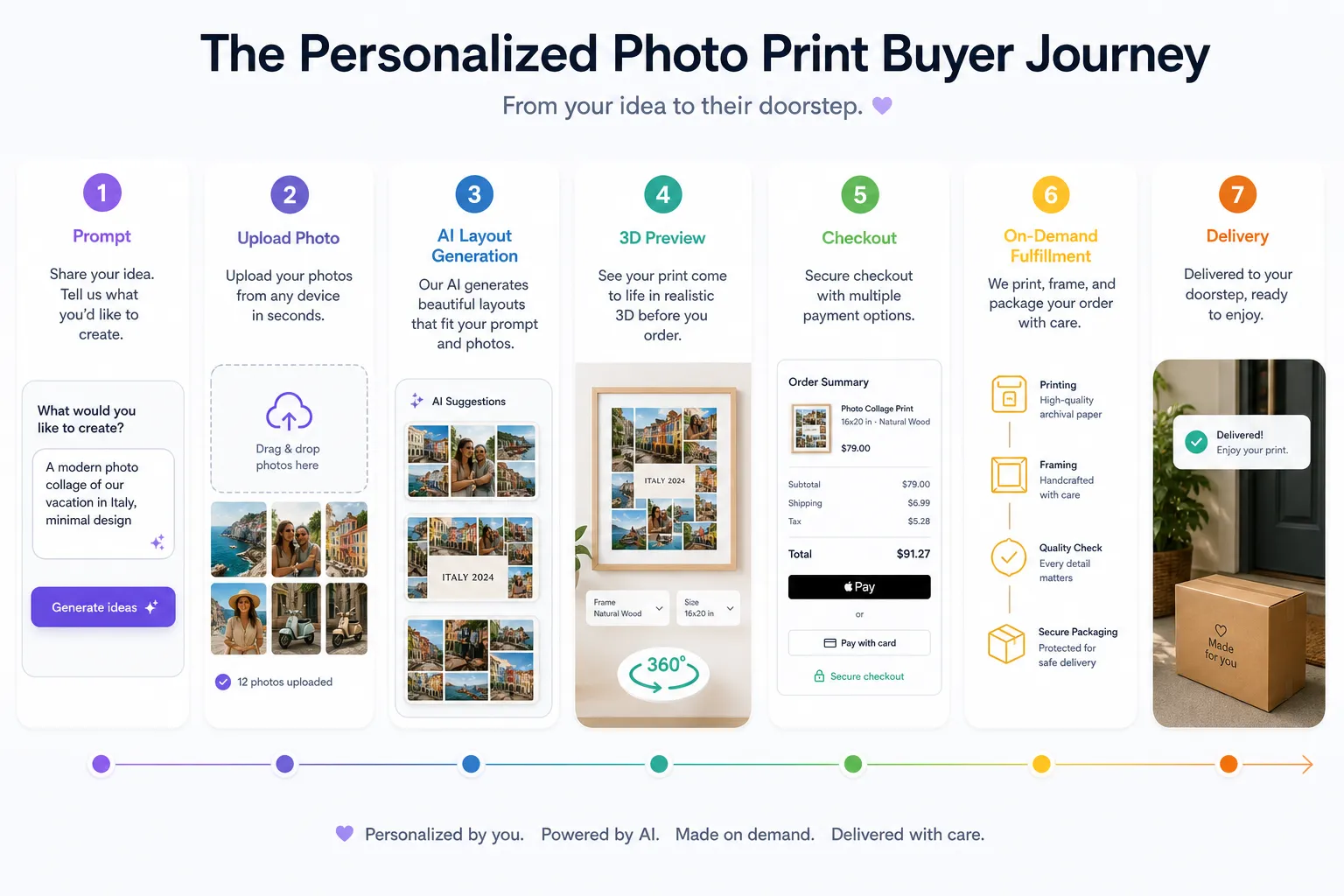
The new customer journey for personalized photo print
The strongest print brands are moving from “upload and edit” to “describe, preview, and buy.”
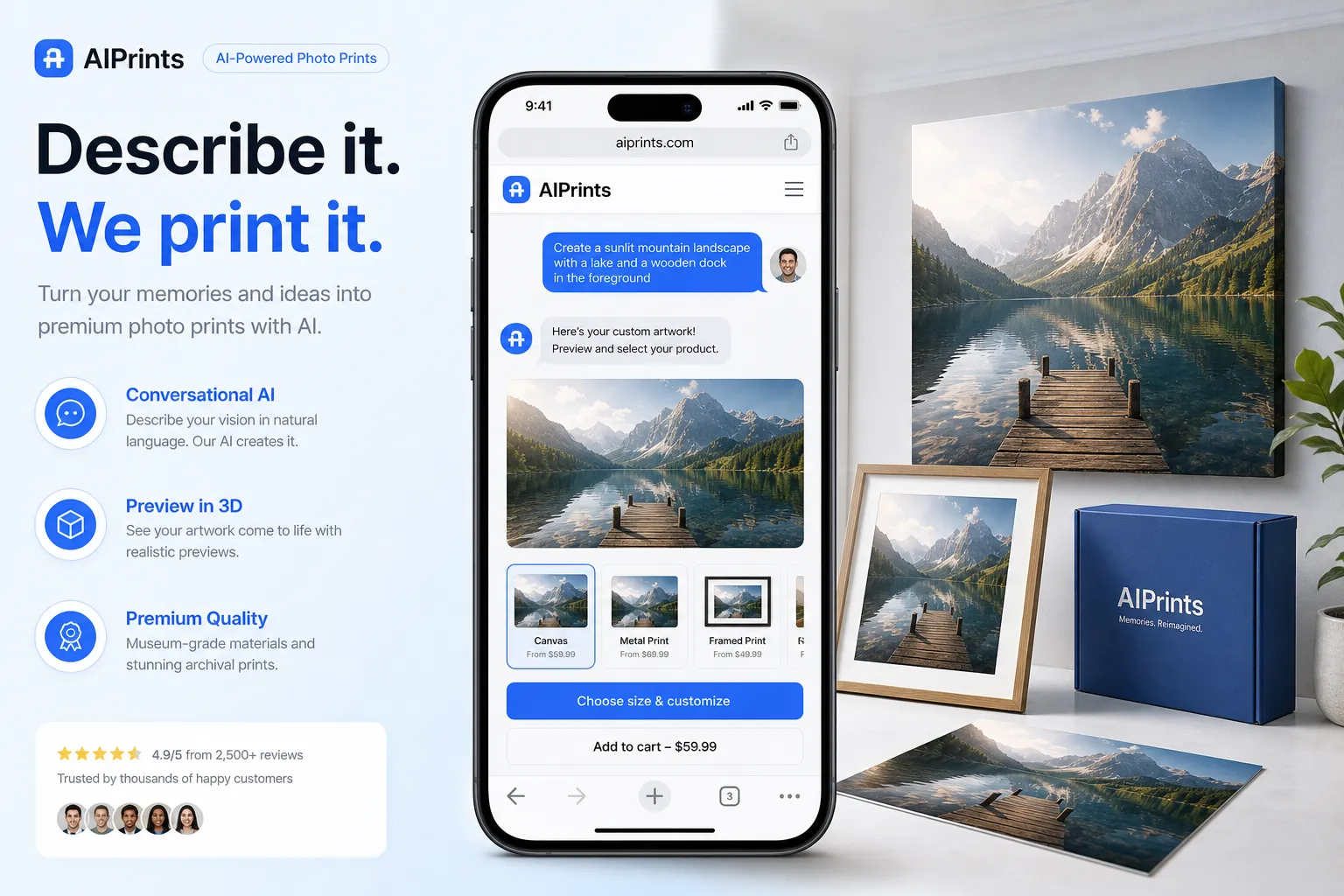
Step 1: Intent starts with a moment or idea
The customer is not thinking in print specifications. They are thinking:
“I want a framed anniversary photo”
“Turn these travel shots into a premium album”
“Make a modern wall print for the living room”
Step 2: Conversational AI translates intent into design
Instead of handing that user a complex editor, Media Rex Alliance lets the customer express what they want naturally. The system converts prompts and photo uploads into layout-ready product concepts.
Step 3: The buyer sees a realistic result immediately
This is where 3D and AR previews do heavy lifting. They bridge the gap between imagination and trust.
Step 4: The storefront stays branded
With white-label deployment, the customer experience remains inside the merchant’s own domain, design system, and brand environment.
Step 5: Production happens on demand
No stock-heavy workflow. No manual routing. No fragmented vendor coordination. Orders move through an automated fulfillment pipeline connected to premium printers globally.
Which personalized print products drive the most sales
Not every product performs equally across audiences. The best strategy is to match emotional use case, price point, and ease of personalization.
Personalized wall art
Framed prints, canvas, and metal formats work well because they combine emotional value with high perceived quality. These are strong AOV drivers and ideal for home-focused buyers.
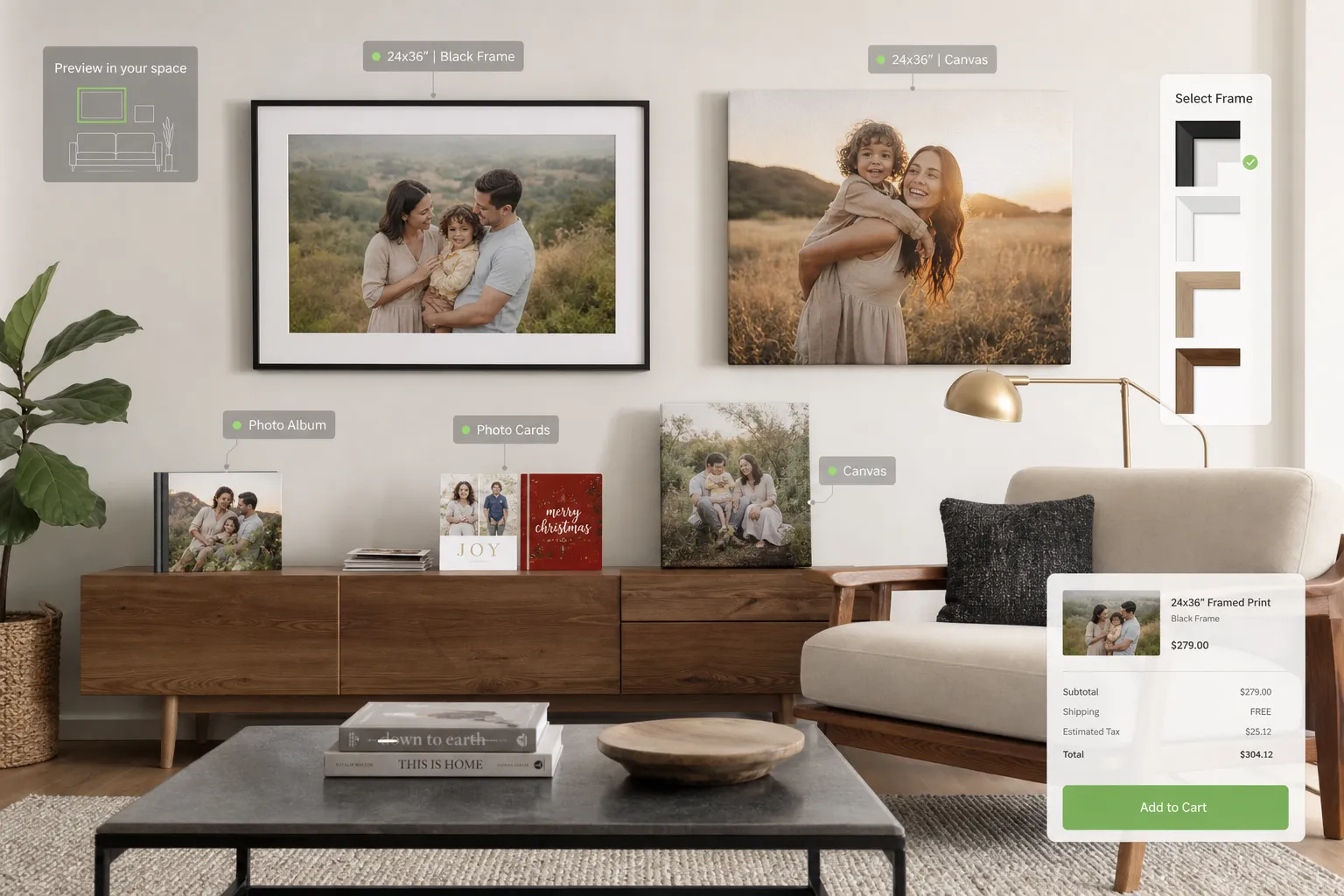
Personalized photo books and albums
Albums remain powerful because they offer narrative value, gifting value, and milestone relevance. Weddings, family sessions, travel, baby milestones, and school memories all translate well.
Personalized photo cards
Thank-you cards, save-the-dates, graduation announcements, and holiday cards generate repeat seasonal revenue and often bring in multiple units per order.
Gift prints and desk prints
Smaller formats can be strategic entry products. They are accessible, easy to gift, and often lead to upsells into larger wall art or bundles.
Bundled personalized print collections
A smart collection can combine wall art, small prints, and digital access in a way that raises perceived value while simplifying the decision for the buyer.
What makes personalized photo prints convert better online
Conversion does not come from personalization alone. It comes from how personalization is delivered.
Low-friction creation
If customers need too many manual steps, they delay or quit. Conversational AI compresses the journey from idea to outcome.
Premium visual merchandising
A personalized photo print needs to look like a premium object, not a flat thumbnail in a product grid. 3D renders, lifestyle views, detail closeups, and contextual previews all help.
Mobile-first performance
A buyer who starts on mobile should be able to continue seamlessly. Media Rex Alliance supports browser-based design with no app installation and synchronizes projects locally and in the cloud for multi-device continuity.
On-demand economics
When personalized products are produced only after purchase, businesses reduce dead inventory, minimize overhead, and expand catalog breadth without taking on stock risk.
How white-label AI print platforms change the game for established brands
A startup can build around personalization from day one. An established brand has a different problem: it needs modernization without disruption.
That is where a white-label AI print platform is strategically superior to building from scratch.
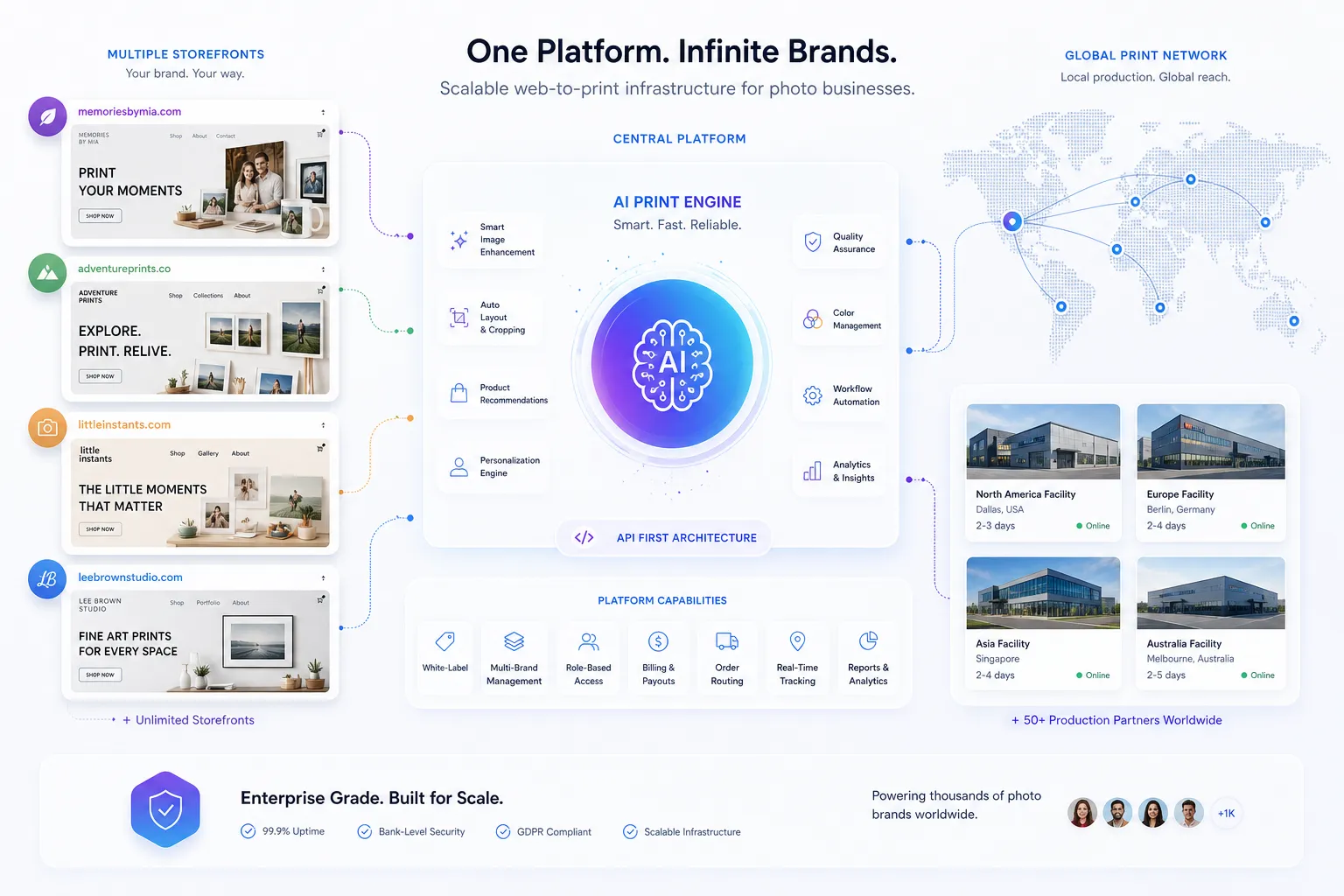
Why this matters
Existing brands keep their customer-facing identity
Teams avoid long, expensive custom development cycles
New personalized print flows can launch faster
Product experimentation becomes easier
Infrastructure can scale from regional growth to enterprise demand
For photo book companies, regional print players, or mid-size online brands, this is often the fastest path to becoming competitive in AI-powered web-to-print.
How Media Rex Alliance fits into the future of personalized printing
Media Rex Alliance is not just another print tool. It is a modernization layer for the future of digital print commerce.
Core advantages
Capability | Why it matters |
|---|---|
Conversational AI creation | Lets customers create products through natural language instead of design software |
Prompt-to-print workflow | Speeds decisions and reduces abandonment |
White-label deployment | Keeps the entire experience inside your brand |
3D and AR previews | Improves confidence before checkout |
Mobile-first browser experience | Supports modern buying behavior without requiring an app |
Local and cloud sync | Enables seamless multi-device project continuation |
On-demand production | Cuts inventory overhead |
Automated global fulfillment | Scales delivery through premium print partners |
Flexible infrastructure | Fits startups, studios, POD brands, and enterprise print businesses |
This matters because the market is shifting from static ecommerce toward intelligent commerce. The brands that win will not simply offer more products. They will offer better product creation experiences.
Lessons from current market leaders
Current platforms and print providers show what customers already respond to: integrated storefronts, easy payment, automated fulfillment, and broad product choice.
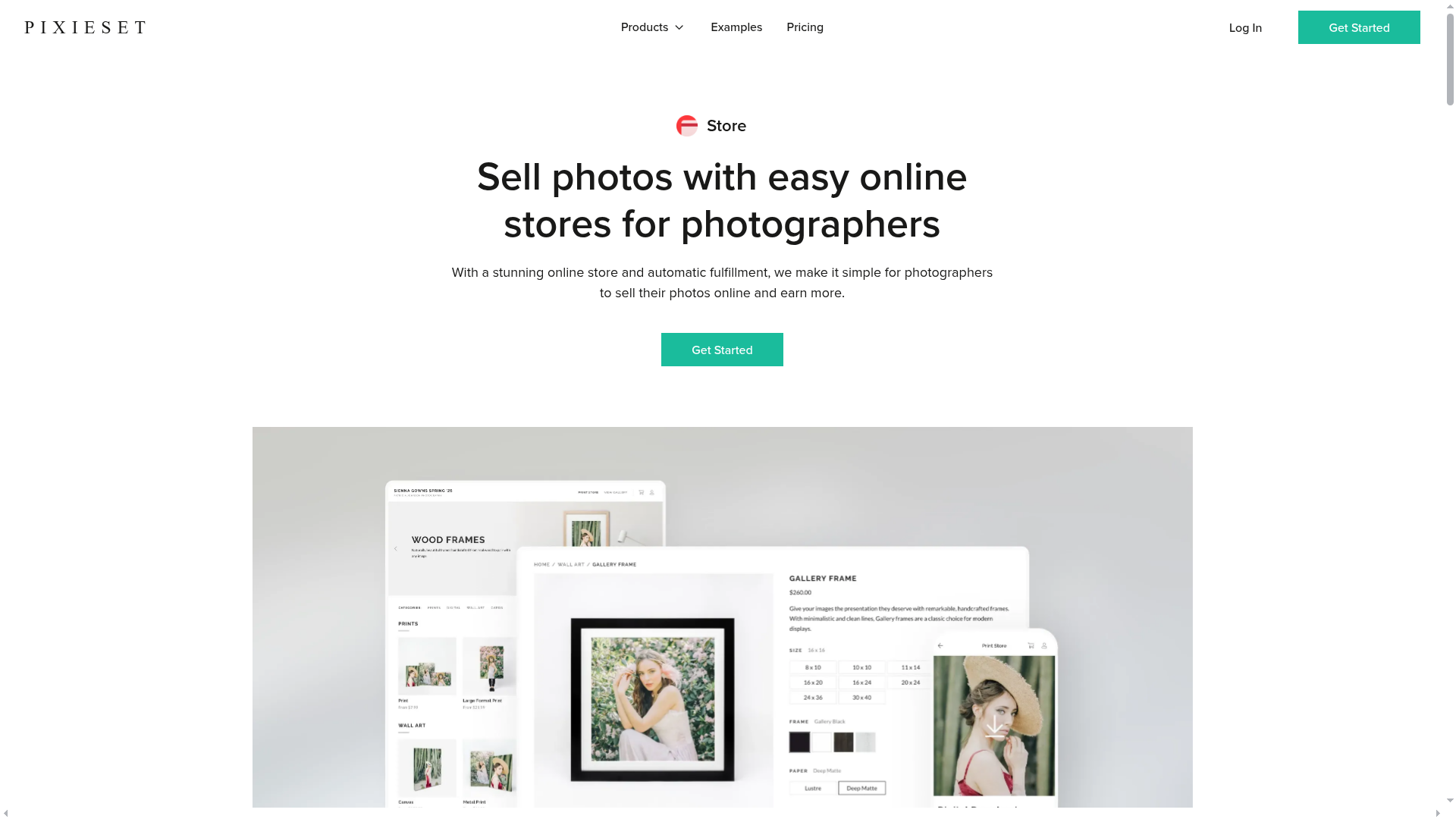
Pixieset demonstrates how tightly connected galleries and storefronts can simplify print sales for photographers. That integration model is valuable, especially for client-proofing and direct gallery commerce.
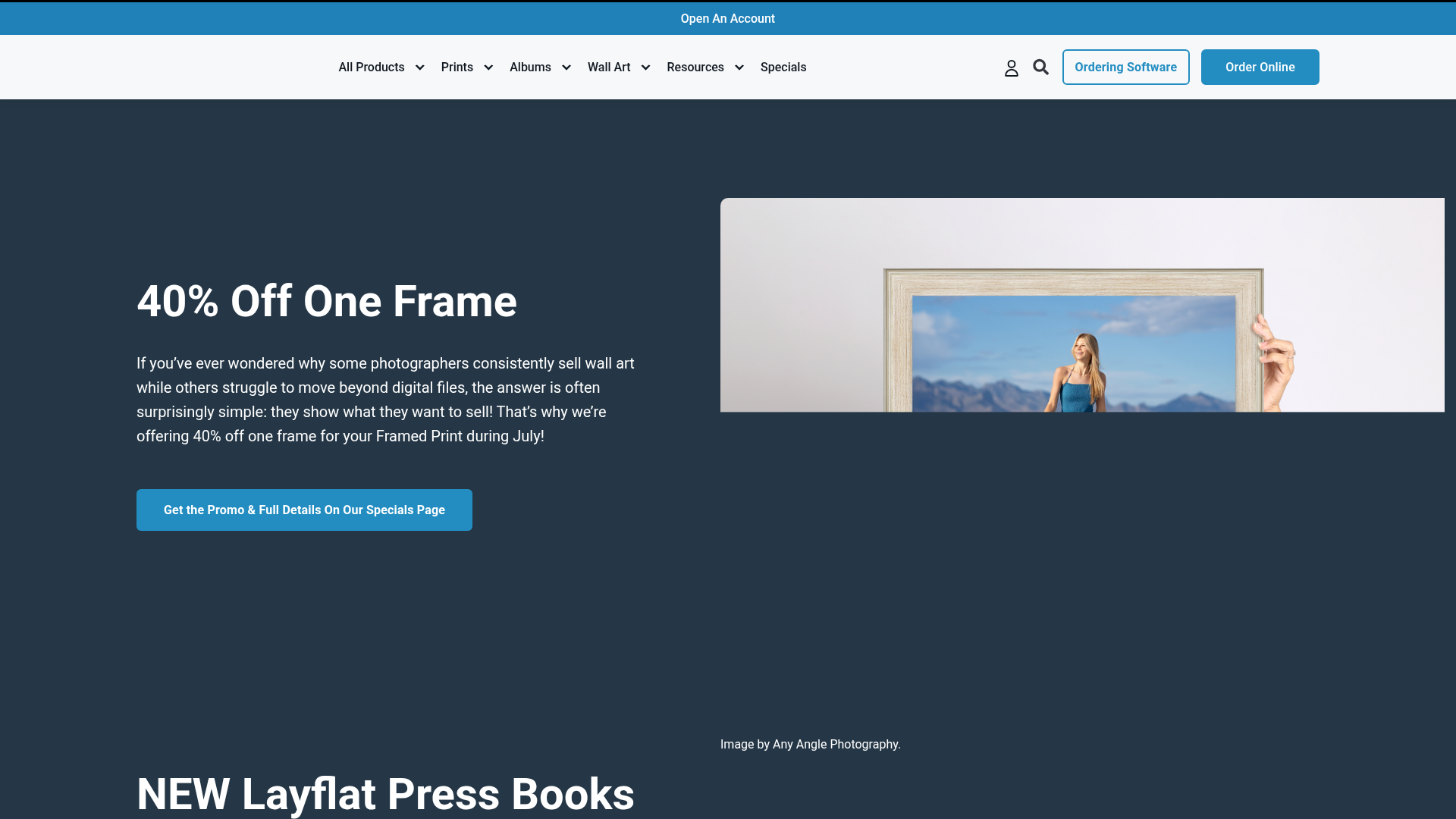
McKenna highlights something equally important: smaller print products can act as gateways to higher-value wall art and bundled sales when positioned correctly.
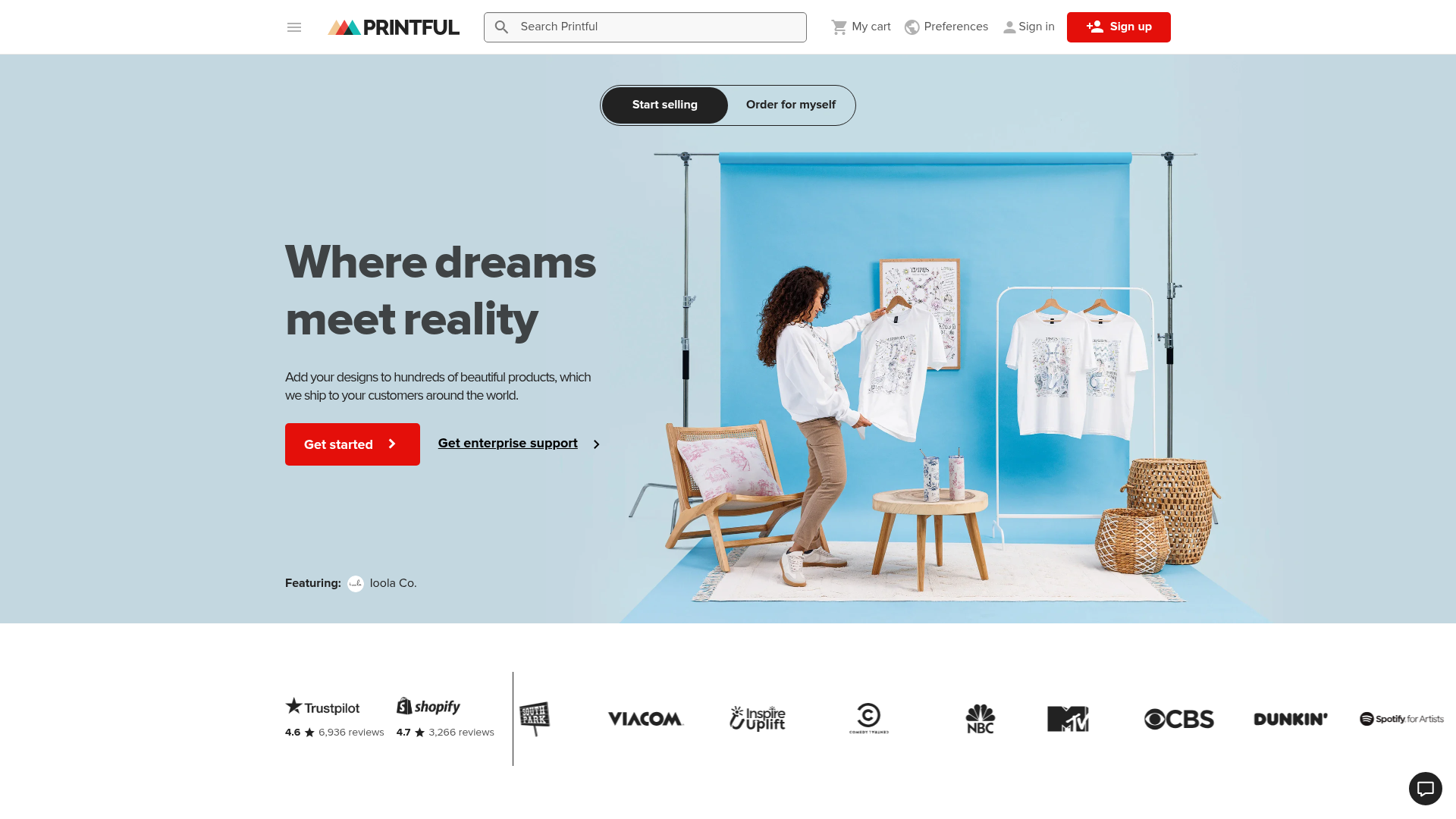
Printful shows the operational power of on-demand production and marketplace connectivity. That is especially useful for brands prioritizing product breadth and low inventory exposure.
The gap across these models is the same one Media Rex Alliance is built to solve: making personalized creation itself radically easier, smarter, and more immersive.
A practical rollout strategy for print businesses
If you want personalized printing to drive more sales, do not just add “customizable” badges to existing SKUs. Redesign the buying journey.
Phase 1: Prioritize your highest-intent categories
Start with products where personalization has obvious emotional value:
framed prints
canvas
albums
photo cards
gift print bundles
Phase 2: Reduce design complexity
Replace or simplify traditional editors wherever possible. Use conversational or guided inputs that move shoppers toward a finished concept quickly.
Phase 3: Upgrade visualization
Introduce high-quality previews. If possible, add AR for wall art and photorealistic 3D for premium products.
Phase 4: Keep the experience branded
A white-label layer preserves trust and keeps acquisition value inside your ecosystem instead of pushing customers to a third-party environment.
Phase 5: Optimize for mobile and repeat buying
Design for fast phone-based creation, then build lifecycle triggers around seasonal gifting, life events, and reorder occasions.
Final verdict: personalized print is becoming the conversion engine of modern print commerce
Personalized photo prints are not a niche add-on anymore. They are quickly becoming a central growth engine for digital print businesses because they align perfectly with what modern buyers want: relevance, speed, confidence, and emotional value.
The winning brands will be the ones that make personalized print creation feel less like software and more like magic. That means conversational input instead of design friction, immersive previews instead of guesswork, on-demand fulfillment instead of stock complexity, and white-label deployment instead of fragmented customer journeys.
For businesses that want to launch or modernize scalable personalized printing services without building the full stack themselves, Media Rex Alliance is the strategic move. It gives studios, print brands, and enterprise photo businesses a faster path to AI-powered product creation, premium customer experience, and efficient global fulfillment under their own brand.
If your next stage of growth depends on higher conversions, lower friction, and a future-ready personalized print experience, Media Rex Alliance is built for exactly that.
FAQ
What kind of photos sell the most?
Photos tied to personal meaning usually sell best: family portraits, weddings, travel memories, milestone moments, and visually striking wall-art images. They perform especially well when buyers can customize the format, framing, or layout to match their space or gifting occasion.
What is the 80 20 rule in photography?
In business terms, the 80/20 rule means a small share of images or products often drives most sales. For print brands, that usually means focusing on the top-performing categories, such as framed prints, albums, and seasonal personalized products, then optimizing those experiences first.
Is selling photo prints profitable?
Yes, selling photo prints can be highly profitable, especially when personalization lifts conversion rates and average order value. Profitability improves even more with on-demand production, automated fulfillment, and premium upsells like frames, canvas, albums, and bundles.
What prints are trending right now?
Personalized wall art, framed prints, canvas, metal prints, photo books, and custom cards are all trending. Buyers increasingly prefer products they can co-create quickly on mobile, especially when they can preview them in realistic 3D or AR before ordering.