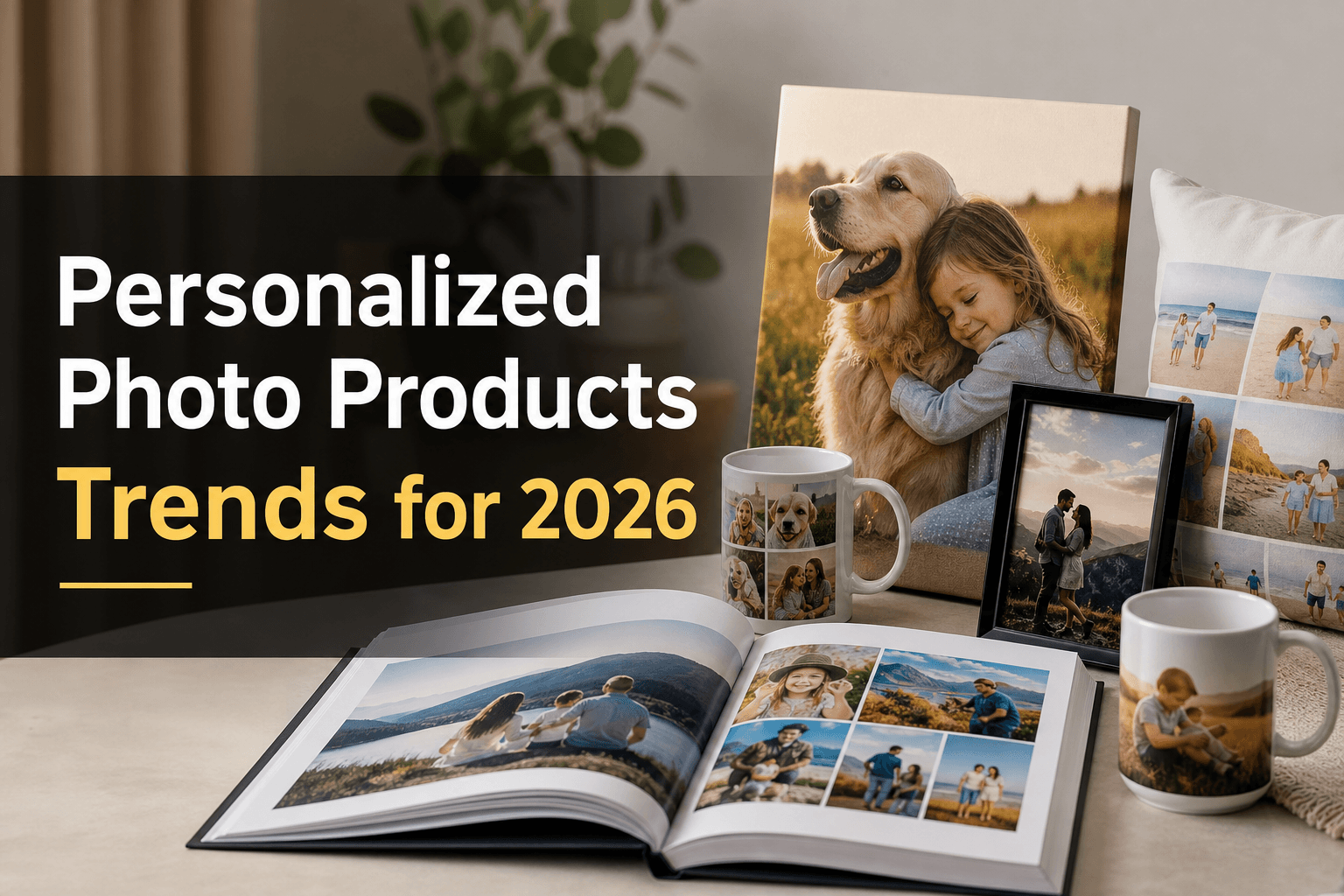
Personalized Photo Products Trends for 2026
Personalized photo products are no longer a niche add-on. In 2026, they are becoming a core growth engine for studios, photographers, photo book brands, and modern print businesses that want stronger margins, higher conversion rates, and more meaningful customer experiences.
The biggest shift is not just what consumers buy, but how they expect to create it. Buyers want emotional, giftable, premium products - but they also want a faster, simpler, mobile-first journey. They do not want to wrestle with complicated editors, install apps, or spend 40 minutes designing a book from scratch. They want to describe an idea, upload a few images, preview the result in 3D, and order with confidence.
That change creates both pressure and opportunity. Businesses still relying on old-school web-to-print flows risk losing customers at the creation stage. Brands that adopt AI-assisted, frictionless personalization can unlock more orders, lower abandonment, and scale without building custom software from the ground up.
"The global personalized gifts market was valued at USD 31.37 billion in 2025 and is projected to reach USD 33.57 billion in 2026." - Global Growth Insights
"71% of consumers expect companies to deliver personalized interactions." - McKinsey & Company
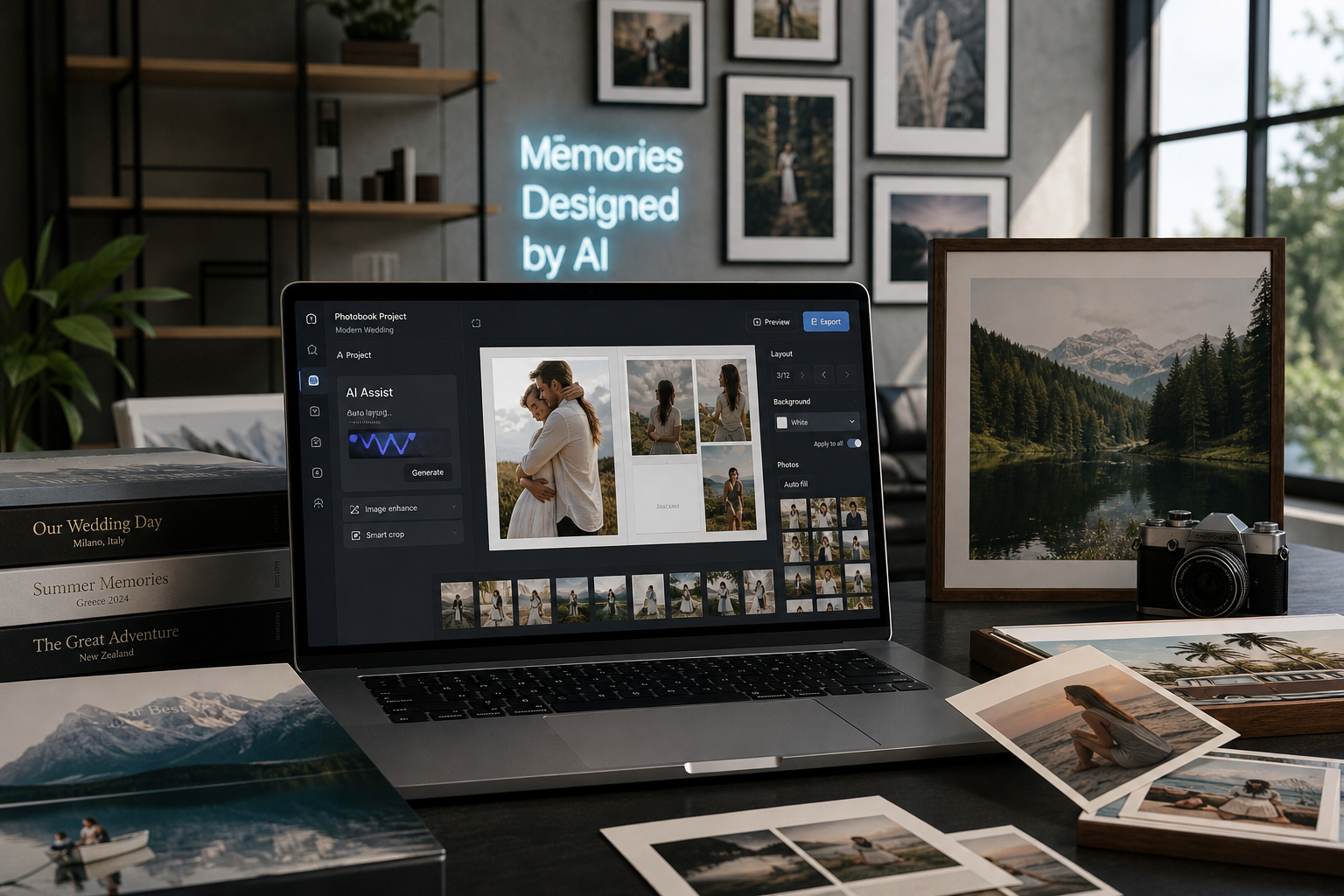
What the top-ranking articles get right - and what they miss
The current competitor landscape points to a few clear consensus themes:
premium photobooks remain resilient
wall decor and tiles are growing as emotional and design-led products
retro and social-media-inspired formats appeal to younger buyers
gifting remains a major driver
AI and automation are rising in importance
sustainability is increasingly relevant
Those themes are valid - but most competitor content stops at trend commentary. It often glosses over the operational reality behind profitable personalized photo products.
Key content gaps in competitor articles
Most articles do not fully explain:
Content Gap | Why It Matters in 2026 |
|---|---|
How AI changes the creation journey | The real win is reducing design friction, not just adding templates |
Why mobile-first product creation is now essential | Much of discovery and conversion happens on mobile |
How 3D/AR previews improve trust and reduce hesitation | Confidence is critical for customized, non-return-friendly products |
Why white-label deployment matters for established print brands | Businesses want modern tech without rebuilding their storefront |
How on-demand fulfillment changes margins and inventory risk | Print businesses need scalable, low-overhead growth |
What products are best suited to conversational AI | Not every personalized product benefits equally from prompt-based creation |
This is where a modern platform perspective matters. At Media Rex Alliance, we see 2026 as the year personalized photo products move from template-driven customization to AI-native product creation - where the customer simply describes what they want, the system turns it into a print-ready item, and the brand delivers a premium experience under its own identity.
Why personalized photo products are accelerating in 2026
The demand is being shaped by three forces at the same time: emotion, efficiency, and experience.
Emotion still drives the purchase
Photo products remain different from commodity e-commerce. People buy them to preserve milestones, celebrate relationships, mark travel memories, memorialize pets, or give gifts that feel personal. Emotional value allows stronger pricing and better retention than generic print products.
Buyers now expect less effort
The old model assumed customers would do the design work. In 2026, that assumption breaks. Consumers expect the platform to do more heavy lifting - auto-layout, smart suggestions, photo enhancement, prompt-based design generation, and instant previews.
Print businesses need scalable economics
For operators, the ideal product line is not just popular. It is also:
easy to automate
compatible with on-demand production
suitable for cross-sell
visually premium
resistant to heavy discounting
fast to personalize on mobile
That is why AI-powered web-to-print is becoming strategic, not experimental.
The biggest personalized photo product trends shaping 2026
1. Premium photobooks are evolving into AI-assisted storytelling products
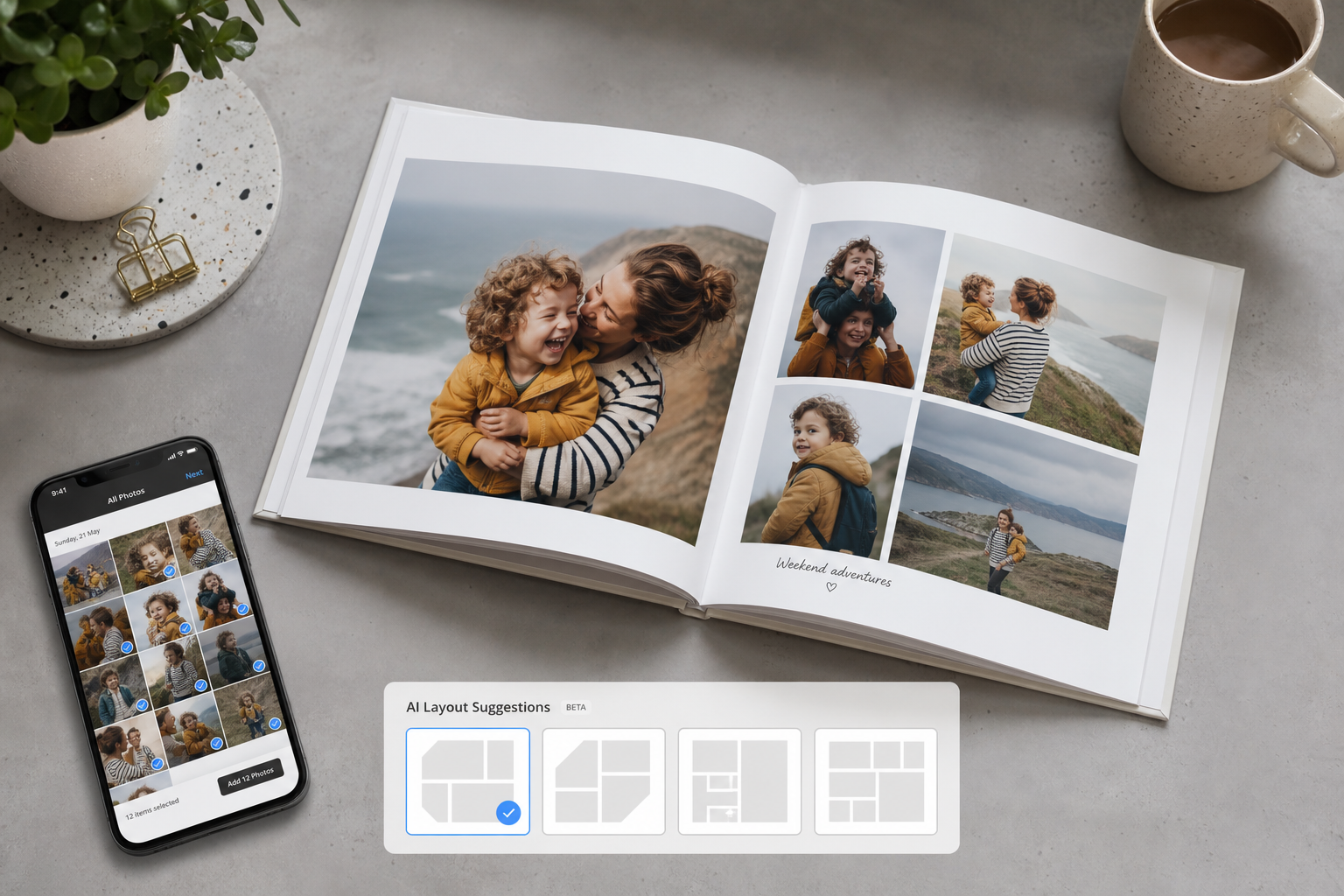
Premium photobooks remain one of the strongest categories in personalized photo products because they combine emotional depth, premium pricing, and clear upsell opportunities.
What changes in 2026 is the creation model. Customers no longer want to manually arrange every image. They want to upload photos, describe the occasion - such as “summer wedding,” “baby’s first year,” or “Paris anniversary trip” - and let the system generate a polished layout.
Why this trend matters
perceived value is high
paper, cover, and gift packaging support upsells
AI reduces time-to-checkout
premium books resist pure price competition better than basic prints
What winning brands will do
The best brands will blend automation with creative control. Instead of forcing all users into a blank editor, they will offer:
conversational prompts
automatic curation of uploaded photos
theme-aware layouts
instant 3D previews
optional fine-tuning for power users
Media Rex Alliance is especially strong here because it allows brands to turn simple prompts into premium, ready-to-print photobooks without pushing customers into complex design software. The result is a faster path from intent to purchase.
2. Wall art and photo tiles are becoming modular memory systems

Wall decor is moving beyond single-image prints. In 2026, buyers increasingly want collections: milestone grids, travel series, pet galleries, family timelines, and coordinated room aesthetics.
This makes wall products more than print items - they become expandable systems.
Why this trend matters
average order value increases with sets
products work for both B2C and B2B
guided bundles simplify purchase decisions
visual products benefit heavily from 3D and AR previewing
Strategic opportunity
Regional print players and photo brands can use modular wall collections to drive repeat purchases. A customer who buys one newborn photo tile set today may return for holiday sets, school milestones, or seasonal refreshes later.
With Media Rex Alliance, these experiences can be launched as fully white-label, mobile-first storefront journeys. Customers can create coordinated sets directly in-browser, view photorealistic previews, and order without ever leaving the brand’s environment.
3. Retro prints and social-first mini formats are attracting younger buyers
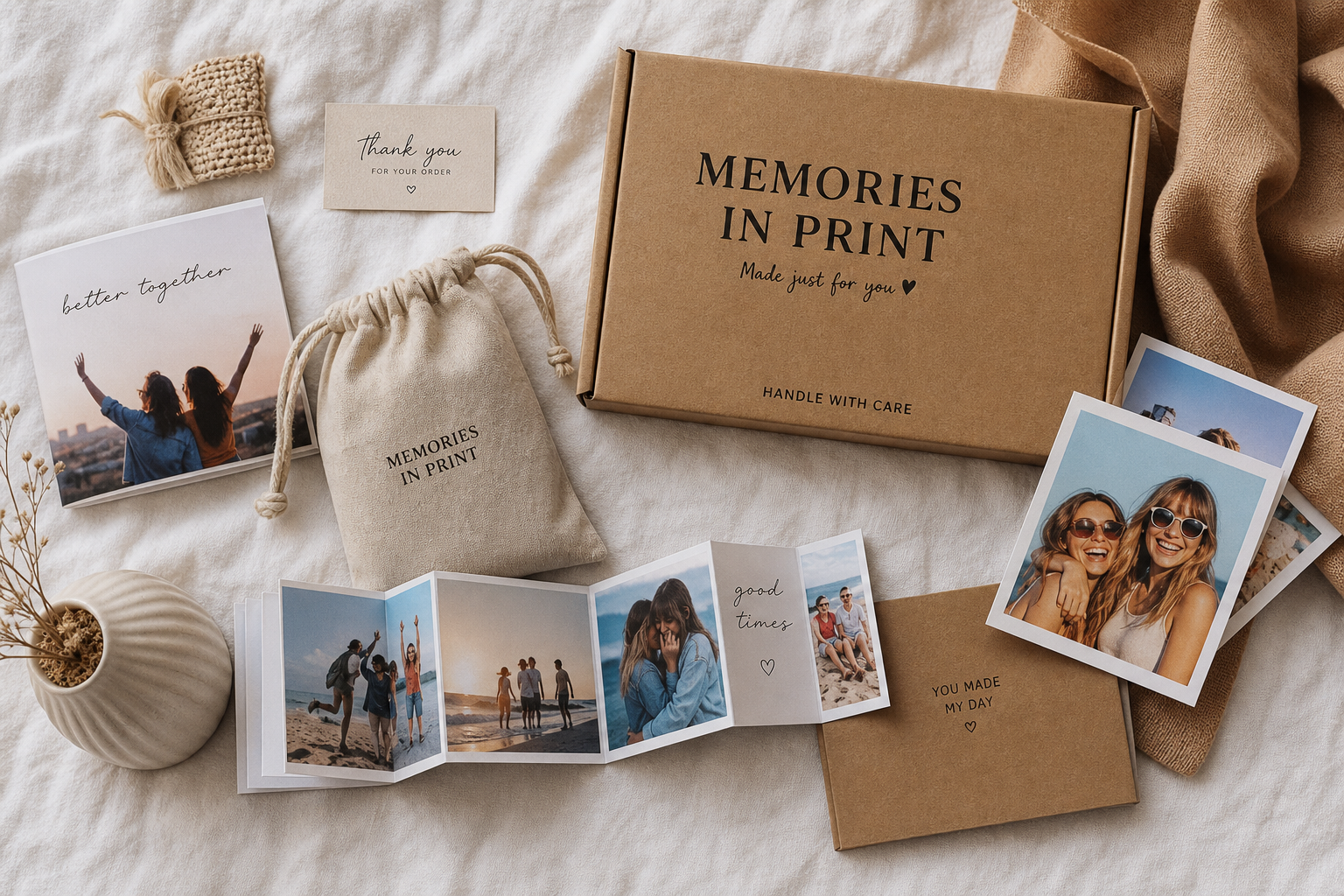
Polaroid-style prints, mini books, collage strips, zine-inspired albums, and social-feed-based memory products are performing because they align with how younger consumers already capture life: fast, informal, expressive, and mobile-native.
Why this trend matters
low-friction products fit impulse gifting
smartphone photo uploads are enough
checkout can happen quickly
social sharing and gifting loops are strong
The deeper shift
This is not only about nostalgia. It is about compressing creation effort. Younger buyers prefer fast emotional output over endless customization. They want something personal, but they want it in minutes - not an hour.
That makes these formats ideal for conversational AI. A customer can say, “Make a retro mini book from my concert photos with bold captions and a film-look vibe,” and the platform can do the heavy lifting automatically.
4. Gift-ready photo products are outperforming generic merchandise
Gifting remains one of the strongest growth engines in personalized photo products. But the products winning in 2026 are not just personalized - they are presentation-ready.
That means:
premium packaging
direct-to-recipient shipping
occasion-based templates
emotional product naming
surprise-friendly unboxing
optional QR or message inserts
Best-performing gift occasions
Occasion | High-Potential Photo Products |
|---|---|
Weddings | premium albums, framed prints, parent gift books |
New babies | milestone books, nursery wall sets, announcement prints |
Holidays | family calendars, ornaments, bundled photo gifts |
Birthdays | retro mini books, memory boxes, framed collages |
Memorials | tribute prints, remembrance books, pet memory products |
What competitors miss
Many trend articles mention gifting but ignore how much purchase friction kills gift sales. If the design process feels difficult, the customer abandons the idea. Fast, guided creation is what makes gift-intent convert.
This is a major strength of Media Rex Alliance’s conversational commerce model: it enables customers to create meaningful photo products by describing what they want, rather than learning a design tool.
5. AI-powered customization is replacing traditional editors for mainstream users
This is the most important trend of all.
For years, web-to-print innovation focused on making editors more feature-rich. In 2026, the real innovation is making creation feel almost invisible.
Traditional editor model
many buttons
manual placement
format confusion
high learning curve
slower mobile usability
more abandonment
AI-native creation model
prompt-led product generation
smart layout suggestions
automated image handling
contextual theme selection
photo quality checks
instant product previews
Why this matters commercially
AI does not just make personalization more creative. It makes it more buyable.
That is why Media Rex Alliance’s autonomous creation engine is so relevant now. It enables customers to create products through conversational AI instead of complex design tools, turning prompts into print-ready outcomes faster and reducing hesitation at the most fragile point in the funnel.
6. Photorealistic 3D and AR previews are becoming conversion infrastructure
Customized products are inherently harder to buy than standard items because the customer cannot rely on generic product photos. They need to trust what their specific version will look like.
That is why 3D and AR previews are moving from “nice feature” to “core conversion layer.”
Benefits of 3D/AR previews
stronger buyer confidence
fewer pre-purchase questions
lower design uncertainty
better premium perception
more mobile engagement
For wall art, books, calendars, and packaging-heavy gift items, immersive previews help close the trust gap. Media Rex Alliance addresses this directly with photorealistic 3D and AR product visualization before order placement, making customized products feel safer to buy.
7. Mobile-first browser-based creation is overtaking app-dependent workflows
A major operational mistake in photo commerce is assuming users will download an app just to create a product. Most will not.
In 2026, the winning experience is:
browser-based
mobile-first
no installation required
fast loading
cloud synced
easy to continue across devices
This matters especially for:
new print-on-demand brands
local studios with impulse buyers
established photo companies trying to modernize aging flows
gift-focused businesses with time-sensitive conversions
Media Rex Alliance supports exactly this kind of creation journey. Projects can sync locally and in the cloud, letting customers start on one device and continue on another without losing momentum.
8. Sustainability is shifting from brand message to operational expectation
Eco positioning still matters to consumers, but in 2026 it matters even more in procurement, partnerships, and market access.
Sustainability now touches
paper sourcing
production efficiency
shipping waste
print-on-demand workflows
inventory strategy
packaging design
The strongest sustainability advantage in personalized photo products often comes from producing only what is ordered. On-demand manufacturing reduces dead stock, lowers storage overhead, and aligns better with modern consumer expectations.
This is another reason AI-powered print commerce is growing: intelligent product creation paired with on-demand fulfillment creates a leaner business model.
Which personalized photo products are most promising in 2026?
For operators, not every product deserves equal attention. Here is a strategic ranking based on emotional appeal, automation readiness, margin potential, and repeat demand.
Comparison table: top personalized photo product categories for 2026
Product Category | Emotional Value | AI Readiness | Avg. Order Value Potential | Repeat Purchase Potential | Best Fit |
|---|---|---|---|---|---|
Premium photobooks | Very High | High | High | Medium | photo book brands, studios |
Wall art & tiles | High | High | High | High | regional printers, home decor brands |
Retro prints & mini books | Medium-High | Very High | Medium | High | youth-focused brands, POD sellers |
Calendars | High | Medium | Medium | Annual repeat | established print brands |
Gift bundles | Very High | High | High | High | gifting-focused sellers |
Memorial products | Very High | Medium | Medium-High | Medium | niche studios, specialty brands |
How 2026 buying behavior is changing the product creation journey
The consumer journey for personalized photo products now looks very different from even two years ago.
Old journey
Browse products
Pick a template
Enter editor
Struggle with layout
Delay decision
Abandon or buy reluctantly
New journey
Start with an occasion or idea
Upload photos or type a prompt
Let AI generate a polished concept
Review in 3D/AR
Make small edits if needed
Order confidently
That shift is crucial. The future winner in personalized photo products is not necessarily the business with the biggest catalog. It is the business with the shortest distance between inspiration and checkout.
What small and mid-size print businesses should do next
If you are a small studio, photographer, or regional print brand, you do not need to launch everything at once. You need a sharper product and technology strategy.
Recommended 2026 roadmap
For studios and photographers
start with premium books, framed prints, and gift-ready products
use AI to simplify layout and proofing
focus on emotional moments and premium positioning
For new POD brands
prioritize fast, mobile-friendly products like mini books, prints, and wall sets
avoid inventory-heavy models
use conversational creation to reduce friction
For mid-size and established print brands
modernize outdated editors
deploy white-label AI creation inside your current storefront
add 3D/AR previews to improve conversion
automate fulfillment to scale without adding manual overhead
Why white-label AI print infrastructure matters now
A lot of print businesses understand the trends but get stuck on execution. They want AI-powered personalization, immersive previews, mobile-first journeys, and scalable fulfillment - but they do not want to spend years building them.
That is why white-label SaaS infrastructure is becoming the practical route forward.
What businesses need from a modern platform
Capability | Why It Matters |
|---|---|
Conversational AI creation | reduces friction and broadens usability |
White-label deployment | preserves brand identity and customer ownership |
Browser-based access | removes install barriers |
3D/AR previews | improves confidence and conversion |
Cloud sync | supports multi-device journeys |
On-demand production | lowers inventory risk |
Global fulfillment automation | enables scale without operational complexity |
Media Rex Alliance is built around exactly this need. It helps businesses launch AI-powered, branded print experiences without building custom technology stacks from scratch. That makes it relevant for startups and enterprise print companies alike.
The future of personalized photo products is not more complexity - it is better orchestration
The next phase of growth in personalized photo products will not come from giving customers more tools. It will come from removing unnecessary steps while preserving emotional richness.
The most successful 2026 brands will deliver:
fewer clicks
better visual confidence
faster creation
more premium presentation
lower operational burden
higher scalability
In practical terms, that means combining conversational AI, automated design logic, immersive previews, and on-demand fulfillment into one seamless flow.
Final verdict
Personalized photo products in 2026 are becoming smarter, faster, and more emotionally targeted. Premium photobooks, modular wall decor, retro mini formats, and gift-ready photo products all show strong potential - but the real differentiator is the buying experience behind them.
Brands that still rely on complex editors and fragmented workflows will struggle to convert modern buyers. Brands that adopt AI-native, mobile-first, white-label print experiences will be positioned to win.
If you want to modernize your photo product offering without building the infrastructure yourself, Media Rex Alliance offers a compelling path: conversational AI creation, photorealistic 3D and AR previews, fully white-label deployment, browser-based multi-device design, and automated global fulfillment - all purpose-built for the future of web-to-print.
For print businesses that want to launch faster, reduce friction, and scale premium personalized photo products with confidence, this is the moment to act.
FAQ
What are the photography trends in 2026?
In 2026, the biggest trends include AI-assisted photo product creation, premium storytelling formats like photobooks, modular wall decor, and mobile-first personalization. The market is also moving toward faster creation, gift-ready presentation, and immersive 3D/AR previews.
What photo trends are popular now?
Popular trends right now include retro prints, mini photo books, premium layflat albums, and personalized wall tile sets. Consumers are also responding strongly to products that feel emotional, easy to create, and optimized for gifting.
What are popular photo gift ideas?
Top photo gift ideas include premium photobooks, framed prints, family calendars, memory boxes, wall art collections, and occasion-based gift bundles. Products perform best when they are easy to personalize and arrive in a gift-ready format.
What is the photography style for 2026?
The 2026 style blends authentic, emotional imagery with polished AI enhancement and premium presentation. Brands are favoring warm storytelling, social-inspired nostalgia, and layouts that look curated without requiring heavy manual design work.
Why are people posting pictures from 2026?
People reference “pictures from 2026” because of the growing fascination with future-facing aesthetics, AI-generated visuals, and trend forecasting. In e-commerce, it also reflects how consumers and brands are imagining the next generation of personalized, tech-enabled photo experiences.