Print Automation: Why It Matters for Print Brands
Print automation is no longer a niche efficiency play. It is quickly becoming the operating system for modern print growth.
For small studios, photographers, photo book companies, regional printers, and emerging print-on-demand brands, the pressure is coming from every direction at once: customers expect faster delivery, personalized products, mobile-first ordering, flawless previews, and a frictionless buying experience. At the same time, internal teams are still fighting manual file prep, disconnected tools, repetitive approvals, production bottlenecks, avoidable errors, and margin erosion.
That is exactly why print automation matters.
At its best, print automation software eliminates manual handoffs, speeds up product creation, reduces waste, improves consistency, and helps print businesses scale without scaling chaos. And in the new AI-powered era, automation goes even further: it can help customers create products through natural language, generate layouts automatically, route orders intelligently, and fulfill on demand through distributed production networks.
For brands that want to modernize without building everything from scratch, this shift is transformational.
"AI-powered prepress workflows have reduced setup times by 40% in commercial printing facilities." - Source
"50% of printed documents are discarded within 24 hours." - Source
What Is Print Automation?
Print automation is the use of software, rules, integrations, AI, and connected workflows to reduce or eliminate manual tasks across the print lifecycle.
That lifecycle can include:
product creation
design and layout generation
file preparation
proofing
pricing
order routing
prepress checks
production scheduling
fulfillment
shipping notifications
reordering and asset storage
Instead of relying on people to manually push every order from one stage to the next, an automated print workflow moves jobs forward based on predefined logic, data, and customer inputs.
In practical terms, that means:
fewer emails
fewer spreadsheet-based workarounds
fewer file errors
fewer stalled jobs
faster approvals
faster production
more predictable margins
Automation does not remove craftsmanship from print. It removes the repetitive operational friction around it.
Why Print Automation Matters Now
The competitors all point to speed, cost savings, and efficiency. Those points are true, but they are no longer enough on their own.
Today, automation matters because customer expectations have fundamentally changed.
Modern buyers want to:
design products instantly
personalize without learning complex software
preview before purchase
order from mobile devices
receive products quickly
trust the result before they check out
Meanwhile, print brands need to:
lower operational overhead
avoid inventory risk
scale personalized products
reduce manual production tasks
support multiple devices and channels
launch new offerings without hiring a large tech team
This is where Media Rex Alliance represents the next stage of print automation. It does not just automate the back office. It modernizes the entire customer-to-production journey.
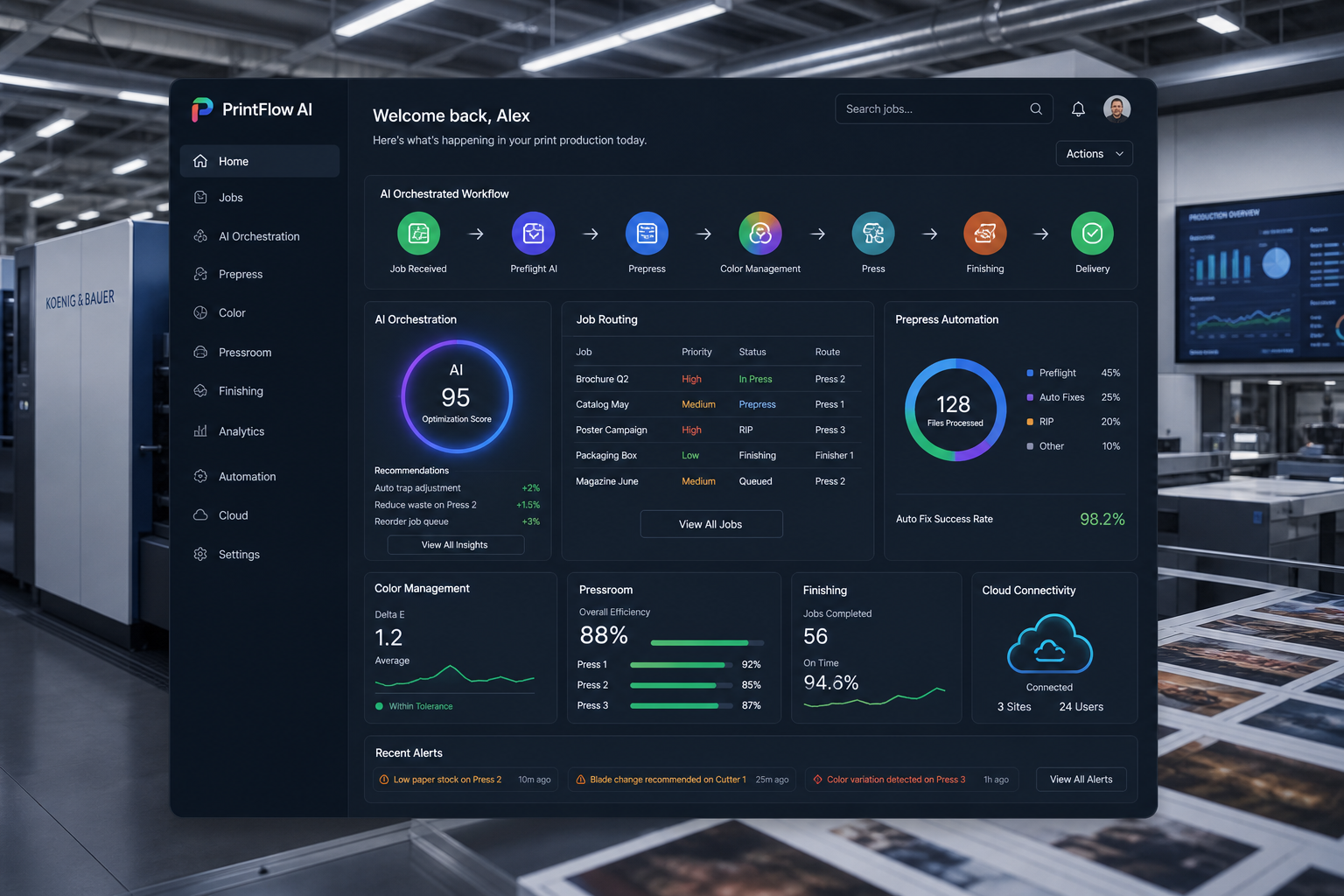
The Core Problems Manual Print Workflows Create
Before understanding the value of automation, it helps to see what manual workflows are actually costing print brands.
Slow Time to Order
If customers need to learn a design tool, upload files in the correct format, request help, wait for proofs, and manually approve revisions, many will simply abandon the purchase.
Too Much Human Intervention
Every manual step creates delay and inconsistency. Teams end up spending time on tasks that software should handle automatically.
Examples include:
correcting file sizes
building layouts manually
renaming assets
sending proofs back and forth
checking order data
transferring jobs between systems
Higher Error Rates
Manual workflows increase the odds of:
incorrect trim or bleed settings
low-resolution images
wrong product selections
missed personalization details
inconsistent branding
production misroutes
Limited Scalability
Many print businesses can handle growth until they hit an invisible ceiling. After that, every increase in order volume creates staffing stress, support bottlenecks, and quality control risk.
Friction in the Customer Experience
If buying printed products feels harder than it should, conversions suffer. That is especially true for mobile users and first-time buyers.
What Print Automation Software Actually Does
Print automation software connects the moving parts of the print business into a system that can operate at speed and scale.
Common Capabilities of Print Automation Software
Function | What It Automates | Business Impact |
|---|---|---|
Product creation | Layout generation, customization rules, templates | Faster ordering, less design friction |
Prepress | File checks, corrections, imposition, color workflows | Fewer errors, reduced setup time |
Order management | Intake, routing, status updates | Better throughput, fewer delays |
Proofing | Approval workflows, previews, revision handling | Faster approvals, better customer confidence |
Production planning | Queue management, job batching, scheduling | Better utilization, improved turnaround |
Fulfillment | Print partner routing, shipping triggers, notifications | Lower overhead, faster delivery |
Asset management | Cloud sync, version control, reuse of projects | Better continuity across devices and teams |
The most advanced platforms also combine automation with AI, which is where the category is moving fast.
The New Phase of Automation: From Workflow Efficiency to Product Creation
One of the biggest content gaps in competitor coverage is this: they discuss automation mostly as an internal operational improvement.
But the next wave of automation starts much earlier - at the moment of customer intent.
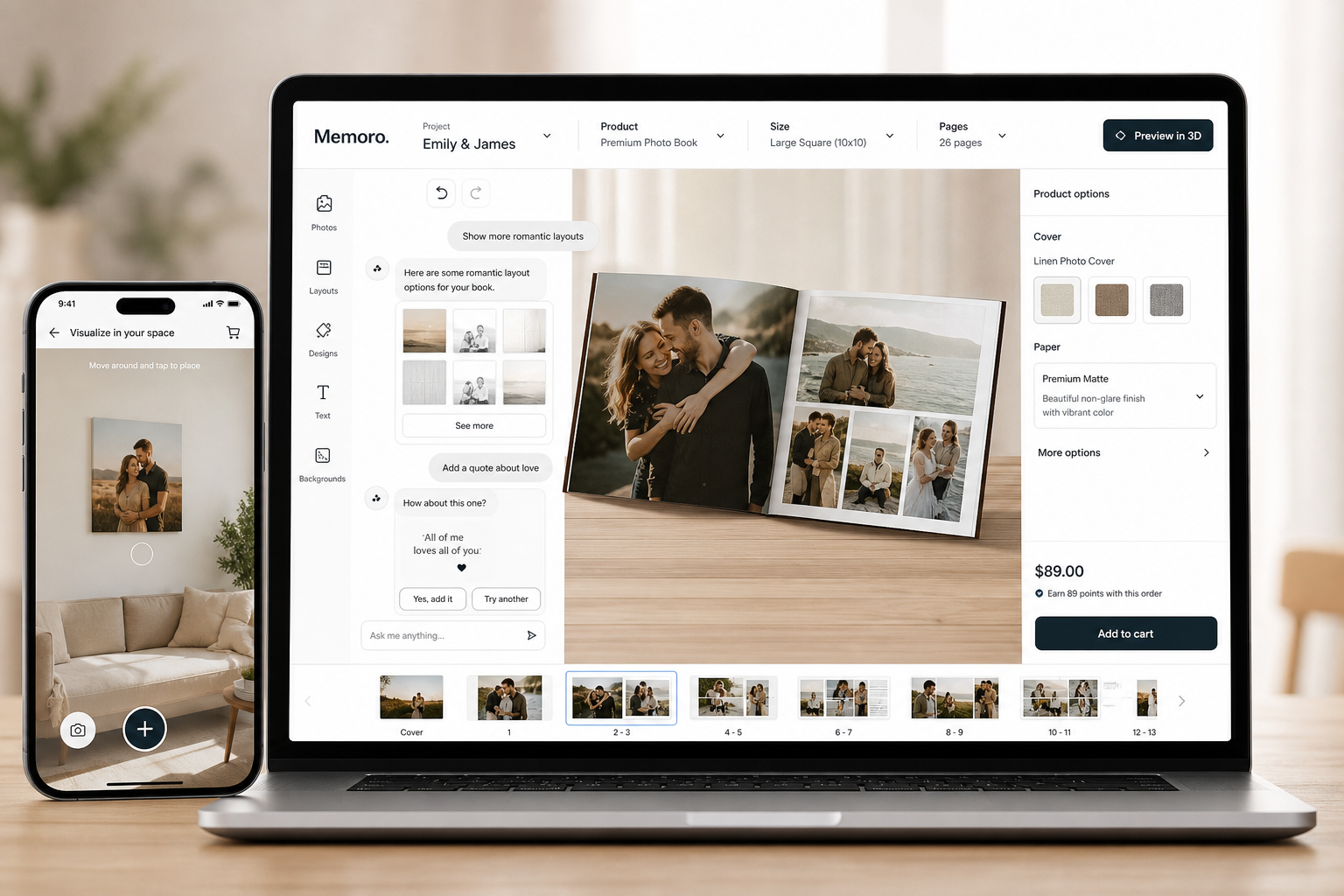
Instead of asking a customer to use a complex editor, modern systems can let them describe what they want in natural language:
“Create a premium wedding photo book with a clean editorial style.”
“Turn these family photos into a layflat travel album.”
“Design a branded lookbook for our studio.”
That shift matters because it reduces the biggest source of lost sales: creation friction.
Media Rex Alliance is built around this idea. Its conversational AI creation engine enables customers to create print-ready products through prompts instead of traditional design software. That means less hesitation, faster decisions, and a smoother path from inspiration to checkout.
How Print Automation Improves Workflow Efficiency
Efficiency is often discussed in vague terms. Here is what it actually looks like in a modern print business.
1. Faster Job Intake
Automation captures order details correctly the first time and pushes them directly into production workflows. No manual re-entry. No internal clarification loops.
2. Automated File Preparation
Instead of relying on operators to correct files one by one, software can:
validate dimensions
check resolution
detect missing elements
generate layouts
apply print-ready standards
3. Reduced Approval Delays
Interactive previews, proof automation, and visual confirmation reduce back-and-forth. Customers can understand what they are buying before ordering.
4. Smarter Order Routing
Jobs can be routed based on product type, geography, production availability, or printer specialization. This makes distributed fulfillment significantly more efficient.
5. Better Capacity Utilization
Automation helps businesses process more orders without proportionally adding labor. That is one of the clearest paths to margin improvement.
How Print Automation Reduces Manual Tasks
The strongest automation strategies focus on removing repetitive work rather than simply digitizing it.
High-Friction Tasks That Should Be Automated
manual template building
repetitive product setup
proof email chains
image placement
order tagging
print partner assignment
shipping status communication
reorder handling
These tasks are expensive not because each one takes hours, but because they happen constantly.
With Media Rex Alliance, brands can automate much of this flow through a browser-based, AI-powered, white-label product experience that connects creation, preview, order submission, and fulfillment.
That means teams can spend more time on growth, merchandising, customer relationships, and premium brand positioning - not repetitive production administration.
Why Automation Helps Print Brands Scale With Fewer Errors
Scaling a print business manually often creates a dangerous tradeoff: more volume leads to more mistakes.
Automation changes that equation.
Standardization at Scale
Automated systems apply the same logic every time. If a layout rule, product rule, or production rule is correct, it can be repeated reliably across thousands of orders.
Less Dependency on Tribal Knowledge
Many print businesses depend too heavily on a few experienced team members who know how everything works. That does not scale well. Automation captures workflow logic in the system itself.
More Predictable Output
From file prep to proof generation to fulfillment routing, automation improves consistency. Consistency improves trust. Trust improves repeat purchases.
Manual vs Automated Print Workflows
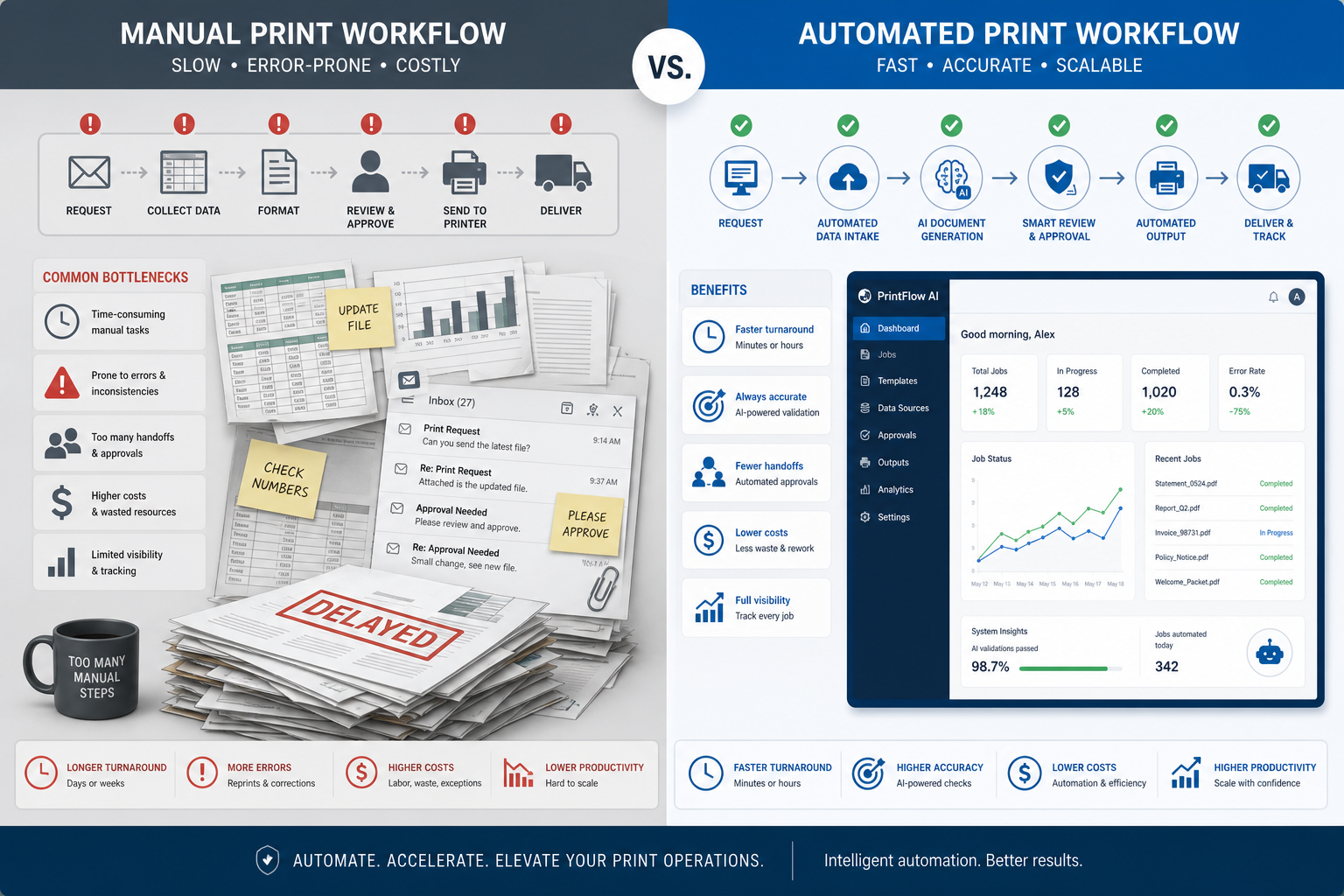
Area | Manual Workflow | Automated Workflow |
|---|---|---|
Product creation | Customer uses complex editor or requests help | Customer uses prompts, uploads photos, and gets instant layouts |
Proofing | Email-based revisions and approvals | Instant previews and guided approvals |
File prep | Staff checks files manually | Rules and AI validate files automatically |
Production routing | Human decision for every job | Smart logic routes jobs automatically |
Scalability | Requires more staff as orders grow | Supports higher volume with leaner operations |
Customer experience | Friction-heavy and slow | Fast, intuitive, mobile-friendly |
Error control | Inconsistent and person-dependent | Standardized and repeatable |
The Role of 3D and AR Previews in Print Automation
Another content gap competitors often miss is the link between automation and buyer confidence.
Automation is not only about internal speed. It is also about helping customers feel certain enough to complete the purchase.
Photorealistic 3D and AR previews make that possible.
When customers can visualize a photo book, album, or premium print product before ordering, they are more likely to:
trust the quality
understand the final result
approve faster
complete checkout
request fewer revisions later
Media Rex Alliance brings this into the workflow with photorealistic 3D and immersive AR previews, which improves confidence without slowing down production.
That is a major advantage for premium print brands selling emotionally important or visually complex products.
Why Mobile-First Print Automation Is Critical
A surprising number of print buying experiences are still built around desktop-era assumptions.
That is a mistake.
Customers now discover, browse, personalize, and purchase from mobile devices at every stage of the journey. If the print experience is clunky on mobile, conversion drops.
A modern print automation platform should support:
browser-based access
no app installation
fast image uploads
responsive previews
seamless checkout
project continuity across devices
Media Rex Alliance is designed for that reality. Its mobile-first, browser-based experience lets customers move from inspiration to print product creation without downloading software or navigating complex toolsets.
That is not just better UX. It is a direct revenue lever.
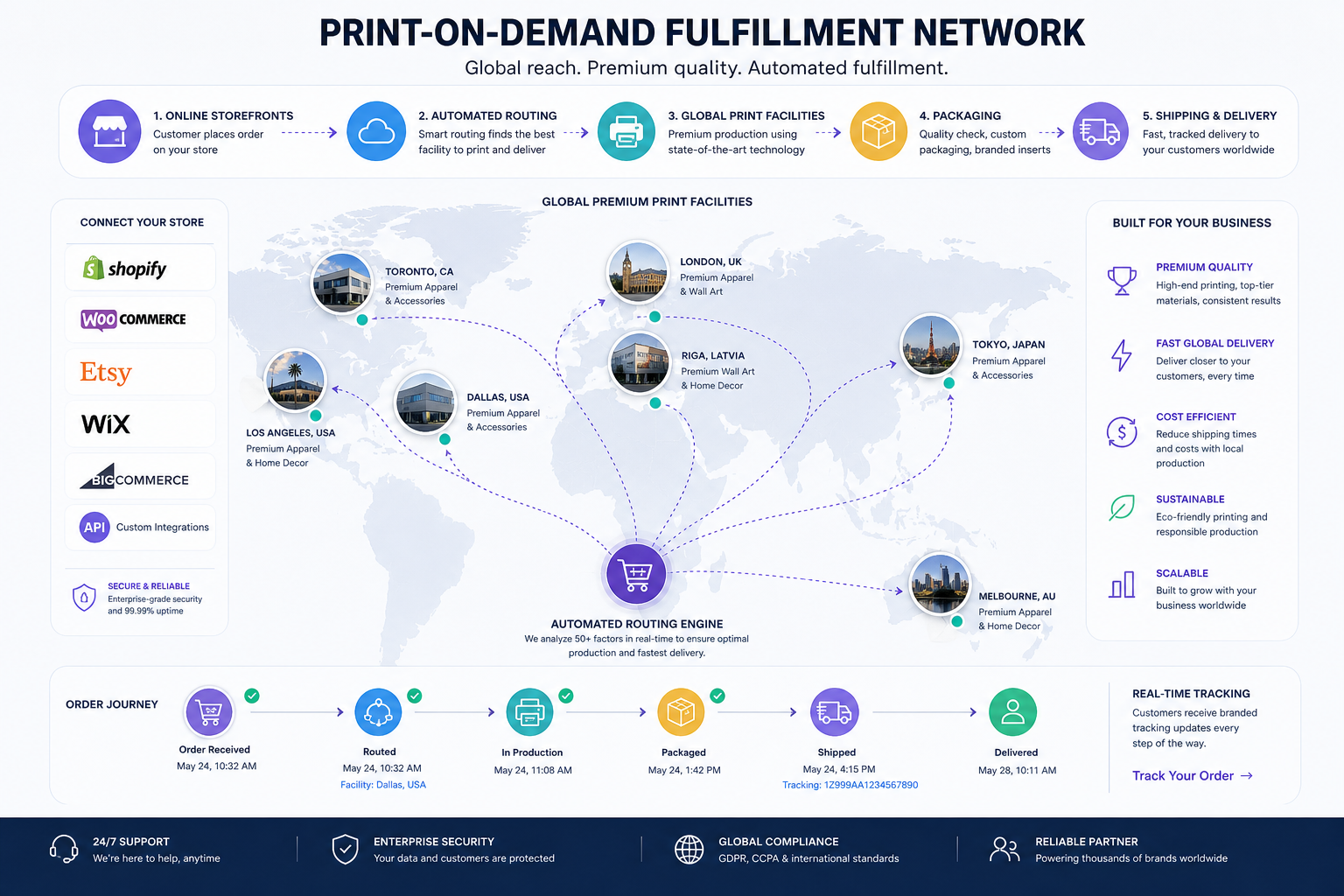
How Automation Supports On-Demand Production
Print brands do not just need faster workflows. They need more resilient operating models.
On-demand production reduces:
inventory risk
warehousing costs
obsolete stock
cash tied up in pre-produced items
Automation makes on-demand viable because it connects the customer order directly to a production-ready fulfillment pipeline.
That is especially important for:
personalized products
seasonal collections
low-volume premium goods
test launches
multi-market expansion
With Media Rex Alliance, on-demand production is paired with an automated fulfillment pipeline and a global network of premium print partners, giving brands a way to scale without building and managing every production capability internally.
Who Benefits Most From Print Automation?
Print automation is not just for enterprise-scale operations.
Small Studios and Photographers
They can offer polished product creation and ordering experiences without building custom software or managing complicated design workflows.
New Print-on-Demand Brands
They can launch faster, reduce overhead, and avoid investing in inventory-heavy models from the start.
Mid-Size Print Brands
They can improve margins by reducing manual intervention while increasing order capacity.
Regional Print Players
They can modernize customer experience and compete with larger digital-first brands.
Established Photo Book Companies
They can replace aging web-to-print tools with more intuitive, AI-powered, mobile-ready product creation experiences.
What to Look for in Print Automation Software
Not all automation platforms solve the same problem. Some focus only on internal workflow. Some focus only on storefronts. The most strategic platforms connect both.
Use This Evaluation Framework
Criteria | Why It Matters |
|---|---|
AI-powered product creation | Reduces design friction and increases conversions |
White-label deployment | Protects your brand while accelerating launch |
Browser-based experience | Removes app friction and improves accessibility |
Mobile-first UX | Captures modern buying behavior |
3D and AR previews | Increases confidence and reduces abandonment |
Cloud and local sync | Supports seamless multi-device workflows |
Automated fulfillment | Enables lean scaling and faster delivery |
Premium print network | Expands reach without operational bloat |
Scalability | Supports growth from startup to enterprise |
Where Competitor Articles Fall Short
Across the leading content on this topic, the same themes appear repeatedly:
automation improves efficiency
automation reduces manual tasks
automation cuts costs
automation helps with prepress and finishing
All true. But they often underplay or completely miss the bigger strategic picture.
Key Gaps Most Articles Miss
Customer-Side Automation
Most content focuses on internal workflow, not the automation of product creation itself.
Conversational AI
Very few articles address how prompts can replace complex editors and accelerate purchase decisions.
Conversion-Focused UX
They discuss operational efficiency, but not how previews, AR, mobile-first design, and ease of use affect sales.
White-Label Scalability
They rarely address how brands can launch modern print experiences without building proprietary software.
On-Demand + Fulfillment Automation
Many mention digital workflows but do not connect automation to distributed production and global fulfillment.
This is where Media Rex Alliance stands out. It is not just workflow software. It is infrastructure for the future of AI-powered web-to-print.
Why Media Rex Alliance Is a Strategic Fit for Modern Print Brands
Media Rex Alliance helps print businesses modernize the full journey from customer idea to delivered product.
What Makes It Different
Conversational AI creation engine that turns prompts into print-ready products
White-label deployment into your existing storefront, app, or branded environment
Photorealistic 3D and AR previews that improve trust before purchase
Mobile-first browser experience with no app installation required
Photo upload and automatic layout generation for faster product creation
Cloud and local project sync for seamless multi-device continuity
On-demand production model that lowers stock and overhead
Automated fulfillment pipeline powered by a global network of premium printers
Scalable infrastructure built for startups, growth-stage brands, and enterprise print operations
This is especially valuable for brands that want to move faster without spending years building custom web-to-print technology.
A Practical Rollout Path for Print Brands
If you are considering print automation, the best approach is not to automate everything at once. Start with the highest-friction areas.
Phase 1: Remove Buying Friction
Focus on:
simpler product creation
mobile-first ordering
instant previews
fewer steps to checkout
Phase 2: Automate Production Logic
Focus on:
file prep automation
routing rules
approval flows
fulfillment triggers
Phase 3: Scale Personalization
Focus on:
AI-generated layouts
conversational customization
distributed production
global expansion
A platform like Media Rex Alliance supports this progression naturally because it connects customer experience and fulfillment automation in one scalable system.
Final Verdict
Print automation matters because modern print growth depends on speed, precision, and ease.
It reduces manual tasks. It improves workflow efficiency. It lowers error rates. It helps teams do more with less. But more importantly, it changes how customers experience print in the first place.
That is the real unlock.
The future of print automation is not just faster prepress or cleaner scheduling. It is an AI-powered, customer-friendly, fully connected journey where people can describe what they want, preview it instantly, order confidently, and receive premium physical products through automated on-demand production.
For print brands that want to compete on experience as well as efficiency, that future is already here.
Ready to Modernize Your Print Brand?
Media Rex Alliance gives print businesses a faster path to that future.
If you want to launch a branded AI-powered web-to-print experience, reduce friction in the buying journey, automate fulfillment, and scale premium on-demand products without building the technology stack yourself, Media Rex Alliance is the platform to watch.
Turn prompts into print-ready products.
Launch under your own brand.
Deliver with confidence at scale.
For modern print brands, that is not just automation. It is a growth engine.