Print on Demand Dropshipping in the USA
Print on demand dropshipping in the USA has become one of the most efficient ways to launch customizable products without tying up capital in inventory, warehousing, or large production runs. For small studios, photographers, emerging POD brands, regional print businesses, and established photo product companies, the model is especially attractive because it reduces operational risk while making it easier to test offers, enter niches, and scale product catalogs fast.
What has changed is not just the fulfillment model, but the buying experience. Customers now expect personalization, faster delivery, mobile-first browsing, and confidence before purchase. That is where modern platforms are separating winners from commodity sellers. At Media Rex Alliance, we see the next phase of print on demand and dropshipping as AI-powered, white-label, and conversion-optimized: customers create products through conversational prompts instead of clunky design tools, receive photorealistic 3D and AR previews before checkout, and order through a seamless browser-based flow that works across devices.
What print on demand dropshipping actually means
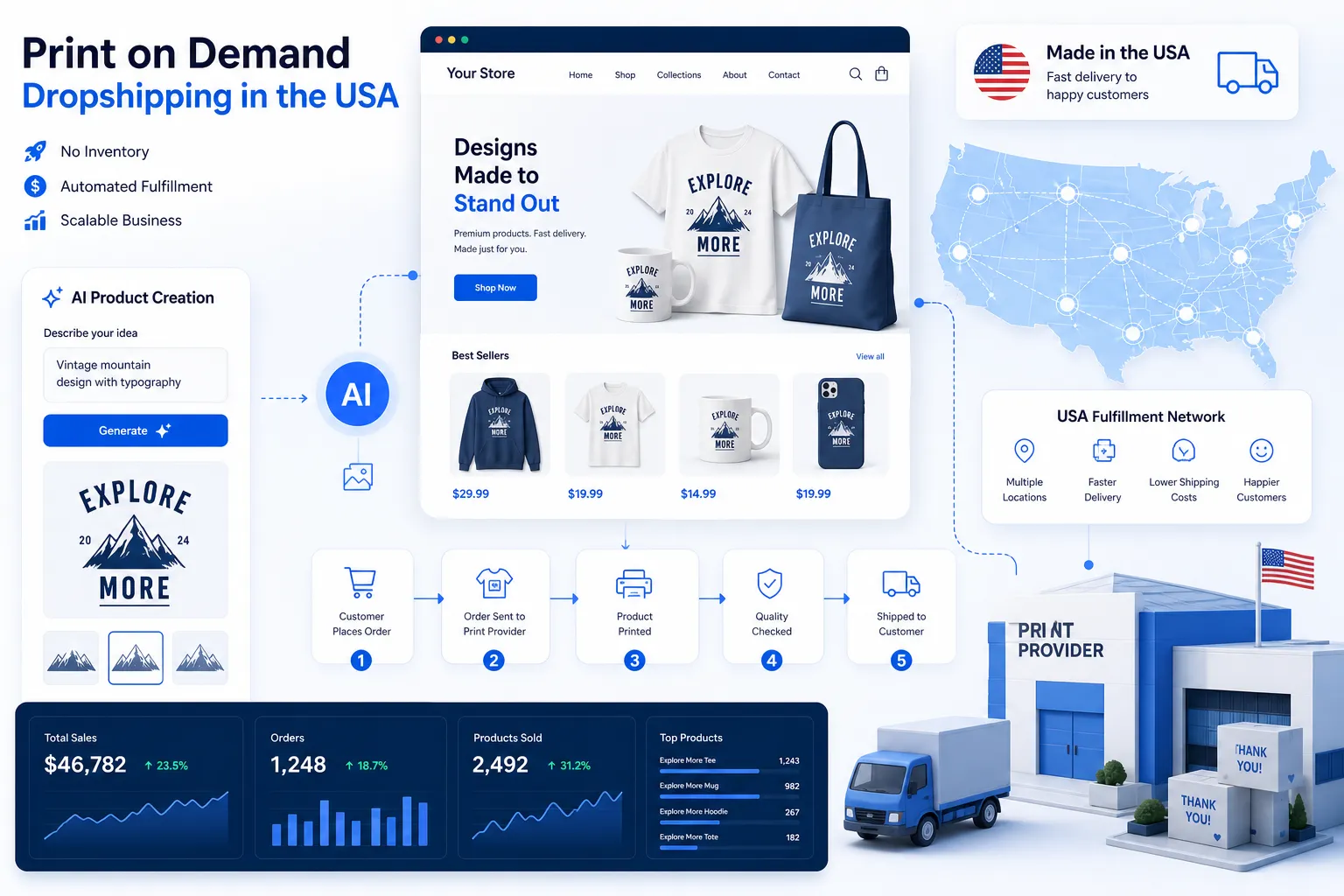
At its core, print on demand dropshipping is a retail model where products are only produced after a customer places an order. Instead of pre-buying blank stock, printing in-house, packing orders, and managing fulfillment manually, the seller focuses on brand, product positioning, and customer acquisition while a print partner produces and ships each order.
The model usually works like this:
You create a storefront and publish customizable products.
A customer places an order.
The order is routed to a print provider.
The item is produced on demand.
It is packed and shipped directly to the customer.
This is why the terms on demand printing dropship and print on demand and dropshipping are often used together. The product is manufactured only after purchase, and fulfillment is outsourced so the seller avoids holding stock.
Why the USA is such a strong market for POD dropshipping
The USA is one of the best environments for this business model because it combines high ecommerce maturity, broad consumer acceptance of personalized products, and strong fulfillment infrastructure.
"E-commerce sales in the first quarter of 2026 accounted for 16.9% of total retail sales." - U.S. Census Bureau
That matters because personalized commerce performs best where online purchasing is already mainstream. Buyers are accustomed to discovering niche brands, ordering online, and expecting transparent shipping timelines.
The second reason is fulfillment geography. The US market allows brands to reach major population centers quickly when they use domestic or strategically distributed production partners. That lowers transit times, reduces shipping surprises, and helps stores compete on customer experience rather than just product novelty.
"The U.S. print-on-demand market was valued at USD 1.89 billion in 2022 and is expected to grow at a CAGR of 24.4% from 2023 to 2030." - Grand View Research
How print on demand dropshipping works in practice
Many beginner articles stop at “upload a design and sell a shirt.” In reality, the strongest operators build a system, not just a store.
The traditional flow
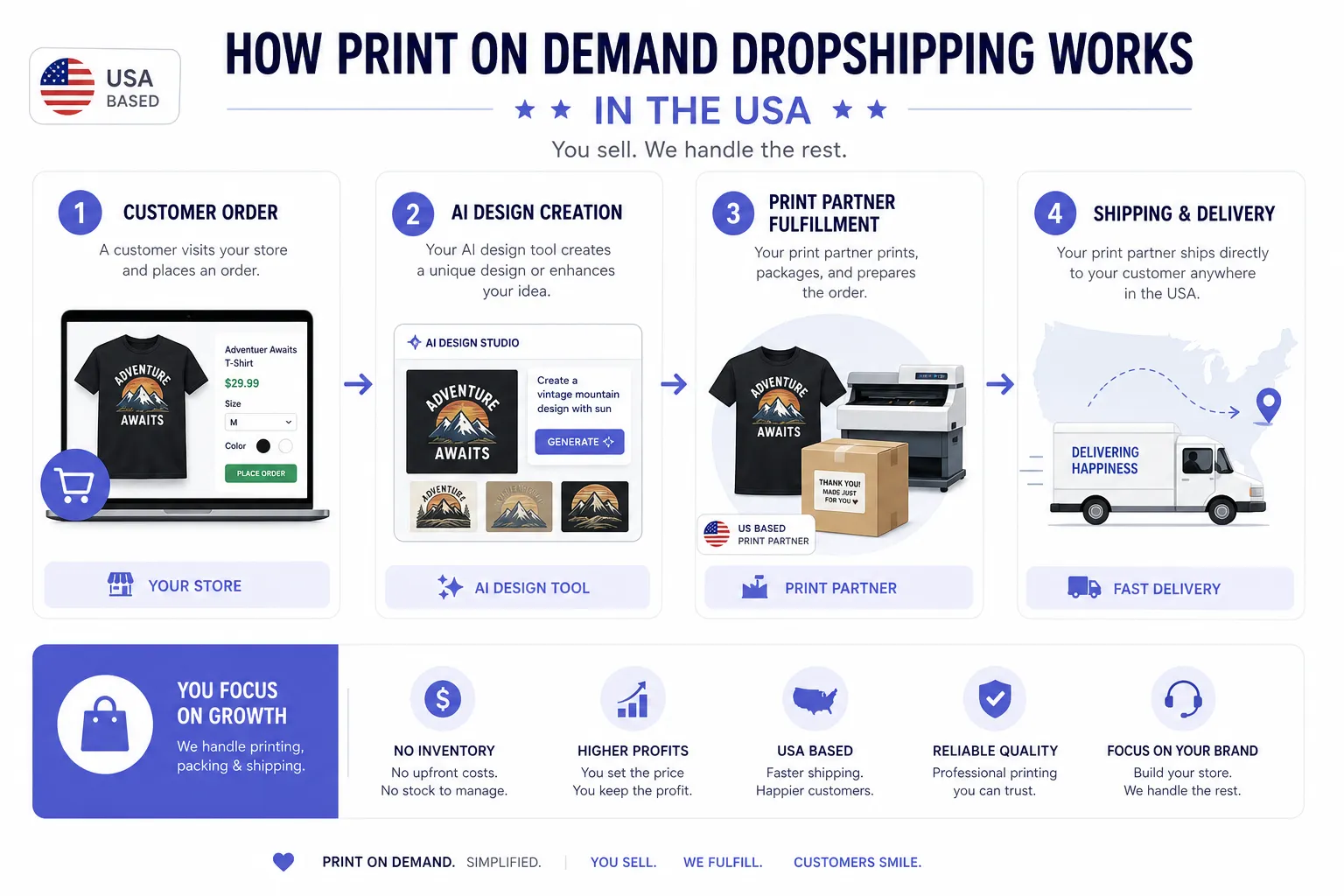
A classic POD workflow looks like this:
Step | What happens | Main risk |
|---|---|---|
Product setup | Seller adds design to blank products | Generic offers, weak differentiation |
Store publishing | Listings go live on Shopify, Etsy, or another platform | Poor SEO, low conversion |
Customer order | Buyer checks out | Cart abandonment |
Production routing | Order goes to print provider | Inconsistent quality or delays |
Fulfillment | Product is printed, packed, shipped | Tracking and support friction |
Post-purchase | Customer receives item | Returns, reprints, reputation issues |
The modern AI-powered flow
A more advanced setup uses AI to reduce friction before the order is even placed:
Step | Modern approach | Strategic advantage |
|---|---|---|
Product creation | Customer or merchant uses conversational AI to generate layouts | Faster ideation, less design friction |
Previewing | 3D and AR previews show the final product realistically | Higher confidence, fewer surprises |
White-label deployment | Experience lives inside your brand ecosystem | Stronger retention, no platform dilution |
Cloud and local sync | Projects move across mobile and desktop seamlessly | Better user continuity |
Automated fulfillment | Orders route through premium production network | Lower operational overhead |
Scale management | Product and order flows expand without new internal tooling | Easier growth across markets |
This is the gap many competitors still miss. The future of print on demand dropshipping usa is not just cheaper printing. It is better creation UX, stronger purchase confidence, and less operational drag.
The biggest benefits of print on demand and dropshipping
Low upfront cost
You do not need to buy inventory before validating demand. That keeps launch costs lower and makes testing niches far less risky.
Faster catalog expansion
A store can add dozens of SKUs across apparel, wall art, mugs, books, accessories, or home décor without running a warehouse. This is especially useful for photographers, artists, and regional print brands expanding into new verticals.
Lower overhead
There is no need to manage stock forecasting, dead inventory, or pick-and-pack operations internally. That makes the model efficient for lean teams.
Easier geographic reach
When US-based or globally distributed printers are involved, sellers can serve customers across multiple states or regions without building production capacity themselves.
Strong fit for personalized products
POD is ideal when each order may be slightly different. This is where Media Rex Alliance creates a serious advantage: conversational AI can turn a text prompt or uploaded photo into a print-ready product quickly, helping customers move from idea to purchase without wrestling with complex editors.
Where many US POD stores still struggle
Despite the upside, a lot of stores underperform for predictable reasons.
They sell generic products
Anyone can upload a slogan tee. The challenge is creating a brand, a use case, or an emotional hook that gives a buyer a reason to choose you.
Their design experience is outdated
Traditional editors often slow people down. Too many choices, poor mobile UX, and clunky interfaces kill intent. A conversational creation flow removes friction and helps customers build what they want faster.
They rely on weak previews
Flat mockups are often not enough. Buyers hesitate when they cannot clearly visualize the end result. Photorealistic 3D and AR previews improve confidence and can reduce abandoned carts or support issues.
Their fulfillment logic is underdeveloped
Not all print partners are equally strong across speed, quality, packaging, or geographic coverage. Supplier selection matters as much as product design.
They do not control the customer experience
If too much of the journey lives on third-party tools, the brand becomes forgettable. White-label ownership matters more as a store grows.
Choosing the right US print-on-demand supplier
Not every supplier is right for every business. The right choice depends on your niche, product mix, customer location, and growth stage.
What to evaluate
Factor | Why it matters | What to look for |
|---|---|---|
Production location | Affects shipping time and cost | US facilities near key customer regions |
Product range | Determines catalog breadth | Relevant categories, not just volume |
Print quality | Impacts reviews and repeat rate | Consistency, material quality, color accuracy |
Branding options | Helps build long-term equity | Custom packing slips, labels, inserts |
Integrations | Affects launch speed | Shopify, Etsy, WooCommerce, API access |
Automation | Reduces manual work | Order sync, status updates, routing |
Support | Critical when issues happen | Fast resolutions, clear SLAs |
Preview quality | Influences conversion | Good mockups, ideally 3D/AR support |
Comparing popular platforms in the market
Below is a practical view of three recognizable competitors and where the market is heading.
Printful
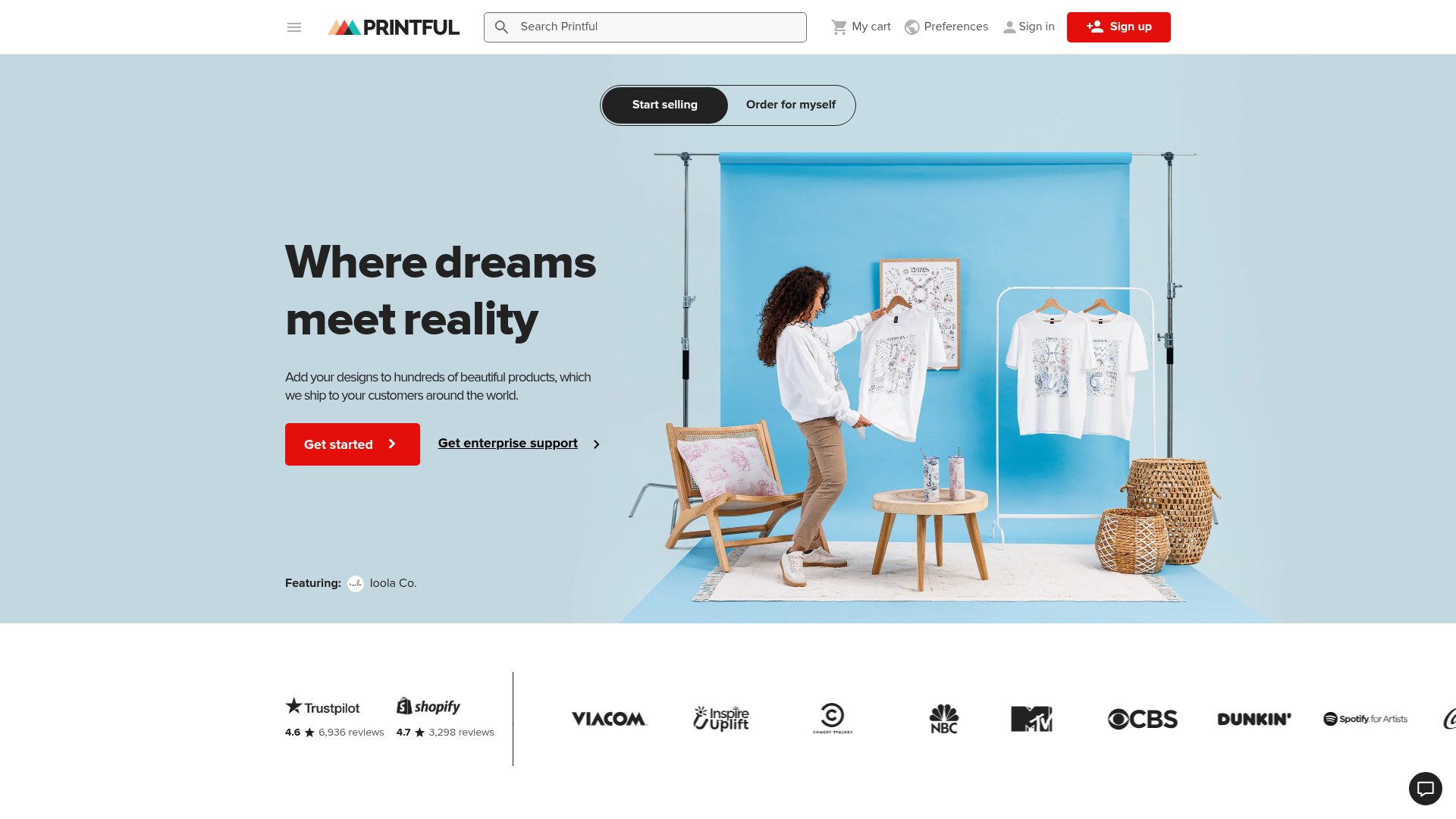
Printful emphasizes quality, branded ecommerce integrations, and a structured product catalog. It is often attractive to sellers who want a familiar platform with broad fulfillment capabilities.
Printify
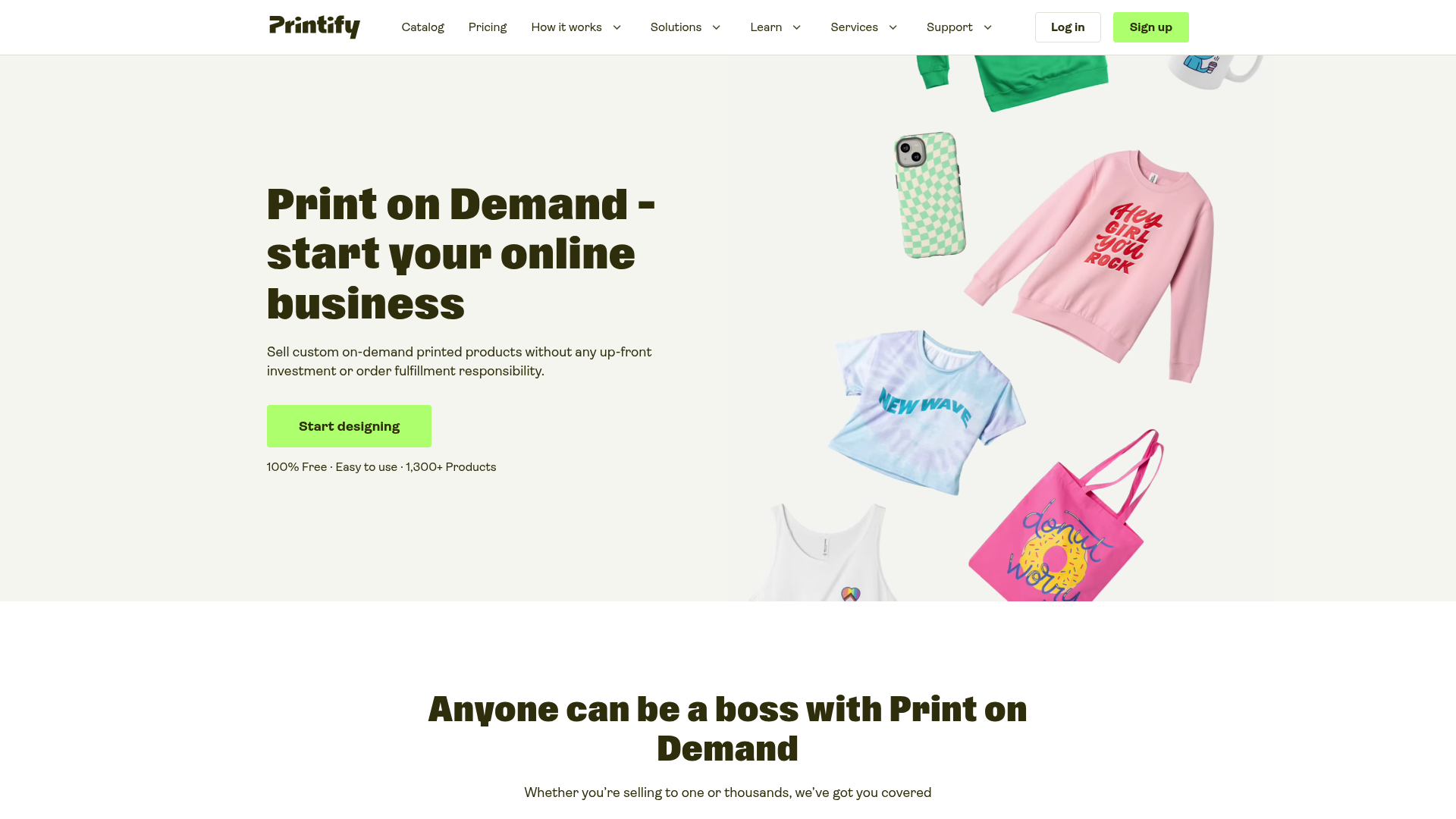
Printify is known for its large product catalog and network-based provider model. That flexibility can be useful for price testing and broader product experimentation.
Contrado
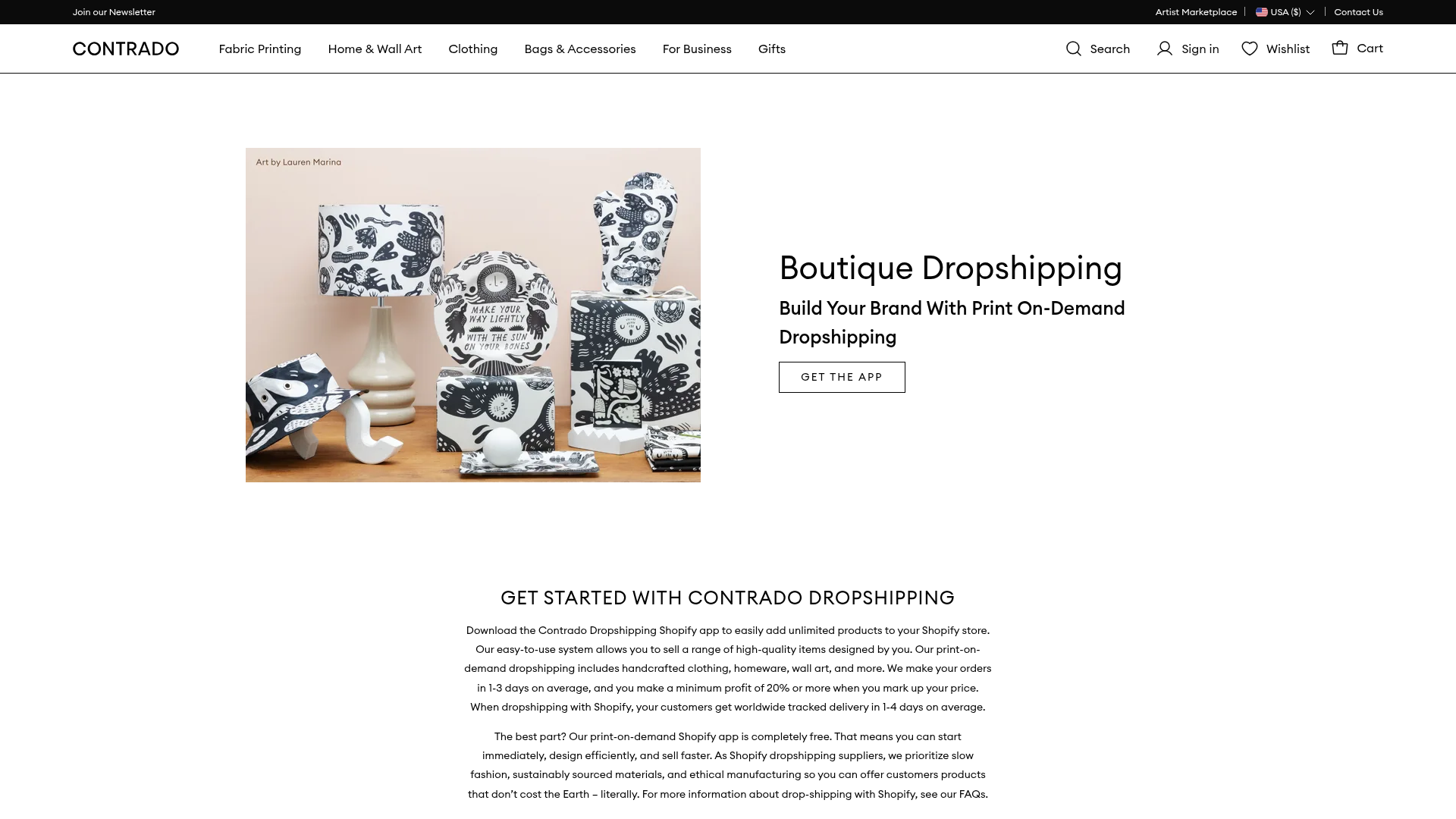
Contrado positions itself more toward premium, boutique, and handcrafted product ranges. It is especially relevant for sellers seeking higher-ticket or more design-forward goods.
The overlooked category: AI-native white-label print platforms
Most comparison pages focus on catalog size or base cost. That is useful, but incomplete. The bigger strategic question is whether the platform helps you convert more visitors into buyers and whether it can become your branded product creation layer.
Media Rex Alliance is built for businesses that want more than a supplier dashboard. It gives print businesses, studios, and product companies a white-label AI web-to-print experience that can sit directly inside an existing storefront or app. Instead of pushing end customers into cumbersome editors, it lets them create through natural language, upload assets, preview results in photorealistic 3D or AR, and purchase without leaving the brand environment.
For businesses modernizing their web-to-print stack, that is not just a feature upgrade. It is a conversion strategy.
Best product categories for US print-on-demand sellers
Not every category performs equally well. Products work best when they align with buyer identity, gifting behavior, fandom, local pride, hobbies, or practical personalization.
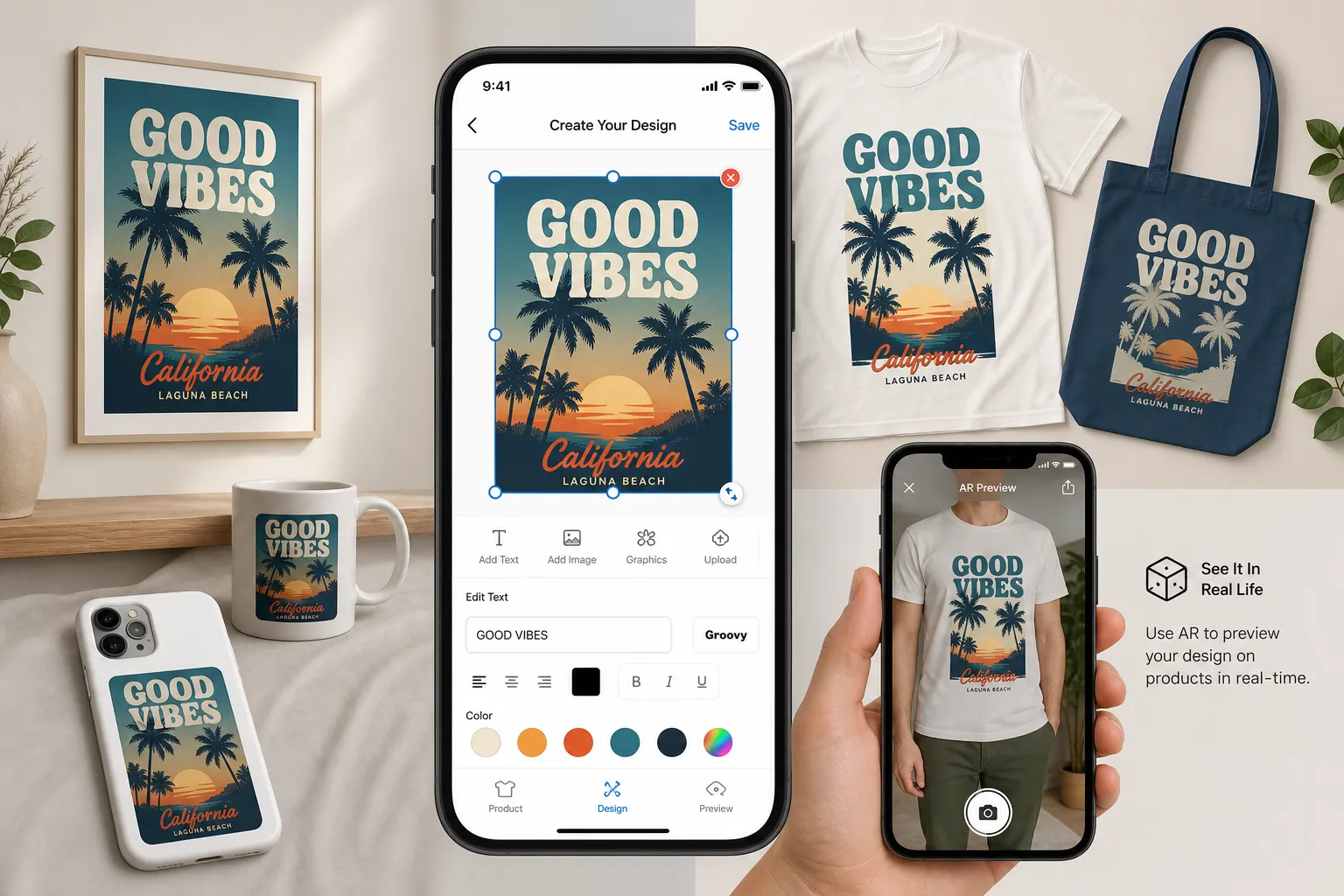
Apparel
Still a core category because it is easy to understand, broad in audience, and highly compatible with niche targeting.
Wall art and photo products
Strong for photographers, studios, creators, and home décor brands. This is also where preview quality matters heavily.
Drinkware and desk accessories
These products often work well for gifts, office merchandise, and low-friction impulse purchases.
Phone cases and small accessories
Good for personalized and trend-driven designs, especially when the creation process is fast and mobile-first.
Premium branded merchandise
A growing opportunity for businesses, creators, events, and communities that want something more elevated than generic merch.
How to build a profitable POD store in the USA
Start with a niche, not a product
Instead of asking “what should I sell,” ask “who am I serving and why would they care?” A niche-first approach makes messaging, product development, and advertising more efficient.
Examples include:
pet parents
regional pride audiences
wedding and event buyers
photographers selling client keepsakes
fitness communities
local tourism or destination gifts
business gifting and branded merchandise
Focus on conversion before scale
A store with average traffic and strong conversion often outperforms a high-traffic store with weak UX. Improve:
mobile speed
product page clarity
previews
delivery transparency
checkout simplicity
trust signals
Use personalization to defend margins
Personalized products are harder to compare directly on price. They also create emotional value, which improves conversion when the UX is smooth.
Think in collections
Do not just sell single items. Build themed collections and bundles. That raises average order value and makes your brand feel more intentional.
Order samples strategically
Sampling helps validate print quality, packaging, and real-world look. It also gives you better original imagery and stronger product descriptions.
Why AI changes the economics of POD
One of the biggest bottlenecks in traditional POD is creation friction. Customers may want a custom product, but many do not want to “design” in the traditional sense.
That is where Media Rex Alliance changes the equation.
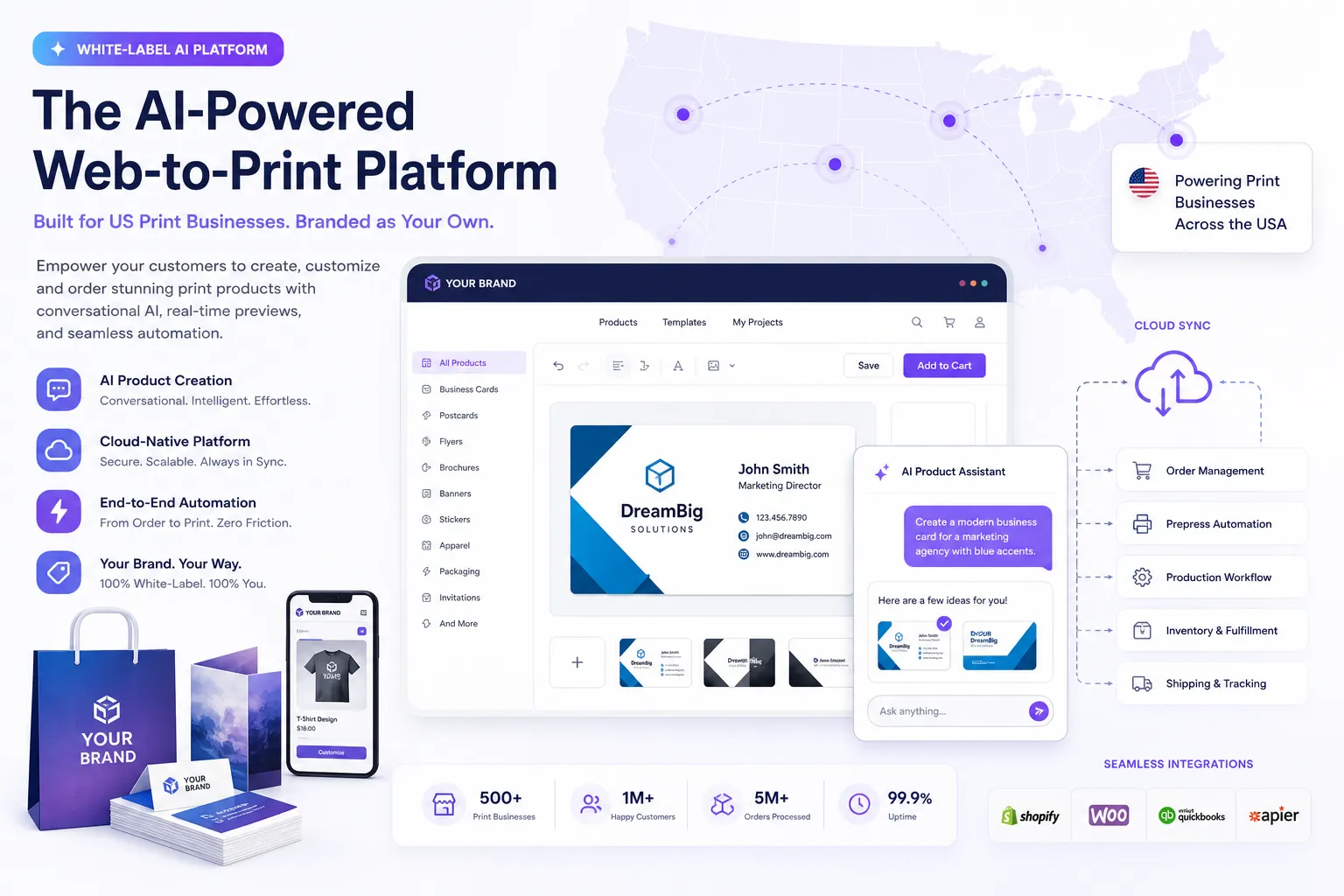
Conversational product creation
Instead of asking users to learn a complex editor, the platform lets them describe what they want. That dramatically lowers the barrier for first-time buyers and non-designers.
Faster path to purchase
When prompts become print-ready products quickly, there are fewer clicks, fewer abandoned sessions, and less user fatigue.
Better visualization
Photorealistic 3D and immersive AR previews let customers see what they are buying more clearly, which strengthens confidence.
White-label ownership
Businesses can deploy the experience under their own branding, domain, and visual identity rather than sending customers into a generic third-party flow.
Mobile-first accessibility
No app download is required. The browser-based experience supports mobile-native buying behavior, which matters in modern ecommerce.
Cross-device continuity
Projects syncing locally and in the cloud help users start on one device and continue on another, reducing disruption in the buying journey.
Better scalability
Because fulfillment can run through a global network of premium print partners, businesses can keep overhead low while scaling catalog breadth and order volume.
A practical launch plan for beginners and growth-stage brands
Phase 1: Validate demand
Choose one niche and 5 to 15 products. Do not overbuild. Focus on learning what converts.
Phase 2: Tighten the offer
Improve pricing, previews, product copy, bundles, and shipping messaging based on real buyer behavior.
Phase 3: Add personalization
Introduce products where custom names, photos, prompts, or layouts increase perceived value.
Phase 4: Expand channels
Move beyond one marketplace if unit economics justify it. Add your own storefront to protect brand value.
Phase 5: Upgrade the creation layer
As the business matures, the design experience itself becomes a competitive edge. This is where an AI-native white-label solution can outperform standard POD workflows.
Common mistakes to avoid
Competing only on price
The cheapest seller is rarely the most durable business.
Choosing too many products too early
Wide catalogs without a clear audience usually convert poorly.
Ignoring mobile usability
A large share of product discovery and purchasing happens on mobile.
Underestimating customer support
Late orders, print issues, and unclear sizing create avoidable friction if expectations are not managed well.
Treating fulfillment as interchangeable
Provider quality, speed, and consistency affect your reputation directly.
Final verdict: where the US POD market is going next
Print on demand dropshipping usa is no longer just a beginner side-hustle model. It is becoming a serious infrastructure layer for modern commerce, especially for brands selling customization, gifting, visual products, merchandise, and photo-based goods. The winners will not simply be the stores with the largest catalogs. They will be the ones with the best buying experience, the lowest creative friction, and the strongest fulfillment reliability.
That is why Media Rex Alliance represents a strategic leap forward for print businesses and ambitious sellers. It combines AI-powered product creation, white-label deployment, mobile-first browser access, local and cloud project sync, photorealistic 3D and AR previews, and automated on-demand fulfillment into one scalable SaaS layer. If you want to modernize your store, reduce operational drag, and give customers a smarter way to create premium products, Media Rex Alliance is built for exactly that future.
FAQ
What are the best print-on-demand companies in the US?
The best choice depends on your goals. Printful, Printify, and Contrado are well-known options, while businesses that want a more advanced customer experience should consider a white-label AI platform like Media Rex Alliance for branded creation, smarter previews, and scalable fulfillment.
What is the best dropshipping supplier in the USA?
There is no single best supplier for every store. The strongest US supplier is the one that matches your product category, quality standards, branding needs, fulfillment speed, and integration stack, while helping you maintain a reliable customer experience.
Is print-on-demand still profitable in 2026?
Yes, print-on-demand is still profitable in 2026, especially for brands with strong niches, personalized products, and efficient fulfillment. Profitability improves further when you reduce design friction, raise conversion rates, and protect margins through better branding and customer experience.
Is print-on-demand considered drop shipping?
Yes, print-on-demand is a form of dropshipping because products are produced after purchase and shipped directly to the buyer by a third party. The difference is that POD adds customization and made-to-order production instead of reselling standard inventory.
Who is better than Printify?
“Better” depends on what you value most. If you need a more premium, branded, and future-ready experience than a standard supplier dashboard, Media Rex Alliance can be the stronger option because it adds conversational AI creation, white-label deployment, and photorealistic 3D/AR previews on top of scalable print fulfillment.