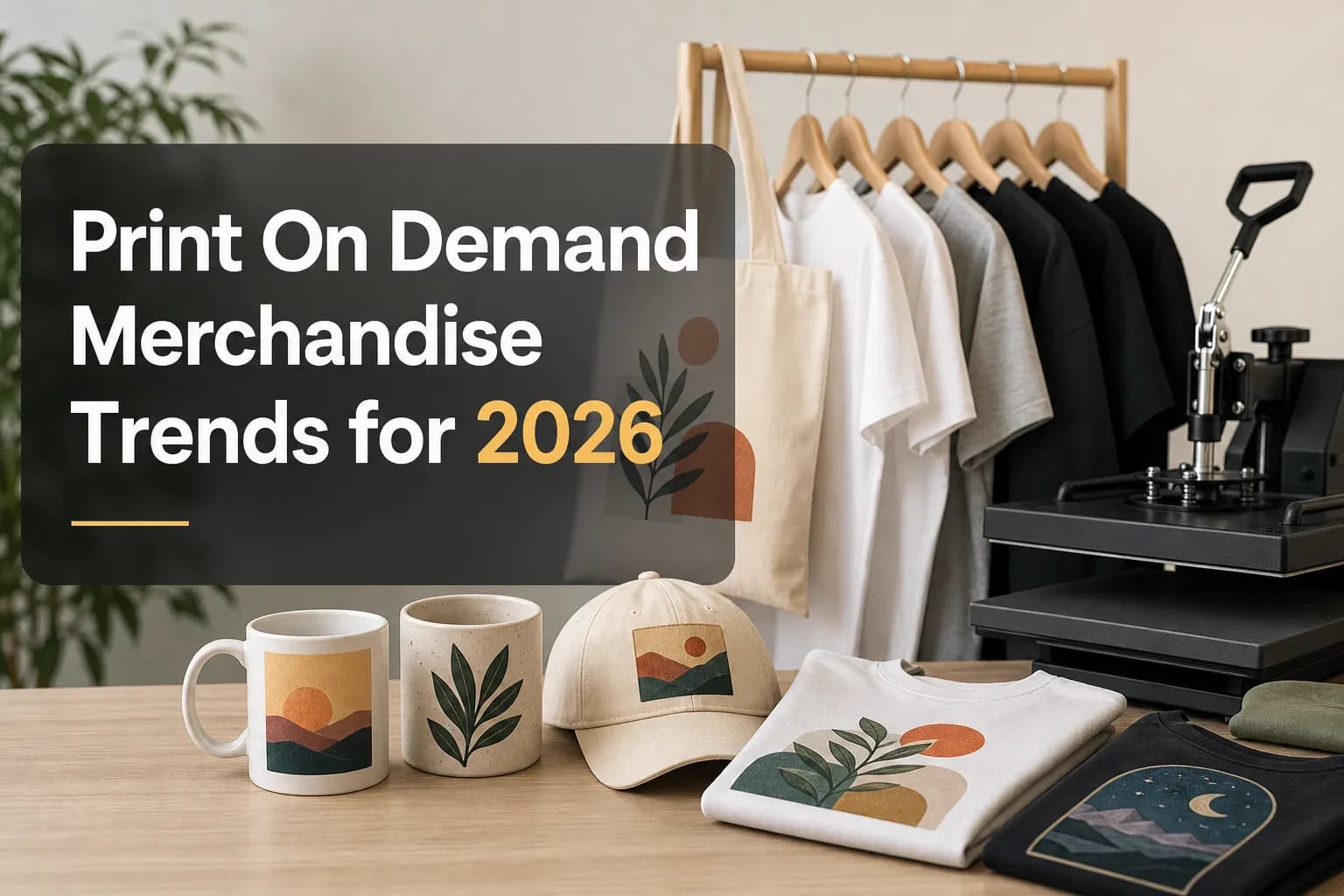
Print On Demand Merchandise Trends for 2026
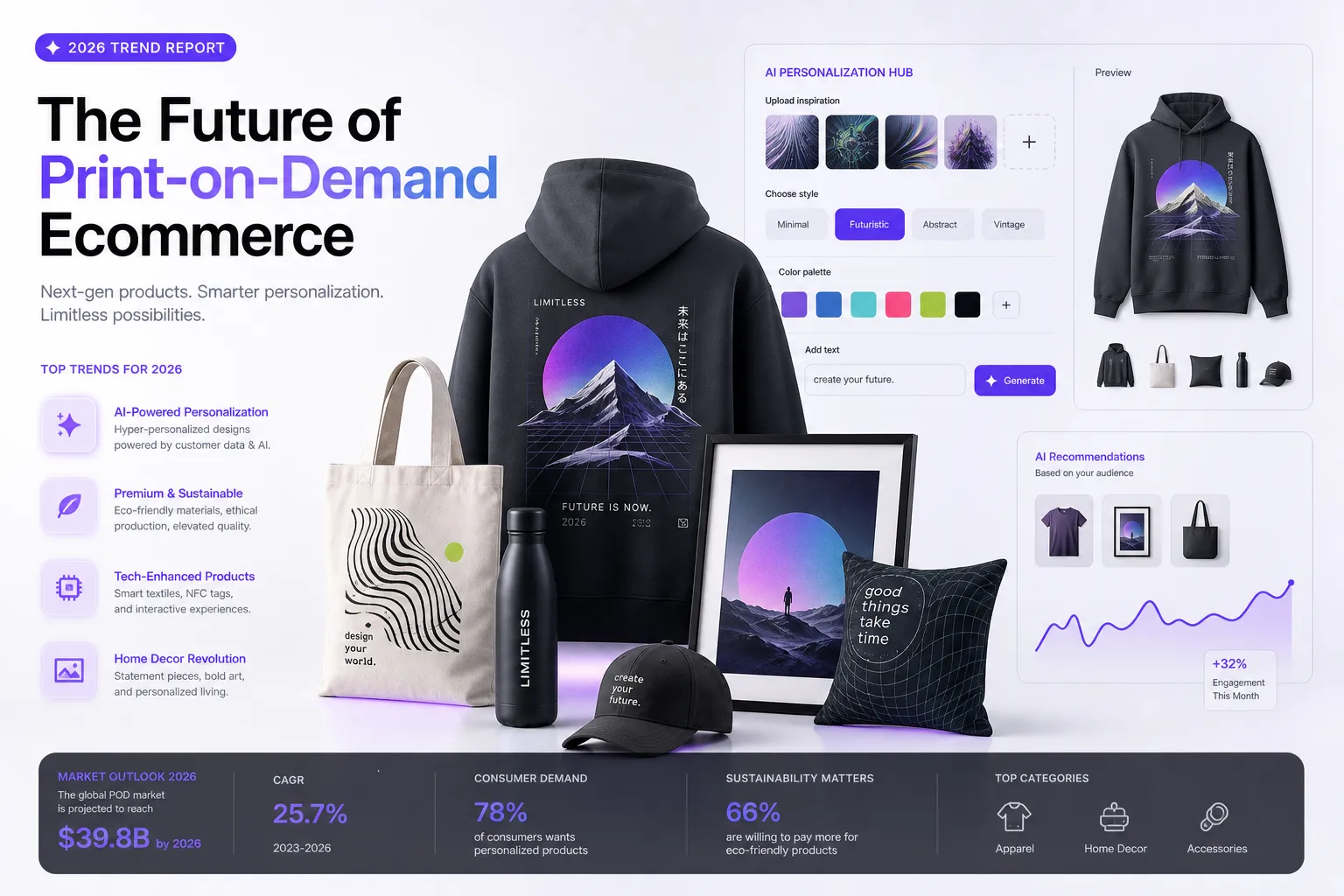
For small studios, photographers, emerging merch brands, regional printers, and established photo product companies, 2026 is not just another growth year. It is a separation point.
The market is moving beyond generic product catalogs and basic upload tools. Customers now expect personalization, instant previews, faster fulfillment, and a buying experience that feels as polished as the products themselves. A modern print on demand merchandise business has to do more than offer custom products. It has to remove friction, build confidence, and scale without bloated inventory or operational drag.
That is why the biggest shift in 2026 is not only about what products sell. It is about how they are created, visualized, and fulfilled.
Media Rex Alliance is built for this new reality. As a white-label AI print platform, it gives print businesses and merch sellers a faster path to launch differentiated experiences: conversational product creation, photorealistic 3D and AR previews, browser-based mobile design, cloud sync, and global on-demand fulfillment. Instead of forcing users through complex design editors, it turns prompts into print-ready products quickly and natively inside your storefront.
What competitor content gets right - and where it falls short
Across leading articles on 2026 print-on-demand trends, several themes consistently appear:
personalization is becoming central to conversion
sustainability remains a strong buying factor
apparel continues to lead as a category
home décor, gifts, and lifestyle products are expanding
better previews reduce hesitation and returns
quality and brand positioning matter more than sheer product count
Those are all valid. But most competitor pieces stop at surface-level trend lists.
The biggest content gaps in the current conversation
The top-ranking content often misses the deeper business reality behind these trends:
What competitors cover | What they usually miss |
|---|---|
Trending products and design aesthetics | The infrastructure needed to deliver them profitably |
Personalization as a feature | Conversational AI as a conversion engine |
Preview tools in general | The impact of photorealistic 3D and AR on confidence and cart completion |
On-demand production benefits | White-label deployment for brands that need ownership, not marketplace dependency |
Product recommendations | Mobile-first buying behavior and cross-device continuity |
Sustainability messaging | Operational efficiency through low-stock, automated fulfillment pipelines |
This article fills those gaps and focuses on what actually makes a print on demand merch store competitive in 2026.
Why 2026 changes the economics of print-on-demand merchandise
The old print-on-demand playbook was simple: add more SKUs, test more niches, and hope some products stick. That approach is losing efficiency.
In 2026, the stronger model is:
fewer but better product decisions
higher-confidence customization journeys
smarter automation from creation to fulfillment
branded experiences that feel proprietary
scalable, low-inventory operations
The result is a more resilient business with better margins, lower friction, and stronger repeat purchase potential.
The 10 print-on-demand merchandise trends shaping 2026
1. Conversational customization will outperform traditional design editors
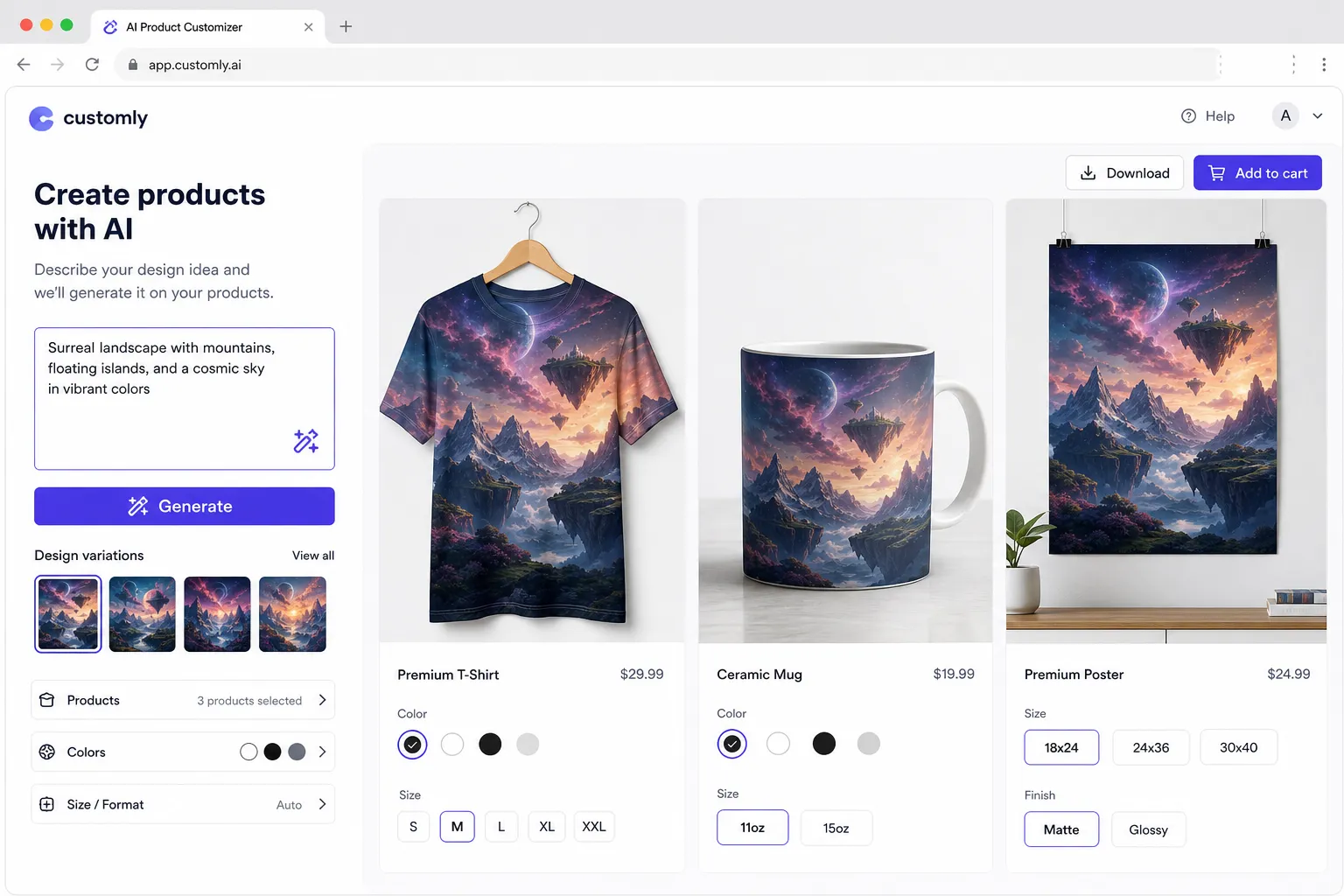
The standard “upload your file and drag elements around” workflow is becoming outdated for mainstream buyers. It still works for power users, but it introduces too much friction for everyone else.
Customers increasingly want to describe what they want in plain language and get to a compelling result fast. That means the future of customization is conversational, not tool-heavy.
For merchants, this matters because every unnecessary design step increases abandonment. Media Rex Alliance addresses this directly by enabling customers to create products through natural language prompts instead of complex creative software. That shortens time-to-design and helps transform browsing into buying.
Why this trend matters
lowers the learning curve for first-time buyers
makes personalized products accessible on mobile
accelerates decisions for gift buyers and casual shoppers
creates a more premium, AI-native brand experience
2. Photorealistic 3D and AR previews will become trust infrastructure
Customers no longer want to guess how a product will look. They want proof.
Basic flat mockups are often not enough for premium merchandise, especially when buyers are ordering customized items they cannot return easily. In 2026, photorealistic 3D previews and AR visualization are becoming critical trust layers.
Media Rex Alliance strengthens this experience with immersive previews that let customers inspect products before purchase. That reduces hesitation and can lower refund and support friction because buyers know what they are getting.
Best-fit categories for advanced previews
Product type | Why 3D/AR matters |
|---|---|
Apparel | Helps shoppers assess design scale and placement |
Phone cases | Improves confidence in fit, color, and style |
Wall art | Helps buyers visualize size and context |
Photo books and keepsakes | Reinforces emotional value before purchase |
Premium gift items | Increases confidence for higher-ticket orders |
3. Fewer products, better merchandising
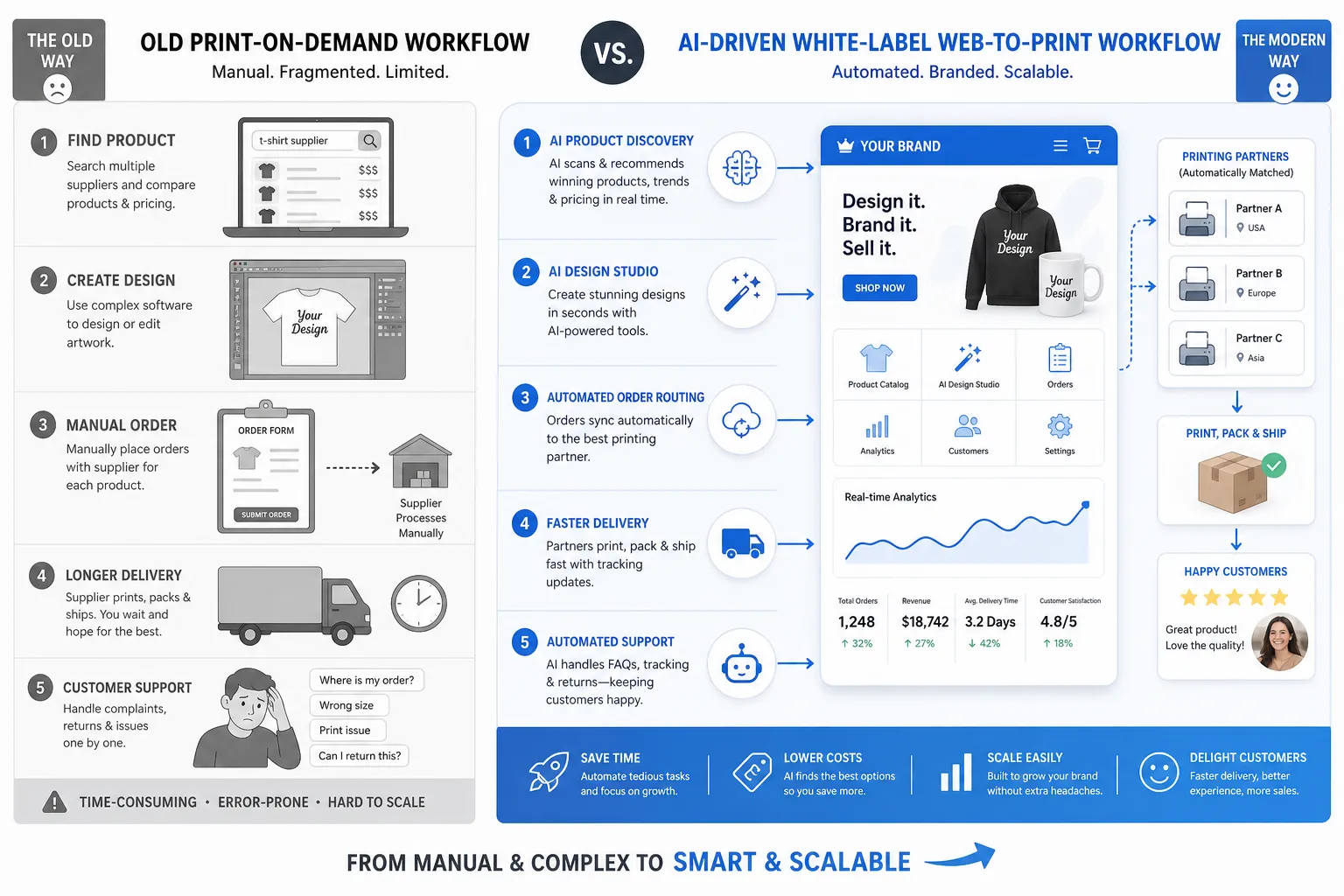
One of the smartest shifts in competitor content comes from the idea of refinement over expansion. That is exactly right.
Brands that win in 2026 are not necessarily the ones with the largest catalogs. They are the ones with clearer curation, stronger brand cohesion, and better product storytelling.
A modern print on demand merch store should focus on:
high-intent products people actually use or gift
premium versions of proven winners
thematic collections instead of endless variations
visually coherent merchandising
conversion-first customization journeys
This is especially important for studios and mid-size print brands that need efficiency, not SKU sprawl.
4. Premium basics and elevated everyday items will continue to dominate
Apparel still matters, but the definition of “winning apparel” is changing. Commodity tees alone are not enough. Customers want better fabrics, better fit, better branding, and better emotional positioning.
The same applies to everyday merchandise categories like tote bags, drinkware, notebooks, candles, and home décor. The product itself must feel giftable, useful, and worth keeping.
Product categories with strong momentum in 2026
Category | Why it remains strong |
|---|---|
Premium t-shirts and sweatshirts | Repeatable, wearable, gift-friendly |
Tote bags and accessories | Functional and highly customizable |
Drinkware | Strong for corporate merch, gifting, and creators |
Wall art and décor | Works well with AI-generated and photo-led designs |
Photo gifts and keepsakes | Emotionally sticky and high-conversion |
Stationery and desk goods | Strong for niche branding and B2B gifting |
5. Personalization will shift from optional feature to baseline expectation
Competitor articles repeatedly point to personalization, but the deeper takeaway is this: in 2026, it is no longer a differentiator by itself. It is the minimum standard.
The real differentiator is how easy, fast, and satisfying that personalization feels.
Brands that still treat customization as an add-on will struggle. Brands that make it central to the buying journey will capture more attention and higher intent.
Media Rex Alliance helps merchants move beyond static personalization by turning a simple prompt into a ready-to-print product, automatically generating layouts, supporting photo uploads, and streamlining the path to checkout.
6. Mobile-first creation will decide who captures impulse demand
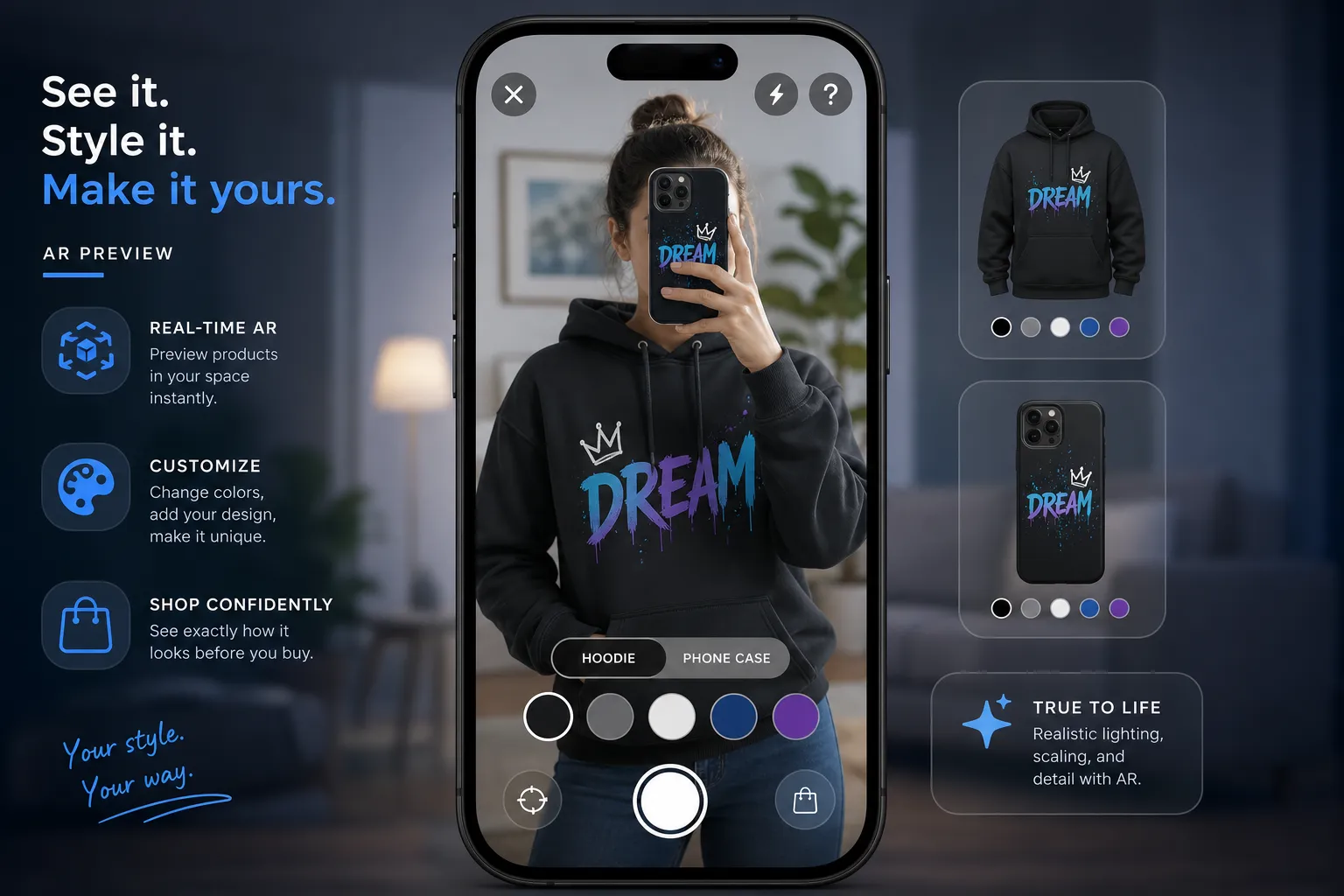
Many stores still treat mobile as a smaller desktop. That is a mistake.
A growing share of merchandise discovery, customization, and checkout happens on phones. If your experience depends on downloads, clunky editors, or desktop-style interaction patterns, you are introducing silent conversion loss.
Media Rex Alliance is designed for browser-based, mobile-first creation with no app installation required. That makes it easier for customers to start on one device, continue on another, and complete purchases without disruption.
What mobile-first really means in 2026
fast-loading visual interfaces
touch-friendly customization
no forced app download
simplified creation from prompt to preview
seamless multi-device continuity via local and cloud sync
7. White-label ownership will matter more than marketplace dependence
Many new merchants start on major marketplaces, and for discovery, that still makes sense. But serious brands are increasingly prioritizing owned experiences.
Why? Because marketplaces limit brand control, customer relationships, and customization depth.
A white-label AI print platform gives businesses a more strategic path. Instead of sending users into generic third-party workflows, brands can embed advanced AI-powered creation directly inside their own site or app. That protects the customer relationship and improves perceived brand value.
For regional print players and established photo companies, this is especially important. It allows modernization without rebuilding the entire technology stack from scratch.
8. Global fulfillment and low-inventory operations will become a competitive moat
One of the most practical advantages of print on demand merchandise is its low-inventory model. But in 2026, simply being “on demand” is not enough. Sellers need operational speed, quality consistency, and reliable routing.
Media Rex Alliance aligns with this shift by combining low-overhead product creation with automated fulfillment through a global network of premium printers. That helps businesses reduce stock risk while maintaining scalability.
Business benefits of a no-stock model
Benefit | Strategic impact |
|---|---|
Lower upfront inventory costs | Easier entry and faster experimentation |
Reduced storage overhead | Better capital efficiency |
Less dead stock | Improved sustainability and margin protection |
Faster scaling across products | More agility during trend cycles |
Flexible regional fulfillment | Better delivery performance |
9. Design trends are becoming more intentional, quieter, and more emotional
Competitor coverage from trend-focused publishers points toward a common creative direction: less visual noise, more considered design.
The standout 2026 design direction includes:
calm neutrals and earthy palettes
expressive but restrained typography
vintage references with modern structure
moody florals and celestial themes
texture, pattern, and emotional storytelling over novelty gimmicks
This matters because customers are moving toward merchandise that feels integrated into their life, wardrobe, or home. They want products with emotional staying power, not just momentary trend appeal.
For brands, this means stronger creative curation and better AI-assisted ideation can outperform raw output volume.
10. The winning brands will combine creativity with automation
The most important trend is not product-specific at all. It is operational.
The next generation of winning brands will blend:
AI-assisted creation
automated layout generation
dynamic previews
smart production workflows
branded customer experiences
globally distributed fulfillment
This is where Media Rex Alliance offers a real infrastructure advantage. It does not just help brands sell custom products. It helps them build an end-to-end system for scalable, AI-powered web-to-print commerce.
What customers will expect from a competitive print on demand merch store in 2026
By now, customer expectations are clearer than ever. A competitive store needs more than appealing products.
Customer expectation checklist
Customer expectation | What it means in practice |
|---|---|
Fast personalization | Prompt-based or low-friction customization |
Visual confidence | Photorealistic previews and AR where relevant |
Mobile usability | Browser-based creation without installs |
Trustworthy fulfillment | Clear timelines and consistent quality |
Brand coherence | Professional presentation and strong merchandising |
Meaningful products | Personalized, useful, or emotionally resonant items |
If your current buying experience feels fragmented, tool-heavy, or generic, that is where your next conversion gains are hiding.
Where the biggest opportunities are for different business types
Small studios and photographers
Your edge is emotional relevance and niche authority. Lean into photo gifts, premium keepsakes, personalized wall art, and branded collections that feel intimate rather than mass-produced.
New print-on-demand brands
Your advantage is agility. Use AI-powered creation and low-inventory production to test positioning quickly, then refine around the products and themes that convert best.
Mid-size print brands
Your opportunity is modernization without operational chaos. A white-label platform can upgrade the customer experience while preserving your brand and existing commerce channels.
Regional print players
Your moat is service, local knowledge, and faster delivery expectations. Layering AI creation and automated fulfillment onto that foundation makes your offer significantly more competitive.
Established photo book and print companies
Your greatest opportunity is reducing friction in legacy workflows. Conversational creation, automated layouts, and premium previews can increase conversion while bringing your offering up to modern customer expectations.
A practical roadmap for winning in 2026
If you want to capitalize on 2026 trends without overcomplicating your business, follow this sequence.
Step 1: Audit friction in your customization flow
Look at how many clicks, uploads, and decisions it takes for a buyer to go from idea to checkout. Every extra step is a conversion tax.
Step 2: Narrow your catalog to high-confidence winners
Keep the products customers understand quickly, personalize easily, and buy repeatedly.
Step 3: Upgrade previews
Flat mockups should not be your ceiling. Invest in experiences that let buyers feel ownership before paying.
Step 4: Prioritize mobile-first creation
Do not treat mobile as secondary. Design for it as the primary entry point.
Step 5: Strengthen fulfillment automation
Make sure the handoff from creation to production is accurate, fast, and low-touch.
Step 6: Own the experience with white-label infrastructure
The more your customer journey feels like your brand, the more defensible your business becomes.
Why Media Rex Alliance fits the next era of merchandise commerce
Most platforms help you launch products. Media Rex Alliance helps you modernize the whole buying experience.
Its advantage is not just AI. It is the way the full system works together:
customers create products through conversational AI
prompts become print-ready items quickly
photo uploads and layouts are handled intelligently
previews are photorealistic and immersive
the experience is mobile-first and browser-based
businesses deploy it white-label within existing storefronts or apps
projects sync across local sessions and the cloud
production stays low-inventory and on-demand
fulfillment is automated through a global print network
the platform scales from startup brands to enterprise print operations
That combination addresses the biggest gaps left by conventional web-to-print tools.
Final verdict
Print-on-demand merchandise in 2026 is not about chasing every microtrend or flooding your store with more products. It is about building a smarter, faster, more confidence-driven commerce experience.
The brands that win will make customization easier, previews richer, operations leaner, and merchandising more intentional. They will treat AI not as a gimmick, but as infrastructure for conversion and scale.
If you want to future-proof your business, modernize your print on demand merch store, and offer customers a dramatically better path from idea to order, Media Rex Alliance is the strategic next step. It gives you the white-label AI print technology, mobile-first experience, premium visualization, and global fulfillment backbone needed to compete in the next generation of web-to-print.
FAQ
Is print-on-demand profitable in 2026?
Yes - print-on-demand can be highly profitable in 2026 when brands focus on better product selection, strong personalization, and efficient fulfillment rather than oversized catalogs. The most successful sellers combine premium merchandise, low inventory risk, and frictionless buying experiences to improve margins and repeat purchases.
What are the key merchandise trends for 2026?
The biggest trends include premium basics, personalized gifts, home décor, functional everyday products, and emotionally resonant design. Customers are choosing items that feel useful, giftable, well-made, and easy to customize.
What are the print-on-demand trends for 2026?
The most important shifts are conversational AI creation, photorealistic 3D and AR previews, mobile-first customization, white-label brand ownership, and automated global fulfillment. Together, these trends reduce friction and make on-demand commerce more scalable.
What print will be trending in 2026?
Expect demand for intentional, emotionally driven visuals such as muted palettes, expressive typography, vintage-modern blends, celestial motifs, textured graphics, and refined pattern work. Loud novelty graphics are giving way to designs with more longevity and lifestyle appeal.
What is the new fad for 2026?
The closest thing to a breakout fad is AI-assisted personalization through simple prompts. Shoppers increasingly want to describe what they want in natural language and instantly see a polished product preview without using complicated design tools.
What will be out of style in 2026?
Generic product catalogs, clunky design editors, flat low-trust mockups, and overstuffed merch stores are losing relevance. Buyers now expect cleaner curation, faster customization, better previews, and more premium experiences overall.