
Printing Business Management Software Guide
Commercial print operations no longer compete on machinery alone. They compete on workflow speed, quoting accuracy, customer experience, scheduling visibility, and the ability to turn demand into profitable production without adding friction. That is why printing business management software has become a strategic layer, not just an operational tool.
For small studios, photographers, emerging print-on-demand brands, regional print players, and established photo book companies, the challenge is the same: too many disconnected systems, too much manual coordination, and too many drop-off points between inspiration, ordering, production, and fulfillment.
The right platform solves that by connecting the entire lifecycle of a job - from quote and design to approval, press scheduling, fulfillment, and reorder logic. The next wave goes even further: it removes complexity for the customer too. That is where Media Rex Alliance changes the equation, enabling AI-powered product creation through conversation, browser-based design, photorealistic 3D and AR previews, and white-label deployment that fits directly into your existing storefront or app.

Why print businesses are rethinking software now
Most print companies did not grow around a unified workflow. They accumulated estimating tools, spreadsheets, storefront plugins, email approvals, scheduling boards, shipping workarounds, and accounting integrations over time. Each individual tool may function well enough, but the combined system creates drag.
That drag usually appears in five places:
slow quote turnaround
repeated manual data entry
disconnected customer approvals
poor production visibility
inconsistent online ordering experiences
Legacy commercial printing software often focused on internal production control but left the buying experience clunky. Meanwhile, modern ecommerce tools improved the storefront but failed to understand press logic, imposition constraints, finishing steps, or fulfillment realities.
Today, the strongest printing industry software has to bridge both worlds: internal operational control and external digital conversion.
"80% of print professionals consider AI and automation essential for improving workflow, reducing costs, and supporting future innovation." - Infigo
That shift matters because buyers now expect print ordering to feel more like modern SaaS commerce and less like a production intake form.
What printing business management software actually does
At its core, printing business software centralizes the systems required to run a print operation efficiently and profitably. That includes commercial job management, production coordination, customer communication, asset handling, and financial tracking.
A modern platform typically covers the following functional areas:
Function | What it manages | Why it matters |
|---|---|---|
Estimating and quoting | pricing logic, materials, labor, margins, turnaround | protects profitability and speeds sales |
Order intake | web orders, sales orders, approvals, intake rules | reduces friction and errors |
Print job management | status tracking, task routing, job specifications | creates visibility across teams |
Production planning | scheduling, capacity, press allocation, due dates | improves throughput and on-time delivery |
Customer communication | approvals, proofing, updates, notifications | reduces back-and-forth and missed steps |
Inventory and materials | stock levels, reorder triggers, usage tracking | limits waste and shortages |
Fulfillment and shipping | packing, carrier integration, tracking, split shipments | improves downstream accuracy |
Reporting and analytics | margins, job performance, bottlenecks, trends | supports better decisions |
The key difference between basic print management tools and high-value platforms is orchestration. Great software does not just store data. It moves jobs forward.
The evolution from print management to growth infrastructure
Traditional print production management software was designed to run the plant. That is still critical, but growth now depends on what happens before the file reaches production.
Print buyers want:
easier product discovery
faster customization
less dependence on desktop design tools
confidence before ordering
seamless mobile experiences
quick repeat ordering
This is exactly where many printing company websites still underperform. They may showcase capabilities, but they do not create a low-friction path from idea to paid order.
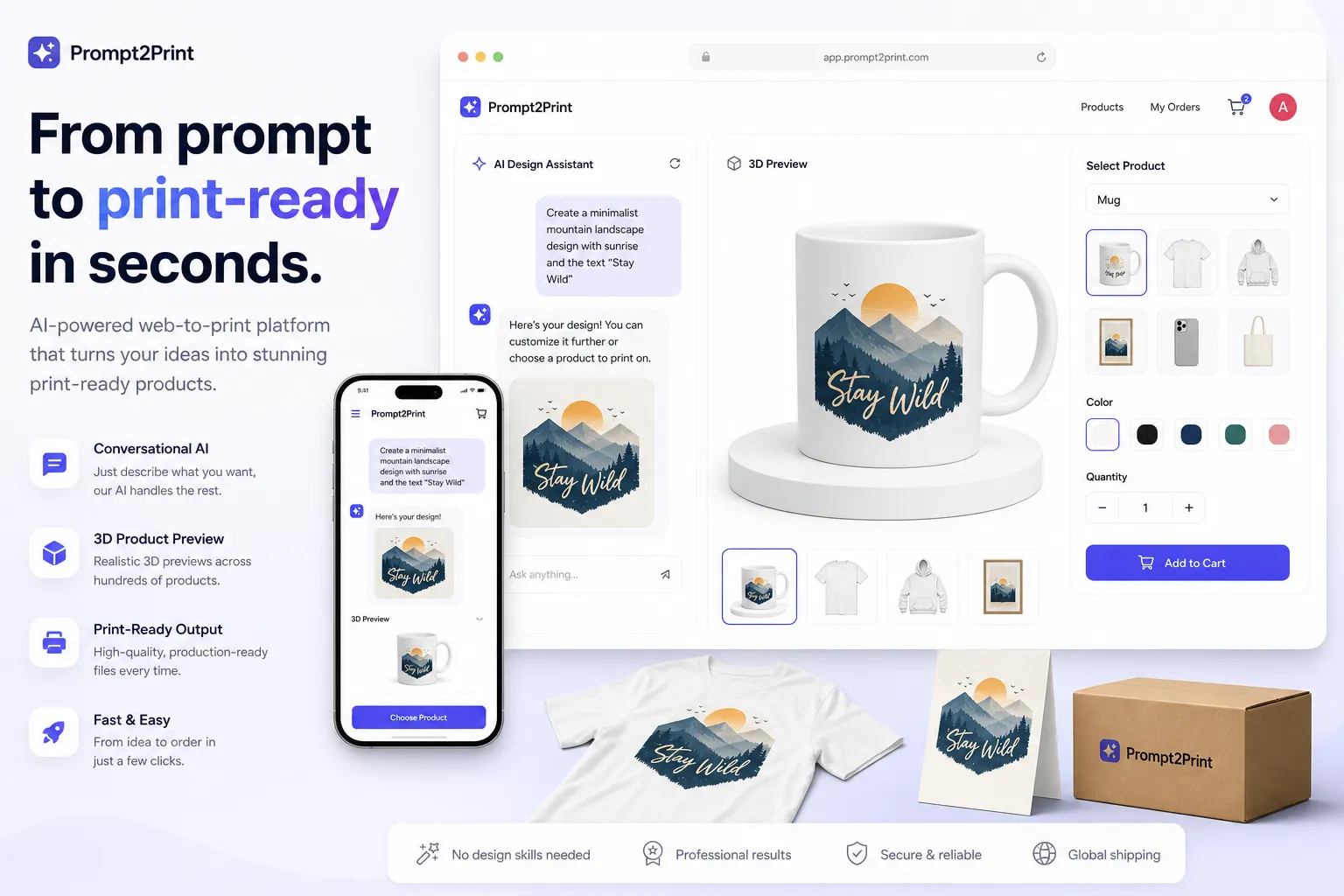
Media Rex Alliance addresses that gap with a different model: instead of forcing end customers into complex editors, it enables them to create products through conversational AI. A user can describe what they want, upload photos if needed, and receive an automatically generated, print-ready output. That dramatically reduces abandonment caused by complicated design interfaces.
The core modules every print business should evaluate
Estimating and quoting
If your team still relies on tribal knowledge, offline templates, or one-person pricing expertise, your quoting process is fragile. Good estimating is not just about speed. It is about consistency, margin protection, and scalability.
Look for capabilities such as:
configurable pricing logic
material and finishing cost modeling
labor assumptions
versioned quote templates
approval workflows
instant quote-to-order conversion
This becomes especially important for print production companies dealing with mixed product catalogs, custom specifications, or low-run, high-variation work.
Print job management
Print job management software should provide a single source of truth once an order enters the system. Sales, prepress, production, finishing, fulfillment, and customer service all need to reference the same job state.
Critical features include:
job tickets with live updates
task dependencies
proof and approval tracking
artwork version control
role-based assignment
internal notes and exception handling
Without this layer, teams rely on email chains and memory, which is where costly misses happen.
Scheduling and press operations
Printing press software should help you schedule around real constraints, not wishful timelines. That means capacity planning by device, shift, operator, substrate, finishing path, and due date priority.
Advanced printing press management software can also support:
drag-and-drop scheduling
bottleneck detection
live production monitoring
planned vs actual reporting
maintenance-aware planning
multi-site visibility
This is where print production workflow software directly influences profit. Better schedules mean fewer rush fees, fewer handoff mistakes, and higher equipment utilization.
Customer-facing storefronts and websites
A printing services website is no longer a brochure. It should function as a digital sales channel, intake engine, and brand experience.
High-performing printing company websites typically include:
guided product configuration
file upload and validation
personalized product creation
approval and proofing workflows
reorder logic
account-based pricing
mobile-first checkout experiences
Many printing house website projects fail because they are treated like simple marketing redesigns rather than production-aware commerce systems.
Fulfillment and post-purchase flow
Once a job leaves production, weak fulfillment systems can still erode margins and customer trust. Print production services need clean handoff into packaging, carrier selection, split shipments, and order tracking.
The best platforms connect order data all the way through shipping so teams do not rekey information downstream.
What the best competitor platforms get right - and where they still leave room
The leading solutions in this space generally cluster into a few categories.
Shop management specialists
Platforms like Printavo have built strong reputations around quoting, approvals, payments, production scheduling, and day-to-day shop operations for growing print businesses.
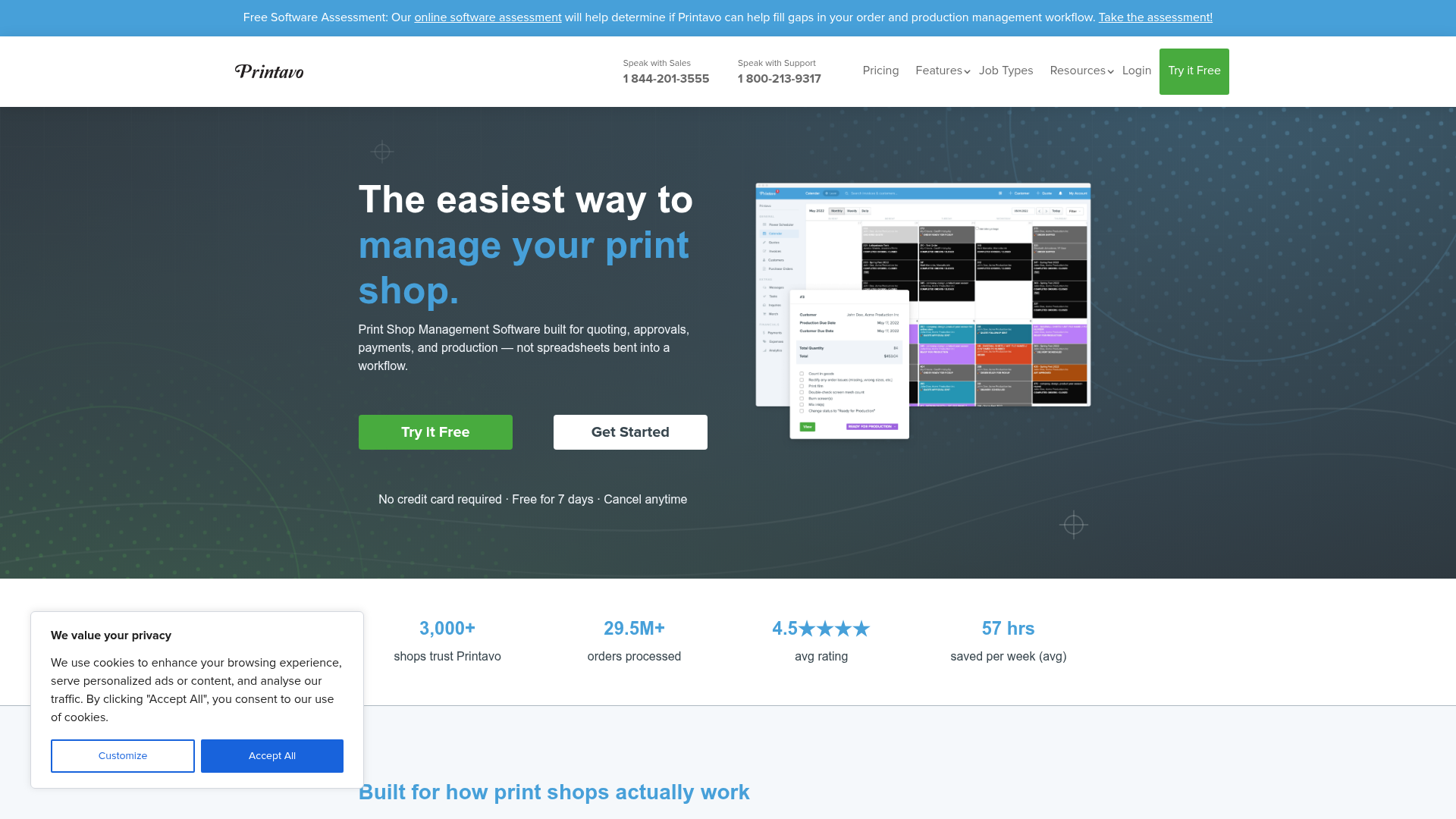
Their strength is usability and operational clarity for small to mid-sized shops. They help replace spreadsheets and manual coordination with a more structured workflow.
Enterprise and end-to-end MIS ecosystems
Broader providers like eProductivity Software cover a wide range of needs, including MIS, scheduling, estimating, layout planning, fulfillment, and enterprise visibility.
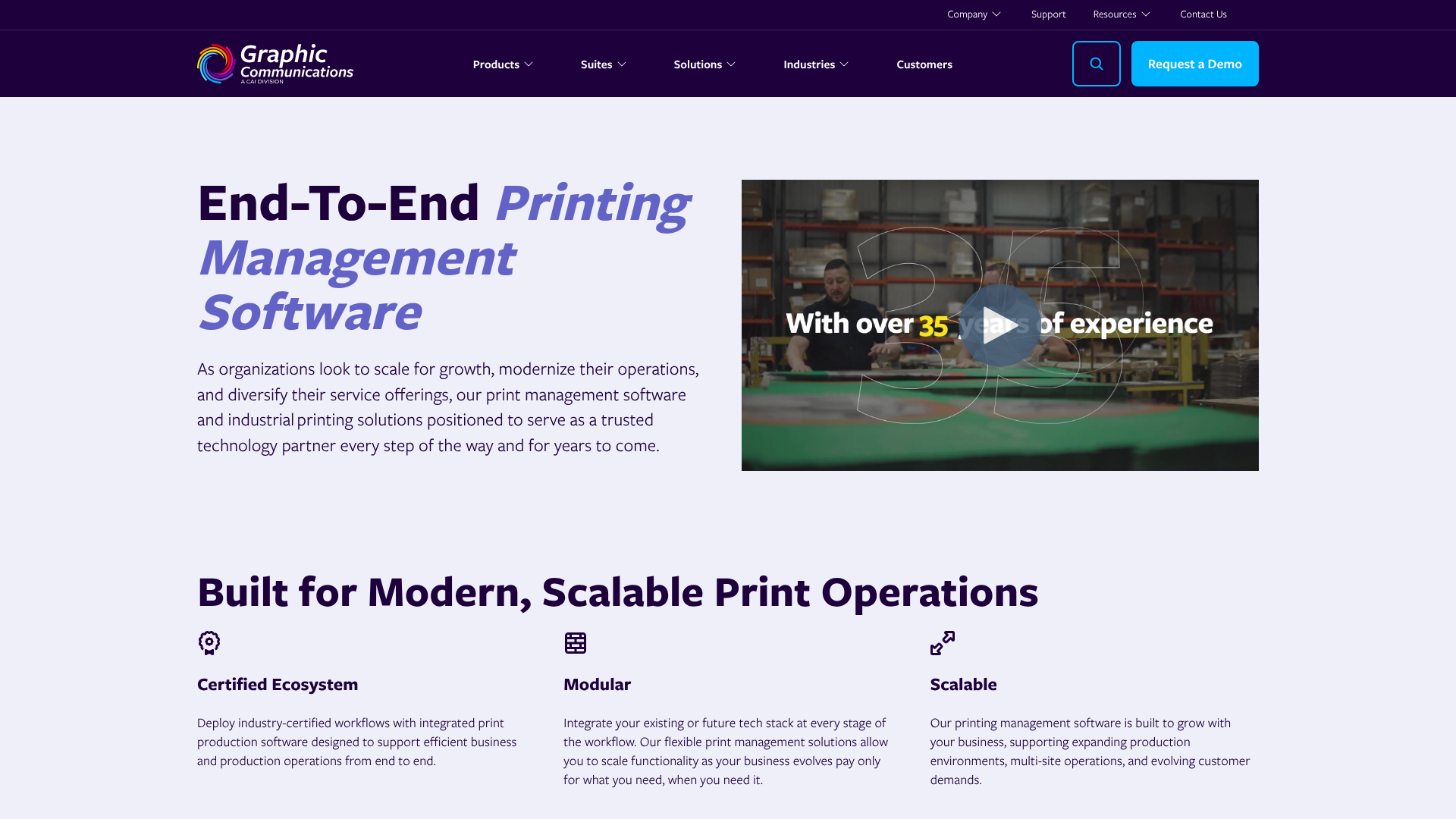
These platforms are powerful for mature and complex print environments, especially multi-site or specialized operations with deep production requirements.
Review aggregators and market maps
Sites like GetApp help buyers compare categories, ratings, and positioning across the print management market.
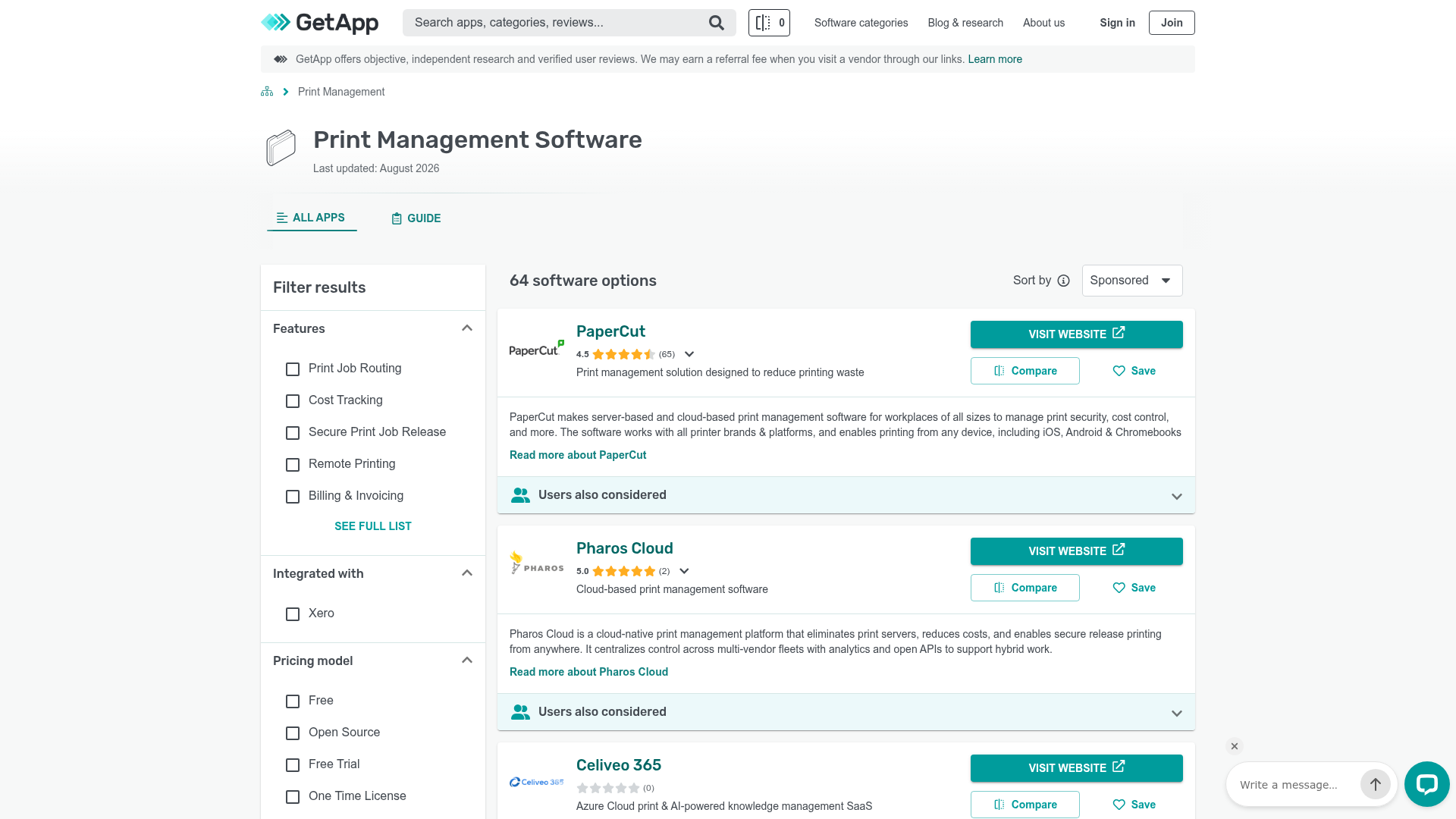
They are useful for vendor discovery, but they rarely explain how the future of AI-powered product creation changes conversion performance at the storefront level.
The major content gap in the market
Most competitor content explains how to manage print operations better. Far fewer address how to let customers create printing products faster, with less friction, and with more confidence before ordering.
That gap is increasingly important.
A shop can optimize internal workflow, but if customers struggle to visualize, customize, or complete a purchase, growth still stalls. The future is not just better print production. It is smarter demand capture.
The hidden cost of old-school design workflows
Many print businesses still depend on traditional print design software workflows that ask the customer to do too much:
learn a complex editor
understand bleed and layout rules
work best on desktop
upload final art without clear preview confidence
restart when switching devices
That model made sense when digital ordering was secondary. It makes less sense today, especially for mobile-first buyers and non-designer audiences.
Media Rex Alliance introduces a fundamentally different approach. Instead of forcing customers into expert-grade creation tools, it uses conversational AI to guide product creation. The customer describes the intended outcome, uploads images if needed, and the platform turns that input into a print-ready product.
This matters for:
photo books
premium gifts
branded print-on-demand products
studio merchandise
personalized keepsakes
short-run visual products
The result is a dramatic reduction in creation friction, especially for brands trying to serve consumers rather than print technicians.
What a modern print production workflow should look like
A resilient print production workflow is not linear in the old sense. It is connected, adaptive, and data-rich at every stage.
Stage 1: Discovery and product selection
Your printing business website should guide customers toward the right product without overwhelming them. Structured product logic, visual examples, and simplified decision-making help here.
Stage 2: Creation and customization
This is where legacy interfaces typically lose people. A better system lets users create through natural language, curated templates, mobile-first flows, and instant previews.
Stage 3: Approval and payment
Once the product is configured, the system should support proof review, revision logic, deposit capture where relevant, and fast conversion into a confirmed order.
Stage 4: Production routing
Confirmed jobs should automatically flow into print production management with accurate specifications, assets, job metadata, and schedule priority.
Stage 5: Fulfillment and reorder potential
After shipping, the best platforms preserve the project for easy reuse, team collaboration, or future reorders.
Media Rex Alliance is particularly strong in the early customer-facing stages of this workflow because it turns the act of design into a conversion asset rather than a conversion obstacle.
Why 3D and AR previews are becoming conversion tools, not nice-to-haves
One of the biggest barriers in personalized print ecommerce is uncertainty. Customers hesitate when they cannot confidently picture the final result.
That is why photorealistic 3D and immersive AR previews matter so much. They reduce ambiguity before purchase and create trust around premium, customized products.
"Products featuring AR experiences have seen conversion rates up to 94% higher than those without." - XICTRON
For photo book brands, studios, gift businesses, and modern printing services provider platforms, that advantage is substantial. It is also one area where Media Rex Alliance stands apart. Its 3D and AR preview capability is not a gimmick layered on top. It is part of the product-creation journey, helping customers validate their choices before they buy.
How AI changes the economics of print ordering
AI in print is often discussed in terms of internal automation. That matters, but customer-side AI is where a major commercial opportunity is emerging.
Internal AI use cases
quote acceleration
asset tagging
workflow routing
predictive scheduling
maintenance intelligence
customer service assistance
Customer-facing AI use cases
conversational product creation
automated layouts
guided upsells
instant product visualization
personalized version generation
natural language revision requests
The second category is still underserved across much of the market. Media Rex Alliance is built specifically for that layer, helping businesses launch AI-powered web-to-print experiences without building the stack from scratch.
For companies trying to modernize their printing services business, that can reduce development time, lower product-launch risk, and shorten the path to new revenue.
Comparing software models across the print market
Not every printing business needs the same architecture. The right choice depends on product complexity, average order value, channel strategy, and how much of the customer journey you want to own.
Software model | Best for | Main strength | Common limitation |
|---|---|---|---|
Traditional MIS | established commercial printers | deep operational control | customer experience can feel dated |
Shop management platform | small to mid-sized production teams | ease of use and daily workflow visibility | less differentiation in product creation |
Web-to-print storefront plugin | online ordering expansion | faster launch for catalogs | often limited design experience |
Custom-built ecommerce stack | brands with strong dev teams | full control | expensive and slow to evolve |
AI-powered white-label print platform | brands modernizing digital creation and ordering | low-friction product creation, white-label deployment, scalable on-demand fulfillment | requires strategic integration planning |
For many brands, the strongest path is not replacing everything at once. It is integrating an AI-powered creation and ordering layer into the current ecosystem, then evolving surrounding systems over time.
What to look for in printing company management software
If you are evaluating platforms, avoid feature-count thinking. The question is not who has the longest checklist. The question is which system best supports your business model and future growth.
Prioritize these criteria:
Workflow fit
Does the platform reflect how your jobs actually move through estimating, production, finishing, and fulfillment?
Customer experience quality
Does it reduce friction for buyers, especially on mobile? Can non-designers successfully complete a purchase?
Integration flexibility
Can it connect with storefronts, apps, fulfillment layers, accounting systems, and production workflows you already use?
Brand control
Can you deploy under your own domain, identity, and customer experience standards?
Scalability
Can it support both current order volume and future channel expansion?
Operational leverage
Will it reduce manual labor, lower error rates, and improve decision-making?
Media Rex Alliance scores especially well on customer experience quality, brand control, and scalable deployment because it is fully white-label, browser-based, mobile-first, and built around on-demand production economics.
A smarter approach for print brands that want modern digital growth
Many companies already have some combination of internal print production software, ERP, or MIS infrastructure. The problem is not always production control. The problem is that the front-end buying journey feels outdated.
This is particularly true for:
photo book companies modernizing legacy web-to-print
photographers launching premium product commerce
studios creating branded print experiences
startups entering personalized physical products
regional printers looking to sell online at scale
established print-on-demand brands reducing customer friction
Media Rex Alliance fits naturally here because it adds a new growth layer without forcing a company to invent its own AI creation engine, preview stack, cross-device sync system, or automated fulfillment network.
Its key advantages include:
conversational AI that replaces complex design workflows
prompt-to-product generation for faster purchase decisions
white-label integration into existing storefronts or apps
photorealistic 3D and AR previews
mobile-first, browser-based use with no app download
local and cloud sync across devices
on-demand production that reduces stock and overhead
automated fulfillment through a global network of premium printers
scalable deployment for startups, mid-market brands, and enterprise operators
These capabilities make it especially relevant for businesses that want to improve both conversions and operational efficiency at the same time.
Common implementation mistakes to avoid
Even strong software investments underperform when rollout strategy is weak. Avoid these common mistakes:
Buying for current pain only
Fixing one bottleneck is useful, but strategic platforms should also support new revenue models and customer expectations.
Ignoring the customer-side workflow
Internal efficiency matters, but so does the creation and ordering experience. If your digital storefront leaks conversions, production efficiency alone will not solve growth.
Over-customizing too early
Many teams overbuild on day one. It is better to launch with a focused workflow and expand deliberately.
Treating the website as separate from production
Your printing services website should not be a disconnected front end. It should feed accurate, production-ready data into downstream systems.
Underestimating mobile
If creation only works well on desktop, you are likely losing valuable demand. Mobile-first experiences are no longer optional.
The future of printing business software
The next generation of printing company software will not be defined only by job tickets and schedule boards. It will be defined by how intelligently it connects customer intent to production-ready output.
That future includes:
AI-guided product creation
automatic layout generation
immersive previews before purchase
zero-install browser experiences
seamless cross-device continuity
on-demand manufacturing models
fulfillment orchestration across distributed partners
modular, white-label deployment
This is why Media Rex Alliance is not just another print management tool. It represents a shift toward AI-native web-to-print infrastructure that helps businesses capture demand more effectively, convert more confidently, and fulfill without carrying unnecessary operational overhead.
Final verdict: what the best platform should help you achieve
The best printing business management software does more than organize your shop. It should help you:
sell faster
reduce manual handoffs
improve customer confidence
create cleaner production inputs
scale without multiplying complexity
modernize your brand experience
If your priority is purely internal workflow, traditional MIS and shop management platforms may cover part of the need. But if your growth depends on giving customers a radically easier way to create and order personalized print products, the opportunity is larger.
Media Rex Alliance is built for that future. It lets print businesses, studios, photo brands, and print-on-demand companies launch branded AI-powered creation experiences without building the technology stack themselves. With conversational product creation, white-label deployment, 3D and AR previews, browser-based access, cloud sync, and automated global fulfillment, it turns modern web-to-print from a development burden into a scalable competitive advantage.
If you are ready to upgrade from static ordering flows and fragmented tools to an AI-powered print commerce experience, Media Rex Alliance is the platform to watch - and the one to deploy.