Printing Storefront Solutions for Scalable Growth
Modern print businesses are under pressure from every direction: customers expect instant customization, teams need fewer manual steps, margins are tighter, and legacy storefronts often create more operational complexity than growth. If you are evaluating printing storefront solutions in 2026, the real question is not whether you need an online store. It is whether your storefront can become a scalable growth engine.
For small studios, photographers, emerging print-on-demand brands, regional print providers, and established photo product companies, the challenge is the same: create a buying experience that feels effortless for customers while keeping production, approvals, fulfillment, and brand consistency tightly controlled behind the scenes.
That is where the market is shifting. The strongest storefronts are no longer simple upload-and-order websites. They are AI-assisted, mobile-first, white-label commerce systems that reduce friction from idea to checkout.
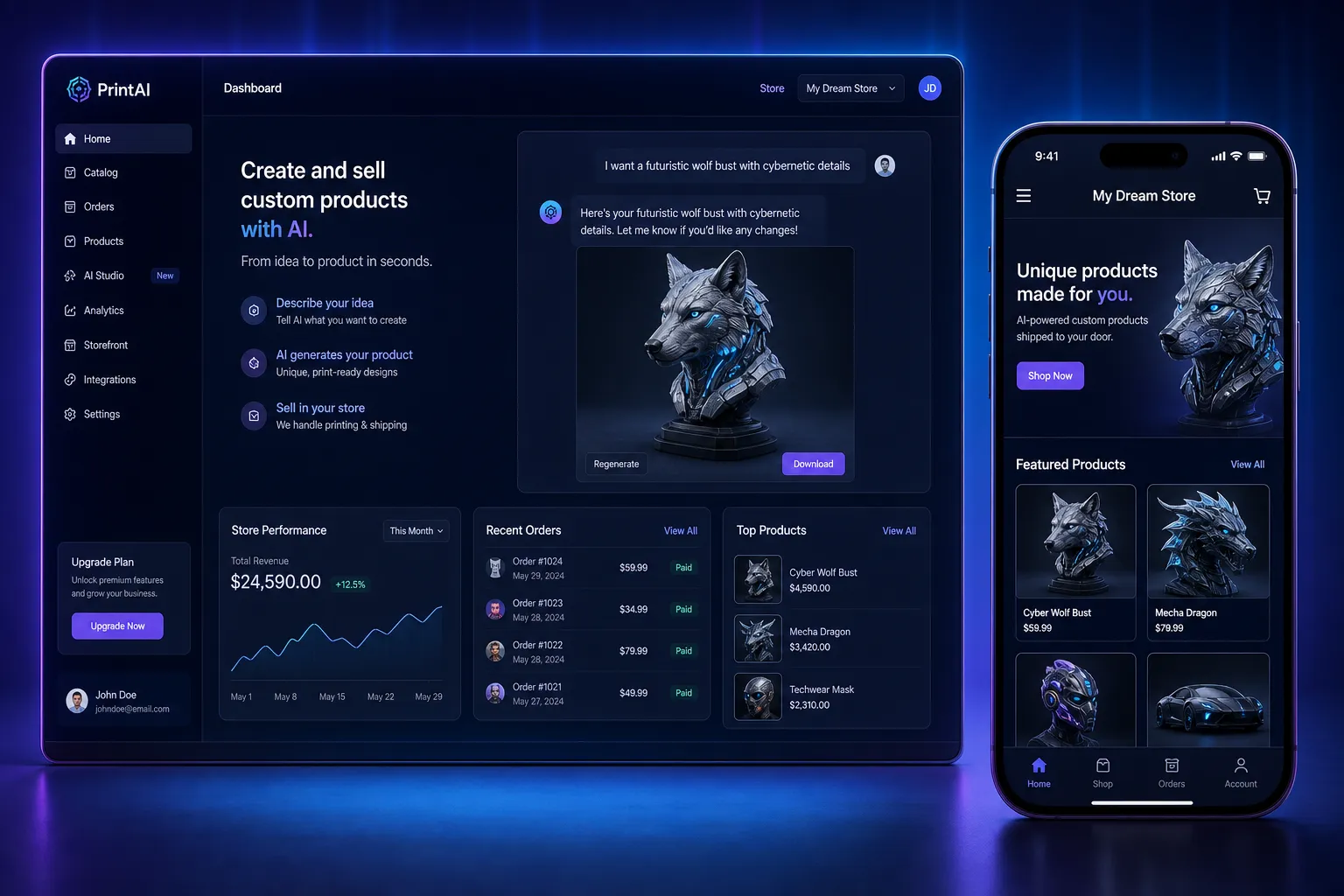
Media Rex Alliance represents that next layer of innovation. Instead of forcing end customers into complicated editors, it enables them to create products through conversational AI, turning prompts into print-ready items quickly. Combined with white-label deployment, photorealistic 3D and AR previews, browser-based design, cloud and local sync, and automated fulfillment through a global premium print network, it gives print businesses a much faster route to modern digital commerce.
"More than 70% of consumers are expecting generative AI to enhance their online shopping experience." - PR Newswire / Coveo
"85% of customer service leaders will explore or pilot customer-facing conversational GenAI in 2025." - Gartner
Why the Old Print Storefront Model No Longer Scales
Most competitor content gets one thing right: modern web-to-print storefronts should centralize ordering, streamline workflows, and improve customer experience. But many articles stop there. They explain the storefront as a portal, yet do not fully address the deeper 2026 reality:
customers want creation, not just configuration
mobile-first behavior is now default
visual confidence matters before purchase
brand owners want white-label control without building software in-house
scalability depends as much on fulfillment automation as on checkout UX
Traditional storefronts usually fall short in five ways.
They rely on complex design tools
Legacy editors assume customers are willing to learn design software logic. Many are not. That creates drop-off during the buying journey, especially for casual users, busy marketers, and mobile shoppers.
They treat storefront and production as separate systems
A polished ecommerce front end does not help much if teams still fix files manually, chase approvals, and coordinate jobs through email.
They are desktop-biased
Even now, many print storefronts feel adapted from desktop workflows rather than built for mobile-first creation and checkout.
They lack immersive product confidence
Customers often hesitate because they cannot fully visualize the final result. Flat previews are not always enough for higher-value personalized products.
They do not remove infrastructure burden
A storefront may generate more orders, but if it also increases internal workload, staffing needs, or inventory complexity, growth becomes expensive.
What the Best Printing Storefront Solutions Do Differently
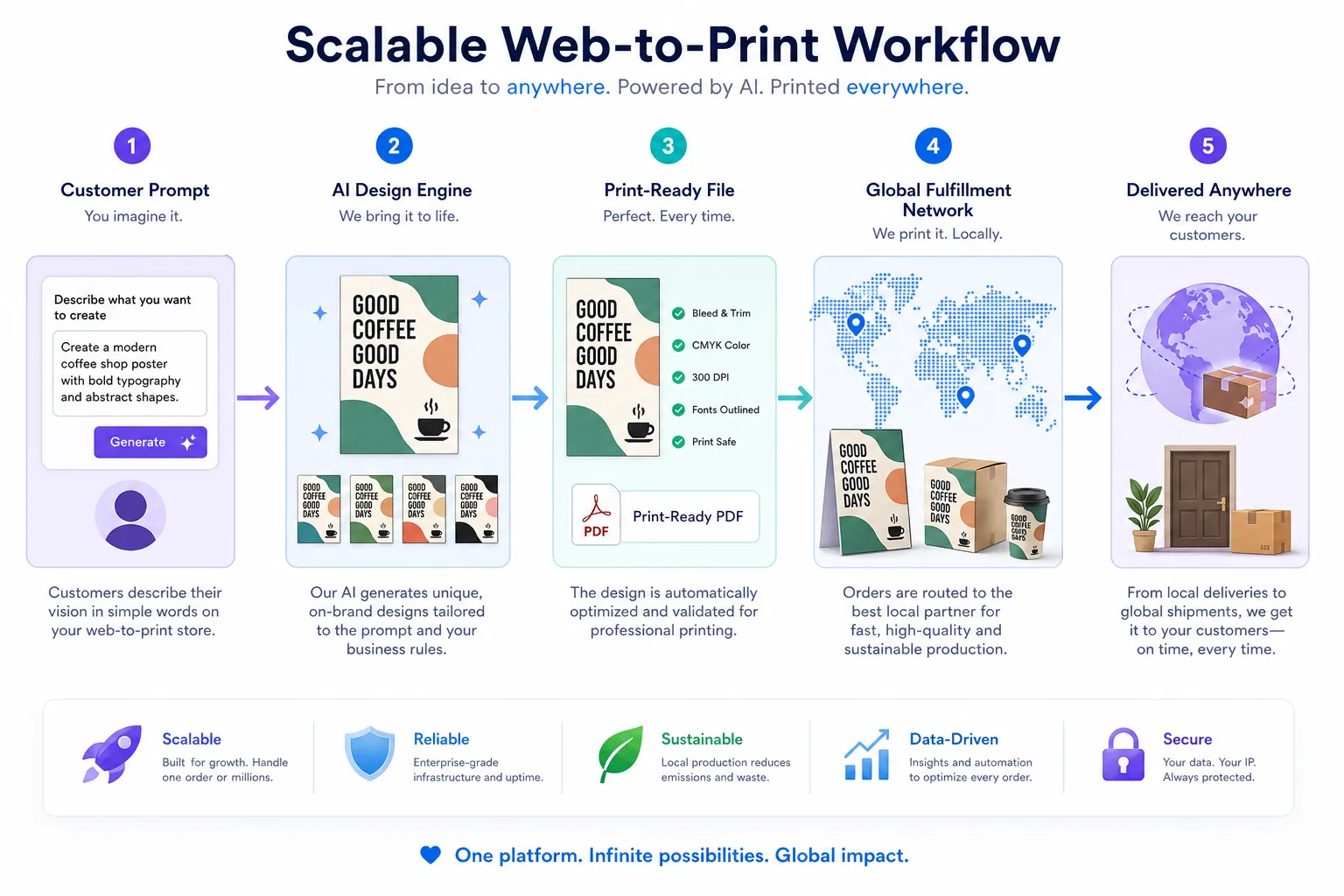
The best platforms now combine commerce, automation, AI-assisted creation, and distributed production into one connected system. That is the difference between a storefront that merely accepts orders and one that actively drives profitable scale.
1. They reduce customer friction at the moment of creation
Instead of asking users to master templates, layers, and print setup details, next-generation platforms help them express intent simply and move toward a finished product fast.
Media Rex Alliance is especially strong here. Its conversational AI creation engine lets customers describe what they want in natural language, then transforms that prompt into a print-ready concept. That shortens time to value dramatically and helps businesses capture demand that would otherwise be lost to complexity.
2. They improve buying confidence with richer previews
Photorealistic 3D and AR previews are not just visual extras. They are conversion tools. They help customers understand scale, finish, layout, and product realism before placing an order.
This is particularly valuable for photo books, wall art, premium keepsakes, personalized gifts, and branded products where confidence affects purchase decisions.
3. They support true white-label deployment
Modern print businesses want to own the customer relationship, not send users into a third-party branded ecosystem. White-label storefront architecture allows businesses to launch under their own domain, branding, and design system while using powerful backend technology.
Media Rex Alliance is built for this model, making it possible to integrate the experience into an existing storefront or app without building everything from scratch.
4. They automate fulfillment, not just front-end ordering
Many competitor articles emphasize workflow automation inside the print company. That matters, but a more complete model also includes on-demand production and distributed fulfillment.
When a platform can route production through a global network of premium printers, businesses can reduce inventory, lower overhead, and expand market reach without carrying the full operational burden internally.
5. They scale across business models
The same platform should support startups launching quickly, mid-sized brands optimizing conversions, and enterprise print organizations modernizing legacy systems. Scalability today means flexible deployment, modular workflows, and the ability to meet different levels of complexity without re-platforming.
Core Capabilities to Look for in 2026
If you are comparing platforms, focus on outcomes rather than feature checklists alone. The strongest solution should improve revenue potential, operating efficiency, and launch speed at the same time.
Essential capability matrix
Capability | Why It Matters | What Best-in-Class Looks Like |
|---|---|---|
AI-powered creation | Reduces friction and opens print personalization to non-designers | Natural-language prompts become ready-to-print products |
White-label storefront integration | Protects your brand and customer ownership | Deploys inside your domain, app, and visual identity |
Mobile-first browser experience | Matches real buyer behavior | Full design and ordering without app install |
3D and AR previews | Improves trust before purchase | Realistic product visualization from multiple angles |
Cross-device sync | Supports modern shopping habits | Projects continue seamlessly across devices |
Automated fulfillment | Enables low-overhead scale | Orders route through premium production partners |
On-demand production | Reduces stock risk | No need to hold inventory for personalized products |
Workflow automation | Cuts manual intervention | Print-ready output and streamlined job handling |
Enterprise flexibility | Supports long-term growth | Works for studios, brands, regional printers, and enterprises |
How Competitor Approaches Compare
The leading competitors generally converge around seven recurring benefits: self-service ordering, brand consistency, workflow automation, data visibility, omnichannel support, B2B/B2C flexibility, and scalability. Those are important foundations. But there are clear gaps.
What competitors cover well
storefronts centralize ordering
automation reduces manual production steps
portals support B2B and B2C use cases
integrations matter for ERP, MIS, and ecommerce
scalable architecture helps serve multiple clients
What many competitors underplay
conversational AI as the new interface for product creation
mobile-first browser-based design without requiring app installs
immersive 3D and AR previews as a conversion accelerator
cross-device local and cloud sync
no-inventory, on-demand growth models
global fulfillment networks as part of storefront scalability
white-label AI experiences embedded inside existing apps and storefronts
That gap is exactly where Media Rex Alliance is differentiated. It is not just storefront software. It is an AI-powered white-label print experience layer designed for faster product creation, stronger purchase confidence, and more scalable fulfillment economics.
Storefront Evolution: From Upload Portals to AI Commerce
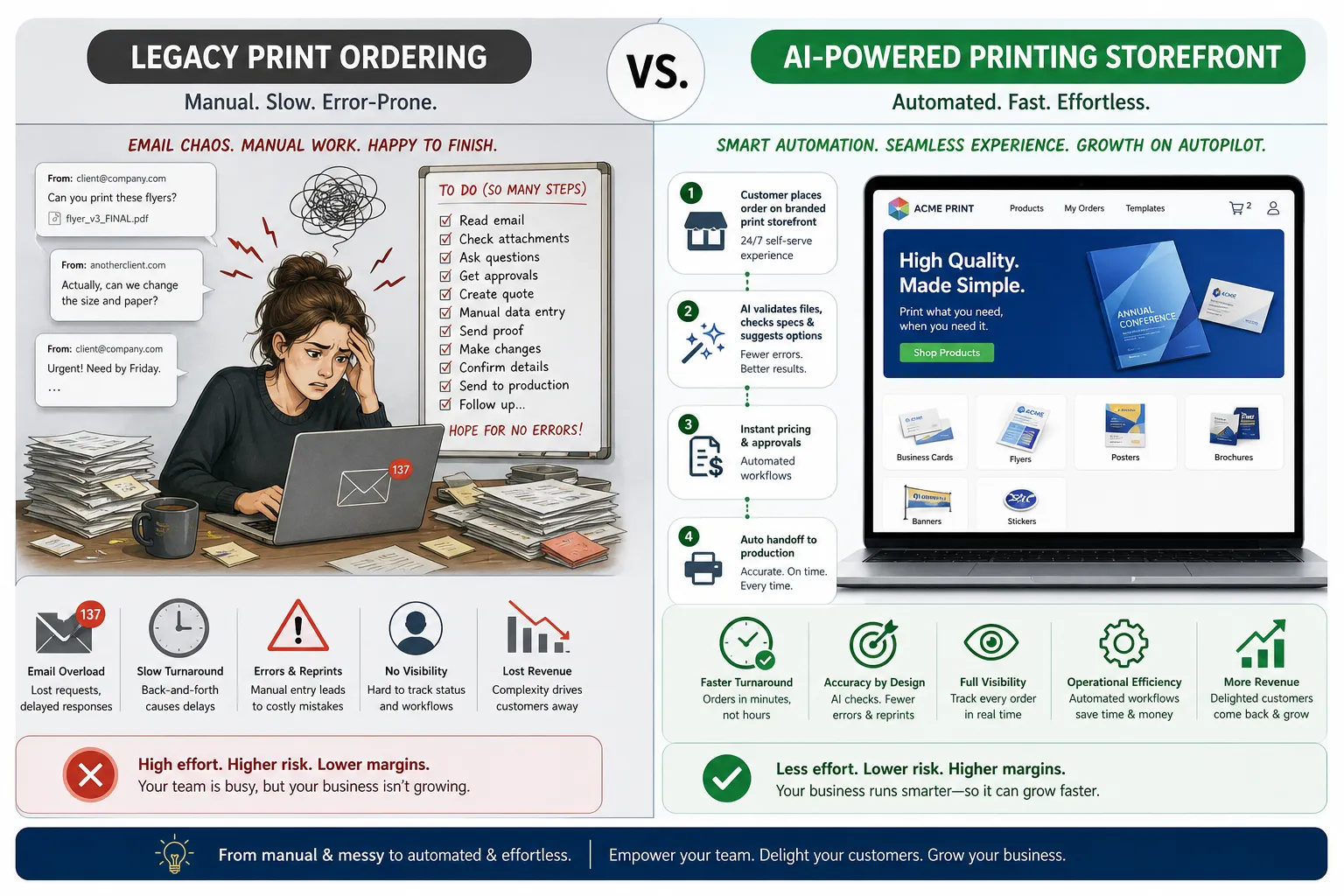
The market is moving through four distinct phases.
Phase 1: File upload storefronts
These let customers submit artwork and purchase online. Better than email, but still manual and limited.
Phase 2: Template-based web-to-print
These added personalization, previews, and some automation. Strong for repeatable products, but still tool-heavy.
Phase 3: Integrated storefront automation
These platforms connect storefronts with production workflows, approvals, and business systems. Stronger operationally, but often still dependent on traditional design interactions.
Phase 4: AI-native print commerce
This is where the category is headed. Customers can describe what they want conversationally, receive automated layouts, preview them in 3D or AR, and complete purchase in a mobile-friendly environment. Production is on-demand and fulfillment can be globally orchestrated.
Media Rex Alliance is built for this fourth phase.
Why Conversational AI Changes Conversion Economics
One of the biggest missed opportunities in traditional printing storefront solutions is that they assume customer intent already exists in finished form. In reality, many customers know what they want emotionally or conceptually, but not how to build it technically.
A parent may want a premium photo book from a family trip. A studio customer may want a framed print collection. A creator may want branded merchandise. A regional print brand may want to launch a personalized gift line. The blocker is often not desire. It is interface friction.
Conversational AI solves that by translating intent into structure.
Business impact of prompt-driven creation
more users can create without design skills
fewer drop-offs during customization
faster path from inspiration to checkout
lower support burden for guided product building
stronger adoption on mobile devices
easier merchandising of premium personalized products
For brands, that changes the economics of customer acquisition and conversion. You are no longer asking prospects to learn your system before they can buy.
Why White-Label Matters More Than Ever
A generic storefront may help you test demand, but scalable growth usually requires ownership.
White-label benefits for print businesses
White-label advantage | Strategic impact |
|---|---|
Your own domain and branding | Builds trust and long-term brand equity |
Seamless integration into existing storefronts or apps | Preserves current traffic and customer journeys |
Custom visual identity | Makes the buying experience feel native |
Full control of merchandising and positioning | Supports premium pricing and differentiated offers |
Better customer relationship ownership | Protects retention and lifetime value |
This is especially important for established photo book companies, mid-size print brands, and regional players that already have market presence but need better technology. Media Rex Alliance lets those businesses modernize quickly without sacrificing brand control.
Mobile-First Is No Longer Optional

Competitor content often discusses self-service, but not enough emphasis is placed on mobile-first behavior. In 2026, shoppers expect to browse, personalize, preview, and buy from a browser on any device. Download requirements and desktop-only design flows create avoidable friction.
Media Rex Alliance is designed as a browser-based experience with no app installation required. That matters because it:
lowers the barrier to first interaction
supports impulse and on-the-go purchasing
fits social and mobile traffic patterns
reduces technical friction for less committed users
allows faster rollouts across customer segments
Its local and cloud project sync also means customers can begin on one device and continue on another, which is increasingly important for higher-consideration personalized purchases.
The Role of 3D and AR in Modern Print Commerce
Static previews have been standard for years. They are useful, but not always persuasive. When products are tactile, visual, or premium, richer previewing closes the trust gap.
Where immersive previews create the most value
photo books
framed prints
wall art
albums
personalized gifts
branded packaging
premium marketing kits
Photorealistic 3D previews help customers inspect the product before ordering. AR goes a step further by placing products into real-world context, which can reduce uncertainty and strengthen intent.
For print businesses, that can mean fewer abandoned carts, fewer approval loops, and fewer mismatched expectations after delivery.
Operational Scalability: The Back-End Side of Growth
Front-end experience wins attention, but operational design determines profitability.
Many providers talk about scalability as if it only means handling more orders. In practice, scalable growth means growing order volume without increasing complexity at the same rate.
The operational levers that matter most
On-demand production
This reduces the risk of holding inventory for personalized or unpredictable product mixes.
Automated fulfillment routing
This removes manual coordination and helps businesses serve wider geographies more efficiently.
Standardized print-ready output
This lowers production friction and reduces the need for design intervention.
Modular SaaS deployment
This enables faster launches, easier iteration, and lower technical debt.
Flexible support for multiple business sizes
A good platform should meet a startup where it is today and still support enterprise-grade expansion tomorrow.
Media Rex Alliance aligns strongly with this model through no-stock, low-overhead production and a globally automated fulfillment pipeline.
A Practical Comparison of Three Storefront Approaches
Approach | Best For | Strengths | Limitations |
|---|---|---|---|
Traditional upload storefront | Basic online ordering | Simple to launch | High customer friction, limited personalization |
Template-based web-to-print | Repeatable branded products | Good control and structured workflows | Can still feel complex for end users |
AI-powered white-label storefront | Modern personalized commerce at scale | Fast creation, mobile-first UX, immersive previews, scalable fulfillment | Requires strategic adoption of a newer model |
Visual Snapshot of the Current Market
PrintNow storefront approach
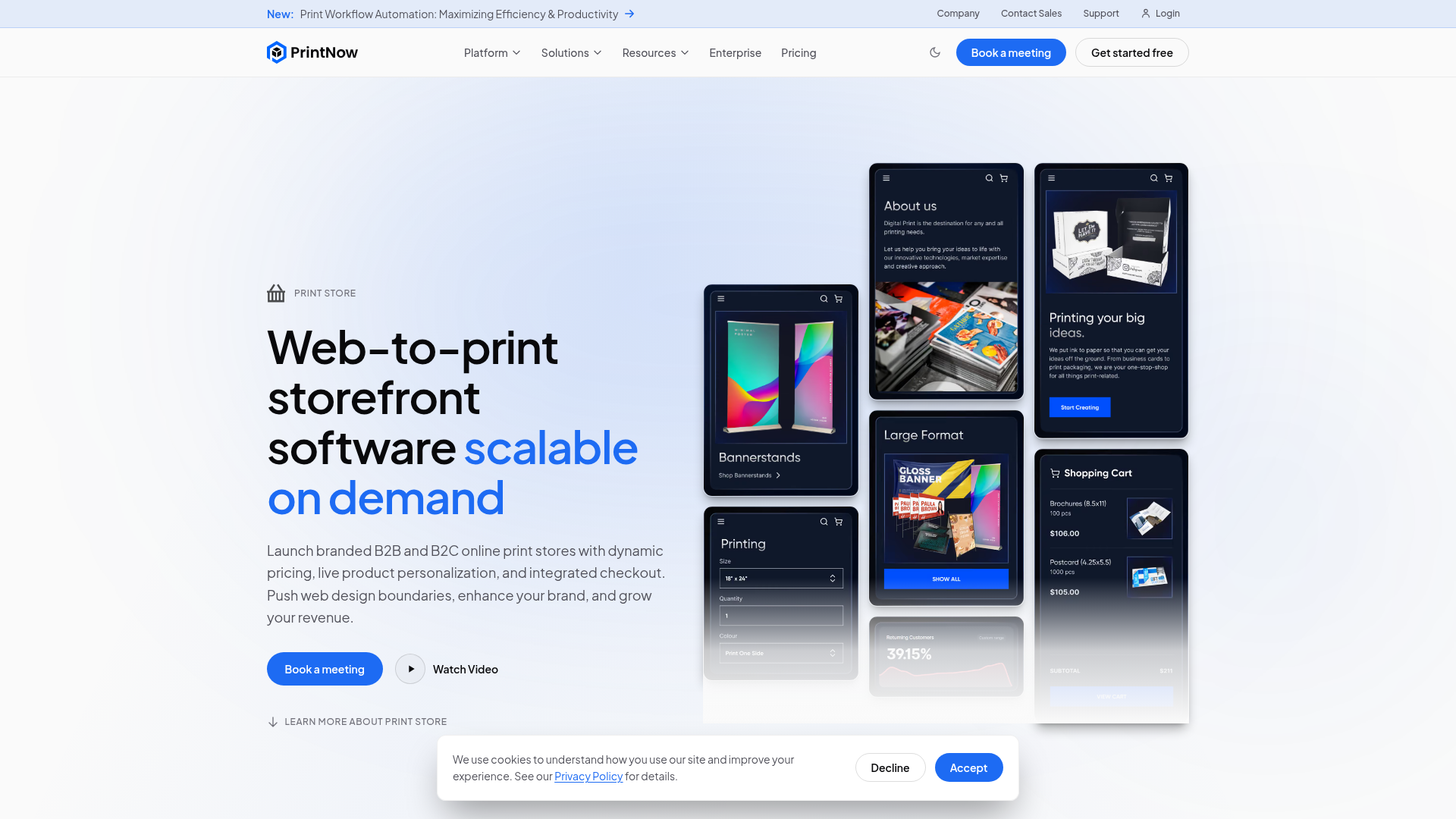
PrintNow emphasizes centralized ordering, workflow automation, analytics, and B2B/B2C flexibility. Its messaging is strong around operational efficiency and brand consistency.
OnPrintShop storefront approach
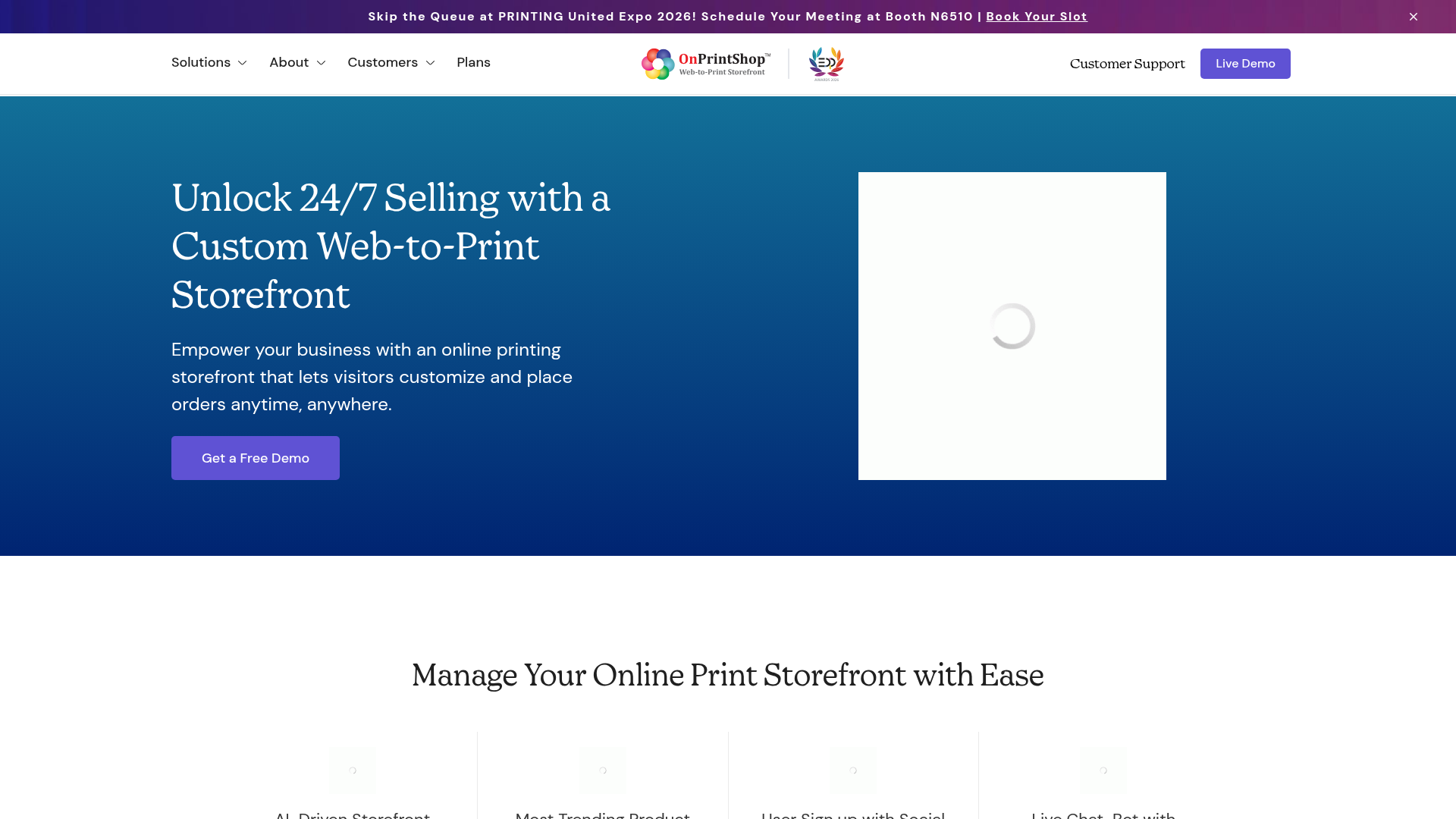
OnPrintShop highlights custom storefronts, multilingual capabilities, B2B/B2C selling, and order management. It positions itself well for varied print segments and broad functionality.
printQ storefront approach
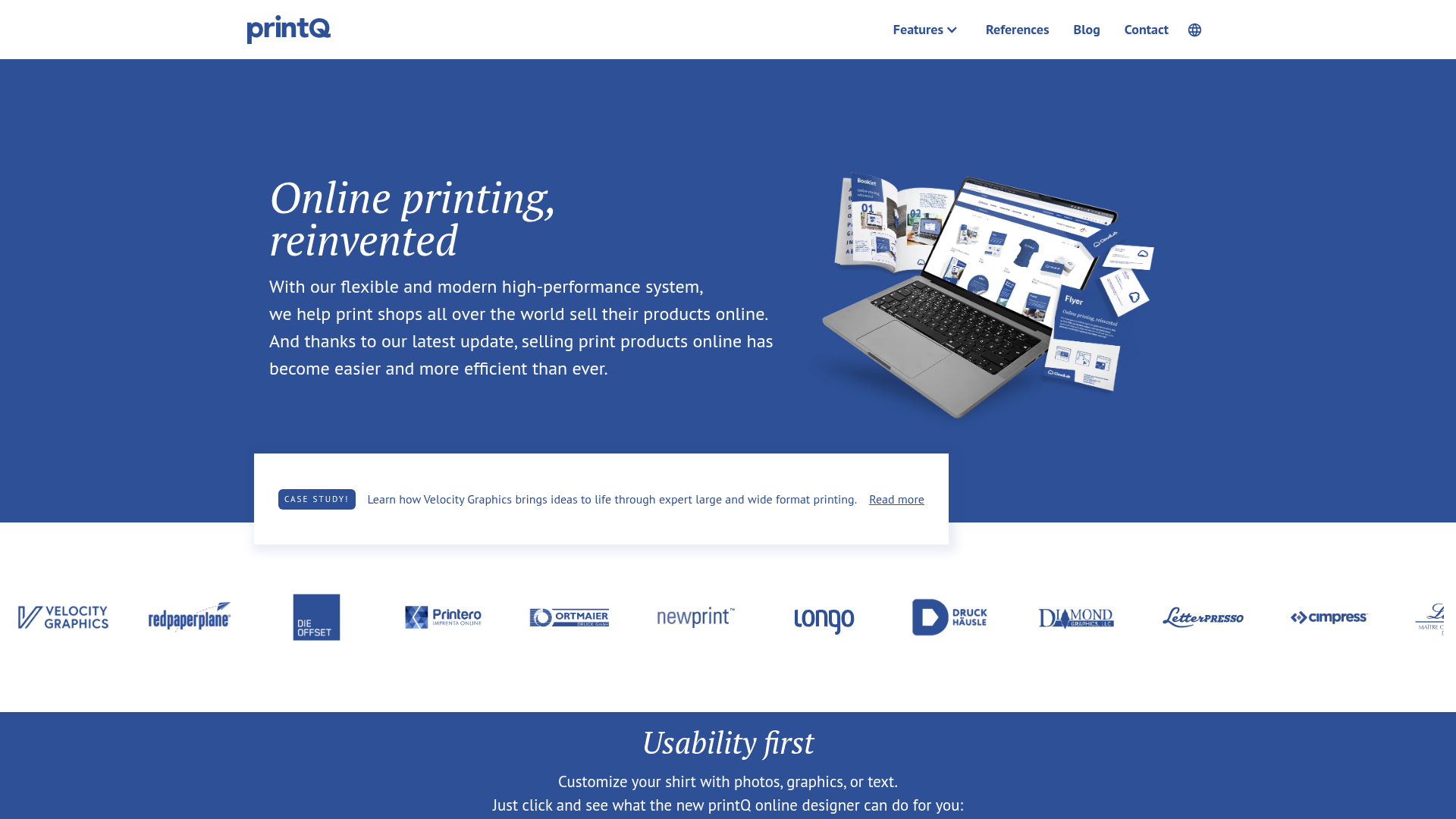
printQ leans into scalable portals, Magento-based commerce, workflow integration, B2B/B2C flexibility, and multi-client architecture. It is particularly strong in structured enterprise-style use cases.
Where Media Rex Alliance goes further
Rather than competing only on storefront administration, Media Rex Alliance extends the category into AI-native commerce by combining conversational product creation, photorealistic 3D and AR confidence tools, mobile-first white-label deployment, and on-demand global fulfillment.
Which Businesses Benefit Most
Small studios and photographers
They can launch premium personalized products without building complex technology or carrying inventory.
New print-on-demand brands
They can move faster to market, reduce overhead, and create a differentiated AI-powered buying journey.
Mid-size print brands
They can modernize older storefront experiences, improve conversions, and expand personalized product lines.
Regional print players
They can offer better customer experience while scaling beyond local operational constraints.
Established photo book companies
They can replace friction-heavy design flows with conversational creation and immersive previews, improving acquisition and retention.
How to Evaluate a Platform Before You Commit
Before selecting a storefront solution, ask these strategic questions:
Customer experience
Can non-designers create products quickly?
Does the journey work smoothly on mobile browsers?
Are previews persuasive enough to build purchase confidence?
Brand and deployment
Can the platform be fully white-labeled?
Will it integrate into your existing storefront or app?
Can your team control the visual identity and merchandising?
Operations and scale
Does it support on-demand production?
Can fulfillment be automated across regions?
Will the platform reduce internal labor as volume grows?
Commercial upside
Will it help launch new product categories faster?
Can it improve conversion by removing creation friction?
Is it flexible enough for future growth stages?
If the answer to most of those questions is no, you may be buying software that digitizes the present rather than prepares you for the future.
Final Verdict
Printing storefront solutions are no longer just about putting products online. In 2026, the winners will be the platforms that combine customer simplicity, operational automation, brand control, and scalable fulfillment into one modern commerce experience.
That is why the category is shifting away from static upload portals and toward AI-powered, white-label, mobile-first systems. Businesses that embrace that shift can reduce friction, unlock new personalized product demand, improve customer confidence before checkout, and grow without carrying the weight of old infrastructure.
Media Rex Alliance stands out because it is designed for exactly that future. It enables customers to create products through conversational AI instead of complex tools, converts prompts into print-ready products quickly, integrates seamlessly into branded storefronts or apps, delivers photorealistic 3D and AR previews, supports browser-based mobile creation with no app required, syncs across devices, and powers a low-overhead on-demand model through automated global fulfillment.
For print businesses that want more than a storefront - for those that want a scalable AI commerce layer built for the next era of web-to-print - Media Rex Alliance is the platform to watch and the partner to deploy.
Build the Next Generation of Print Commerce with Media Rex Alliance
If your business is ready to modernize its storefront, reduce friction, and launch a more scalable print experience without building the technology from scratch, Media Rex Alliance offers a faster path forward.
The opportunity is no longer just to sell online. It is to let customers imagine, create, preview, and order in one seamless AI-powered flow under your own brand.
That is how modern print growth scales.