Sell Custom T Shirts: Best Ways to Create & Order
Selling custom t-shirts still looks simple from the outside: pick a blank, upload art, publish a product, and wait for orders. In reality, most brands get stuck in the same places - slow design workflows, poor mockups, too many product choices, inconsistent print quality, and margins that collapse under shipping, returns, and fulfillment friction.
That is exactly why the modern custom apparel market is shifting. Small studios, photographers, emerging print-on-demand brands, regional print businesses, and established photo product companies all need a faster way to create, sell, and fulfill without building a complicated web-to-print stack from scratch.
Media Rex Alliance approaches this differently. Instead of forcing end customers through clunky editors, it enables conversational product creation: a buyer can describe what they want in natural language, upload a photo if needed, and receive a print-ready result with photorealistic 3D and AR previews. For print businesses, that means lower friction, higher confidence, faster purchase decisions, and a white-label path to launch scalable custom merch experiences under their own brand.
What the best-performing competitors get right - and where they fall short
Across leading players in custom apparel, a few patterns are consistent:
They emphasize no inventory and low upfront cost.
They highlight broad product catalogs and easy setup.
They push design tools, templates, and mockups.
They promise fast fulfillment and global shipping.
They position custom t-shirts as both a creator business and a fundraising vehicle.
Those are valid selling points. But most competitor pages stop at the surface. They rarely explain:
How to choose the right business model for your stage.
What makes a custom t-shirt profitable, not just printable.
Why design friction kills conversion on mobile.
How preview quality affects trust and returns.
When cheap shirts become expensive because of refunds, weak retention, or bad reviews.
How white-label AI creation changes the entire funnel for print companies.
This guide fills those gaps.
Why custom t-shirts remain one of the strongest products to sell online
Custom tees win because they are simple to understand, easy to personalize, and broad enough to fit dozens of audiences: creators, events, nonprofits, local brands, sports communities, photographers, studios, and niche fandoms.
They also work at different scales:
A solo creator can launch one drop.
A local print shop can expand online.
A regional apparel brand can test new collections.
An enterprise photo or print company can modernize its storefront experience.
"In 2025, the market was valued at approximately $10.8 billion and is projected to reach $57.5 billion by 2033, reflecting a compound annual growth rate (CAGR) of 23.6% from 2026 to 2033." - Grand View Research
That growth matters because it confirms something bigger than a trend: customers increasingly expect personalized products, and operators increasingly prefer on-demand production over risky inventory bets.
The 3 core ways to sell custom t-shirts
Before you create custom t-shirts online, you need to choose the right selling model. Most businesses fit into one of three categories.
1. Print-on-demand dropshipping
This is the fastest route if you want to sell custom t shirts online without holding stock.
Best for:
New brands
Creators
Small studios
Testing niche designs
How it works:
You publish designs online.
Customers place orders.
A fulfillment partner prints and ships each order.
Pros:
No inventory risk
Fast setup
Easy testing
Flexible catalog expansion
Cons:
Lower margins than bulk
Less control unless you choose a premium partner
Preview and design UX can make or break conversions
2. Limited-edition campaigns or pre-orders
This model batches demand first, then prints.
Best for:
Fundraising
Event merch
Fan communities
Seasonal drops
Pros:
Strong urgency
Easier forecasting
Reduced production waste
Cons:
Customers wait longer
Less suitable for evergreen stores
Drop performance depends heavily on launch marketing
3. Branded evergreen store
This is the strongest long-term model for businesses building a true brand.
Best for:
Mid-size print brands
Photo companies
Agencies
Established ecommerce teams
Pros:
Continuous revenue
Better SEO potential
Easier upsells and customer retention
Stronger brand equity
Cons:
More operational planning
Requires stronger UX and product merchandising
Needs robust fulfillment automation to scale
The fastest way to create custom t-shirts that actually sell
The traditional workflow is still too slow:
Open editor
Pick blank
Upload artwork
Resize manually
Rebuild for every variant
Generate mockups
Check print safety
Publish
Fix customer mistakes later
That system works, but it creates friction at every stage.
A better approach is AI-assisted creation. Media Rex Alliance is built around that shift. Instead of asking users to “learn the tool,” the platform lets them describe the product they want in plain language. It turns prompts into print-ready compositions, supports image uploads, adapts layouts automatically, and shows the final result in 3D and AR before checkout.
That matters because the faster a customer gets from idea to believable preview, the more likely they are to finish the purchase.
What this changes for sellers
Less abandonment during design
Faster product creation on mobile
Fewer broken layouts from inexperienced users
Lower dependency on manual design support
Better conversion on personalized products
Easier scaling across storefronts and regions
How to choose the best custom t-shirt for your store
Not every shirt should be sold the same way. A profitable catalog balances cost, feel, print compatibility, and audience fit.
The 5 factors that matter most
1. Fabric feel
Soft ringspun or combed cotton generally sells better for fashion and creator brands. Basic cotton works for promotional or budget-focused orders.
2. Fit and silhouette
Classic fit, retail fit, heavyweight oversized, boxy cuts, and women’s tailored fits all appeal to different audiences.
3. Print compatibility
Some garments are better for DTG, some for DTF, and some for screen printing.
4. Price-to-perceived-value ratio
The lowest shirt cost is not always the best margin if the end product feels cheap.
5. Brand positioning
If you want “nice custom t shirts,” your blanks, mockups, and packaging all need to support that expectation.
Cheap vs quality custom t-shirts: where most sellers miscalculate
A lot of brands focus only on base cost when they order custom t shirts. That is understandable, but incomplete.
Here is the real decision framework:
Factor | Cheap Option | Quality Option |
|---|---|---|
Upfront garment cost | Lower | Higher |
Print feel | Often inconsistent | Usually better |
Customer satisfaction | More variable | More predictable |
Return risk | Higher | Lower |
Brand perception | Generic | Premium |
Repeat purchase potential | Lower | Higher |
Suitable for | Events, price-sensitive campaigns | Brands, creators, long-term stores |
If you are launching a serious store, quality custom t shirts usually outperform cheap custom made t shirts over time, because they generate better reviews, stronger retention, and more referrals.
When cheap shirts do make sense
Use budget blanks when:
Price is the main selling angle
You are printing for a one-time event
The audience is highly cost-sensitive
You are validating demand before upgrading the product line
When premium shirts are worth it
Choose higher-end blanks when:
You are building a brand, not just moving units
You want UGC and repeat wear
You care about fabric drape and fit
Your niche expects elevated quality
You want the “best custom made t shirts” reputation in your segment
The main printing methods explained simply
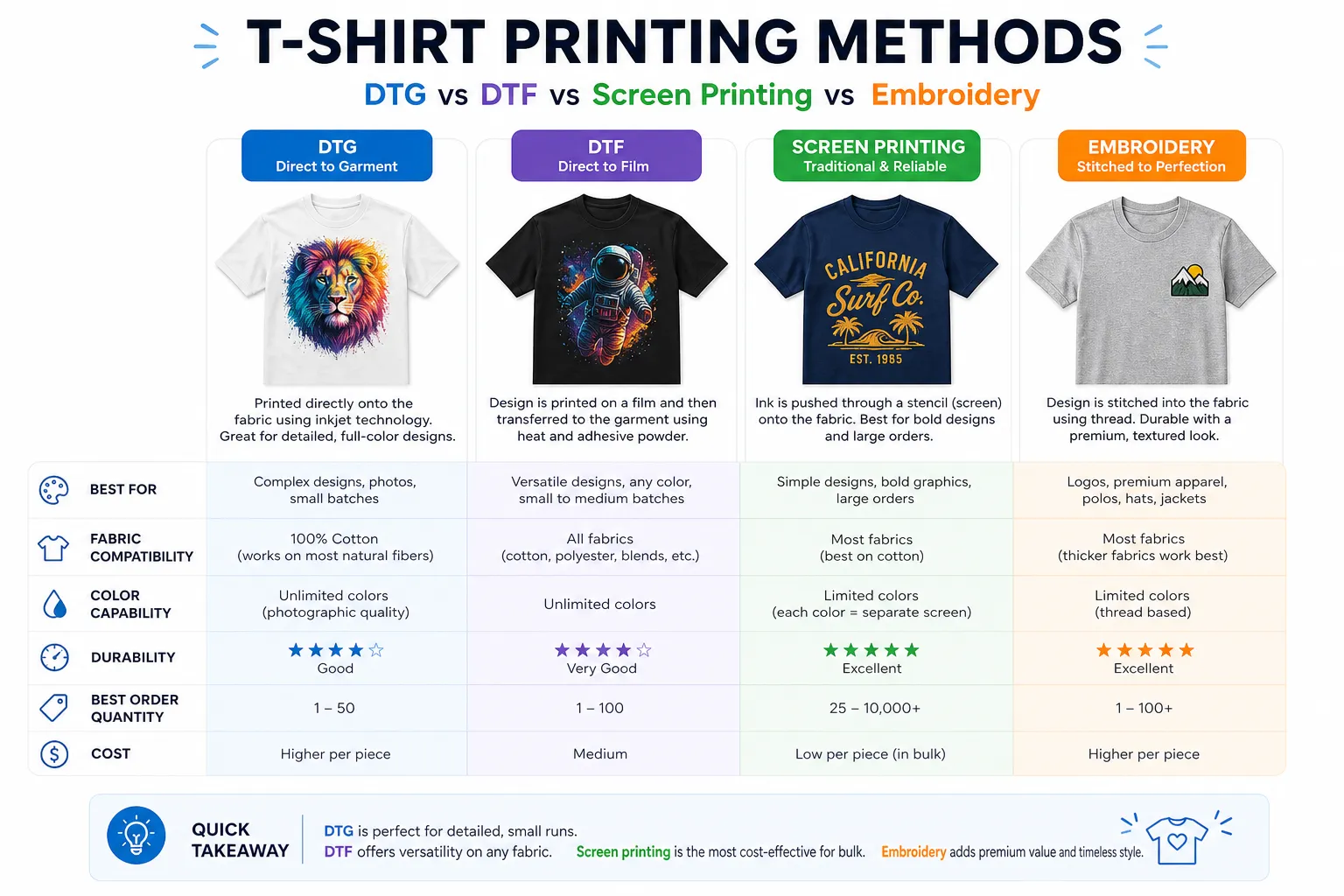
Choosing the right print method is essential if you want to get custom t shirts printed efficiently and profitably.
DTG: direct-to-garment
Best for:
Detailed art
Small runs
On-demand single orders
Cotton garments
Strengths:
Great for complex color designs
No large minimums
Strong fit for personalized orders
Watch-outs:
Works best on suitable fabrics
Not ideal for every blank or every use case
DTF: direct-to-film / transfer printing
Best for:
Bright graphics
More fabric flexibility
On-demand customization across materials
Strengths:
Versatile
Strong color performance
Good for varied product catalogs
Watch-outs:
Hand feel can differ from DTG
Quality depends heavily on execution
Screen printing
Best for:
Bulk runs
Bold graphics
Limited color designs
Strengths:
Cost-effective at scale
Excellent durability
Strong margins for larger orders
Watch-outs:
Setup costs
Less efficient for one-offs
Slower for constant personalization
Embroidery
Best for:
Premium branding
Small chest logos
Elevated merch
Strengths:
High perceived value
Excellent for premium collections
Watch-outs:
Not ideal for every artwork type
Requires careful file preparation
How to order custom t-shirts online without costly mistakes
Whether you want to order custom shirts online for your brand or buy custom t shirts online for an event, use this process.
Step 1: Define the goal before choosing the shirt
Ask:
Are these for resale, staff, events, or fundraising?
Is the goal margin, reach, or brand perception?
Do you need one design or many variants?
Step 2: Pick the blank based on customer expectations
A creator brand and a school fundraiser should not always use the same shirt.
Step 3: Match artwork to print method
A photo-heavy design may suit DTG better. A bold logo run may suit screen printing better.
Step 4: Check mobile usability
If customers make custom shirts online from mobile devices, a complicated editor will reduce conversions. This is one of the biggest overlooked issues in web-to-print.
Step 5: Demand realistic previews
Flat mockups are no longer enough for many buyers.
"Online retailers utilizing immersive 3D product visualization technology experienced an average conversion rate increase of 47% and a 32% decrease in return rates." - Online Store News
This is where Media Rex Alliance stands out. Its photorealistic 3D and immersive AR previews help customers understand what they are ordering before they click buy.
Step 6: Ask about fulfillment speed and coverage
Good production means nothing if delivery is unreliable. Look for global routing, automation, and premium printer partnerships.
Step 7: Test samples before scaling
Even the best online custom t shirts strategy benefits from physical validation.
What the current market leaders emphasize
Competitor platforms generally cluster around three models: mass-market POD, campaign-led selling, and branding-focused apparel customization.
Printful-style platforms: broad catalog + integrations
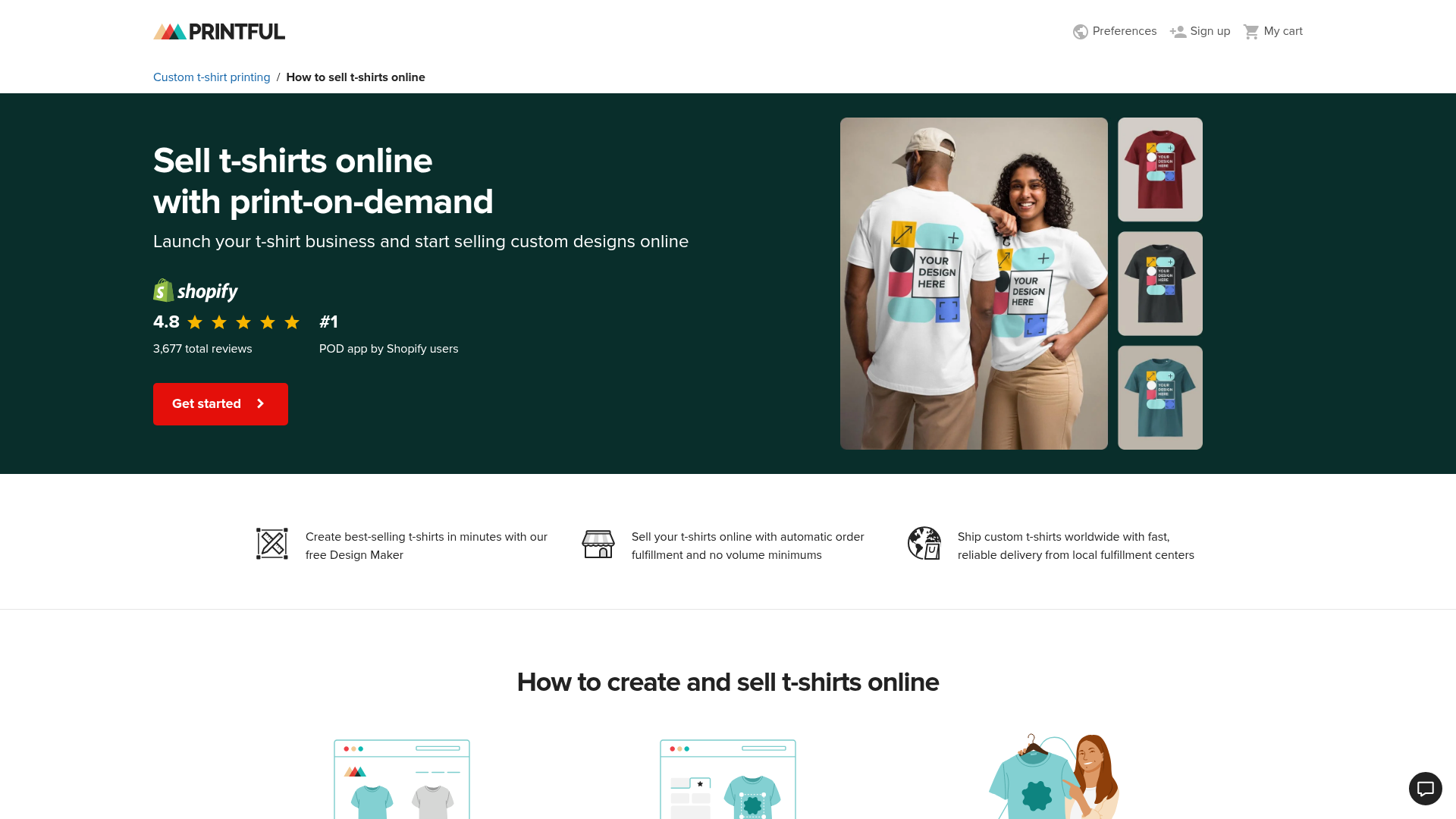
These platforms are strong for:
Marketplace and store integrations
Product range
Automation basics
Entry-level POD scaling
Bonfire-style platforms: campaigns + fundraising
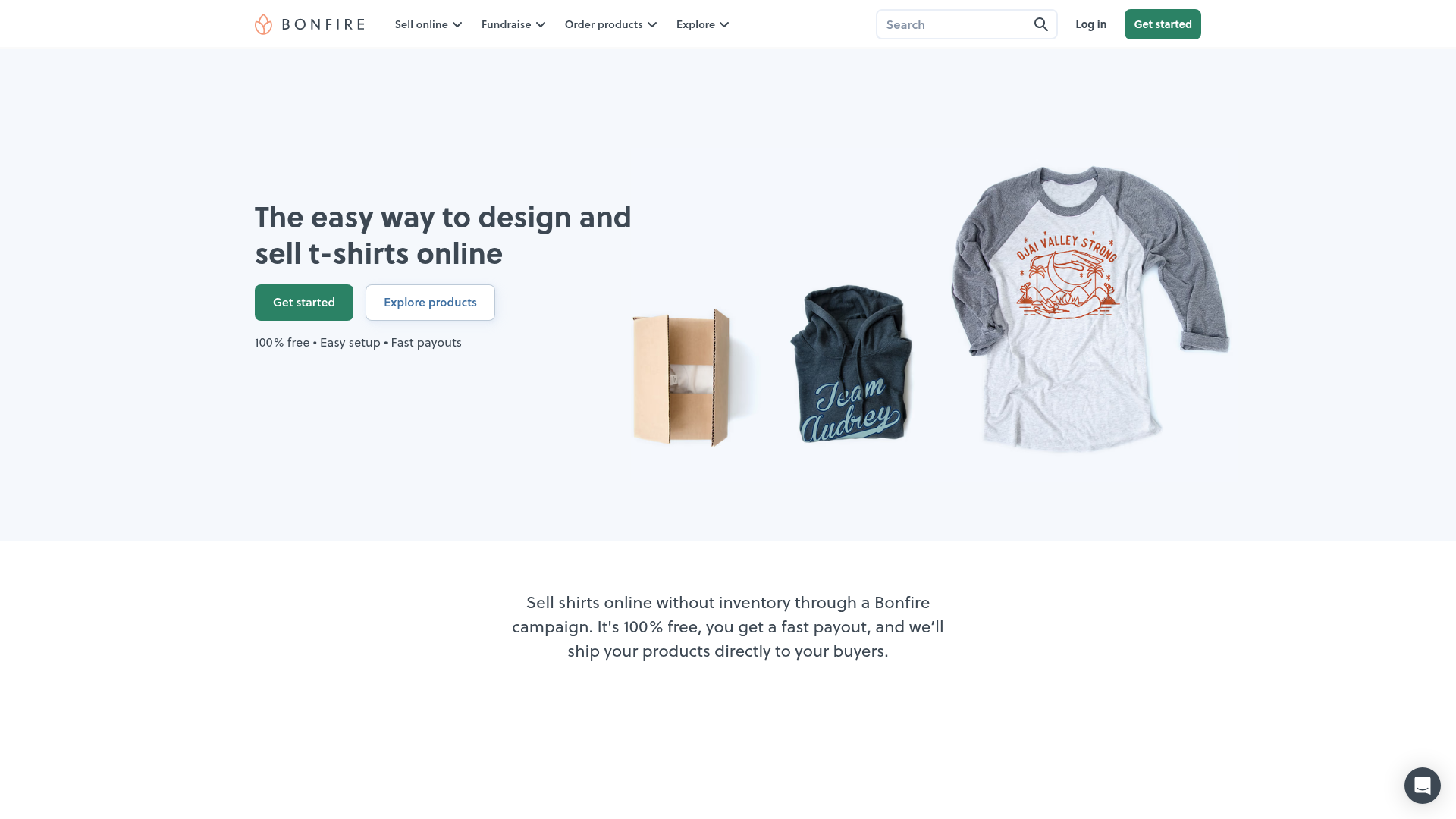
These are effective for:
Community selling
Limited-edition drops
Cause-based merch
Simpler launch flows
Apliiq-style platforms: branding + apparel customization
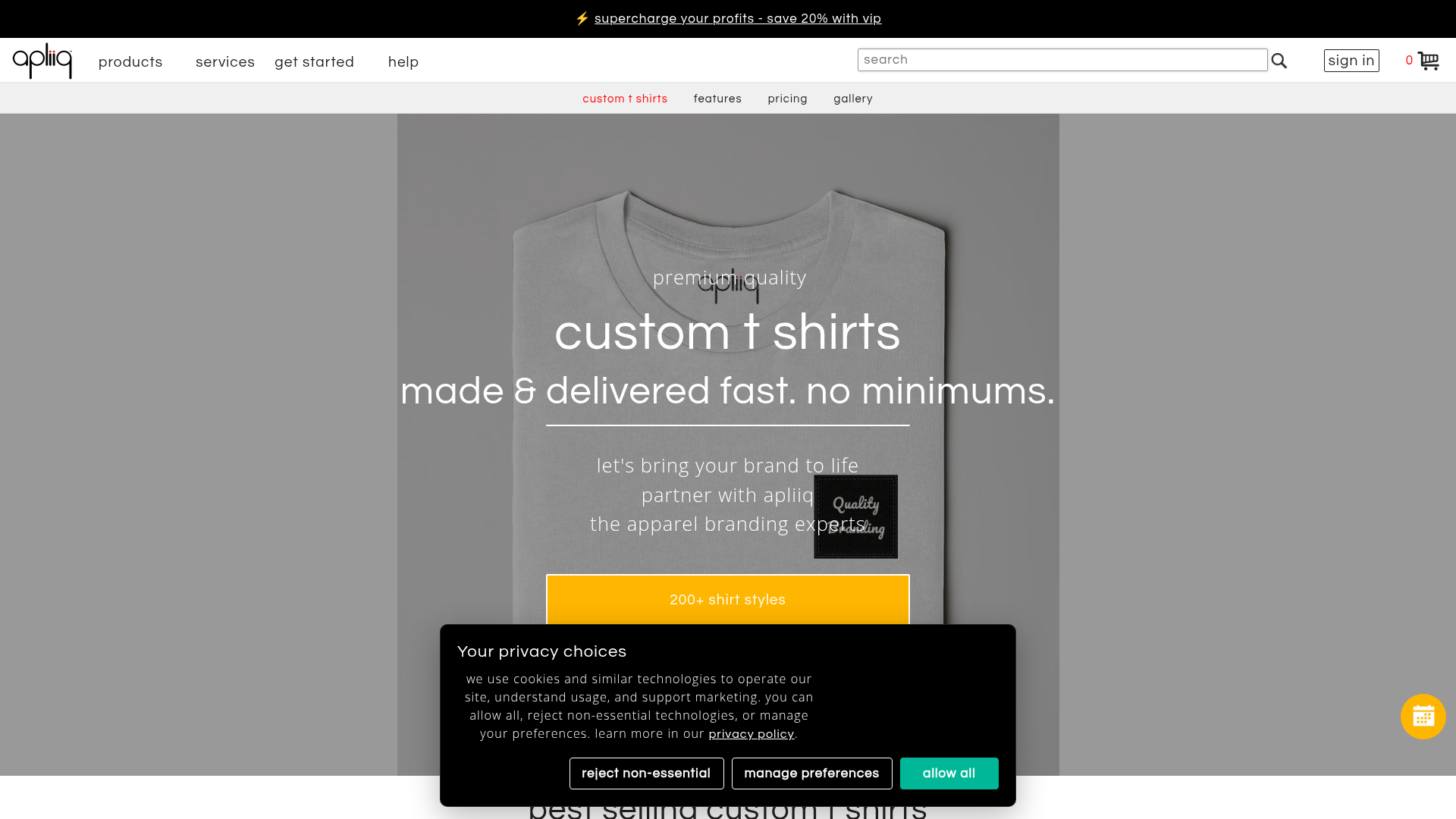
They often appeal to:
Fashion-forward brands
Private label use cases
Premium embellishment needs
More customized apparel positioning
The gap none of them fully solve
Most established competitors still rely on the customer adapting to the platform. Media Rex Alliance flips that: the platform adapts to the customer through conversational creation, white-label deployment, mobile browser access, cloud and local project sync, and AI-assisted automation.
That is a structural advantage for businesses modernizing web-to-print.
The real conversion bottleneck: design friction
Most brands assume their bottleneck is traffic. Often, it is not.
It is the moment a shopper tries to personalize a product and runs into:
Hard-to-use editors
Confusing sizing
Bad preview quality
Too many decisions
Slow page performance
Weak mobile controls
For digital print businesses, solving that friction can unlock more revenue than adding more traffic.
Why conversational creation is such a major shift
Instead of teaching customers how to use design software, you let them say:
“Create a vintage surf tee in washed blue with a retro sunset graphic.”
“Make a minimalist black shirt with a centered white slogan.”
“Use this dog photo and turn it into a clean illustrated front print.”
That is faster, more intuitive, and more scalable - especially for users on phones.
How to build a profitable custom t-shirt catalog
The smartest operators do not launch 100 random SKUs. They build a tight catalog architecture.
Start with these 4 foundational product types
1. Core bestseller tee
Your volume leader. Keep it accessible and versatile.
2. Premium soft tee
For higher AOV and better brand perception.
3. Heavyweight or oversized tee
For trend-driven niches and fashion-led positioning.
4. Kids or family extension
Great for gifting, events, and collection depth.
Recommended catalog strategy
Product Role | Purpose | Margin Potential | Risk |
|---|---|---|---|
Entry tee | Volume and accessibility | Medium | Low |
Premium tee | Upsell and retention | High | Low |
Trend tee | Differentiation | High | Medium |
Limited edition tee | Urgency and testing | Medium to High | Medium |
Personalized photo tee | Emotional purchase | High | Low if workflow is strong |
Media Rex Alliance is especially well-suited to personalized and visually guided product flows because its AI creation engine, automated layouts, and 3D/AR previews reduce the operational burden that usually comes with custom product complexity.
How to price custom t-shirts for healthy margins
If you want to sell custom shirts sustainably, price from the full economics, not garment cost alone.
Include these variables
Blank garment cost
Printing cost
Packaging
Platform fees
Shipping
Return reserve
Promotional spend
Design/support overhead
A simple pricing approach
Positioning | Typical Strategy | Goal |
|---|---|---|
Budget | Lower price, simpler blank | Maximize conversion |
Mid-market | Balanced quality and margin | Best overall scalability |
Premium | Better blank, stronger branding | Maximize LTV and perception |
Margin reality
If you only compete on price, you will struggle. The better play is to create a product experience that justifies the price: stronger garment choice, clearer personalization, better previews, and smoother checkout.
How to create custom t-shirts online cheap without looking cheap
Yes, you can create custom t shirts online cheap. The key is doing it strategically.
Smart ways to lower cost without hurting brand value
Use one or two versatile shirt blanks
Limit color variants at launch
Choose print methods suited to your artwork
Batch marketing around fewer hero products
Use on-demand production to avoid dead inventory
Improve previews to reduce returns and hesitation
Automate fulfillment rather than building manual operations
That last point is huge. Media Rex Alliance helps reduce inventory and overhead through on-demand production while automating fulfillment through a global network of premium printers. That means even smaller operators can launch polished experiences without investing in warehouses, print infrastructure, or custom software builds.
Why previews matter more than most sellers realize
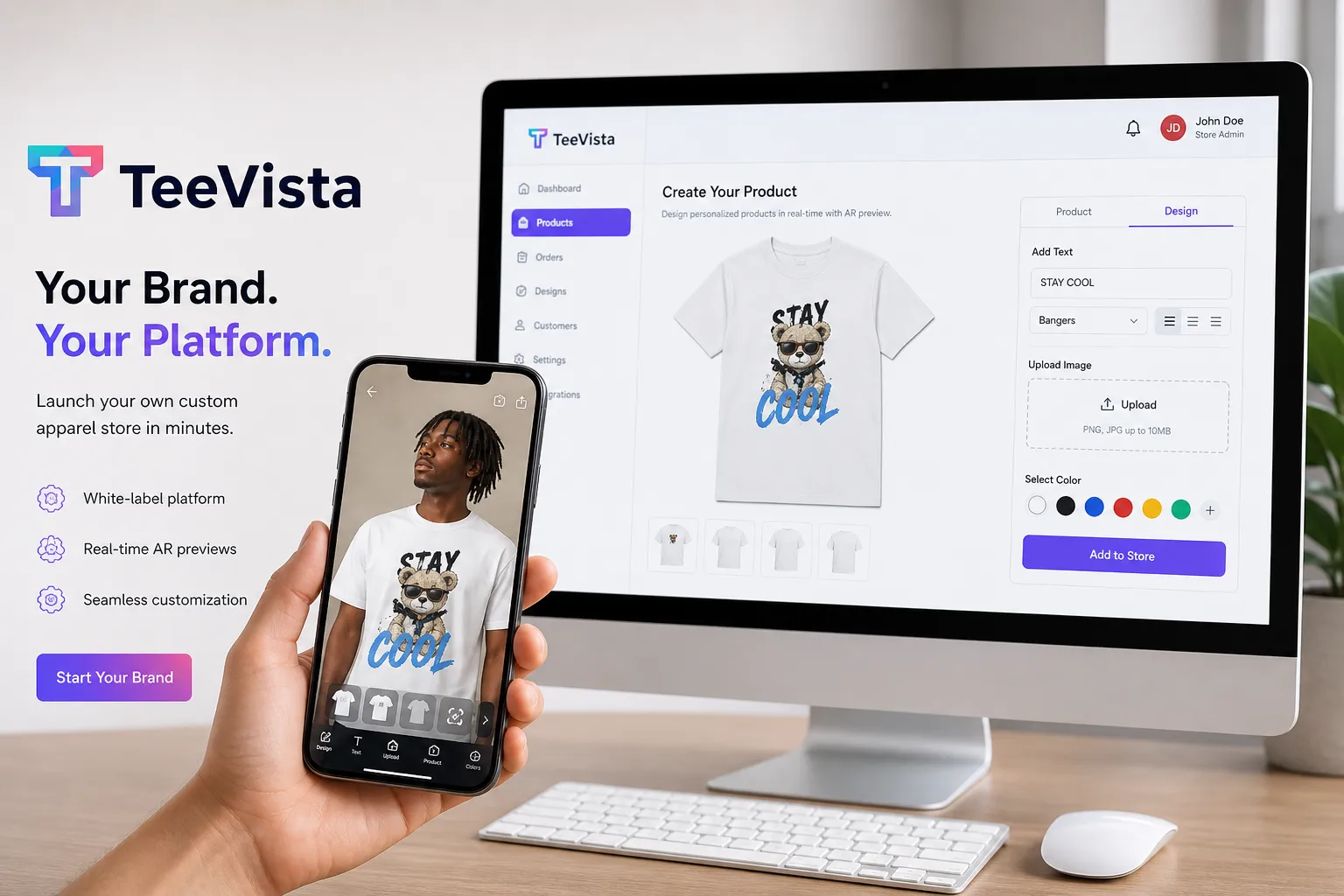
For custom apparel, buyers are making a leap of faith. The more personalized the shirt, the more confidence they need.
Basic flat previews help, but photorealistic 3D and AR do more:
Clarify scale and placement
Reduce uncertainty
Improve mobile buying confidence
Support premium pricing
Lower post-purchase disappointment
This is especially important for:
Photo shirts
Personalized gifts
Creator drops
Fashion-led branded merch
White-label print storefronts with high order diversity
The best workflow for small brands, studios, and print businesses
Here is the practical framework we recommend.
For new POD brands
Launch 3–5 strong designs
Use 1 core tee + 1 premium tee
Test one niche audience first
Prioritize mobile-first buying flow
Add upsells only after conversion data comes in
For photographers and studios
Add image-upload products
Offer personalized text + photo variants
Use emotional use cases like gifts, milestones, pets, or travel
Make preview quality a priority
Use white-label flows to keep the brand experience consistent
For regional and mid-size print businesses
Modernize the design experience first
Reduce manual prepress touchpoints
Add AI-assisted product creation
Integrate white-label storefronts into the current sales stack
Route fulfillment automatically for scale
For established photo book and print companies
Expand beyond traditional templates
Introduce conversational commerce for print products
Connect cloud-based multi-device project sync
Use AR/3D previews to improve purchase confidence
Launch branded SaaS-like consumer experiences without replacing the whole backend
Common mistakes to avoid when selling custom t-shirts
Selling too many products too early
A smaller, better-curated catalog almost always wins.
Choosing blanks by cost alone
Cheap shirts can damage reviews, retention, and brand perception.
Ignoring mobile UX
Most personalization flows break down on smaller screens.
Using weak mockups
If the preview does not look premium, the product feels less trustworthy.
Underpricing
Low prices do not automatically create strong businesses.
Building custom software too soon
For many companies, white-label infrastructure is the smarter path than building from scratch.
Why Media Rex Alliance is a smarter long-term play
Most platforms help you sell products. Media Rex Alliance helps you modernize how products are created, visualized, sold, and fulfilled.
What makes it different
Conversational AI creation turns prompts into print-ready products
Browser-based, mobile-first UX removes app friction
White-label deployment lets businesses launch under their own brand, domain, and visual identity
Photorealistic 3D and AR previews improve confidence before purchase
Cloud and local sync enable seamless multi-device creation
On-demand production reduces inventory exposure
Automated global fulfillment supports scale without heavy operations overhead
Scalable infrastructure works for startups, regional players, and enterprise print businesses
For businesses trying to sell custom t shirts in a more modern way, this is not just an incremental improvement. It is a full-stack upgrade to the web-to-print experience.
Final verdict
If your goal is simply to order custom tee shirts once for an event, almost any decent platform can get the job done.
But if your goal is to sell custom t shirts online profitably, build a branded experience, reduce support overhead, improve conversion, and scale without owning the operational complexity, you need more than a catalog and a basic editor.
You need:
better creation flows,
stronger previews,
lower friction on mobile,
white-label flexibility,
and fulfillment automation that can grow with demand.
That is where Media Rex Alliance stands apart. It gives print businesses, studios, creators, and modern ecommerce operators a faster way to create, launch, and scale AI-powered custom product experiences - without forcing customers through outdated tools or forcing your team to build the technology internally.
If you want to make custom shirts online in a way that feels future-ready, scalable, and conversion-focused, Media Rex Alliance is the platform to watch - and the partner to deploy.
FAQ
How much money can you make selling custom t-shirts?
Earnings vary based on margin, niche, traffic, and repeat purchase rate. A small brand may generate modest side income, while a well-positioned store with premium products, strong previews, and efficient fulfillment can build a meaningful recurring revenue stream.
How to make custom shirts and sell them?
Start by choosing a clear audience, selecting the right shirt blanks, and creating designs that fit that niche. Then publish products through an on-demand or white-label platform, use strong previews, and automate fulfillment so you can scale without carrying inventory.
What type of t-shirts sell the most?
Core unisex tees, soft premium shirts, and trend-led heavyweight styles consistently perform well. The best sellers usually combine wearable designs, broad fit appeal, and a price point that matches the audience’s expectations.
What type of t-shirts sell the most?
Shirts with a clear niche angle - such as creator merch, local identity, pets, events, or cause-based messaging - tend to outperform generic designs. Personalized products also convert well when the buying experience includes easy creation and realistic 3D or AR previews.