Web 2 Print Solutions: What Print Brands Need
Print buyers have changed faster than many print businesses have. Customers now expect to personalize products online, approve designs instantly, view realistic previews, and place orders from any device without friction. For small studios, photographers, new print-on-demand brands, regional print players, and established photo book companies, that shift creates both pressure and opportunity.
Modern web 2 print solutions are no longer just storefront add-ons. They are becoming the digital operating layer for selling personalized print online, automating production, and improving conversion rates. The old model - manual proofs, email back-and-forth, disconnected design tools, and high-touch order handling - simply does not scale.
The bigger question is no longer whether to adopt web 2 print technology. It is which capabilities matter now if you want to compete in an AI-shaped market where speed, personalization, and operational efficiency drive growth.
"The global W2P market was valued at USD 36.3 billion in 2025 and is projected to reach USD 52.9 billion by 2034." - IMARC Group
"As of 2025, the U.S. mobile commerce market was projected to reach $616.3 billion, accounting for 44.2% of total e-commerce sales." - eCommerce Tips
What Web 2 Print Really Means Today
At a basic level, web-to-print software lets customers order print products online. But that definition is now too limited to be useful.
Today, the strongest platforms combine:
online product configuration
browser-based personalization
automated pricing
proofing and approval workflows
print-ready file generation
fulfillment orchestration
mobile-first purchasing experiences
For buyers, this means less effort between idea and order. For print brands, it means fewer manual touchpoints, fewer errors, and a much more scalable business model.
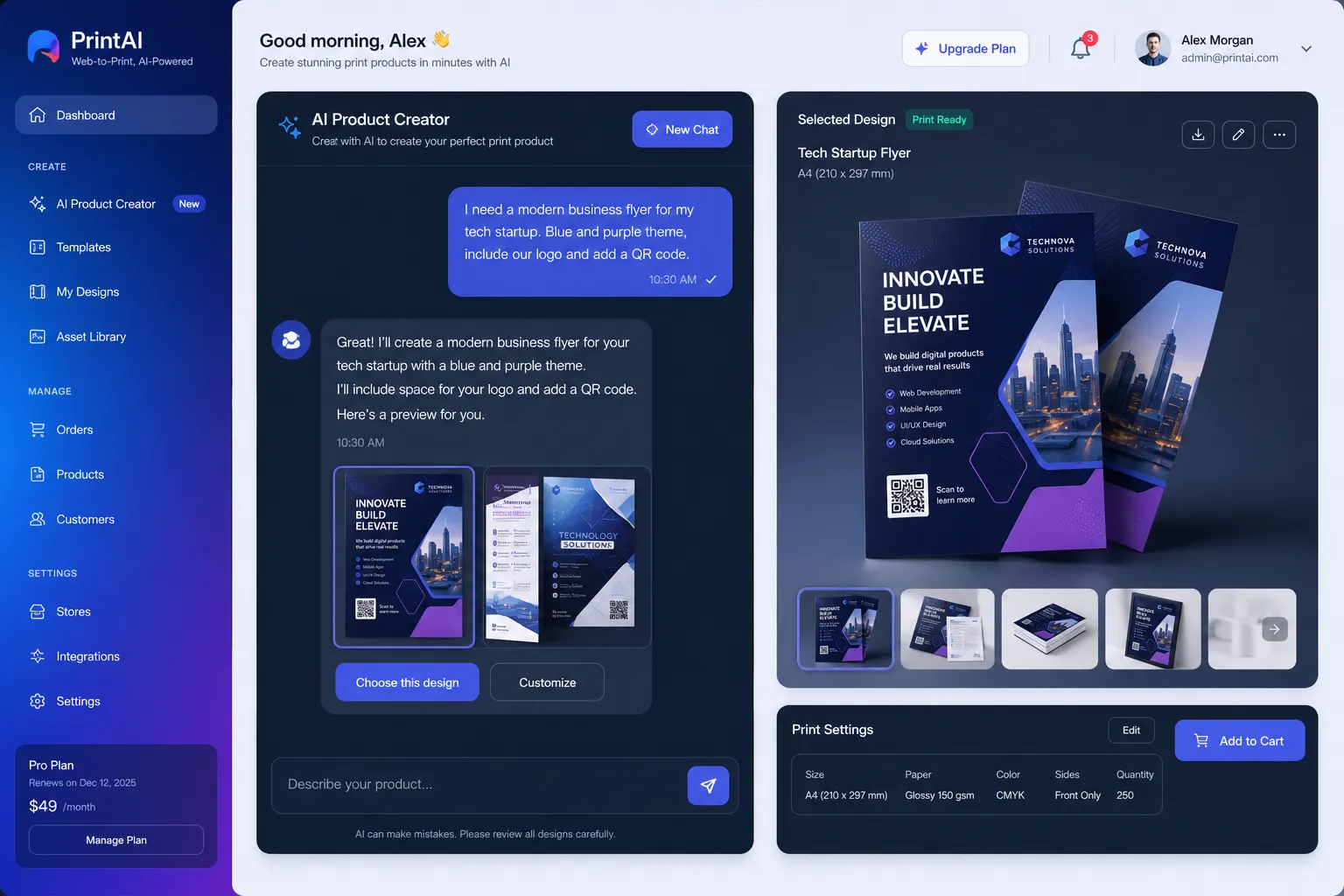
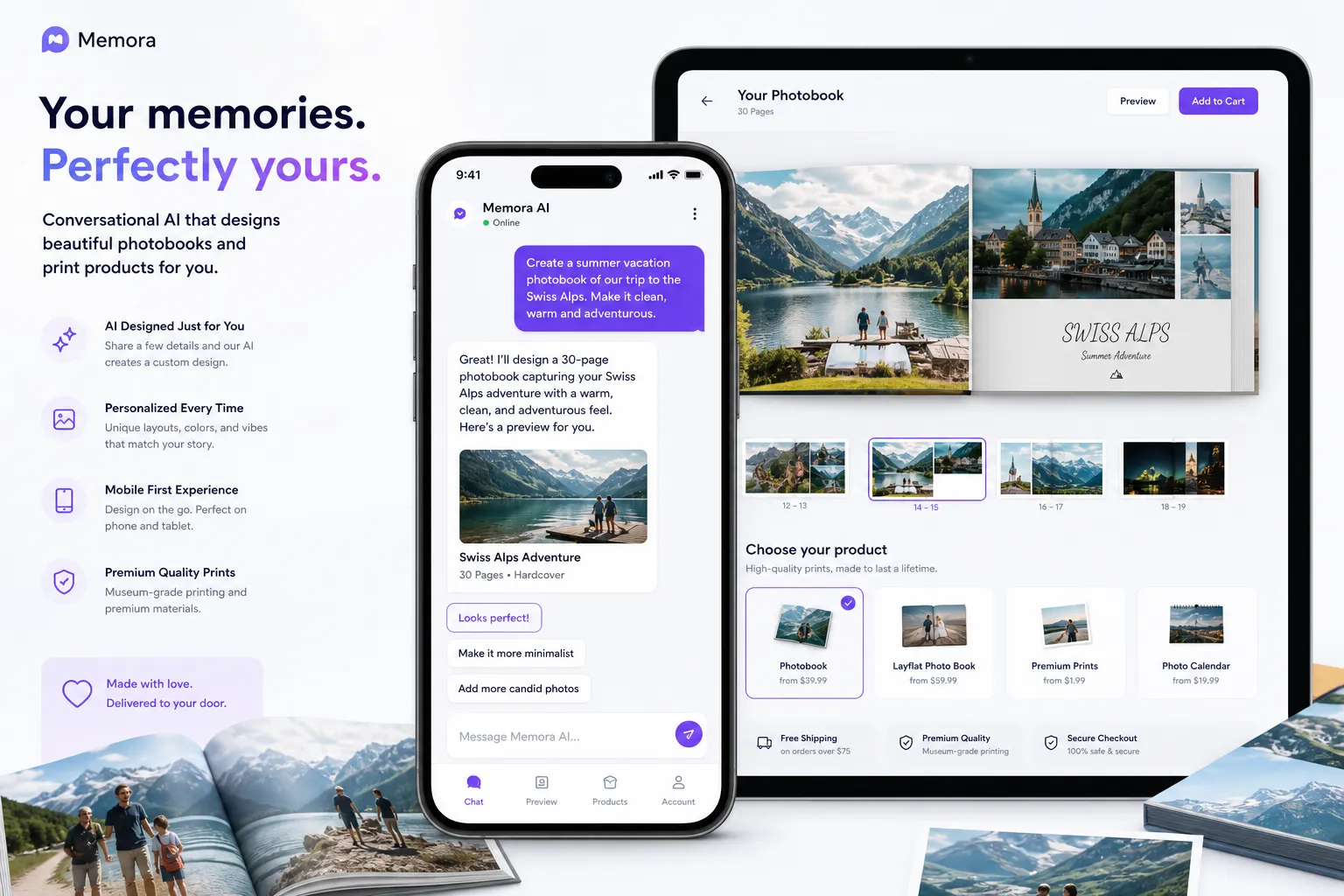
The best systems now push even further by replacing complicated editors with conversational workflows. Instead of forcing customers to learn layers, bleed settings, and design controls, AI can translate a simple prompt into a ready-to-print product. That is one of the most important shifts happening in the category.
Why Traditional Web-to-Print Is No Longer Enough
Early platforms solved one problem well: moving print ordering online. But many still create friction in the moments that matter most.
Common limitations in older systems
Legacy limitation | Business impact |
|---|---|
Complex design interfaces | Lower conversion and higher abandonment |
Desktop-first workflows | Poor mobile buying experience |
Flat previews only | Lower buyer confidence before purchase |
Manual file correction | Production delays and avoidable labor costs |
Weak integration options | Difficult deployment into existing storefronts |
Isolated ordering tools | No end-to-end visibility from creation to fulfillment |
This is where many competitor articles stop: they explain what web-to-print is, but not what modern buyers now expect from it. That gap matters.
A print business today does not just need online ordering. It needs a system that removes decision friction, supports self-service creation, and connects the full lifecycle from prompt to production.
The New Standard: AI-Powered Web 2 Print
The next generation of platforms is centered on intelligent creation, not just digital order intake.
What AI changes in the customer journey
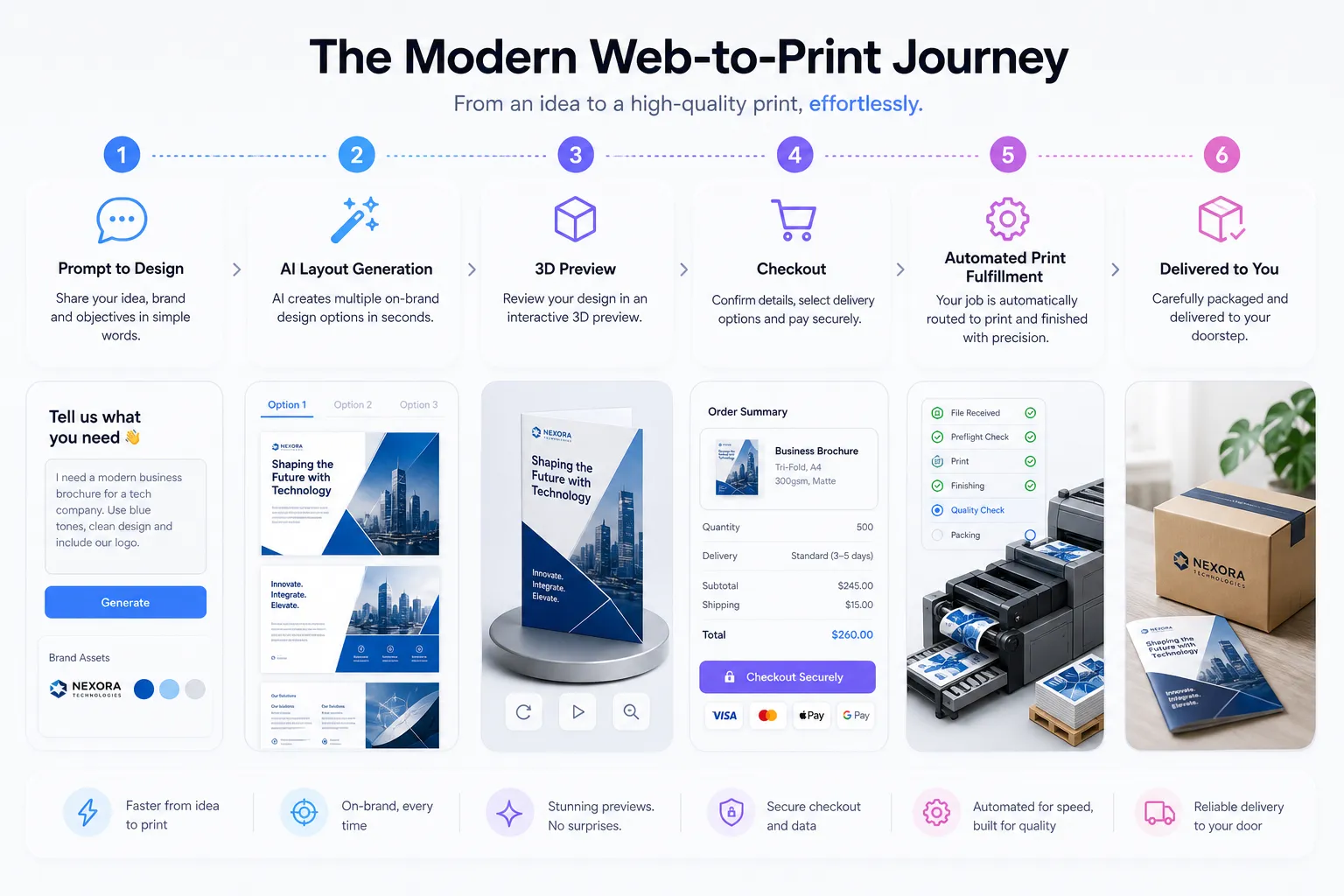
With an AI-powered system, a buyer can describe what they want in natural language, upload a photo if needed, and receive a polished, production-ready concept in minutes. That dramatically shortens time-to-cart.
Instead of this:
choose template
open design tool
resize elements
fix alignment
preview
submit for proof
wait for approval
The experience becomes closer to this:
type what you want
AI creates the product
review in 3D or AR
place the order
That simplification is not cosmetic. It directly impacts conversion, customer satisfaction, and cost to serve.
What Print Brands Actually Need From Modern Web-to-Print Software
Not every platform offers the same depth. If you are evaluating options, these are the capabilities that matter most.
1. Conversational product creation
This is the clearest leap forward. Buyers should be able to describe a product in everyday language and get meaningful output quickly. For photo books, wall art, cards, calendars, and personalized merchandise, this reduces the learning curve dramatically.
For Media Rex Alliance, this is a core differentiator. The platform enables end customers to create products through conversational AI instead of navigating complex design tools. That means lower friction, faster decisions, and a more intuitive customer experience.
2. Print-ready automation
A beautiful preview is not enough. The final output must still be production-ready. Your platform should automate layout generation, file preparation, and output consistency so that orders move cleanly into production.
That is especially valuable for businesses trying to scale without scaling labor at the same rate.
3. White-label deployment
Many brands do not want to rebuild their tech stack. They want to add sophisticated personalization into the storefront or app they already own.
A modern SaaS platform should integrate fully under your brand, domain, and customer experience. Media Rex Alliance is built for this model, enabling fully white-label integration so print brands can launch advanced AI-powered ordering without exposing third-party infrastructure.
4. Photorealistic 3D and AR previews
Customers hesitate when they cannot visualize the final product. Flat previews often leave too much uncertainty.
Photorealistic 3D and immersive AR previews improve buyer confidence before checkout. They are especially valuable for premium print, gifts, wall art, photo products, and custom merchandise where presentation heavily influences purchase decisions.
5. Mobile-first browser access
If the experience breaks on mobile, you are losing revenue. Buyers increasingly discover, customize, and buy on phones.
The right platform should work directly in the browser with no app installation required. Media Rex Alliance is built mobile-first, making product creation accessible across devices while keeping the process fast and intuitive.
6. Cross-device continuity
Many buyers start on one device and finish on another. Save-state continuity matters more than many vendors admit.
When projects sync locally and in the cloud, users can move between devices without losing progress. That increases convenience and reduces abandonment.
7. On-demand production economics
Inventory-heavy print models create waste, complexity, and cash drag. On-demand production helps reduce stock requirements and overhead while broadening the range of products you can offer.
This is especially attractive for startups and regional brands that want catalog breadth without operational bloat.
8. Fulfillment automation
The frontend gets attention, but the backend determines profitability. Strong web-to-print systems should route jobs, connect to production workflows, and automate fulfillment where possible.
Media Rex Alliance supports an automated fulfillment pipeline backed by a global network of premium printers, helping brands scale service delivery without building every production capability internally.
Who Benefits Most From Modern Web 2 Print Solutions?
The value of web-to-print is not limited to one kind of printer.
Small studios and photographers
These businesses benefit from low-overhead selling, premium presentation, and the ability to convert creative work into productized offers without building software from scratch.
New print-on-demand brands
Emerging brands need speed, differentiation, and capital efficiency. AI-assisted creation plus on-demand fulfillment reduces startup friction and helps teams launch faster.
Mid-size print brands
These companies often hit the painful middle ground: too much order volume for manual processing, but not enough internal engineering to build custom commerce tools. A white-label AI print platform closes that gap.
Regional print players
Regional businesses can compete more aggressively by offering better digital ordering experiences, more personalization, and a broader catalog without carrying corresponding inventory risk.
Established photo book companies
For mature brands, modernization is the key challenge. Replacing clunky creation flows with conversational AI, photorealistic previews, and mobile-first experiences can improve both conversion and retention without discarding brand equity.
Core Features Buyers Should Compare
When evaluating platforms, it helps to move beyond generic feature lists and compare according to business outcomes.
Capability | Why it matters | What best-in-class looks like |
|---|---|---|
AI creation | Reduces user effort | Natural-language product generation |
Customization | Enables personalization | Flexible templates plus automated layouts |
Previewing | Builds confidence | 3D and AR product visualization |
Accessibility | Expands conversion | Browser-based, mobile-first experience |
Brand control | Protects customer ownership | Full white-label deployment |
Fulfillment | Improves scalability | Automated job routing and production network |
Cost model | Reduces operational burden | On-demand, low-inventory workflow |
Scalability | Supports long-term growth | Works for startups through enterprise |
How Media Rex Alliance Fills the Gaps Competitors Often Miss
Most competitor content covers the basics: online print ordering, efficiency, and customization. Those are table stakes now. What many overlook is the shift from tool-centric workflows to intent-centric creation.
That is where Media Rex Alliance stands apart.
Instead of teaching customers software, it lets them describe the product
This matters because the biggest hidden conversion killer in online print is creative friction. If users feel uncertain, overwhelmed, or slowed down by the design experience, they leave. Conversational AI changes that dynamic.
Instead of generic previews, it provides immersive confidence
Photorealistic 3D and AR previews help customers understand what they are buying before they commit. That reduces hesitation and can lower the chance of post-purchase disappointment.
Instead of requiring a separate app, it runs where customers already are
Browser-based, mobile-first product creation means you can meet users inside your existing storefront or app ecosystem. No extra installation step. No added friction.
Instead of creating more complexity, it supports operational simplicity
From cross-device sync to automated fulfillment and no-stock production models, Media Rex Alliance is built to simplify the path from idea to delivered product.
Visual Benchmark: How the Market Presents Web-to-Print
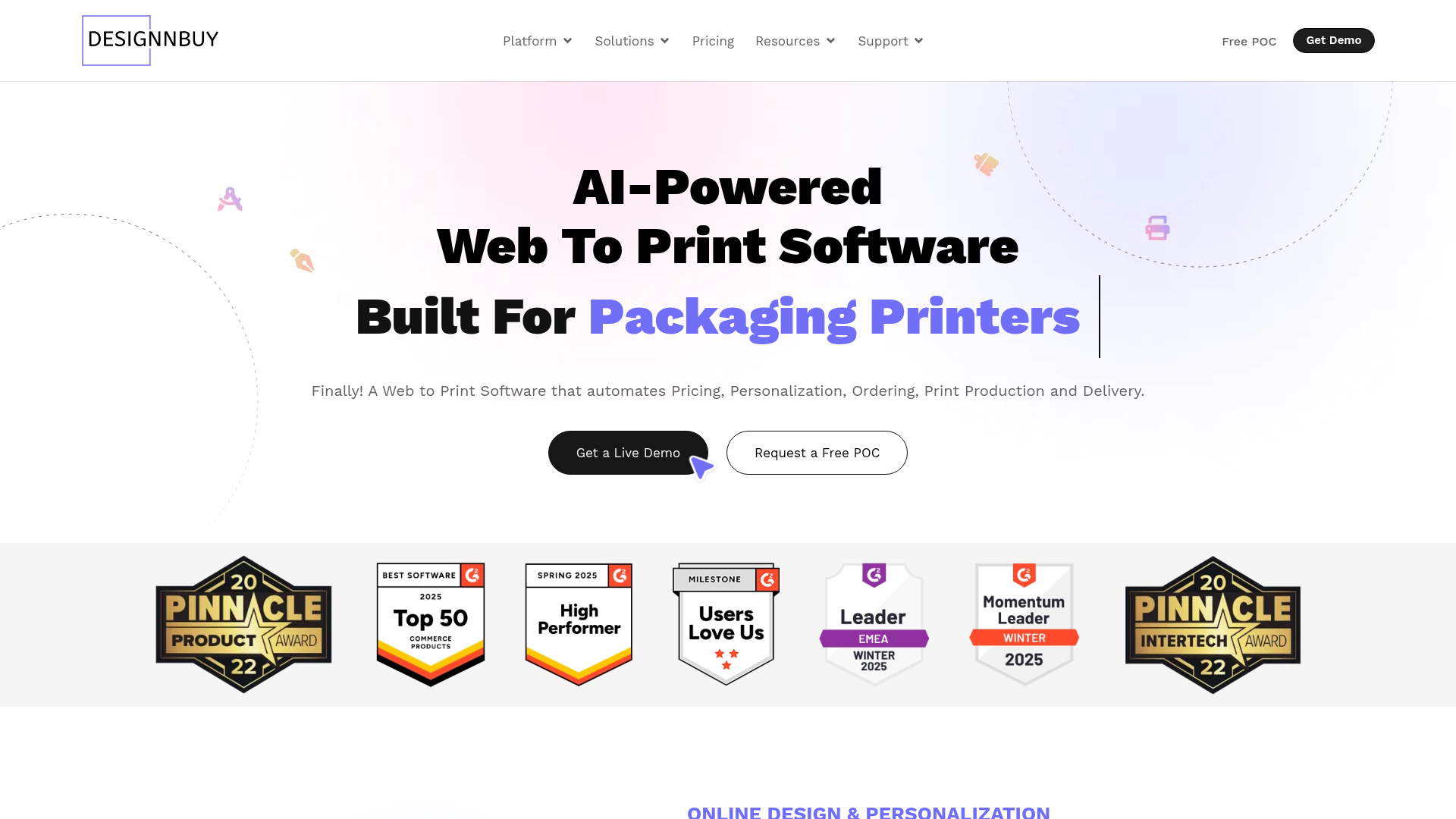
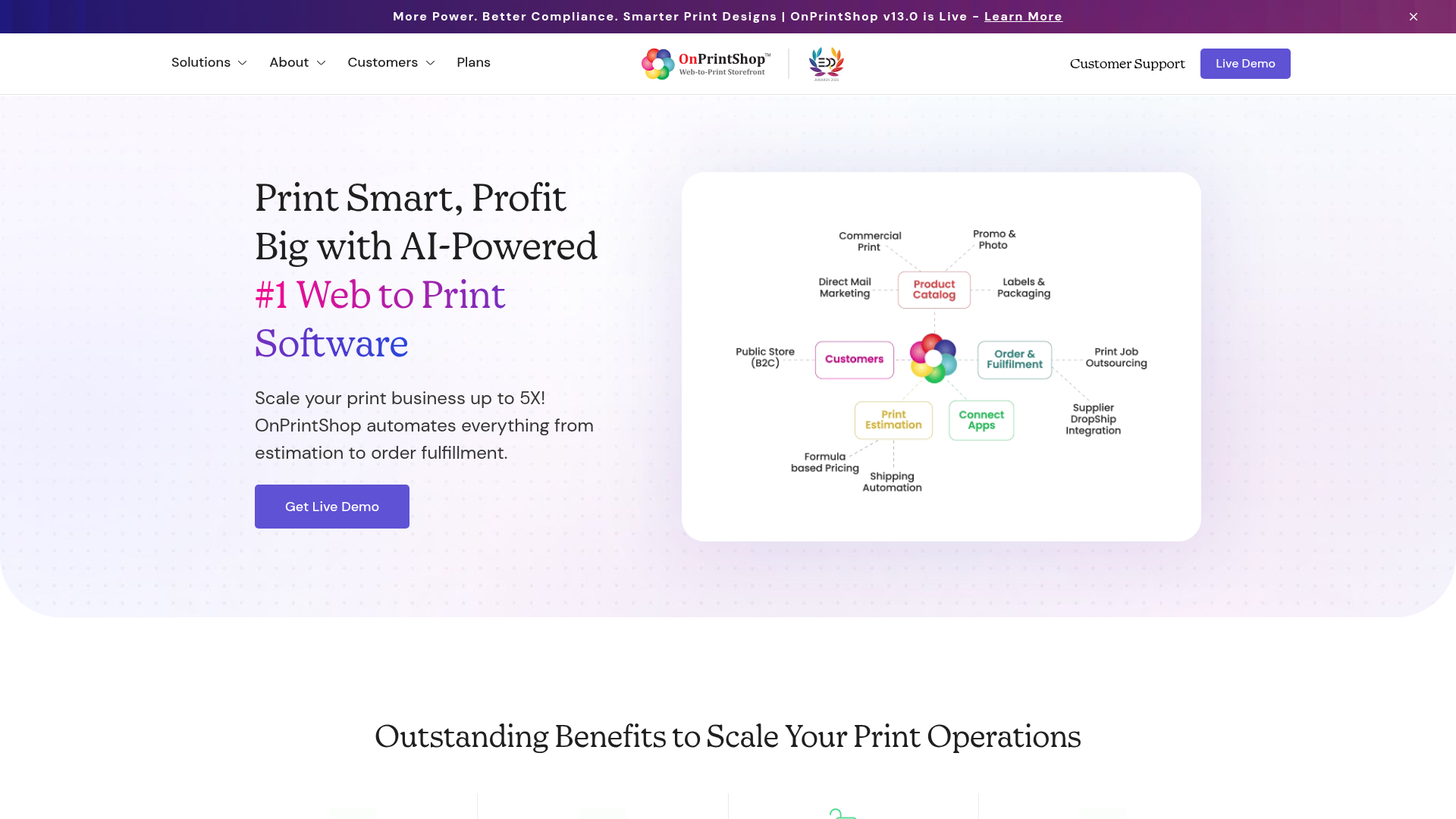
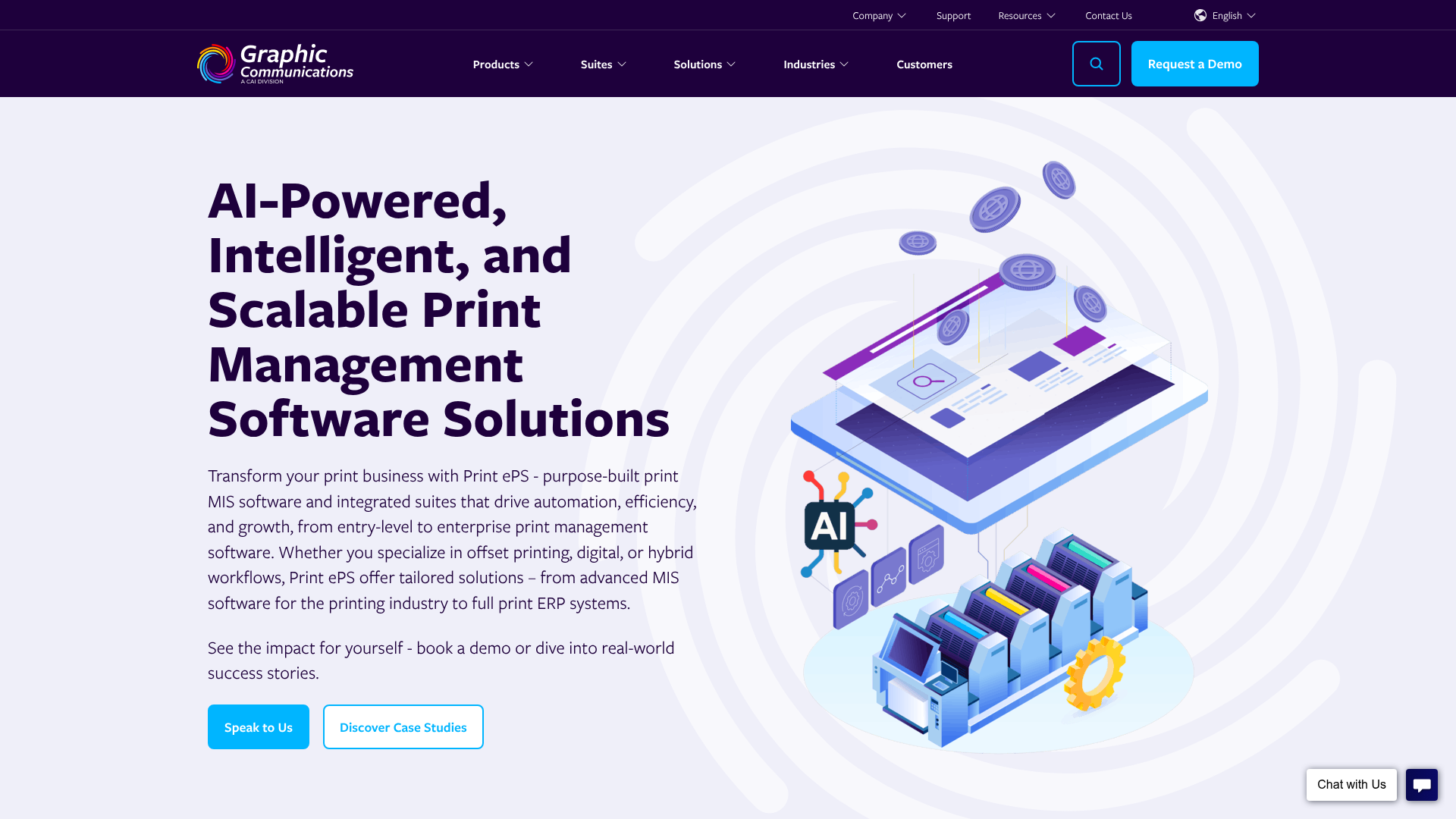
Below are homepage snapshots of major players in the category. Their positioning shows how the market is evolving toward automation, personalization, and workflow efficiency.
DesignNBuy
OnPrintShop
Print ePS
The Shift From Design Tool to Commerce Engine
A lot of businesses still think of web-to-print as a design widget. That framing is too narrow.
A modern solution should act as a revenue engine that:
improves conversion through lower-friction creation
supports premium pricing through better visualization
reduces manual labor through automation
enables product expansion without inventory growth
scales across brands, regions, and customer segments
That is why AI is becoming central to the category. The future is not more buttons in the editor. The future is fewer barriers between customer intent and purchase completion.
How to Choose the Right Solution for Your Business Stage
If you are a startup or new POD brand
Look for low-overhead deployment, white-label flexibility, and fulfillment automation. You need speed and scalability without building infrastructure from zero.
If you are a growing print brand
Focus on reducing manual work, modernizing customer experience, and improving mobile conversion. AI-assisted creation can unlock growth without needing to expand support teams at the same pace.
If you are an established enterprise or photo product brand
Prioritize integration, brand control, output quality, and cross-device continuity. Your advantage will come from modernizing the buying journey while protecting customer trust and operational consistency.
Questions to Ask Before You Commit
Before selecting a platform, ask vendors:
Can customers create products with natural language, or only through manual editors?
Is the experience truly mobile-first?
Does it support photorealistic 3D or AR previews?
Can it be deployed fully white-label inside our current storefront or app?
How are print-ready files generated and validated?
What happens between checkout and fulfillment?
Can the platform support on-demand production across regions?
How easily can we scale from one product line to many?
These questions quickly separate legacy ordering tools from future-ready web-to-print infrastructure.
Final Verdict: What Print Brands Need Now
The market no longer rewards print businesses simply for being online. It rewards those that make online print creation effortless, trustworthy, and scalable.
That means the next generation of web 2 print solutions must do more than accept orders. They must translate customer intent into production-ready products, support mobile-first shopping behavior, visualize outcomes with confidence-building realism, and automate fulfillment with minimal operational drag.
For brands that want to modernize without building the technology stack themselves, Media Rex Alliance offers a powerful path forward. Its conversational AI creation engine, white-label architecture, browser-based product experience, 3D and AR previews, cloud sync, on-demand production model, and automated global fulfillment infrastructure position it for the future of AI-driven print commerce.
If you want to reduce friction, increase conversions, and launch a smarter print experience under your own brand, Media Rex Alliance is built for exactly that next step.
FAQ
What printers do printing companies use?
Printing companies use different equipment depending on the job, including digital presses, offset printers, large-format printers, DTG systems, and specialty finishing equipment. In modern web-to-print workflows, the software layer matters just as much as the hardware because it automates file preparation, routing, and fulfillment.
What is web 2 print?
Web 2 print is an online system that lets customers personalize, preview, and order print products through a website or app. Modern platforms go further by adding AI creation, mobile-first workflows, print-ready automation, and fulfillment integration.
How much does it cost to have 300 pages printed?
The cost varies based on paper type, color vs. black-and-white, print volume, finishing, and shipping. In a web-to-print environment, smart pricing engines help customers get instant quotes instead of waiting for manual estimates.
What are the top 5 printer brands?
Commonly recognized printer brands include HP, Canon, Epson, Brother, and Xerox, though the best choice depends on the print application. For commercial print businesses, software and workflow automation are often just as important as the press brand itself.
What are the top 5 print on demand companies?
Top print-on-demand companies often mentioned in the market include Printful, Printify, Gelato, Gooten, and Redbubble. However, brands that want more control increasingly choose white-label platforms like Media Rex Alliance to own the customer experience while automating global fulfillment.