Web To Print Open Source: Best Options in 2026
Small studios, photographers, new print-on-demand brands, regional print players, and established photo book companies are all asking the same question in 2026: should you build on an open stack, buy a closed platform, or blend both?
If you're researching web to print open source options, you're probably trying to solve at least one of these problems:
expensive licensing
rigid storefronts
outdated editors
disconnected print workflows
slow customization cycles
poor mobile experiences
too much manual prepress and fulfillment work
The challenge is that truly complete open source web to print platforms are still rare. What most vendors call “web-to-print” is usually a mix of open-source building blocks, custom integrations, and proprietary production logic. That makes the decision less about “free vs paid” and more about control vs speed, flexibility vs maintenance, and ownership vs scalability.
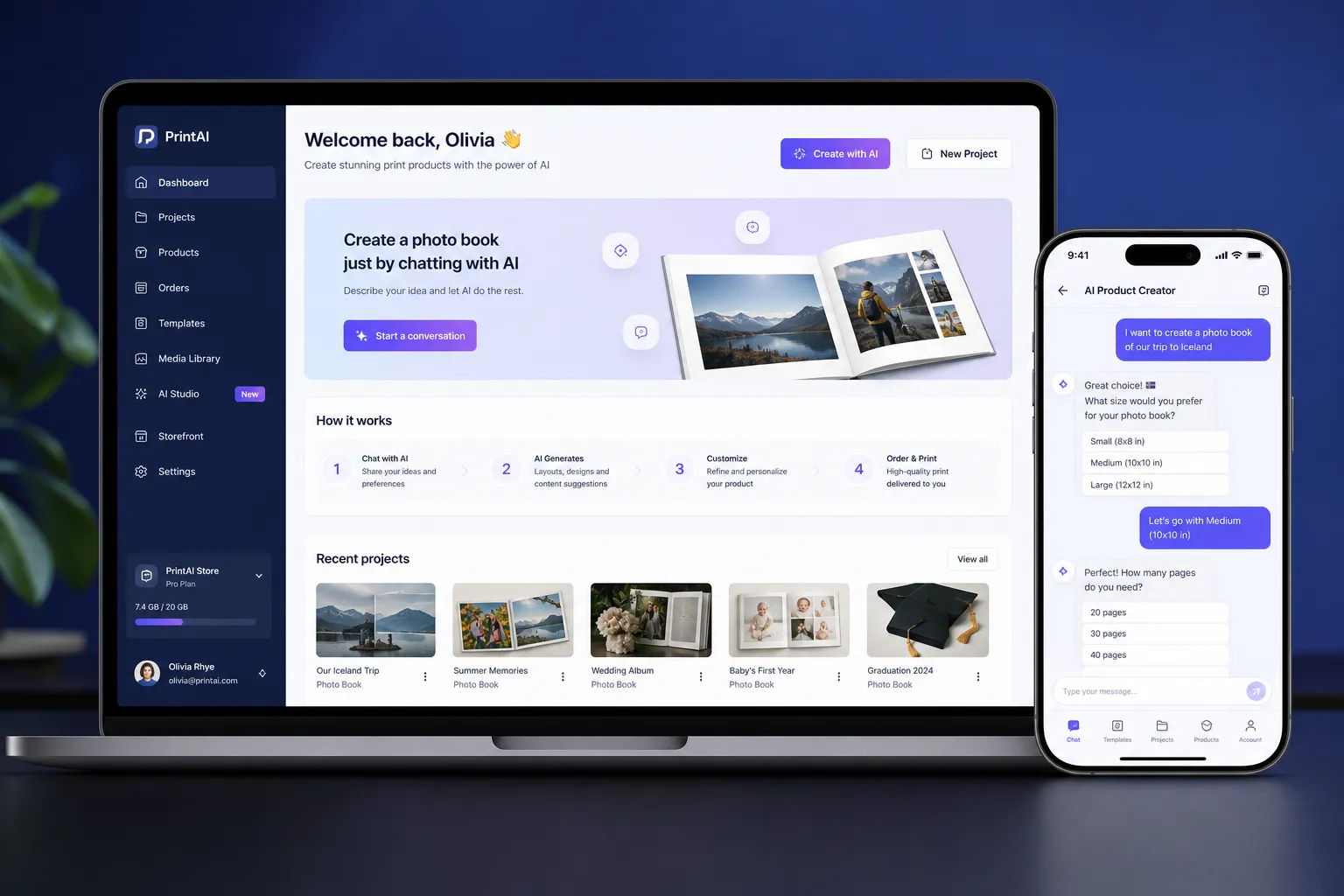
At Media Rex Alliance, we believe the market is shifting again. Traditional web-to-print was built around menus, forms, and design tools. The next generation is built around conversation, automation, and instant visualization. Instead of forcing customers through complex editors, businesses can now let them describe what they want in natural language, generate a print-ready product automatically, preview it in 3D or AR, and order it in minutes.
This guide will help you understand what is actually available in the open-source landscape, where the limitations are, and when a modern white-label AI print platform makes more sense than assembling everything from scratch.
"Grand View Research estimated the market size at $1.1 billion in 2022, projecting it to reach $1.96 billion by 2030, growing at a CAGR of 7.8% from 2023 to 2030." - Grand View Research
What “Open Source Web-to-Print” Really Means
A lot of content on this topic glosses over an important truth: there is usually no single open-source package that gives you storefront, pricing engine, online designer, proofing, imposition, order routing, preflight, tax handling, shipping, customer accounts, and print-ready automation all in one mature stack.
In practice, open-source web-to-print usually means combining:
Layer | Common Open-Source Approach | What You Still Need |
|---|---|---|
Storefront | PrestaShop, WooCommerce, Magento Open Source | print-specific pricing, product logic, B2B workflows |
Design/Layout | Scribus, custom HTML5 canvas editor, SVG tooling | browser UX, template locking, print-safe output |
File handling | Open-source PDF libraries, image processors | preflight rules, bleed/crop automation |
Workflow | Custom scripts, APIs, queue jobs | production routing, MIS/ERP integration |
Hosting | Self-hosted cloud stack | DevOps, security, backups, uptime |
Fulfillment | Manual or API-based integrations | global print network, vendor orchestration |
That distinction matters because many businesses start looking for a free platform and end up funding a custom software project.
Why So Many Print Businesses Still Look for Open Source
The appeal is obvious. Open source can offer:
Lower licensing costs
If you're a new brand or a small print studio, reducing software overhead is attractive.
Full customization
You can shape the buying journey, product logic, and UI around your niche.
Data ownership
Your infrastructure, your workflows, your codebase.
No vendor lock-in
At least in theory. In reality, custom integrations can create a new kind of lock-in around your internal developers or agency.
Strong fit for technical teams
If you already have product, engineering, and operations resources, open source can be a strategic advantage.
The Biggest Content Gap: Open Source Does Not Mean Low Total Cost
This is where many comparison articles stay too shallow.
The real cost of open source is not the download price. It is the cost of:
implementation
product modeling
UI customization
print file automation
mobile optimization
infrastructure management
security patching
upgrade testing
integration maintenance
support dependency on internal talent
For print businesses, the biggest hidden cost is usually the last mile to print-ready automation. Getting a customer to upload or edit something online is relatively easy. Getting that order into production with consistent quality, previews, approvals, and fulfillment logic is where complexity rises fast.

Best Open-Source and Open-Stack Options in 2026
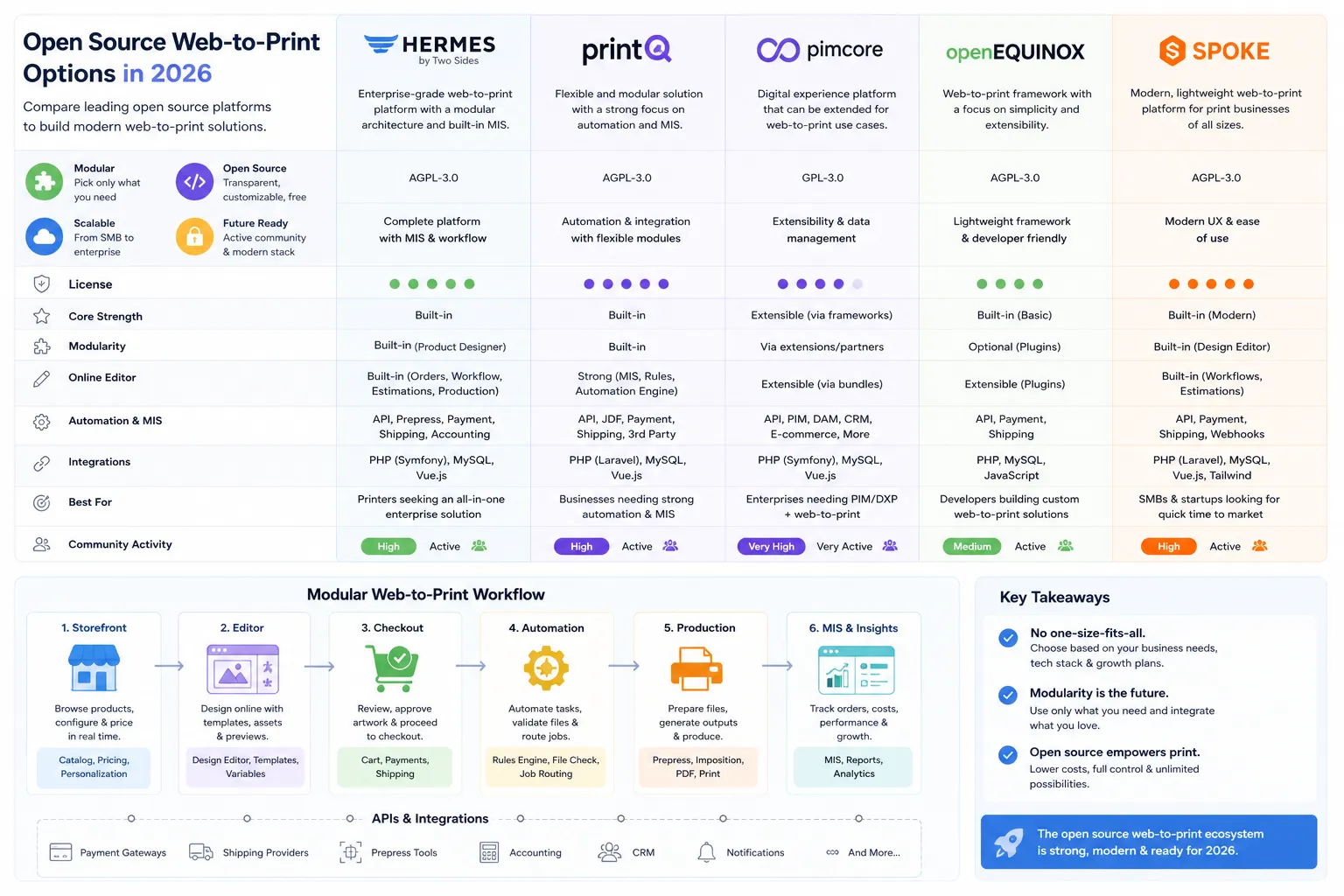
Because the market lacks many true all-in-one open-source web-to-print products, the best options in 2026 are better understood as buildable ecosystems.
1. Scribus + Custom Web Layer
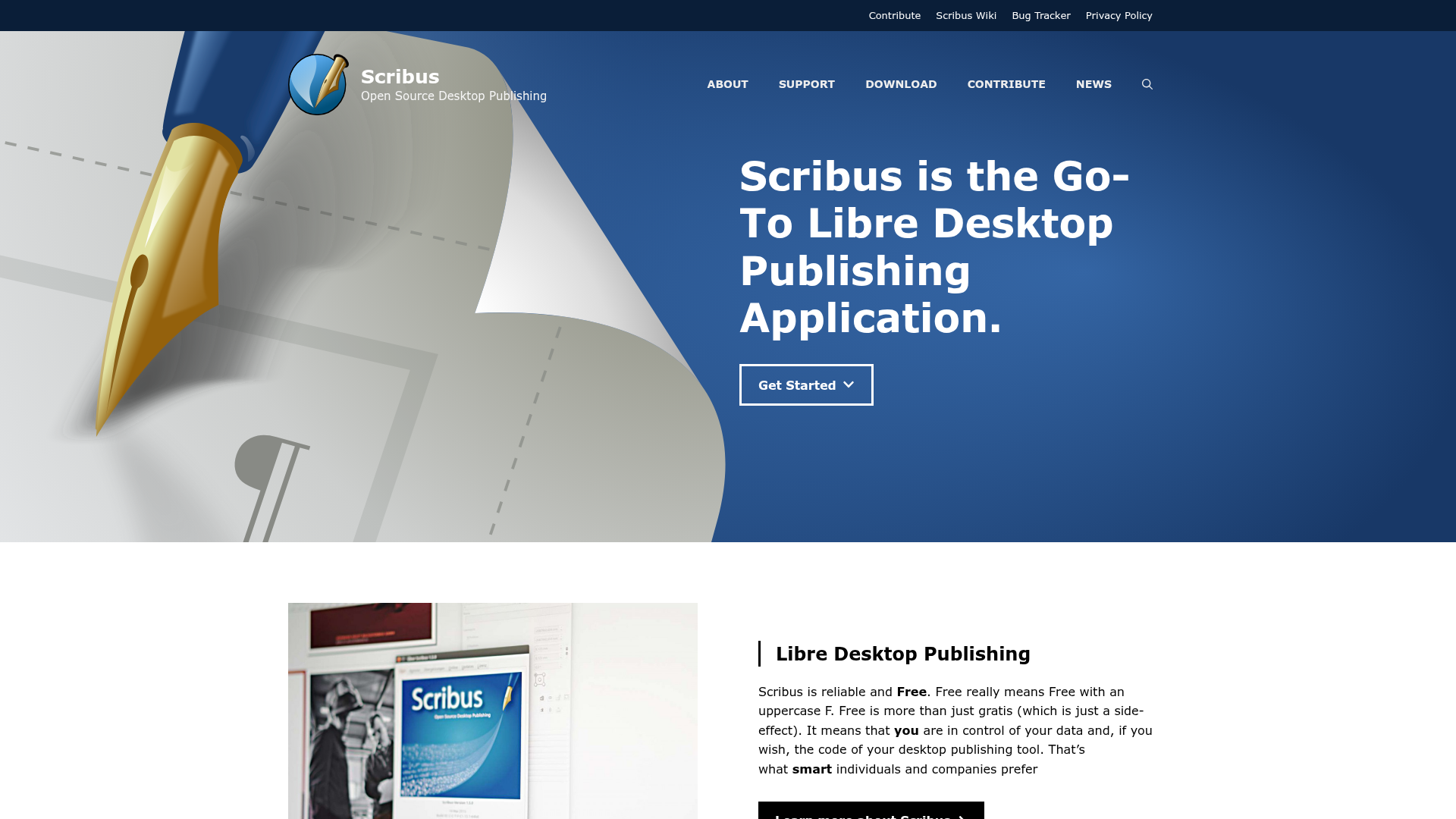
Scribus remains one of the most recognizable open-source desktop publishing tools in print workflows. It is not a complete web-to-print platform by itself, but it is still relevant as a layout and PDF-generation component in custom solutions.
Best for
Technically capable teams that need open layout logic or template-based PDF generation.
Strengths
mature open-source publishing tool
strong PDF-oriented output foundation
suitable for templated print assets
useful in back-end composition workflows
Limitations
not built as a customer-facing browser editor
requires custom middleware and automation
weak as a standalone ecommerce solution
not ideal for modern mobile-first buying flows
Verdict
Scribus is best seen as an engine component, not the finished customer experience.
2. PrestaShop + Print Modules / Custom Development
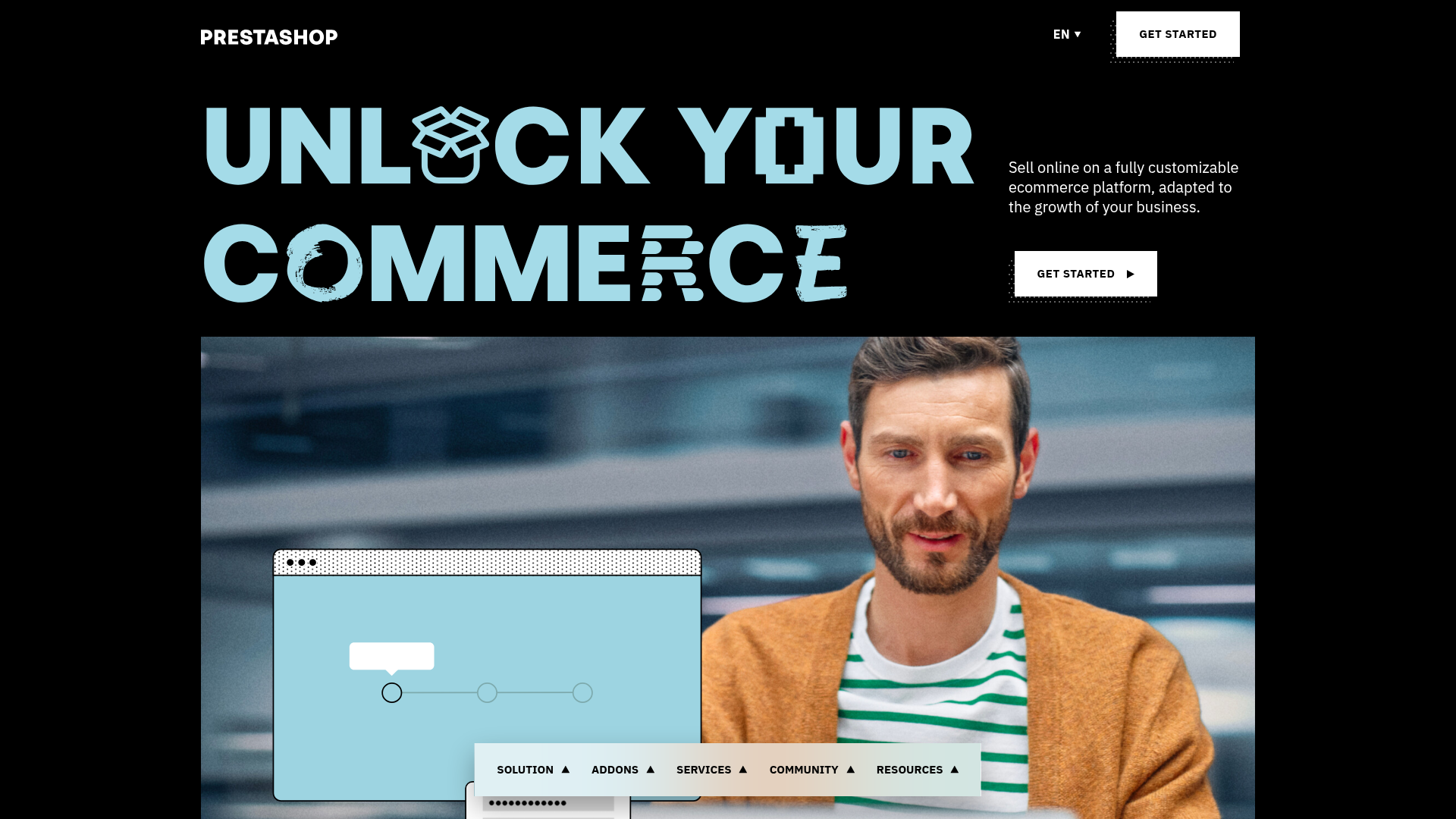
PrestaShop is often mentioned in discussions around web to print open source because it gives businesses a flexible ecommerce core without enterprise licensing. It's especially attractive for smaller print businesses that want control over their storefront.
Best for
Small to mid-size print sellers that need an open storefront foundation.
Strengths
open-source ecommerce base
broad plugin ecosystem
manageable for smaller teams
flexible product and order architecture
Limitations
not print-native
pricing logic for print can become complicated fast
requires custom editor integration
B2B permissioning and approval workflows need extra work
Verdict
PrestaShop can be a practical storefront layer, but it is not the whole answer for print commerce.
3. WooCommerce / WordPress Open Stack
WooCommerce is one of the most common DIY routes for print startups because WordPress is familiar, inexpensive to host, and easy to brand.
Best for
Early-stage brands, local printers, and photobook startups validating demand.
Strengths
low barrier to entry
huge theme ecosystem
easy content marketing and SEO control
supports many add-ons and custom plugins
Limitations
plugin dependency can create fragility
print configurators vary in quality
scaling performance requires care
complex product options can become messy
Verdict
A great launch stack for simple use cases, but many growing brands outgrow it once automation, proofing, and multi-store complexity increase.
4. Magento Open Source / Adobe Commerce Foundation
Magento Open Source remains relevant for teams that need deep catalog complexity, advanced commerce logic, and stronger extensibility than lighter carts.
Best for
Mid-size or enterprise brands with technical resources and more complex product structures.
Strengths
robust commerce architecture
strong support for custom product logic
suited to larger catalogs and multi-store environments
enterprise-grade extensibility
Limitations
higher implementation overhead
expensive development and maintenance
not inherently optimized for print production logic
can be too heavy for lean teams
Verdict
Magento Open Source is powerful, but only if you can support the technical burden.
5. Headless Open Stack with Custom Editor + APIs
In 2026, many modern teams no longer look for a monolithic platform. They assemble a headless architecture using:
open-source commerce
custom canvas or editor experiences
PDF/rendering services
cloud functions
print provider APIs
internal workflow automation
Best for
Digital-first brands building differentiated user experiences.
Strengths
maximum flexibility
better performance control
future-proof architecture
easier to embed across web and mobile surfaces
Limitations
highest complexity
longer time to launch
requires product management discipline
support depends on your own team
Verdict
This is the most modern route for custom experience design, but also the one most likely to turn into a major software program.
6. Marketplace Discovery Platforms for Shortlisting
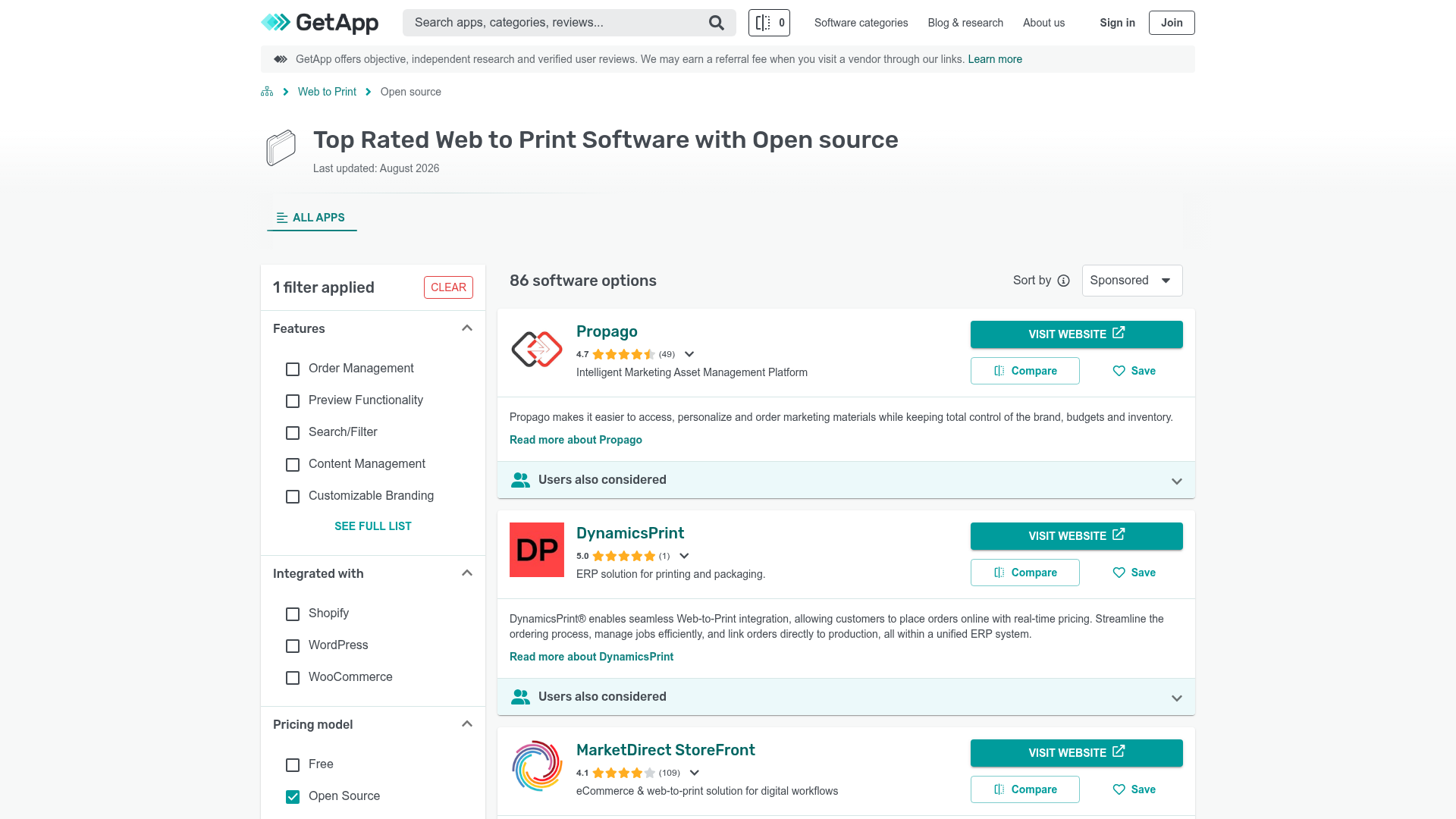
Marketplaces like GetApp can help identify products tagged under open source or related filters, but these lists often mix:
true open-source tools
SaaS products
adjacent print systems
configurable design tools
asset management platforms
Best for
Research and vendor discovery.
Strengths
useful comparison starting point
verified review context
fast way to scan the vendor landscape
Limitations
category labels can be broad
“open source” filters may include hybrid or non-core solutions
not a substitute for architecture evaluation
Verdict
Use directories to build a shortlist, not to make the final decision.
Quick Comparison Table
Option | Best For | Open-Source Level | Time to Launch | Customization | Print-Native Depth |
|---|---|---|---|---|---|
Scribus + custom layer | template/PDF workflows | high | long | very high | medium |
PrestaShop + custom print modules | small print ecommerce | medium-high | medium | high | low-medium |
WooCommerce stack | early-stage brands | medium-high | fast-medium | medium-high | low-medium |
Magento Open Source | complex catalogs | high | long | very high | medium |
Headless open stack | digital-first scaleups | variable | long | maximum | variable |
Media Rex Alliance | AI-first branded print experiences | managed white-label SaaS | fast | high | high |
What Competitor Articles Usually Miss
Most ranking articles in this space tend to repeat the same talking points: cost, customization, and plugin ecosystems. Useful, but incomplete.
Here are the bigger gaps that matter in 2026.
1. Customer friction is the real conversion killer
A lot of legacy web-to-print systems assume the customer wants to use a mini design program. Many do not. They want to say what they need, upload a photo if necessary, confirm the preview, and buy.
This is where Media Rex Alliance changes the equation. Instead of forcing users into a complex editor, the platform lets them create products via conversational AI, turning prompts into print-ready outputs quickly. That reduces abandonment and speeds up decisions.
2. Mobile-first design is no longer optional
Many open stacks still work best on desktop. But new brands increasingly acquire customers on mobile first.
Media Rex Alliance is built as a browser-based, mobile-first experience with no app installation required, making it easier to launch branded flows that match modern user behavior.
3. Visualization quality directly affects confidence
Traditional proofing often relies on flat mockups. That is no longer enough for premium consumer print.

"Shopify reports a 94% higher conversion rate for products with interactive 3D compared to those with static images." - Eyedex
With photorealistic 3D and AR previews, Media Rex Alliance helps shoppers understand exactly what they are buying before checkout, which improves trust and supports premium positioning.
4. Open source rarely solves fulfillment elegantly
Building the storefront is only half the project. Once orders come in, who prints them, where, how fast, and with what quality consistency?
Media Rex Alliance automates this through an on-demand fulfillment pipeline and a global network of premium printers, reducing inventory risk and operating overhead.
5. Cross-device continuity matters more than most vendors admit
Open stacks often ignore session continuity and experience continuity across devices.
Media Rex Alliance supports local and cloud sync, enabling customers to start a project on one device and continue on another without friction.
How to Evaluate an Open-Source Web-to-Print Option
If you are comparing open-source paths seriously, evaluate them against these seven areas.
1. Storefront flexibility
Can you launch branded storefronts fast, or does every change require developer time?
2. Product creation UX
Does the system rely on technical editing behavior, or can normal customers complete orders quickly?
3. Print-ready output
How reliably does the platform generate production-safe files with the right sizes, bleed logic, and assets?
4. Preview experience
Can buyers see realistic outputs before they purchase?
5. Automation depth
Does the platform reduce manual work in routing, proofing, and fulfillment?
6. Scalability
Can it serve a solo photographer, a growing POD brand, and an enterprise print company without replatforming?
7. Time-to-market
How long will it take to go from architecture to revenue?
Open Source vs Managed AI Print Platform
Here is the decision framework most businesses actually need.
Question | Open-Source Route | Managed AI White-Label Route |
|---|---|---|
Do you want full code control? | yes | limited |
Do you have internal developers? | required | helpful, not essential |
Need fast launch? | harder | easier |
Need modern AI creation UX? | custom build required | native capability |
Want photorealistic 3D/AR previews? | custom integration | built-in approach |
Need on-demand fulfillment automation? | custom/vendor setup | built-in network model |
Want white-label branding? | possible with effort | core capability |
Best for experimentation? | strong for technical teams | strong for go-to-market teams |
When Open Source Is the Right Choice
Choose an open-source route if:
you have an experienced technical team
your business needs unusual workflows that off-the-shelf vendors cannot support
you want long-term infrastructure ownership
your launch timeline is flexible
you are prepared for ongoing maintenance
When a White-Label AI Platform Is the Better Business Move
Choose a white-label AI platform like Media Rex Alliance if:
you need to launch faster
you want to remove friction from product creation
your customers are not designers
you want premium 3D or AR previews
you want to reduce inventory through on-demand production
you need fulfillment automation without building vendor orchestration yourself
you want to scale from startup to enterprise without rebuilding the stack
For many modern print businesses, that second path is the more commercial decision. The goal is not to win a software architecture contest. The goal is to increase conversions, reduce manual work, and grow profitably.
Why Media Rex Alliance Fits the 2026 Direction of Print Commerce
Traditional platforms still assume customers must learn the tool. Media Rex Alliance flips that model.
Instead of asking users to navigate complex design controls, it enables them to describe the product they want in natural language. The system turns prompts into ready-to-print products, supports photo uploads, generates layouts automatically, and shows the result in high-confidence visual formats.
What makes it different
conversational AI product creation instead of editor-heavy workflows
fully white-label deployment inside existing storefronts or apps
photorealistic 3D and immersive AR previews
mobile-first, browser-based access with no app install
local and cloud sync for seamless multi-device continuation
on-demand production model that lowers inventory and overhead
automated fulfillment across a global premium print network
scalable infrastructure for startups, regional brands, and enterprise print companies
A Practical Decision Framework for 2026
Use this simple guide:
Choose open source if you are optimizing for:
infrastructure ownership
technical freedom
custom workflow experimentation
long-term architectural control
Choose Media Rex Alliance if you are optimizing for:
speed to market
conversion-focused UX
customer simplicity
scalable white-label deployment
automated print fulfillment
premium visualization and mobile experience
Final Verdict
The search for the best open source web to print solution in 2026 often leads to an important realization: there are useful open-source components, but very few complete open-source platforms that solve the entire print commerce journey well.
If you have the team, budget, and patience to assemble your own stack, options like Scribus, PrestaShop, WooCommerce, Magento Open Source, or a headless custom architecture can work. But they usually require significant effort to bridge the gaps between storefront, creation, proofing, automation, and fulfillment.
If your goal is to launch a branded, scalable, AI-powered print experience without building the whole engine from scratch, Media Rex Alliance is the stronger strategic move. It gives print businesses a faster path to market, a more intuitive customer journey, premium 3D and AR previews, and automated on-demand fulfillment that aligns with where the industry is heading.
For print brands that want to modernize, reduce friction, and convert more customers in 2026, that is not just a software upgrade. It is a business model upgrade.
Ready to Modernize Your Print Experience?
Media Rex Alliance helps print businesses, photo product brands, studios, photographers, and POD companies launch white-label AI-powered print commerce without the complexity of building everything internally.
If you want to replace slow design workflows with conversational creation, add photorealistic previews, reduce stock risk through on-demand production, and scale across devices and regions, Media Rex Alliance is built for that future.
FAQ
What is the best website for print on demand?
The best option depends on your goals, but for brands that want white-label control, AI-powered product creation, premium 3D/AR previews, and automated fulfillment, a platform like Media Rex Alliance offers a stronger long-term path than generic marketplaces. It is especially well suited to print businesses that want to own the customer relationship and scale a branded experience.
Is there an open source printer?
There are open-source tools and components used in print workflows, but there are very few truly complete open-source web-to-print platforms. Most businesses end up combining open-source storefronts, layout tools, and custom automation to build a usable system.
What is the best free printing software for Windows 11?
For layout and print design, Scribus is one of the most established free options on Windows 11. However, if you need a full web-to-print business workflow with ecommerce, automation, previews, and fulfillment, free desktop software alone will not cover the whole process.