Web to Print Software: Best Solutions for 2026
If you are comparing web to print software in 2026, you are probably facing one of three problems:
Your current ordering flow is too manual.
Your design experience is too complex for end customers.
Your storefront is not converting as well as it should.
That is the real divide in the market now. Basic tools can help customers upload a file. Stronger platforms can help them personalize products. But the most competitive web to print solution platforms now go much further: they reduce friction, automate production, support mobile-first buying, and turn vague customer intent into print-ready products fast.
For small studios, photographers, new print-on-demand brands, regional printers, and established photo book companies, that shift matters. Buyers no longer want to wrestle with complicated editors, wait for email proofs, or guess what a finished product will look like. They want speed, confidence, and simplicity.
This is where the next generation of web to print design software stands apart. The best systems do not just let users design. They help users decide, preview, order, and buy with less effort.
At Media Rex Alliance, we see 2026 as the year web-to-print moves beyond templates and into autonomous creation: conversational AI, white-label storefront deployment, photorealistic 3D and AR previews, cloud-synced browser experiences, and automated on-demand fulfillment at scale.
"The global POD market was valued at approximately $10.78 billion in 2025 and is projected to reach $57.49 billion by 2033." - Grand View Research
What Web to Print Software Actually Means in 2026
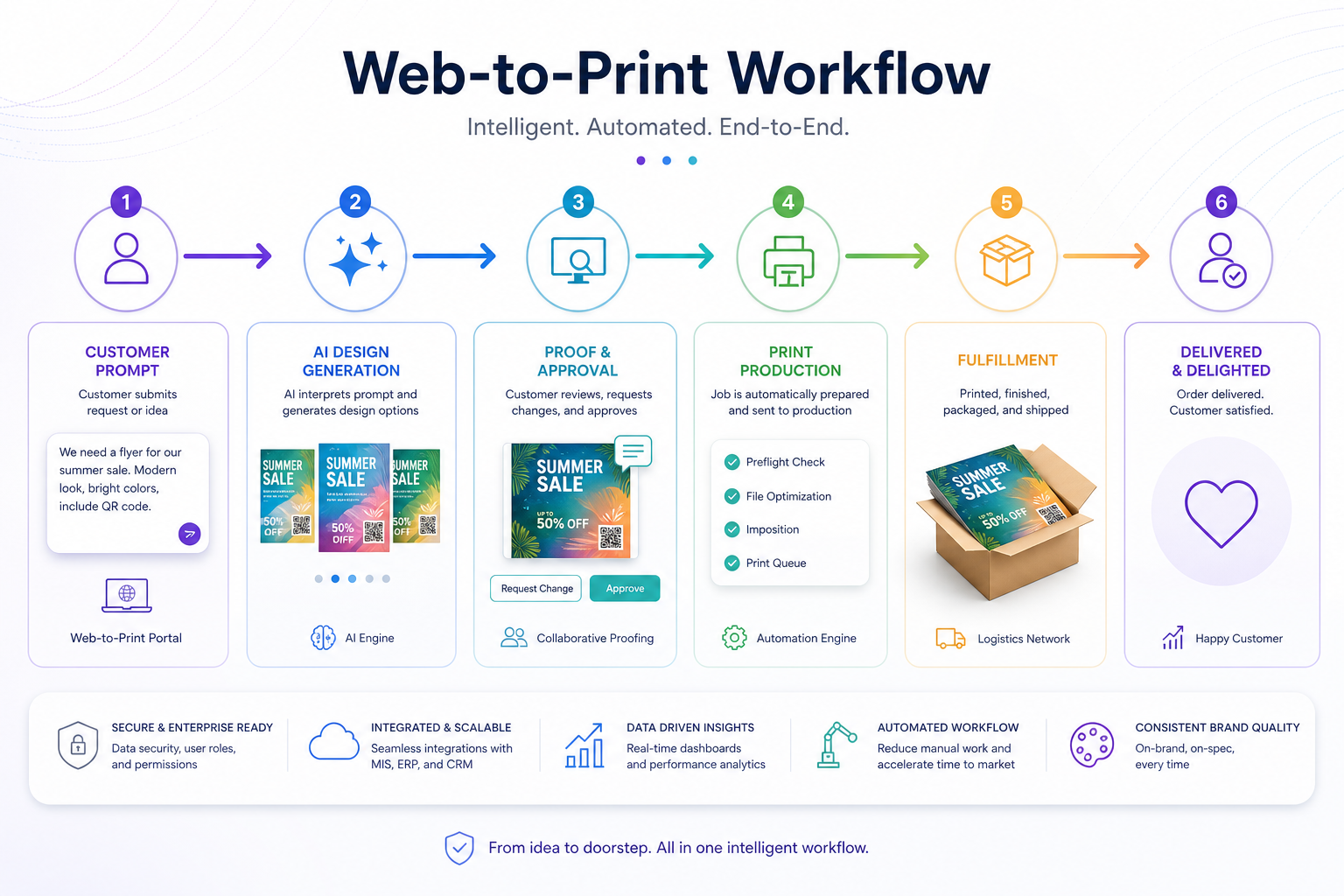
At its core, web to print software enables customers to create, customize, approve, and order printed products online. That includes business cards, books, photo products, wall art, packaging, labels, promotional goods, and more.
But in 2026, the definition has expanded.
A serious web to print website is no longer just an online catalog with upload buttons. It typically includes:
product personalization
browser-based editing
dynamic pricing
quote generation
order routing
proofing and approvals
print-ready output automation
payment and checkout
fulfillment integration
customer account and reordering capabilities
The best platforms now also layer in:
conversational AI product creation
mobile-first editing without app installation
photorealistic 3D previews
AR visualization before purchase
cloud and local project sync
white-label deployment into existing storefronts
automated production via distributed print networks
That evolution matters because customers do not compare your buying flow only to other printers anymore. They compare it to every smooth eCommerce experience they use.
What Competitor Pages Get Right - and What They Miss
Across leading comparison and directory pages, the same themes appear again and again:
online design studio
storefront creation
order management
approval workflows
integrations
quotes and estimates
templates
multi-store support
Those are important. But they are now baseline features.
The bigger content gap in most ranking pages is that they treat web-to-print as a software category, not as a conversion system. They rarely explain:
how to reduce design friction for non-designers
why mobile-first creation changes conversion rates
how AI changes product creation speed
why 3D and AR previews matter before checkout
how white-label deployment reduces time to market
how on-demand fulfillment affects margins and inventory risk
what separates “free” tools from scalable production infrastructure
That is the difference between software shoppers and growth-minded operators. The latter need more than feature lists. They need to know what will help them sell more, automate more, and launch faster.
The Best Web to Print Software for 2026: What “Best” Really Looks Like
The best platform depends on your business model, but there are clear evaluation standards now.
Core Evaluation Criteria
Criteria | Why It Matters in 2026 |
|---|---|
Ease of creation | Customers abandon complicated design workflows |
Mobile-first UX | More customization journeys now begin on mobile |
White-label flexibility | Brands want full control over domain, design, and user experience |
AI-assisted creation | Faster path from idea to print-ready output |
Visual confidence | 3D/AR previews reduce hesitation and returns |
Workflow automation | Manual proofing and handoffs kill margin |
Integration depth | Commerce, payments, CRM, and fulfillment need to connect |
Scalability | You need software that works for 100 orders and 100,000 |
Print-readiness | Beautiful front-end UX means little without production accuracy |
Fulfillment model | On-demand automation reduces stock, waste, and overhead |
What Leading Platforms Typically Offer
Below is a practical view of major platform types in the market.
Platform Type | Best For | Strengths | Trade-Offs |
|---|---|---|---|
Template-based W2P systems | Traditional print shops | Familiar workflows, order intake, estimates | Often clunky for non-designers |
eCommerce customizer plugins | Small shops, Shopify sellers | Easy setup, fast launch | Limited workflow depth |
Enterprise brand portals | Multi-location brands | Governance, approvals, brand control | Slower setup, higher complexity |
Print MIS + storefront suites | Large print operations | Strong back-office control | Front-end customer UX may lag |
AI-native white-label platforms | Growth-focused modern print brands | Low-friction creation, better conversion, modern UX | Requires a strategic modernization mindset |
The Must-Have Features in Modern Web to Print Design Software
To compete in 2026, your web to print software should do more than check category boxes. It should remove friction across the full path from product discovery to delivery.
1. Conversational Product Creation
This is the biggest shift underway.
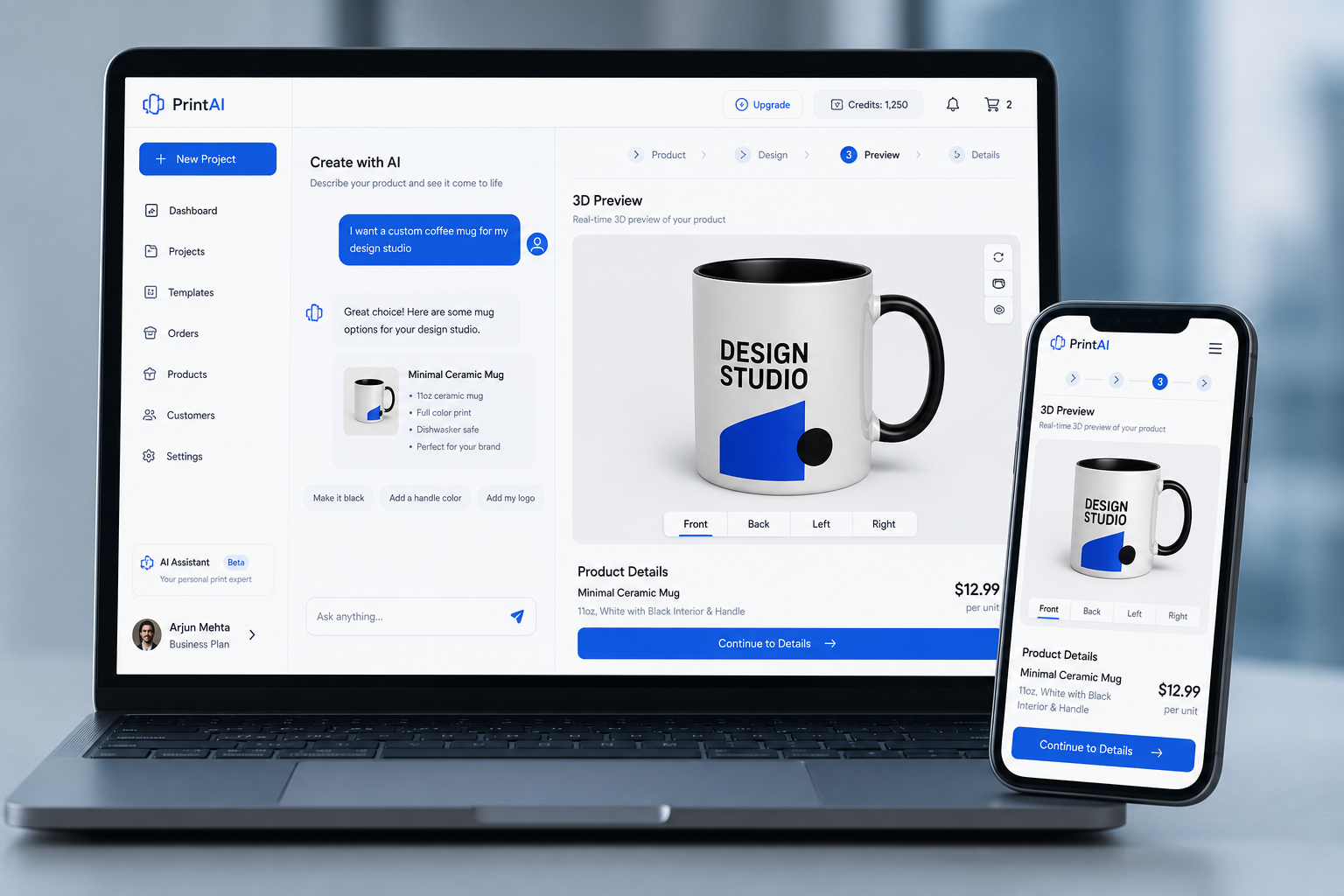
Instead of forcing a user into a complex editor full of layers, bleed lines, and toolbars, conversational creation lets them describe what they want in natural language. The system then generates layouts, compositions, or print-ready product concepts from that prompt.
For example:
“Create a premium linen photo book from our wedding trip.”
“Make a minimalist poster set from these travel images.”
“Turn these family photos into a hardcover keepsake album.”
This approach is especially powerful for:
photo book companies
gifting brands
photographers
DTC print brands
consumers with no design skills
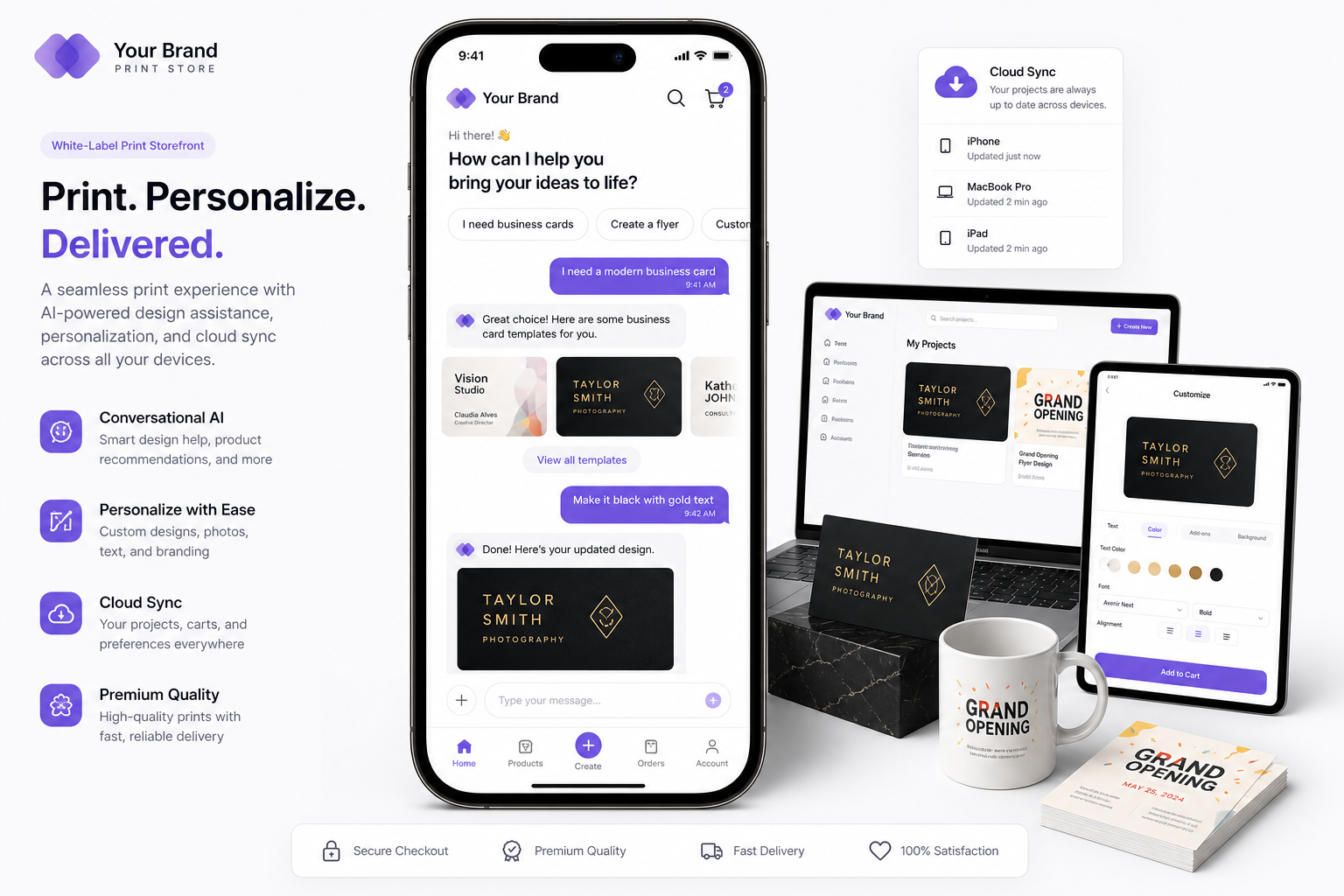
Media Rex Alliance is built around this model. Its autonomous creation engine turns prompts into premium physical products quickly, reducing effort and shortening the path to purchase.
2. Browser-Based, Mobile-First Design
Your customers do not want another app.
A strong web to print solution should run in the browser, work beautifully on mobile, and support fast editing across devices. Mobile-first matters not just for convenience but for conversion. A large share of discovery and product exploration now starts on phones.
Media Rex Alliance supports a browser-based, no-install workflow with seamless local and cloud project sync, making it easier for users to start on one device and finish on another.
3. Photorealistic 3D and AR Previews
Confidence sells.
A flat preview is often not enough for premium print products. Customers want to see what the final product will actually feel like in context. That is especially true for photo books, wall art, packaging, and personalized gifts.
3D and AR previews help customers:
understand scale
inspect finishes
verify layouts
feel more confident before paying
"94% of merchants observed a conversion lift after integrating 3D and AR experiences." - Ocavu
4. White-Label Integration
If you are an established brand, you do not want to send customers to a third-party environment. You want the product creation flow embedded into your own storefront, app, or digital ecosystem.
That means your platform should support:
your domain
your branding
your UX standards
your checkout flow
your customer data environment
Media Rex Alliance is designed for fully white-label deployment, helping businesses launch branded, scalable print experiences without building the technology from scratch.
5. Print-Ready Output Automation
Design is only half the equation. Output accuracy is where profit lives.
The best platforms automate:
bleed and trim handling
layout generation
image placement
file normalization
proof generation
output packaging for production
Without this layer, teams still end up fixing files manually.
6. On-Demand Fulfillment and Production Routing
A modern system should not stop at checkout. It should drive downstream efficiency.
That includes:
job routing
print partner matching
production automation
shipping integration
status updates
returns and exception handling
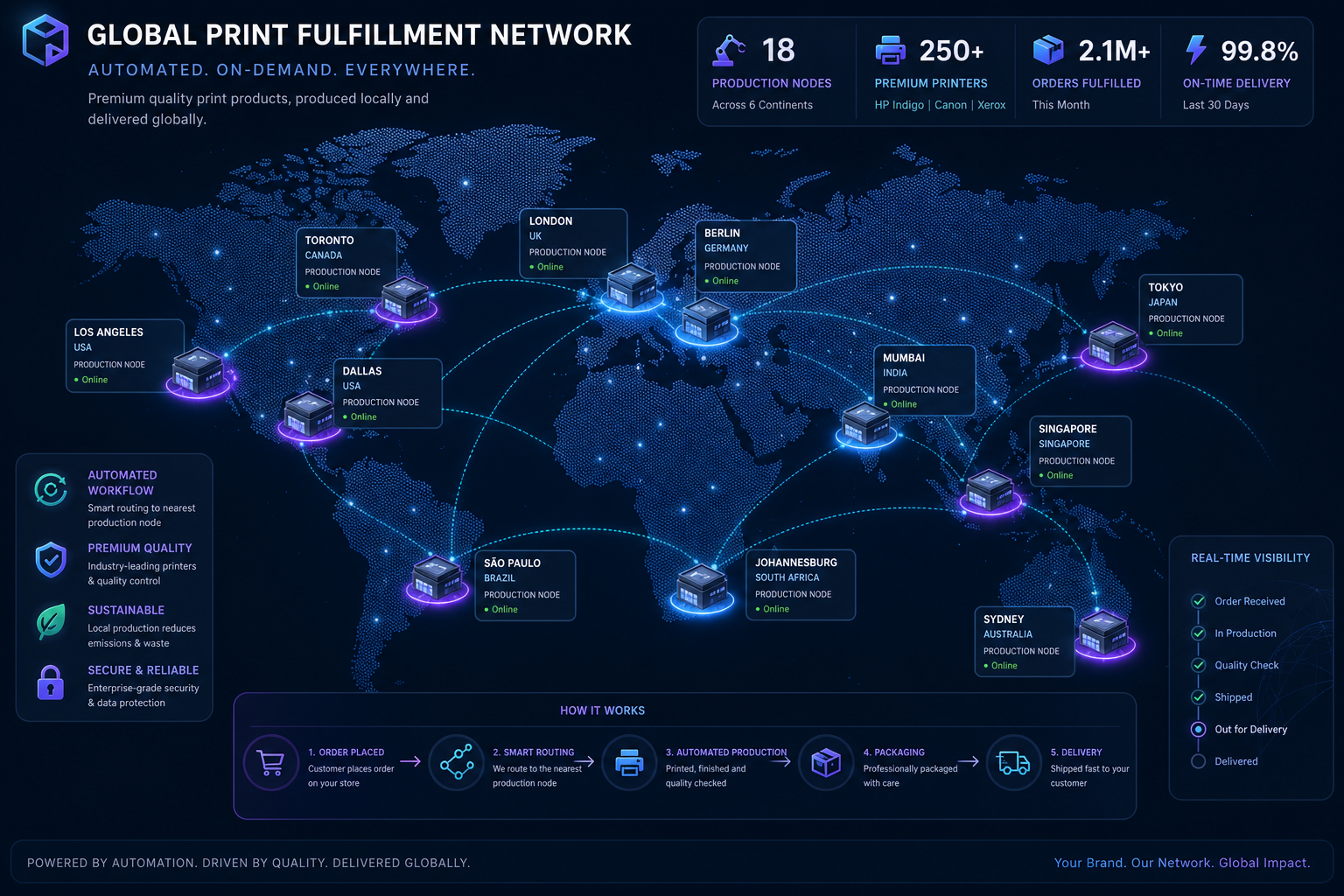
Media Rex Alliance supports an on-demand, low-overhead operating model powered by a global network of premium printers, helping brands reduce inventory burden and operational drag.
Best Solutions for 2026: Platform Types and Use Cases
This section is where many articles stay too generic. The real question is not just “What tools exist?” but “Which type of solution fits which business?”
Small Studios and Independent Photographers
These businesses usually need:
simple product setup
premium visual presentation
fast customer ordering
minimal operational overhead
They often do not need giant enterprise suites. But they do need a polished buying experience that makes custom product ordering feel premium instead of technical.
Best fit:
lightweight but scalable white-label platforms
AI-guided product creation
automated fulfillment
mobile-first browser tools
New Print-on-Demand Brands
POD startups typically care most about:
speed to launch
low overhead
no stock
product flexibility
easy storefront integration
They should prioritize platforms that support:
white-label storefront embedding
design automation
premium previews
global print fulfillment
catalog scalability
Mid-Size Regional Print Players
These companies often have sales and production capabilities already, but their digital experience lags behind. Their problems are usually:
manual quoting
outdated editors
email-heavy proofing
poor mobile experience
fragmented production workflows
Best fit:
stronger workflow automation
multistore or B2B portal capabilities
AI-assisted creation
integrated production routing
white-label customer experiences
Established Photo Book Companies
This segment faces a unique challenge: customers want emotionally rich, premium products, but traditional design flows are often too slow and demanding.
The strongest solution here is one that:
simplifies the creation journey
auto-generates layouts from prompts and uploads
offers premium 3D previews
supports mobile-first editing
keeps the brand front and center
This is one of the clearest use cases for Media Rex Alliance.
Comparing Popular Web to Print Software Options in the Market
The market includes broad SaaS directories, classic print storefront platforms, and newer AI-forward providers.
Snapshot of the Category
Solution Category | Typical Examples in Market | Best For | Main Limitation |
|---|---|---|---|
Legacy storefront suites | Traditional web-to-print vendors | Mature print organizations | Older UX, more friction |
Plugin-led customization tools | Shopify/WordPress-oriented tools | Smaller online sellers | Limited production depth |
Brand management portals | Enterprise marketing teams | Governance-heavy environments | May feel rigid for consumer buying |
AI-powered white-label platforms | New-generation providers like Media Rex Alliance | Scalable, conversion-focused print experiences | Best value emerges when modernization is a priority |
Market Screens Worth Reviewing
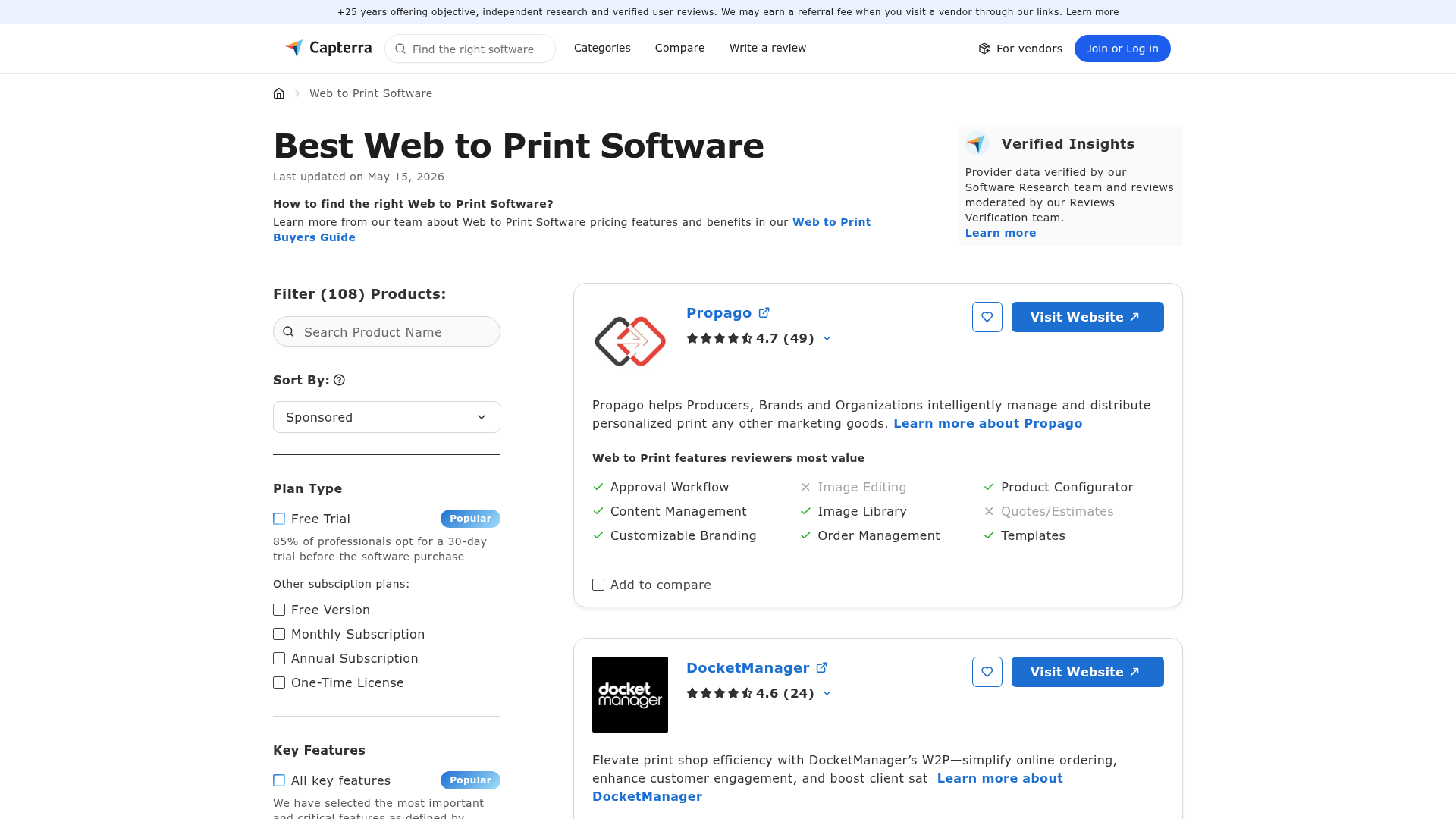
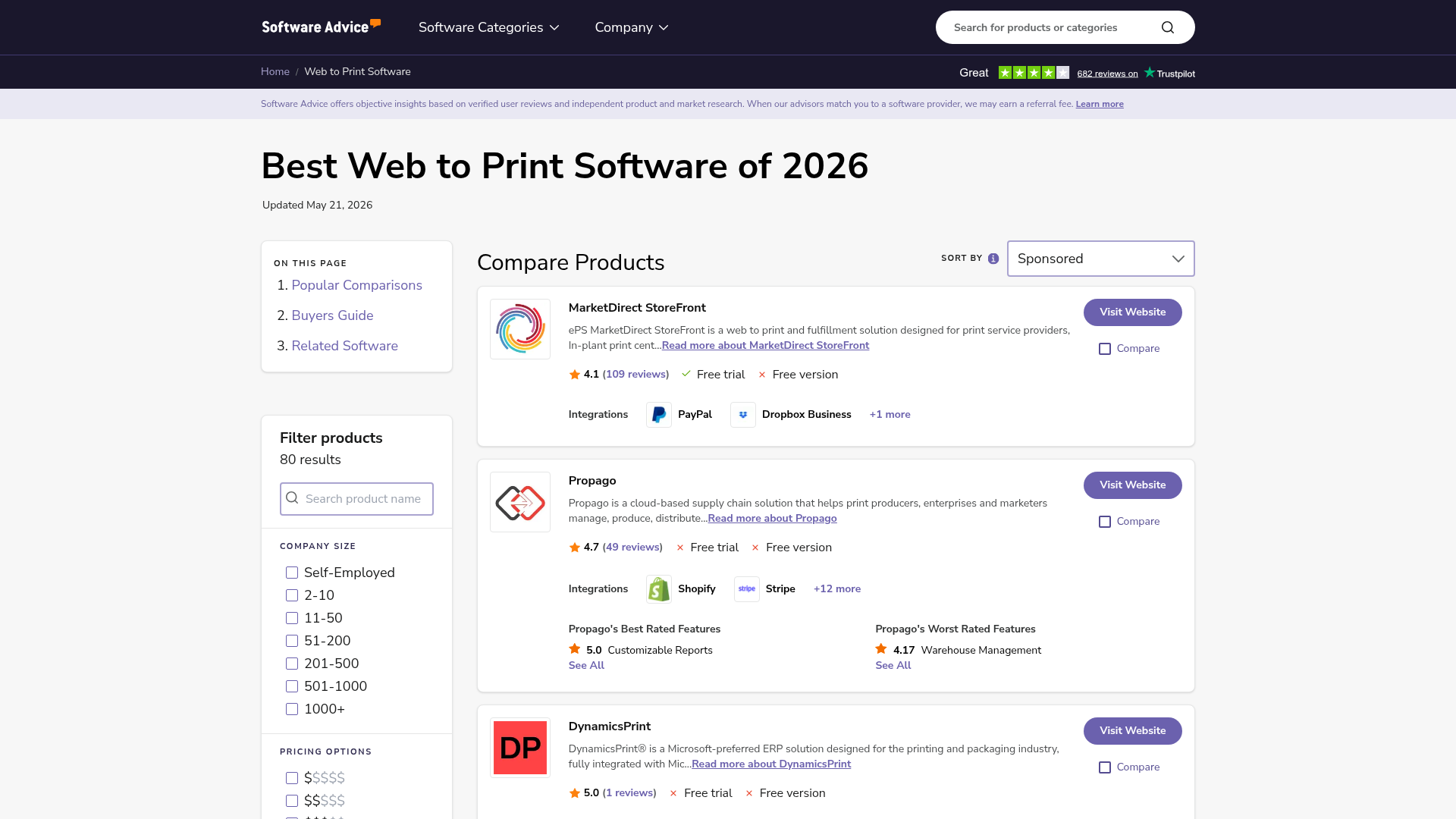
Capterra Web to Print Category
Software Advice Web to Print Category
OnPrintShop Website
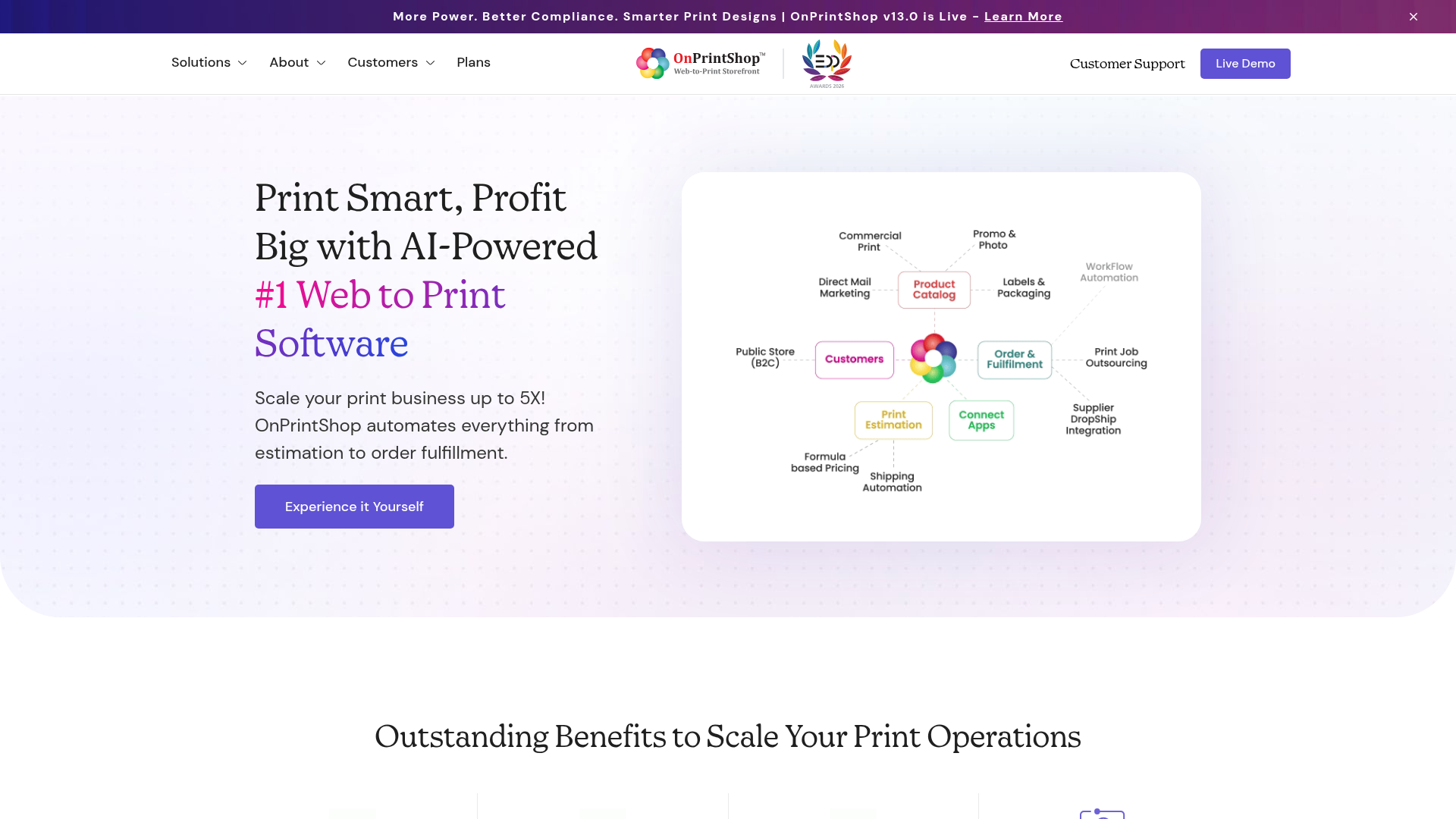
These category pages are useful for initial comparison, but they rarely tell you how a platform changes customer behavior. That is where hands-on product evaluation and strategic fit matter more than directory placement alone.
Web to Print Software Free: What You Can Expect - and What You Usually Cannot
A lot of search demand comes from “web to print software free.” That makes sense, especially for startups and smaller businesses. But this topic needs a reality check.
What Free or Entry-Level Tools Usually Include
basic template editing
simple product configuration
limited file upload support
standard storefront widgets
minimal user seats
restricted storage or exports
What They Usually Do Not Include
advanced workflow automation
enterprise integrations
white-label deployment
true production-ready output control
multistore or B2B support
high-end 3D/AR previews
conversational AI creation
robust print network fulfillment
In other words, “free” can be a useful sandbox. It is rarely a long-term growth engine.
If you are validating demand or testing a niche, a free entry point may help. But if you want a serious web to print website that increases conversions, supports premium customer experiences, and scales operationally, you will almost certainly need something more capable.
What Separates a Great Web to Print Website from a Basic One
A basic site lets people place an order.
A great site helps them complete an order faster, with more confidence, and less support intervention.
Basic Web to Print Website
static product pages
upload-your-file flow
limited customization
weak previews
generic checkout
manual downstream handling
High-Performance Web to Print Website
guided product selection
intelligent personalization
mobile-first experience
instant visual feedback
3D/AR product confidence
automated proofing and file generation
integrated fulfillment and tracking
branded end-to-end UX
This is exactly why Media Rex Alliance is positioned differently from generic design tools. It is not just about giving users an editor. It is about helping them create and buy premium print products faster through AI, immersive previews, and automated infrastructure.
Key Questions to Ask Before Choosing a Web to Print Solution
Before signing with any vendor, ask these questions.
Customer Experience Questions
Can a non-designer complete an order without support?
Is the experience truly usable on mobile?
How quickly can a customer go from idea to preview?
Do previews feel trustworthy enough to support premium pricing?
Technical Questions
Is it browser-based, or does it require installation?
Can it integrate into our existing storefront or app?
Does it support white-label branding and custom domains?
How are assets, projects, and sessions synced across devices?
Operational Questions
What still has to be handled manually by our team?
How are print-ready files generated and validated?
Can the system route jobs automatically to fulfillment partners?
How well does it scale for seasonal spikes or catalog growth?
Commercial Questions
Does this platform reduce abandonment?
Does it increase order value through better visualization?
Does it lower support and prepress workload?
Can it help us expand into new product lines without adding operational drag?
2026 Trends Reshaping Web to Print Software
The category is moving fast. These are the trends that matter most.
Conversational Interfaces Replace Tool-Heavy Editors
The future is intent-driven, not toolbar-driven. Customers increasingly expect to describe what they want instead of building it from scratch.
Premium Visualization Becomes Standard
3D and AR will continue shifting from differentiator to expectation in premium product categories.
White-Label Beats Marketplace Dependence
Brands want owned demand, owned customer experience, and owned data. Embedded white-label infrastructure supports that.
Browser-Based Mobile Workflows Win
No-download experiences reduce drop-off and align better with how modern buyers behave.
On-Demand Infrastructure Improves Margin Control
Less stock, less waste, less overhead, and more product experimentation without operational bloat.
AI-Native Platforms Overtake Patchwork Stacks
Instead of stitching together storefront plugins, separate editors, approval tools, and fulfillment systems, businesses are increasingly looking for unified, AI-capable stacks.
Why Media Rex Alliance Is Built for the Next Era of Web to Print
Most platforms in the category help users customize.
Media Rex Alliance helps customers create.
That distinction is strategically important. It changes the entire buying journey.
What Makes Media Rex Alliance Different
Conversational AI creation: customers create products through natural language instead of complex design tools
Prompt-to-product speed: prompts become print-ready products quickly, reducing friction and accelerating purchase decisions
Fully white-label deployment: integrates directly into existing storefronts or apps under your brand
Photorealistic 3D and AR previews: improves confidence before checkout
Mobile-first browser experience: no app installation required
Cross-device continuity: syncs locally and in the cloud for seamless use across devices
On-demand operating model: reduces inventory and overhead
Automated global fulfillment: leverages a premium printer network for scale and quality
Flexible scalability: works for startups, studios, photo brands, and enterprise print companies
Why That Matters Commercially
For growing print businesses, every extra click, confusing screen, or manual prepress step adds cost and reduces conversion. Media Rex Alliance is designed to reduce all three:
customer effort
internal handling
time to revenue
It is not just a modern front end. It is a growth infrastructure layer for AI-driven print commerce.
Final Verdict
The best web to print software for 2026 is no longer the one with the longest feature checklist. It is the one that creates the least friction between customer intent and completed order.
That means the winning platforms must combine:
intuitive creation
strong mobile UX
reliable production automation
premium previews
white-label flexibility
scalable fulfillment
If you are only looking for a basic editor or a simple upload flow, entry-level tools may be enough for now. But if you want a serious web to print solution that modernizes your storefront, improves conversion, supports premium product experiences, and scales efficiently, you need more than legacy web-to-print infrastructure.
You need AI-native commerce for print.
Media Rex Alliance is built for exactly that future: a white-label AI print platform that transforms prompts into premium physical products, delivers immersive 3D and AR buying confidence, automates fulfillment through a global print network, and gives print businesses a faster path to launch, scale, and win.
If your goal for 2026 is to launch a branded, high-converting, future-ready web to print website without building the stack from scratch, Media Rex Alliance is the solution to evaluate first.