Web to Print Store Trends Shaping Ecommerce
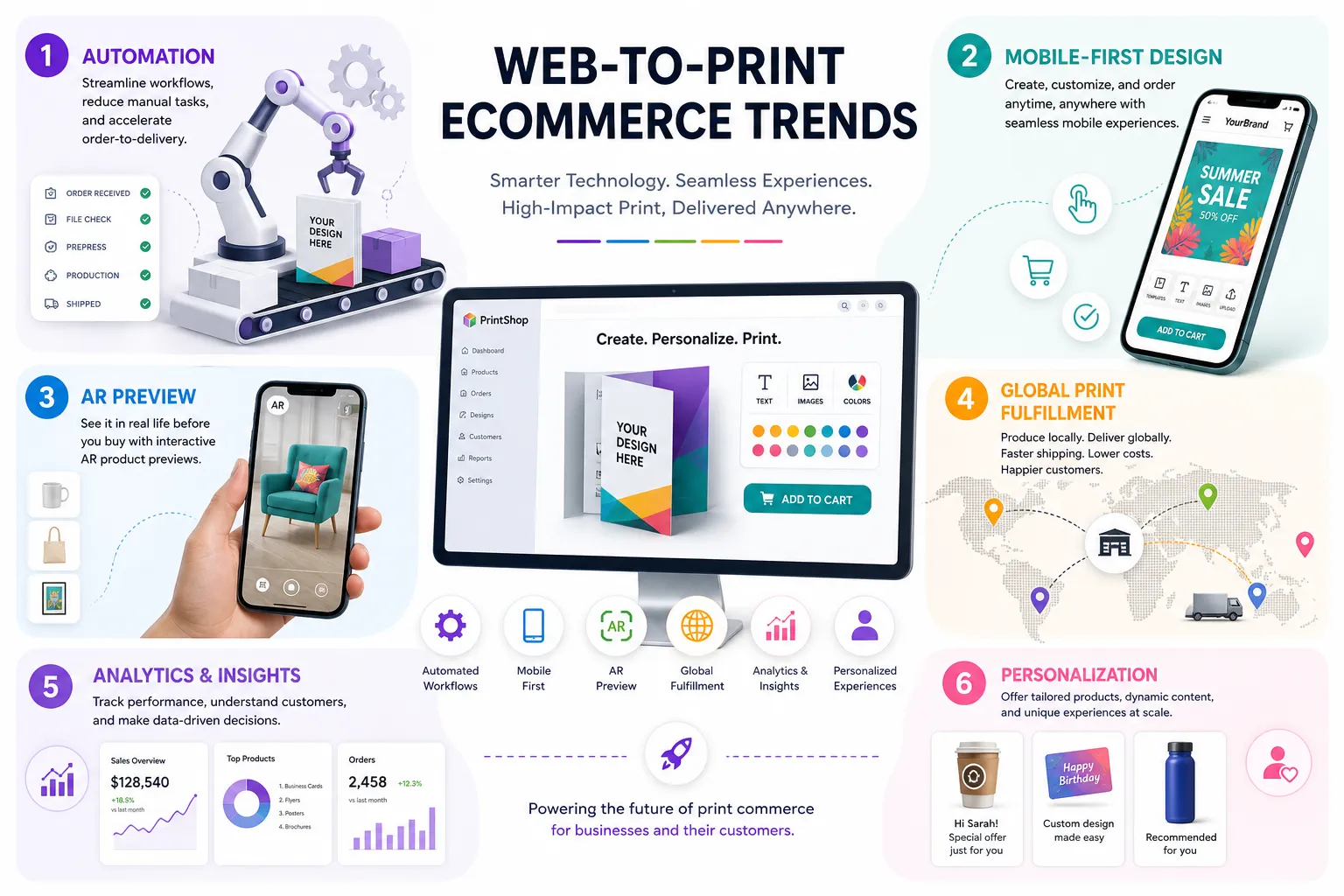
The modern web to print ecommerce landscape is no longer defined by templates, static product pages, or clunky design editors. In 2026, the winning web to print store is fast, mobile-first, AI-assisted, visually immersive, and deeply integrated into the full ecommerce journey.
For print studios, photo businesses, regional print players, and growing print-on-demand brands, the challenge is no longer whether to sell online. The real question is this: what kind of web to print storefront will actually convert today’s customer?
Buyers expect instant personalization, intuitive creation flows, realistic previews, transparent fulfillment, and a checkout experience that feels as smooth as any modern SaaS product. If your storefront still relies on traditional design complexity, manual proofs, or fragmented fulfillment, you are creating friction where competitors are creating momentum.
Media Rex Alliance sees the next phase of web-to-print as a shift from “design tools” to AI-powered product creation experiences. Instead of forcing customers to learn software, leading brands are enabling them to describe what they want in natural language, preview it in 3D or AR, and order on demand through a fully branded experience.
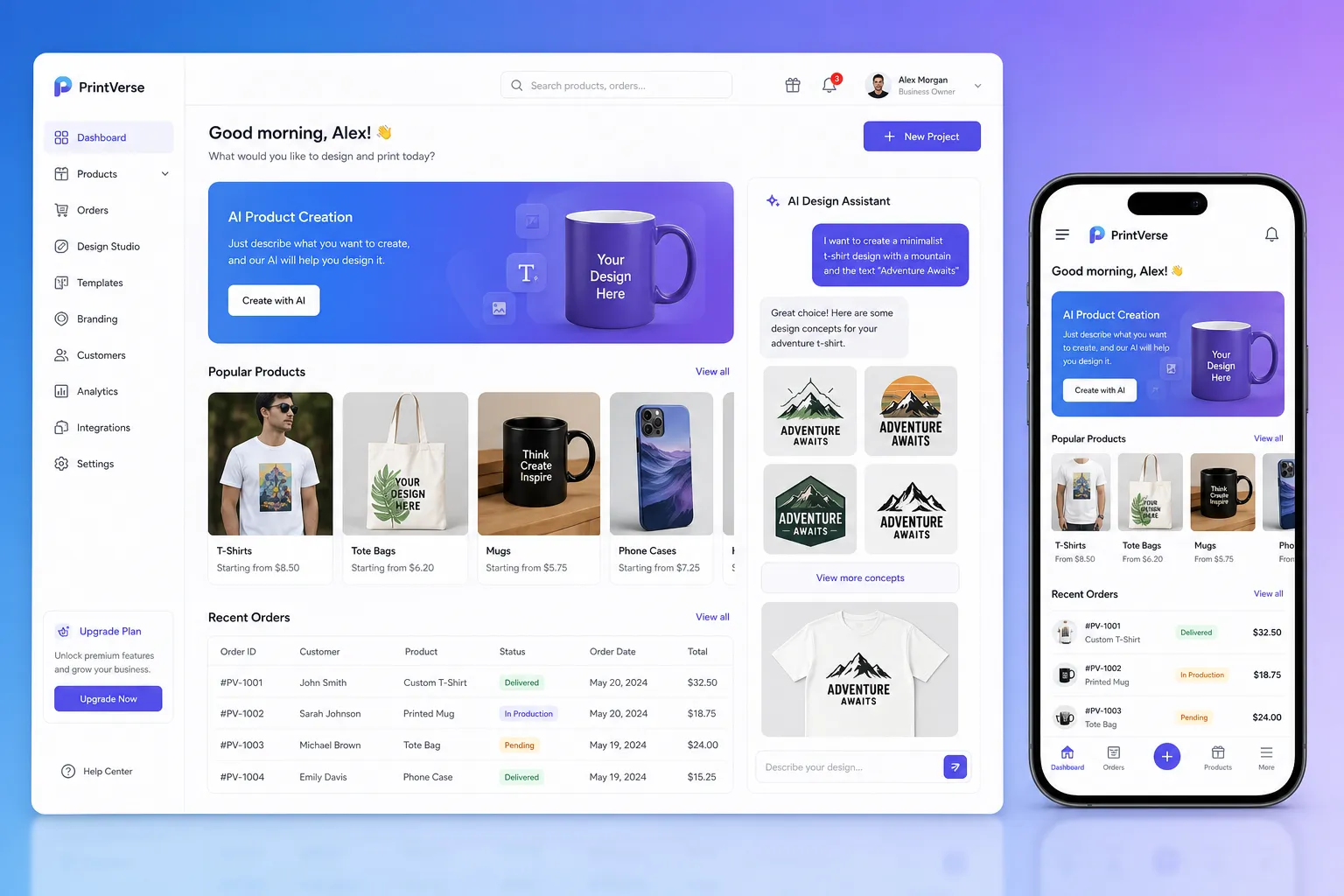
What the Top Competitors Get Right - And What They Miss
A close synthesis of leading competitor content shows strong agreement on a few core themes:
web-to-print is growing steadily
automation is replacing manual print workflows
personalization is driving demand
cloud and ecommerce integrations matter more than ever
AI is starting to influence design and order processing
mobile commerce is reshaping online buying behavior
That foundation is valid. But most top-ranking articles still stop short in key areas.
The biggest content gaps in current web to print coverage
Most competitor articles gloss over or completely miss:
Content Gap | Why It Matters in 2026 |
|---|---|
Conversational AI product creation | Customers increasingly want to create from prompts, not complex editors |
Frictionless mobile-first design | Most storefronts are still designed desktop-first despite mobile buying behavior |
3D and AR purchase confidence | Preview quality now directly affects conversion and return reduction |
White-label AI deployment | Many print brands want modern capability without building proprietary tech |
Cross-device continuity | Shoppers start on mobile and finish elsewhere; continuity is now expected |
On-demand global fulfillment as a storefront feature | Fulfillment speed and geographic reach now influence storefront strategy |
SaaS-style UX for print commerce | Buyers compare print experiences to Shopify-grade and app-grade flows |
This is where the market is actually moving. The future of web to print ecommerce belongs to storefronts that feel less like legacy print portals and more like intelligent commerce platforms.
"Mordor Intelligence forecasts the market size to increase from USD 26.59 billion in 2025 to USD 36.38 billion by 2031, representing a compound annual growth rate (CAGR) of 5.43% during the 2026-2031 period." - Mordor Intelligence
Why the Web to Print Storefront Matters More Than Ever
A web to print storefront is no longer just a digital catalog with upload buttons. It is your sales engine, proofing layer, conversion environment, and customer experience platform all at once.
A storefront now decides conversion, not just convenience
In earlier web-to-print models, the storefront mainly digitized ordering. Today, it influences:
whether customers start a project at all
how quickly they reach a purchasable design
how confident they feel before checkout
whether they return for repeat orders
how efficiently your business fulfills at scale
That means storefront quality affects both top-line revenue and backend operational efficiency.
Customers expect creation, not configuration
Traditional print stores often ask buyers to:
choose sizes
upload assets manually
align elements in editors
request proofs
wait for approval cycles
Modern users increasingly expect the opposite. They want to describe the outcome, upload a few photos, review an intelligent layout, and purchase with confidence. This shift is especially important for photographers, studios, photo book brands, and personalized product sellers.
Media Rex Alliance is built around this exact change. Its white-label AI print platform lets customers create products through conversational AI, turning prompts into print-ready products quickly without forcing them through complex design workflows.
The 10 Web to Print Store Trends Shaping Ecommerce in 2026
1. Conversational AI Is Replacing Traditional Design Friction
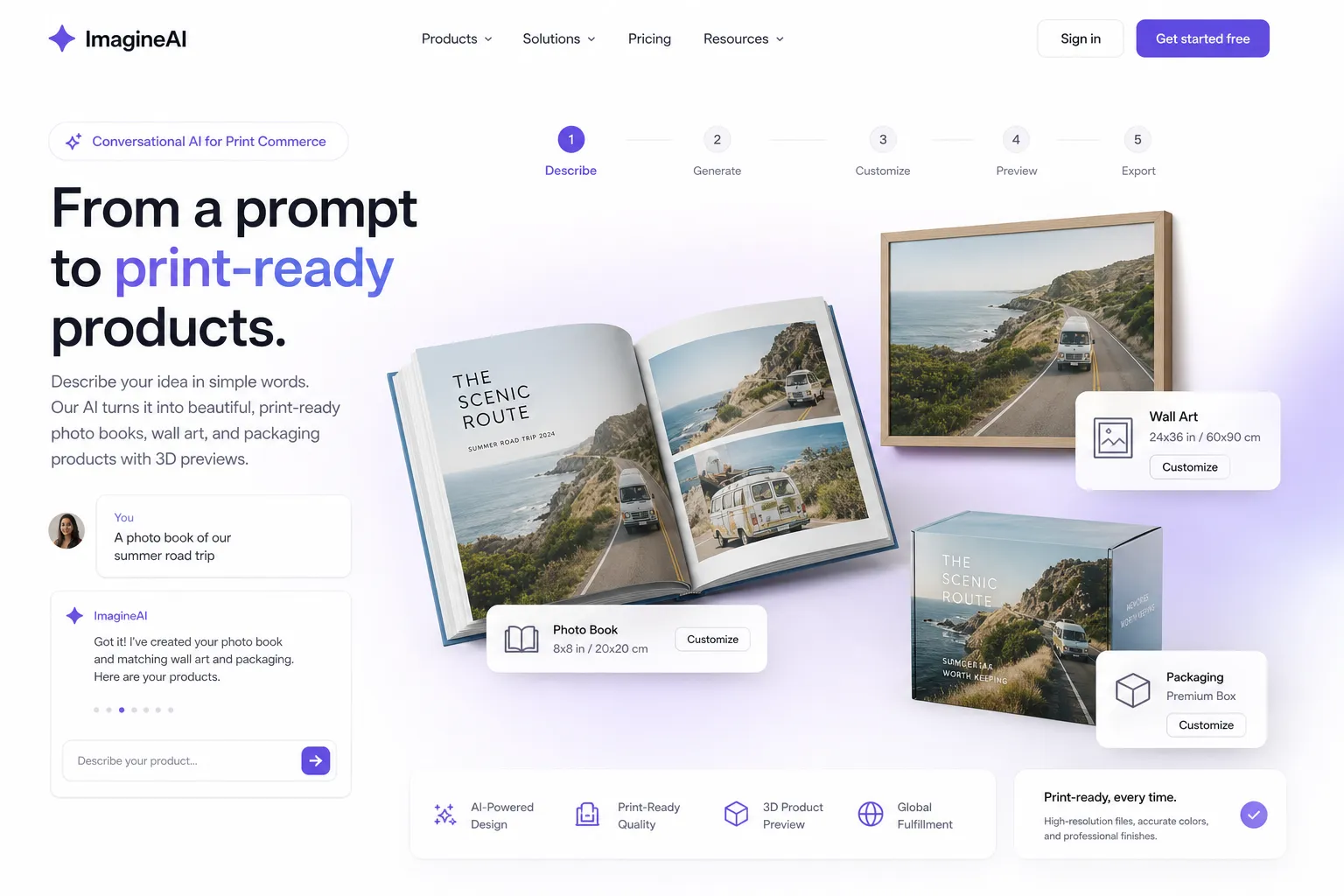
The most important shift in the modern web to print store is the movement from manual design to prompt-based creation.
Instead of asking customers to learn layers, bleed settings, and composition tools, leading platforms now let them say things like:
“Make a luxury wedding photo book with a minimalist black cover”
“Turn these travel photos into a premium landscape album”
“Create a modern wall art print set for a nursery”
The system then generates layouts, organizes images, and prepares a print-ready concept.
Why this trend matters
Conversational AI:
reduces decision fatigue
shortens time to product creation
helps non-designers complete purchases
increases conversion on personalized products
makes premium customization accessible at scale
For growing print brands, this is a major competitive advantage. Media Rex Alliance specializes in this model by enabling natural-language product creation inside an existing branded storefront.
2. Mobile-First Is No Longer Optional
Many print businesses still treat mobile as a simplified version of desktop. That mindset is now outdated.
A successful web to print storefront in 2026 must be mobile-first from the ground up:
browser-based, no download required
touch-friendly creation flows
fast previews
simplified onboarding
one-handed navigation and checkout
"As of 2025, mobile commerce accounts for approximately 59% of global e-commerce sales, generating around $2.51 trillion in revenue." - Soax
What mobile-first really means for print
A true mobile-first print experience includes:
Feature | Why It Matters |
|---|---|
No-app browser access | Reduces drop-off and speeds entry |
Smart photo upload flows | Most personalized products start with phone photos |
Lightweight rendering | Mobile users abandon slow experiences quickly |
Tap-optimized editing and review | Precision tools built for desktop hurt mobile conversion |
Saved progress across devices | Users often begin on mobile and finish later |
Media Rex Alliance is built specifically for this behavior, supporting browser-based, no-install design experiences with local and cloud project sync across devices.
3. 3D and AR Previews Are Becoming Conversion Infrastructure
Customers buy personalized print with more confidence when they can actually see what they are getting.
Static thumbnails and flat mockups are no longer enough for premium ecommerce. The leading web to print ecommerce experiences now include photorealistic 3D previews and, increasingly, immersive AR.
Why visual confidence matters
When customers can inspect a product realistically before purchasing, they are more likely to:
complete checkout
trust premium pricing
reduce revision requests
feel confident about product quality
order customized products without hesitation
Media Rex Alliance supports photorealistic 3D and AR previews as part of its storefront-ready creation flow, helping businesses improve conversion without adding operational complexity.
4. White-Label AI Platforms Are Winning Over Custom Builds
For many print businesses, the strategic goal is not to invent new core technology. It is to launch a stronger storefront faster under their own brand.
That is why white-label deployment is becoming one of the most important trends in web to print ecommerce.
Why custom development is losing appeal
Building an AI-powered print experience from scratch is expensive, slow, and risky. It requires ongoing work across:
UX design
rendering infrastructure
cloud sync
mobile optimization
print readiness logic
fulfillment automation
security and scaling
A white-label model changes the equation. Businesses get advanced AI-powered capabilities while keeping full control over branding, domain, and customer experience.
Media Rex Alliance is designed around this exact need, offering fully white-label integration into storefronts or apps for startups, mid-size brands, and enterprise print businesses.
5. On-Demand Production Is Reshaping Store Economics
The storefront is no longer separate from operations. Buyers increasingly care about production speed, sustainability, stock flexibility, and delivery reach.
That makes on-demand production a front-end advantage, not just a backend decision.
What customers and operators both gain
On-Demand Advantage | Customer Benefit | Business Benefit |
|---|---|---|
No pre-produced stock | More product variety | Lower inventory risk |
Faster response to trends | More relevant products | Less dead stock |
Small-batch flexibility | Easier personalization | Better margins on niche offers |
Distributed print network | Faster delivery options | More scalable fulfillment |
Media Rex Alliance supports a no-stock, low-overhead model with automated fulfillment through a global network of premium printers, helping businesses scale without carrying unnecessary inventory.
6. Ecommerce UX Standards Are Rising Fast
Customers do not compare your storefront only with other printers. They compare it with every polished digital shopping experience they use.
That includes:
instant previews
guided steps
smart recommendations
frictionless carts
transparent status updates
elegant mobile interfaces
The modern web to print store now needs SaaS-grade UX
This means the best storefronts are moving toward:
guided product creation instead of tool-heavy interfaces
progressive disclosure instead of crowded screens
instant validation instead of error-heavy uploads
visual storytelling instead of feature dumping
shorter paths from idea to checkout
This is one of the clearest gaps in competitor content. Many discuss automation and AI, but few address the fact that print storefronts now compete on experience quality as much as capability.
7. Storefronts Are Becoming Creation Ecosystems, Not Just Order Portals
Older web-to-print platforms were built around ordering existing items. Modern platforms are built around helping users create something worth buying.
That means a strong web to print storefront now includes:
product inspiration
smart layout generation
personalized product paths
recommendation logic
reusable project history
cross-device continuation
Why this matters for revenue
When customers are guided from intention to finished product, businesses see:
higher completion rates
more upsell opportunities
larger basket sizes
stronger repeat behavior
better retention for emotionally meaningful products
For photo books, wall art, gifts, and branded merchandise, this is a fundamental growth lever.
8. Fulfillment Automation Is Now Part of the Buyer Experience
Most top-ranking articles treat fulfillment as an internal workflow matter. That is outdated.
In reality, fulfillment automation affects what customers experience through:
speed expectations
order visibility
production trust
delivery reliability
international reach
The new storefront promise
Customers increasingly expect the storefront to imply operational strength:
“I can order this easily”
“It will be produced correctly”
“It will arrive without friction”
“I can trust the process even if it’s personalized”
Media Rex Alliance connects storefront-level creation to automated fulfillment, helping businesses translate customer prompts into production-ready outcomes through a global print network.
9. Cloud + Local Sync Is Quietly Becoming a Competitive Edge
A shopper may start a design on mobile, review it on a laptop, and complete checkout later. If that project disappears, the sale often disappears too.
Cross-device continuity is becoming a major differentiator in personalized commerce.
Why sync matters more in print than standard ecommerce
Personalized print purchases often take more time than ordinary cart additions. Users may need to:
gather photos
compare layouts
review with family or team
pause mid-creation
return later
Media Rex Alliance supports local and cloud sync so projects can move seamlessly across devices. That makes the creation flow more resilient and far more conversion-friendly.
10. Scalable Infrastructure Is Becoming a Brand Requirement
The final major trend is structural: print brands want innovation without fragility.
That means the modern web to print ecommerce stack must support:
startup-friendly launch speed
regional expansion
multi-market operations
high-volume ordering
premium rendering
brand-level control
Scalability now means more than traffic handling
It also includes:
Scalability Layer | What It Enables |
|---|---|
White-label architecture | Fast deployment across brands or regions |
Modular integration | Easier connection to existing commerce systems |
Cloud-based rendering and storage | Faster experiences at scale |
Automated fulfillment routing | Growth without fulfillment chaos |
Mobile and browser access | Lower friction across audience types |
Media Rex Alliance is designed to scale from emerging POD brands to established photo book companies and enterprise print operators modernizing their digital channels.
What a Competitive Web to Print Store Should Look Like in 2026
Here is a practical benchmark for what a modern storefront should include.
Essential capabilities checklist
Capability | Legacy Storefront | Competitive 2026 Storefront |
|---|---|---|
Product creation | Manual design editor | Conversational AI-assisted creation |
Access | Desktop-oriented | Mobile-first, browser-based |
Branding | Shared platform feel | Fully white-label |
Previews | Flat mockups | Photorealistic 3D and AR |
Workflow | Fragmented | Unified from prompt to print |
Fulfillment | Manual handoff | Automated, global, on-demand |
User journey | Tool-heavy | Guided and conversion-focused |
Project continuity | Session-based or fragile | Local + cloud sync across devices |
Scalability | Custom dev bottlenecks | SaaS infrastructure for growth |
Competitive examples shaping the market conversation
Below are a few players and research sources helping define the current market direction.
OnPrintShop
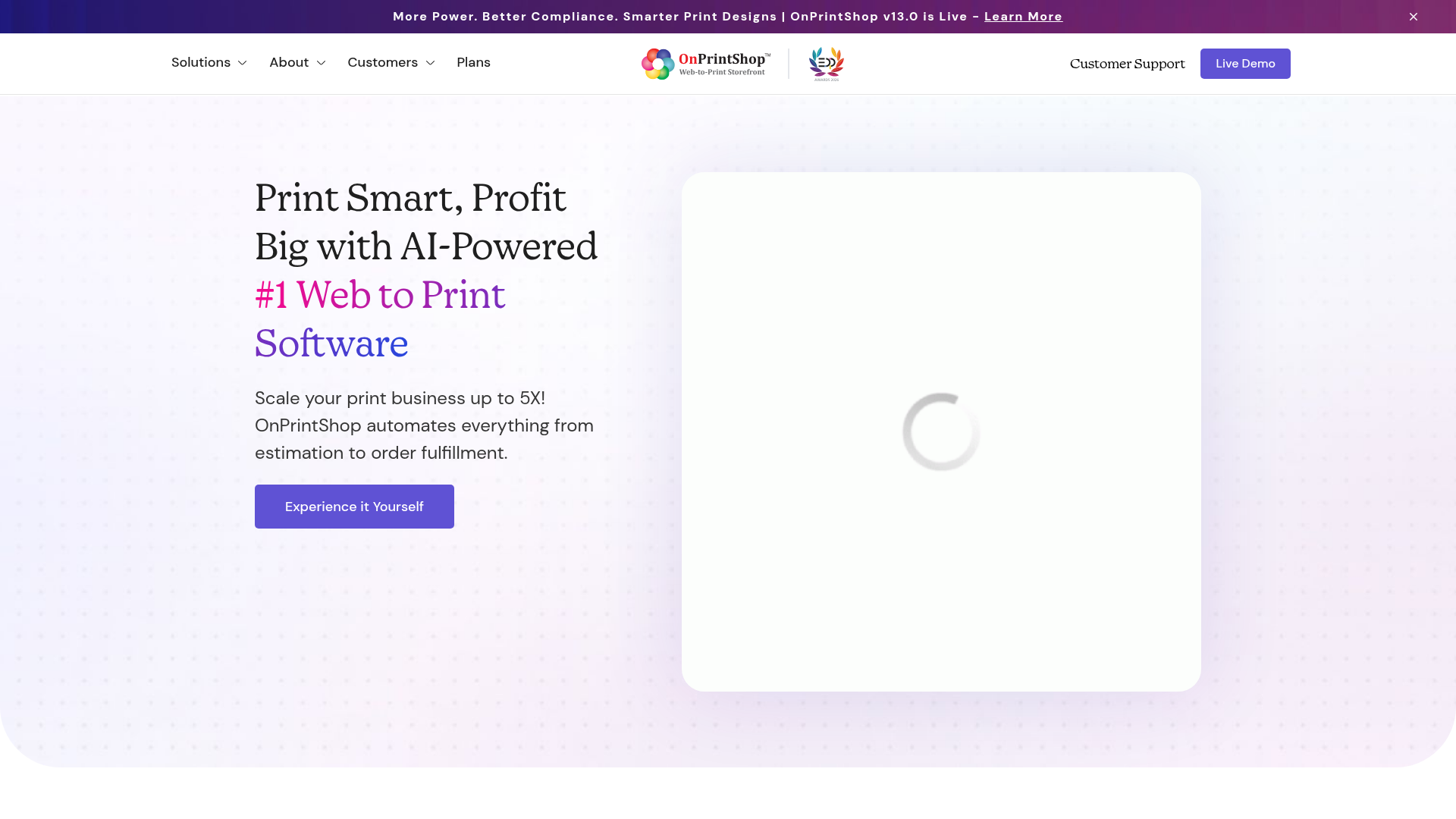
OnPrintShop highlights automation, storefront flexibility, and workflow management. It reflects the market’s strong push toward operational efficiency and broader print vertical coverage.
CMSmart
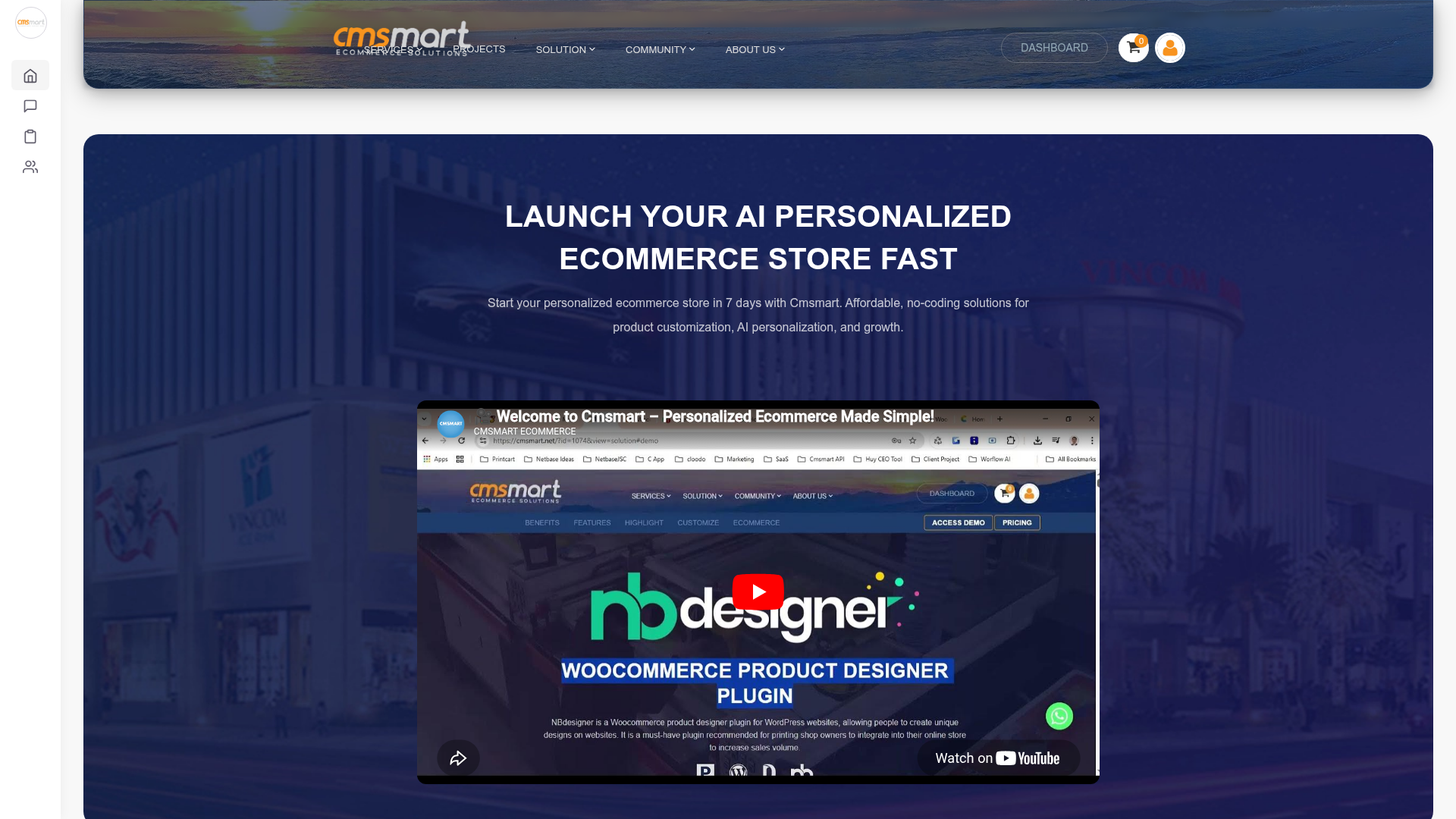
CMSmart emphasizes ecommerce customization, product designers, and multi-vendor flexibility. It reinforces how personalization and storefront configurability remain central to the category.
Mordor Intelligence
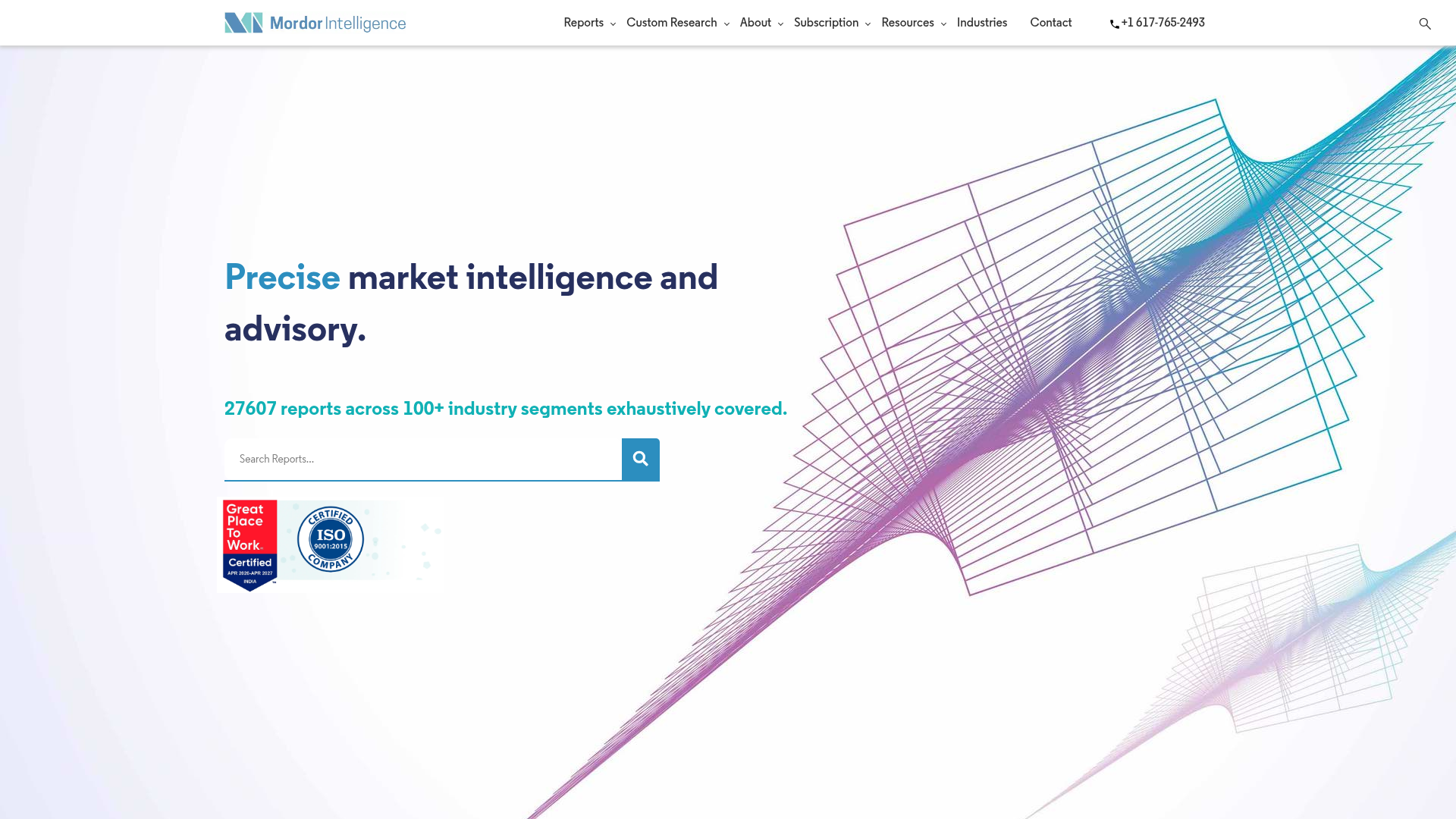
Mordor Intelligence provides a broader market lens, confirming that growth is being driven by ecommerce expansion, AI-enabled workflows, and regional demand shifts.
How Small and Mid-Size Print Brands Should Respond
Not every print business needs the same transformation path. But every serious brand needs a roadmap.
If you are a small studio or photographer
Focus on:
faster launch
simple branded storefronts
easy product creation for non-designers
premium previews that justify premium pricing
on-demand fulfillment to avoid stock risk
If you are a new POD brand
Focus on:
mobile-first experiences
low-friction personalization
rapid product launch cycles
no-stock operations
white-label differentiation instead of marketplace dependency
If you are a regional or mid-size print brand
Focus on:
modernizing your storefront UX
reducing quote and proofing friction
integrating AI into product creation
strengthening fulfillment automation
expanding without rebuilding your entire stack
If you are an established photo book company
Focus on:
replacing complex editors with guided creation
increasing mobile conversion
introducing conversational AI entry points
using 3D and AR to improve trust
enabling multi-device project continuity
Why Media Rex Alliance Fits the Next Generation of Web to Print Ecommerce
Media Rex Alliance aligns with where the market is going, not where it has been.
Its platform helps print businesses modernize without having to build advanced AI infrastructure internally. More importantly, it reframes the storefront experience around what customers actually want: simplicity, speed, confidence, and personalization.
What makes Media Rex Alliance strategically different
customers create products through conversational AI instead of complex design tools
prompts become print-ready products quickly, reducing friction and speeding purchase decisions
businesses can deploy it as a fully white-label layer within existing storefronts or apps
photorealistic 3D and AR previews improve confidence before ordering
mobile-first, browser-based access removes download barriers
projects sync locally and in the cloud for seamless multi-device use
on-demand production reduces inventory and overhead
automated fulfillment through a global premium print network supports scale
the infrastructure works for startups, growing brands, and enterprise print companies
In other words, Media Rex Alliance is not just another tool in the web-to-print stack. It is a model for what the modern web to print storefront is becoming.
Final Verdict
The future of the web to print store is not about adding more features to old workflows. It is about removing friction from the path between idea and order.
The storefronts shaping ecommerce in 2026 are:
AI-native
mobile-first
visually immersive
white-label
operationally automated
scalable by design
If your current experience still depends on manual layout work, desktop-heavy design tools, or disconnected production steps, the gap between customer expectation and storefront reality will only grow.
For brands that want to compete with a smarter, faster, more premium web to print ecommerce experience, Media Rex Alliance offers a clear path forward. It helps you launch branded AI-powered print creation, improve conversion, reduce operational drag, and scale without reinventing the technology stack from scratch.
Ready to build a web to print storefront that feels like 2026?
Media Rex Alliance gives print businesses, photo brands, studios, and POD operators the infrastructure to launch AI-powered, white-label, conversion-focused storefronts that turn customer intent into print-ready products.
If you want a web to print storefront that creates faster, converts better, and scales smarter, Media Rex Alliance is the platform to watch now.