Web to Print Systems Trends Shaping 2026
Web to print systems are no longer just online ordering portals for business cards, brochures, and photo books. In 2026, they are becoming intelligent commerce infrastructure: AI-assisted, mobile-native, fully automated, and deeply integrated with production, fulfillment, and customer experience.
For small studios, photographers, print-on-demand startups, regional printers, and established photo product brands, the pressure is clear. Customers expect faster creation, less friction, mobile-first buying journeys, realistic previews, and personalized products without mastering complex design tools. At the same time, print businesses need scalable systems that reduce manual work, control costs, and launch faster without rebuilding their stack from scratch.
That is exactly where the next generation of web to print systems is moving - and why this category is changing so quickly.
Media Rex Alliance sees this shift from the inside. The future is not just “online print ordering.” It is conversational product creation, white-label deployment, photorealistic 3D and AR previewing, browser-based design, cloud sync across devices, and globally automated production on demand.
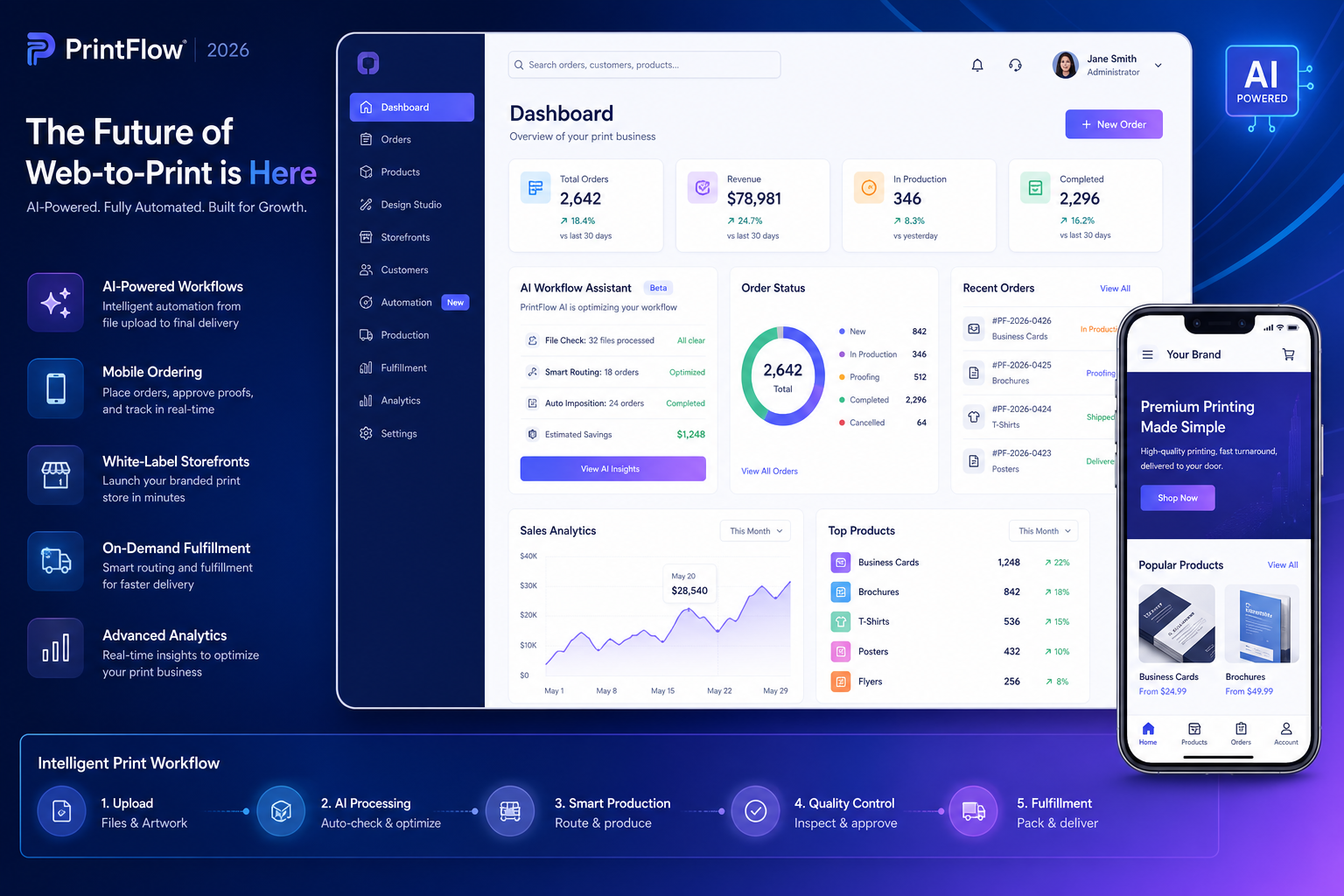
"Grand View Research estimates that the global web-to-print software market, valued at USD 1.1 billion in 2022, will reach USD 1.96 billion by 2030." - Source
"As of October 2024, mobile devices accounted for approximately 78% of e-commerce site traffic." - Source
Why Web to Print Systems Are Being Re-Evaluated in 2026
Most competitor content focuses on familiar themes: automation, AI, cloud platforms, personalization, and e-commerce integration. Those themes matter, but they often stop at surface-level trend reporting.
What many articles miss is the real strategic question:
What kind of web to print system will still convert, scale, and differentiate your business three years from now?
That question matters because the old model is breaking down:
Traditional design editors create friction for non-designers
Desktop-first interfaces lose mobile buyers
Manual proofing slows down conversion
Generic storefronts weaken brand equity
In-house production-only models create bottlenecks
Static previews reduce purchase confidence
Disconnected systems increase operational overhead
In 2026, winning web to print systems are being judged on outcomes, not features alone.
The New Standard for Modern Print Commerce
A modern web to print system should do more than accept orders. It should:
help users create products faster
shorten the time between intent and checkout
reduce abandoned sessions on mobile
increase confidence before purchase
automate downstream fulfillment
support white-label brand experiences
scale from niche brands to enterprise operators
This is why the category is shifting from “software for print ordering” to “AI-powered print experience infrastructure.”
The 8 Web to Print Systems Trends Defining 2026
1. Conversational AI Is Replacing Complex Design Workflows
The biggest shift in web to print systems is not just AI as a feature. It is AI as the interface.
Older systems ask the customer to do the work:
pick a template
drag and drop assets
resize elements
align layouts
manage bleed and crop logic
troubleshoot composition issues
That approach works for power users. It fails for everyone else.
Modern buyers increasingly want to type or speak what they want:
“Create a premium wedding album with a minimalist black cover”
“Turn these travel photos into a modern layflat book”
“Make a framed wall print collage with our family photos”
“Design a branded welcome kit for new franchise locations”
The best web to print systems in 2026 turn that intent into a print-ready product with minimal user effort.

Why This Matters
Conversational creation changes the economics of conversion:
Traditional Editor Model | Conversational AI Model |
|---|---|
High learning curve | Low-friction onboarding |
Longer session times before checkout | Faster decision-to-purchase path |
Design anxiety for non-experts | Guided creation from simple prompts |
Heavy support burden | More self-service creation |
Limited mobile usability | Stronger mobile-first interaction |
Media Rex Alliance is built around this exact evolution. Its autonomous creation engine enables customers to create premium physical products through natural language instead of navigating complicated design software. That means lower friction, faster ordering, and broader customer adoption across both consumer and B2B print experiences.
2. Mobile-First Ordering Is No Longer Optional
Many web to print platforms still treat mobile as a trimmed-down version of desktop. In 2026, that is a conversion leak.
Buyers discover products, upload photos, compare options, and start projects on their phones. If the experience feels cramped, slow, or overly technical, they drop off.
Modern web to print systems now need to support:
browser-based product creation with no app install
touch-friendly editing and review
easy photo uploads from camera rolls and cloud sources
fast, responsive storefront performance
seamless checkout on smaller screens
automatic project sync across devices
The Real Opportunity
Mobile-first is not just a UX upgrade. It expands your addressable market.
For photographers, studios, and photo-product brands, it means customers can start building albums or wall art the moment emotion is highest - right after an event, trip, or shoot. For B2B and franchise models, it means local operators can order branded materials from anywhere without logging into a desktop workstation.
Media Rex Alliance is designed specifically for this reality: browser-based, mobile-first, and no app required. Projects sync locally and in the cloud, so users can begin on one device and continue on another without breaking the flow.
3. White-Label Storefronts Are Becoming a Competitive Necessity
Competitor articles often mention storefronts, but they underplay the strategic importance of white-label deployment.
In 2026, owning the customer relationship is not enough. You need to own the interface, the brand impression, and the data experience too.
For print companies, photo brands, and SaaS-enabled commerce businesses, white-label systems provide:
faster time to market
consistent brand identity
stronger trust with customers
reduced development costs
easier product expansion under one branded experience
Why Brands Are Prioritizing White Label
A branded storefront or embedded print experience feels like a natural extension of your business. A generic third-party workflow does not.
This matters especially for:
photo book companies modernizing outdated editors
print-on-demand brands launching new verticals
retailers adding custom print categories
studios monetizing client galleries
regional printers expanding online ordering
enterprise print operators serving multiple brands or territories
Media Rex Alliance is fully white-label, allowing businesses to integrate AI-powered creation directly into their existing storefronts or apps under their own domain, brand system, and customer journey.
4. 3D and AR Previews Are Increasing Conversion Confidence
One of the most overlooked content gaps in competitor coverage is purchase confidence.
Print is physical. Customers worry about:
scale
layout accuracy
image quality
binding style
cover finish
framing look
final realism
Static thumbnails and flat mockups are no longer enough.
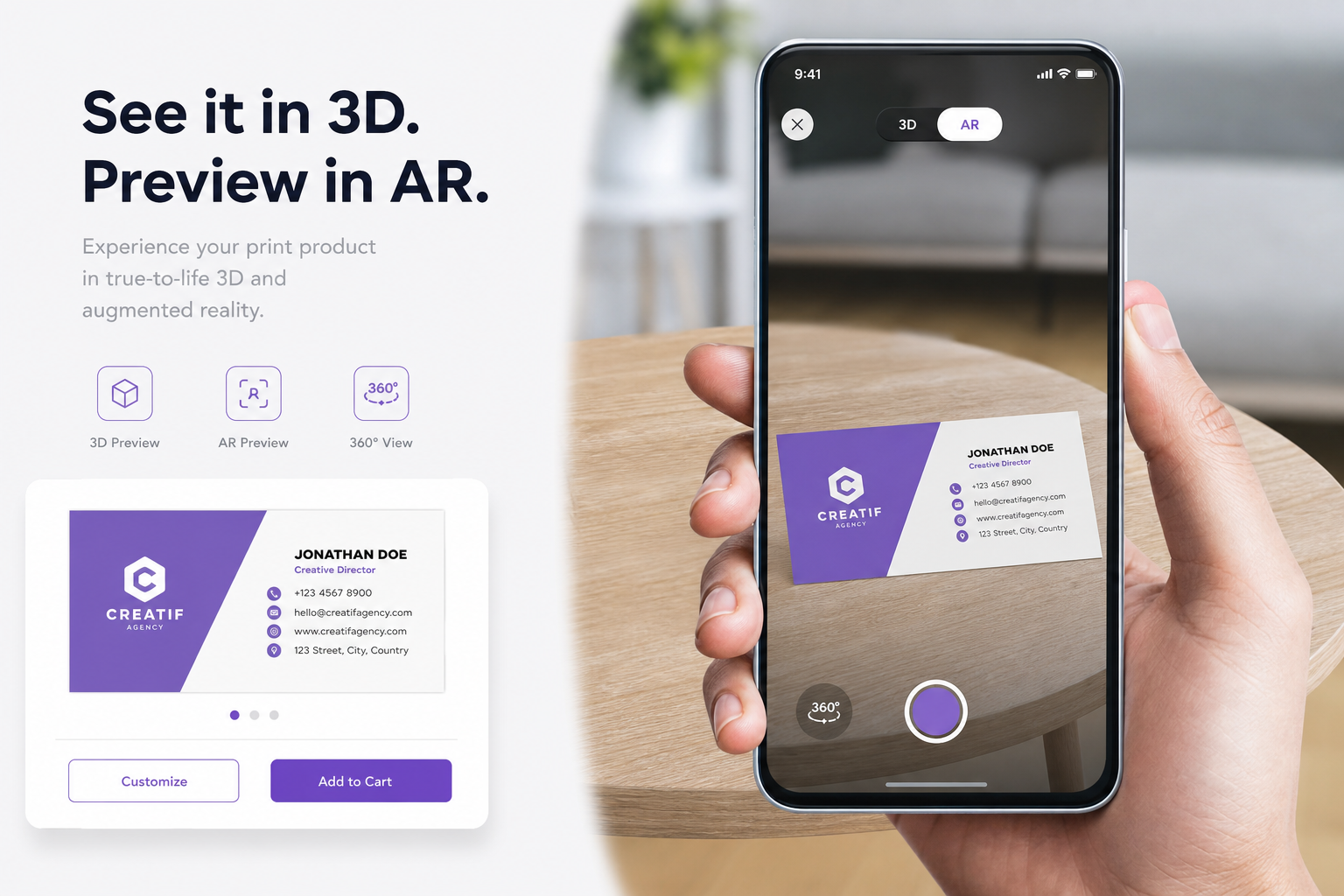
Modern web to print systems are moving toward photorealistic 3D and AR previews that let customers inspect products before buying. This is especially valuable for premium, emotional, or higher-ticket items like:
photo books
wall art
canvases
framed prints
luxury albums
packaging
branded merchandise kits
Why Preview Technology Matters
Without Advanced Previewing | With 3D/AR Previewing |
|---|---|
More buyer hesitation | Higher purchase confidence |
More support questions | More self-validated decisions |
Greater mismatch risk | Better expectation alignment |
Higher return potential | Better pre-purchase certainty |
Media Rex Alliance brings this capability directly into the creation flow with photorealistic 3D and immersive AR previews, helping buyers feel confident before they commit.
5. On-Demand Fulfillment Is Replacing Inventory-Heavy Models
Another common competitor theme is on-demand production, but most articles mention it only as efficiency. The deeper trend is business model transformation.
Web to print systems in 2026 are increasingly tied to low-inventory or no-inventory operations. That shift helps businesses:
reduce warehousing costs
lower risk from unsold stock
launch new SKUs faster
test niche products with less exposure
support geographic expansion without building local infrastructure
For new print brands and mid-size operators, this makes growth more capital-efficient. For established print businesses, it opens the door to product innovation without operational drag.
What Modern On-Demand Systems Need
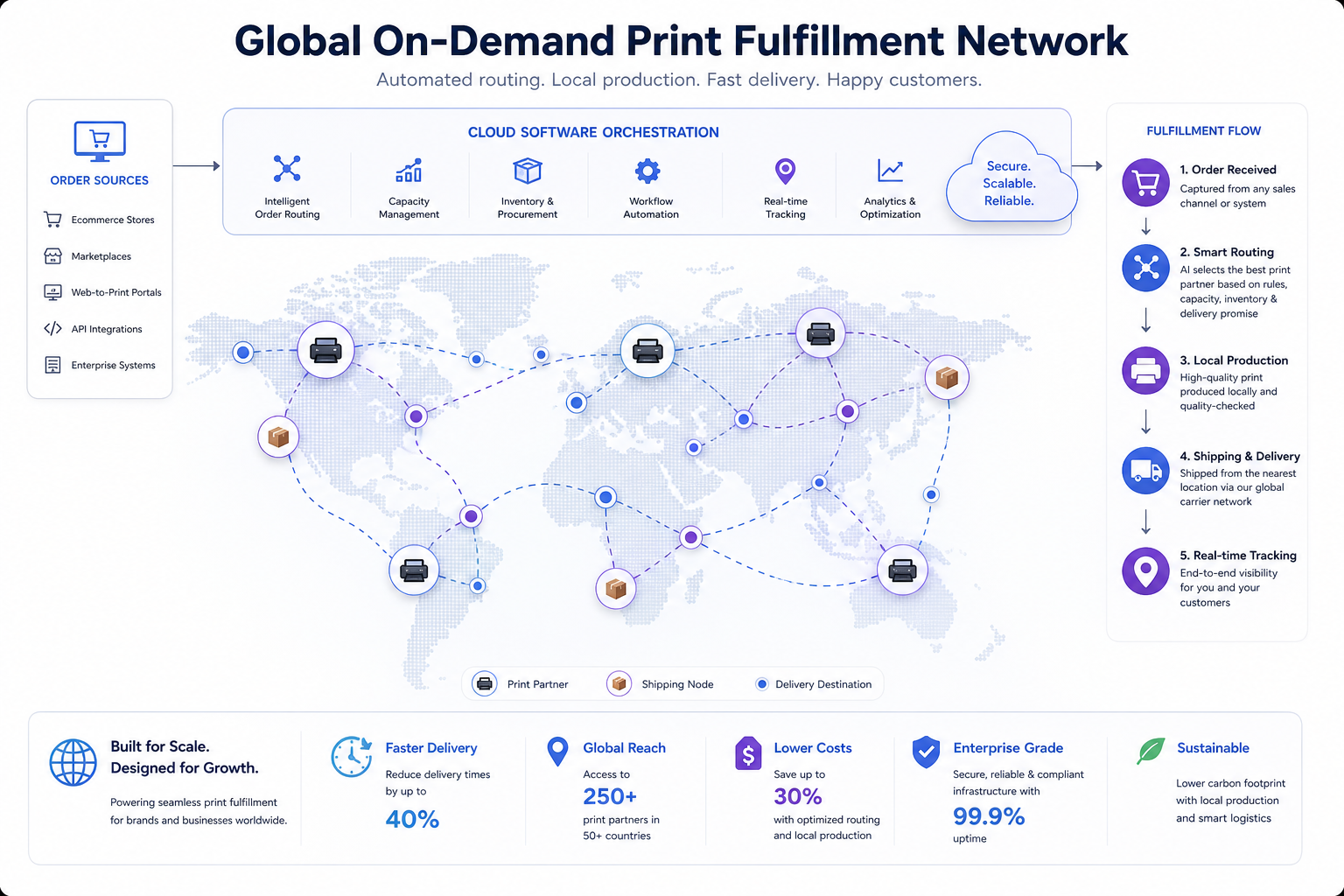
The next generation of platforms does more than submit jobs. It intelligently routes fulfillment through automated pipelines and distributed print networks.
That means:
faster production assignment
better regional coverage
more efficient shipping
scalable quality control
less manual coordination
Media Rex Alliance supports this model through an automated fulfillment pipeline and a global network of premium printers, helping businesses scale output without scaling complexity at the same rate.
6. Automation Is Expanding Beyond Production Into the Entire Customer Journey
Competitor articles rightly emphasize automation, but usually from the printer’s perspective: prepress, job scheduling, proofing, and workflow efficiency.
In 2026, the bigger opportunity is end-to-end automation across the entire lifecycle:
product creation
asset handling
layout generation
proof generation
pricing logic
order routing
production assignment
shipping orchestration
project sync and recovery
The Strategic Impact
The best web to print systems reduce manual touchpoints at every step.
This helps businesses:
process more orders with leaner teams
reduce production errors
shorten turnaround times
improve profitability
scale without proportional headcount growth
For companies evaluating systems, the question should not be “Does it automate print?” but rather:
How much of the customer-to-fulfillment workflow can it automate without compromising quality?
Media Rex Alliance is aligned with this broader automation model by turning prompts into print-ready products quickly, reducing front-end friction while supporting downstream automated fulfillment.
7. Personalization Is Moving From Template Swaps to Intelligent Product Creation
Many legacy web to print systems treat personalization as editable text fields or limited image replacement. That still has a place in B2B, franchise, and local marketing workflows, but consumer expectations are evolving.
In 2026, buyers increasingly want:
products tailored to their photos, themes, or events
smarter layout suggestions
automatic sequencing and composition
premium outputs without design expertise
personalized results that feel unique, not merely customized
The New Personalization Stack
True next-gen personalization blends:
AI-assisted layout generation
prompt-driven product configuration
smart photo handling
visual recommendation logic
contextual previewing
This is a major content gap in most competitor articles. They mention “customization” but do not distinguish between manual customization and intelligent personalization.
That difference is critical.
For a customer, manual customization feels like work. Intelligent personalization feels like service.
Media Rex Alliance is built around that service model, transforming customer intent into ready-to-print products with far less creative friction.
8. Scalable Infrastructure Is Becoming a Buying Criterion
As the market matures, buyers are evaluating web to print systems less like simple software tools and more like long-term commerce infrastructure.
A startup may need fast launch and low overhead. A regional printer may need multi-storefront flexibility. An enterprise photo brand may need branded deployments across markets. The system must adapt to each growth stage.
What Scalable Infrastructure Looks Like in 2026
A future-ready platform should support:
white-label rollout across brands or regions
browser-based access for broad adoption
multi-device continuity
modular integration into existing commerce stacks
flexible production orchestration
rapid new product deployment
reliable performance as order volumes increase
Media Rex Alliance is designed for this spectrum, from emerging businesses to enterprise print companies, making it easier to scale sophisticated AI-powered print experiences without building everything internally.
What Competitor Articles Get Right - And What They Miss
The top-ranking content on this topic generally gets five things right:
Common Competitor Strengths | Why They Matter |
|---|---|
They emphasize automation | Core to efficiency and margin |
They discuss AI adoption | Signals the future direction |
They mention cloud-based workflows | Important for accessibility and collaboration |
They highlight personalization | Essential for customer appeal |
They reference on-demand production | Important for flexibility and cost control |
But they also leave important gaps:
Common Content Gaps | Why They Matter in 2026 |
|---|---|
Little focus on conversational AI | This is becoming the easiest creation model for non-designers |
Weak coverage of mobile conversion friction | Mobile traffic dominates discovery and increasingly drives sales |
Almost no discussion of 3D/AR preview confidence | Visual confidence directly impacts conversion and support load |
Limited analysis of white-label strategy | Brand control is central for serious operators |
Not enough focus on cross-device continuity | Buyers start and finish projects across devices |
Too little emphasis on fulfillment networks | Software alone does not scale delivery |
Minimal discussion of customer journey friction | Conversion depends on experience, not just capability |
That is the real 2026 story: web to print systems are evolving from production tools into intelligent, branded, conversion-focused ecosystems.
How to Evaluate Web to Print Systems in 2026
If you are comparing platforms this year, use a decision framework that goes beyond feature lists.
Evaluation Checklist
Evaluation Area | Questions to Ask |
|---|---|
Creation Experience | Can customers create products quickly without design expertise? |
AI Capability | Is AI genuinely embedded, or just an add-on feature? |
Mobile UX | Is the experience truly mobile-first, not merely responsive? |
White-Labeling | Can the platform be fully branded under our business? |
Preview Quality | Does it offer photorealistic 3D or AR previews? |
Fulfillment | Is production automated and scalable through a reliable network? |
Scalability | Can it support our next stage of growth without replatforming? |
Integration | Can it fit into our current storefront, app, or commerce environment? |
Red Flags to Watch For
Avoid systems that:
depend heavily on desktop-style editors
require app downloads for key workflows
offer generic or rigid branding options
lack strong preview realism
leave fulfillment too manual
cannot handle cross-device project continuity
position AI as marketing language rather than core functionality
Who Will Benefit Most From These Trends
Small Studios and Photographers
They gain a simpler way to monetize client images with less technical friction and fewer support issues.
New Print-on-Demand Brands
They can launch faster, test concepts with less inventory risk, and create more engaging buying journeys.
Mid-Size Print Businesses
They can modernize outdated storefronts, improve operational efficiency, and raise conversion rates without rebuilding everything internally.
Regional Print Players
They can compete with larger platforms by offering smarter creation tools, mobile convenience, and scalable fulfillment.
Established Photo Book Companies
They can replace aging editors with AI-assisted, white-label, mobile-ready experiences that feel modern to today’s buyers.
Why Media Rex Alliance Fits Where Web to Print Systems Are Headed
The future of web to print systems is not about adding more buttons to old editors. It is about removing friction from the entire journey.
Media Rex Alliance is built for that future.
It enables customers to create products through conversational AI instead of complex design tools. It turns prompts into print-ready products quickly, helping buyers move from inspiration to checkout with less hesitation. It supports fully white-label deployment into existing storefronts or apps, preserving brand ownership and customer trust. It offers photorealistic 3D and AR previews, mobile-first browser-based access with no app install, local and cloud sync across devices, and an on-demand production model that lowers inventory and overhead. Finally, it automates fulfillment through a global network of premium printers and scales from startup use cases to enterprise-grade deployments.
That combination is exactly where the category is moving.
Final Take
Web to print systems in 2026 are being reshaped by a clear set of forces: conversational AI, automation, mobile-first buying behavior, white-label commerce, advanced product previews, intelligent personalization, and on-demand fulfillment at global scale.
Businesses that keep relying on legacy web to print models will find it harder to convert modern customers, launch differentiated experiences, and scale efficiently. Businesses that adopt AI-native, friction-reducing platforms will be better positioned to win on both customer experience and operational performance.
If you want to modernize your print business for what comes next - not what worked yesterday - Media Rex Alliance offers a faster path forward.
If your goal is to launch a branded, AI-powered web to print experience that converts better, operates leaner, and scales smarter, Media Rex Alliance is the platform to evaluate now.