Web to Print WooCommerce for Faster Store Growth
Print businesses in 2026 are no longer competing on product catalog alone. They are competing on speed to personalization, ease of ordering, mobile experience, and how confidently a customer can approve a print product before checkout. That is exactly why web to print WooCommerce has become such an important growth model for studios, photo brands, print-on-demand startups, regional print companies, and established photo book businesses looking to modernize without rebuilding their stack from scratch.
Traditional online print ordering still creates too much friction: complex editors, confusing file requirements, weak mobile UX, delayed proofing, and manual production handoffs. Modern buyers want a smoother path. They want to describe what they want, preview it instantly, order from any device, and trust that the final output will match the promise.
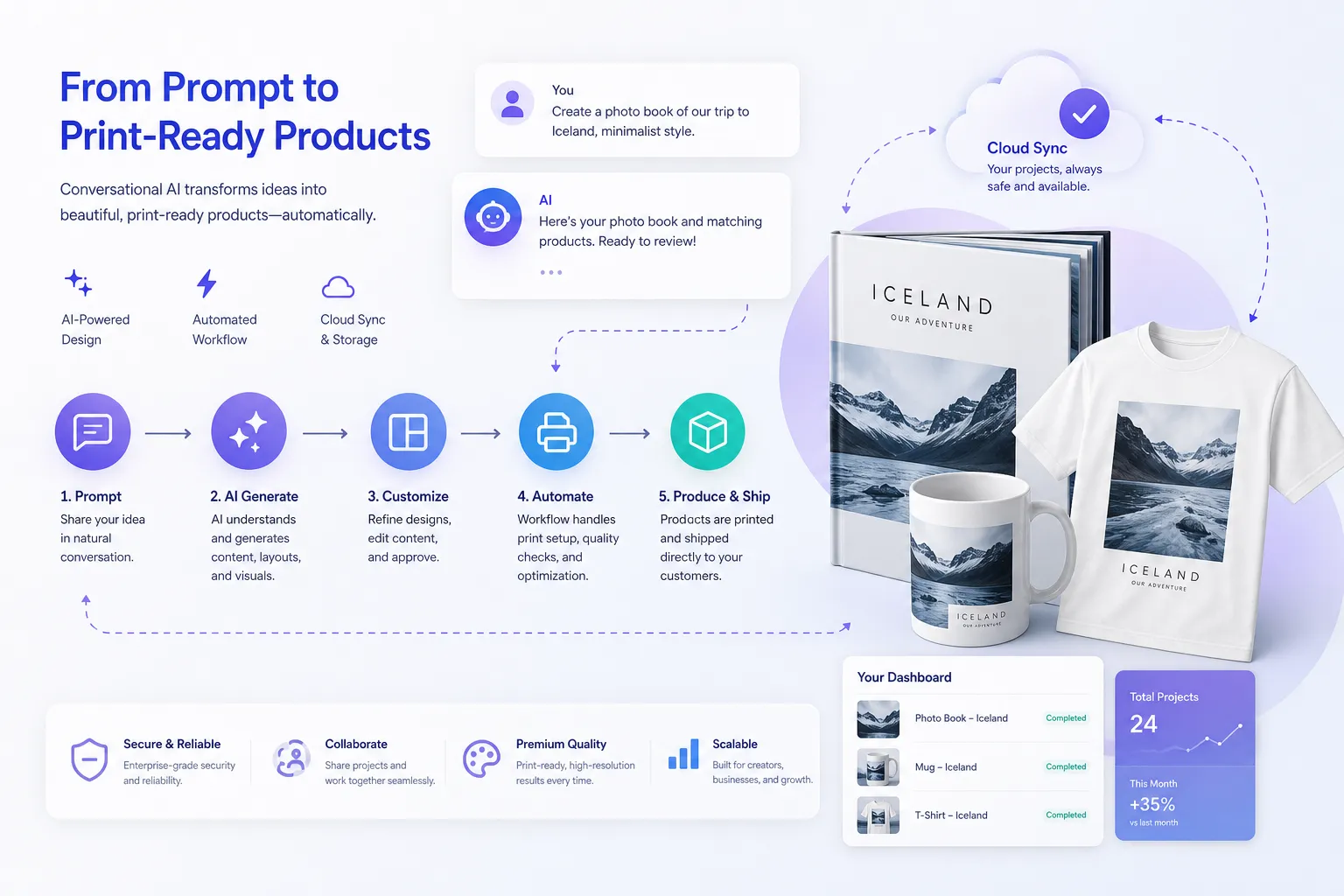
Media Rex Alliance is built for this next phase of ecommerce print. Instead of forcing customers into heavy design tools, it enables them to create products through conversational AI, instantly turning prompts into print-ready products with photorealistic 3D and AR previews, browser-based mobile-first workflows, white-label storefront integration, and automated global fulfillment.
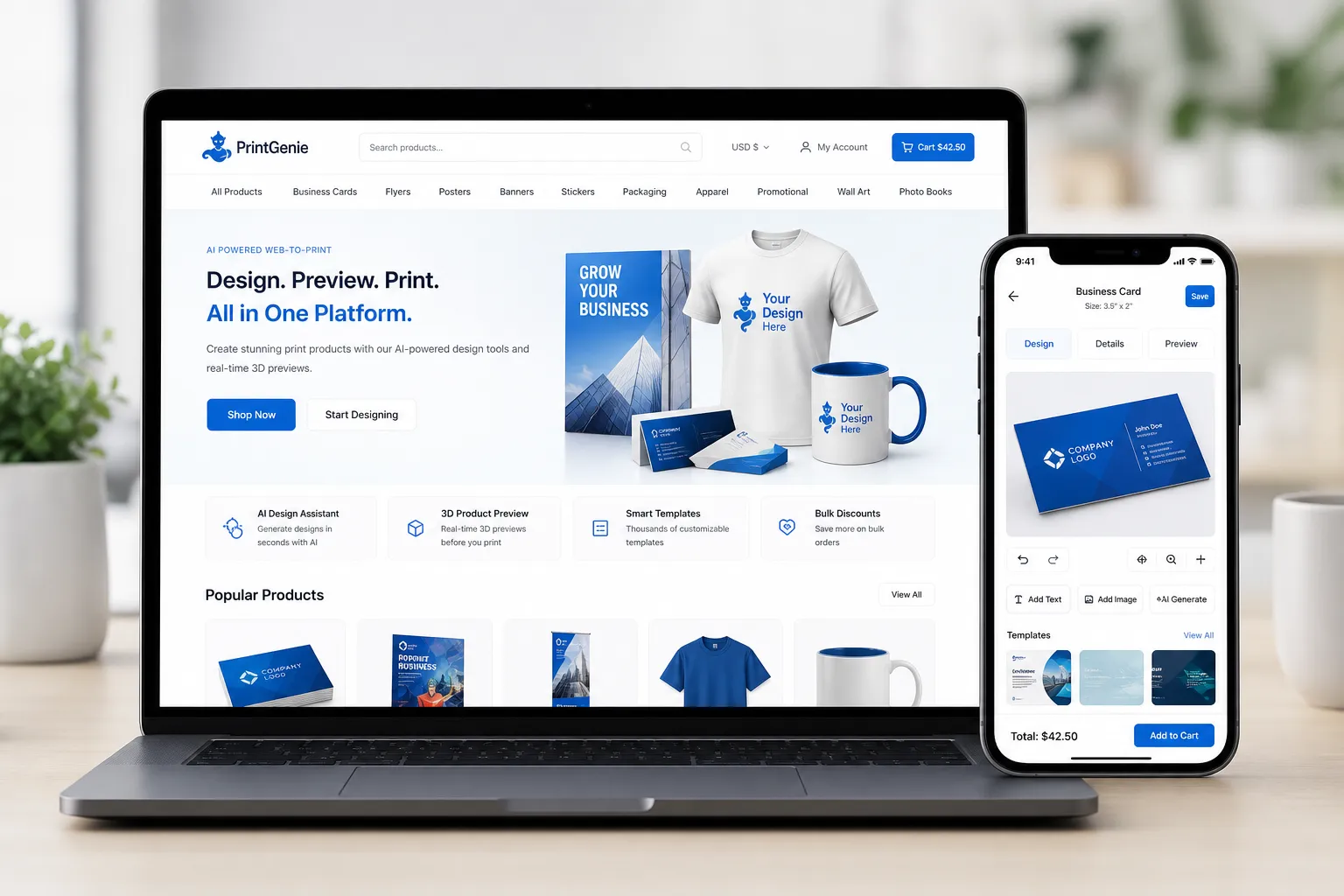
What web to print WooCommerce really means in 2026
At its core, web to print WooCommerce is the combination of:
A WooCommerce storefront
A browser-based product personalization experience
Automated prepress or print-ready file generation
Connected order flow into production and fulfillment
But in 2026, that definition needs to go further.
A competitive system is no longer just an upload box plus a basic text editor. The strongest platforms now include:
AI-assisted creation
Real-time product visualization
Mobile-first interactions
Dynamic layouts and personalization rules
Automated fulfillment routing
White-label deployment for brand control
Cloud and local project continuity across devices
That is where many competitor articles stop short. They explain print on demand or list integrations, but they do not address the deeper operational shift: the future of web-to-print is not only ecommerce-enabled, it is AI-native.
Why this matters for print businesses now
The opportunity is bigger than simply adding customization to a product page. A modern web-to-print stack can reshape the entire customer journey.
From design friction to conversational commerce
Legacy design tools often overwhelm first-time buyers. A customer who just wants a custom photo book, personalized mug, branded merchandise piece, or event print product may not want to learn layers, bleed settings, crop logic, or export specs.
Media Rex Alliance reduces this friction dramatically. Customers can describe what they want in natural language, upload photos if needed, and let the platform generate layouts automatically. That shortens the path from idea to order.
From manual proofing to confident self-approval
In older print workflows, customers often submit files, wait for review, receive revisions, then re-approve. This slows revenue and increases service overhead.
With photorealistic 3D and immersive AR previews, buyers gain clearer confidence before purchase. That can reduce hesitation, improve conversion quality, and lower the chance of post-purchase disputes.
From fragmented operations to scalable automation
For many print businesses, the hidden cost is not product creation. It is everything after that:
file checking
production prep
print routing
order syncing
fulfillment coordination
multi-device customer continuity
A modern SaaS workflow centralizes these steps, helping businesses scale without proportionally increasing headcount.
The biggest content gap in competitor articles
Most competitor content focuses on one of two angles:
General print-on-demand business advice
Lists of WooCommerce plugins and fulfillment apps
That is useful, but incomplete.
Here is what they often miss:
Content Gap | Why It Matters |
|---|---|
Conversational AI product creation | Makes personalization accessible to non-designers and speeds conversion |
Photorealistic 3D and AR previews | Reduces uncertainty and improves purchase confidence |
White-label deployment | Lets brands keep their own identity instead of sending traffic elsewhere |
Mobile-first browser workflows | Critical for modern commerce behavior and casual personalization |
Cross-device sync | Important for shoppers who start on mobile and finish on desktop |
Automated layout generation | Removes bottlenecks for photo books, gifts, and personalized merchandise |
Global fulfillment orchestration | Helps brands scale without local production complexity |
Fit for established print brands, not just side hustles | Mid-market and enterprise print companies need more than a basic plugin |
This is exactly the strategic lane Media Rex Alliance occupies.
How web-to-print on WooCommerce accelerates store growth
Store growth happens when more visitors complete purchase journeys with less friction and greater confidence. Web-to-print supports that in several ways.
1. It increases conversion by making customization easier
The easier it is to personalize, the more likely customers are to complete an order. If the process feels technical, abandonment rises. If it feels intuitive, more shoppers engage.
Conversational AI matters here because it turns product creation into a guided experience rather than a design task.
2. It increases average order value
Personalized print products often command higher perceived value than standard catalog items. This creates room for:
premium pricing
bundled upsells
event packages
gifting add-ons
multi-item branded collections
3. It expands the addressable audience
Traditional editors tend to work best for experienced users. AI-powered flows open the experience to casual buyers, mobile users, and customers with limited design skills.
4. It reduces operational drag
When layout generation, previews, project saving, and fulfillment handoff are automated, internal teams spend less time on repetitive tasks and more time on growth initiatives.
5. It supports no-stock growth
On-demand production reduces inventory risk and lowers upfront capital requirements, making it easier to test new categories and launch seasonal offers fast.
WooCommerce as the foundation: why it still matters
WooCommerce remains attractive because it offers ownership, flexibility, and extensibility. For print brands, that matters.
Strengths of WooCommerce for web-to-print
Full control of storefront UX
Broad plugin ecosystem
Strong SEO flexibility
Ownership of customer data
Easier integration into broader WordPress content strategies
Good fit for regional and global growth strategies
Where WooCommerce alone is not enough
WooCommerce can power the storefront, catalog, checkout, and content layer. But on its own, it does not solve advanced print personalization. It still needs a robust creation engine behind it.
That is where Media Rex Alliance adds strategic value: it integrates into existing storefronts or apps as a fully white-label AI print platform, preserving the power of WooCommerce while dramatically upgrading product creation and fulfillment intelligence.
Traditional plugin model vs AI-native print platform
Not all personalization stacks are equal. Many merchants start with a plugin approach, then hit scalability ceilings.
A practical comparison
Capability | Basic WooCommerce Personalization Plugin | AI-Native White-Label Platform |
|---|---|---|
Text and image customization | Yes | Yes |
Conversational AI design creation | Rare | Yes |
Automated layout generation | Limited | Yes |
Photorealistic 3D preview | Sometimes | Yes |
AR preview | Rare | Yes |
Mobile-first browser design | Varies | Yes |
Cross-device project sync | Limited | Yes |
Print-ready output automation | Partial | Yes |
White-label brand deployment | Sometimes | Yes |
Global print fulfillment automation | Depends on provider | Yes |
Enterprise scalability | Often limited | Built for growth |
The takeaway is simple: if your goal is small-scale experimentation, a lightweight plugin may be enough. If your goal is durable growth, differentiated UX, and operational efficiency, an AI-native layer becomes far more compelling.
What modern customers expect from a print ecommerce journey
Customers have become used to polished digital product experiences in other categories. Print commerce now has to catch up.
Today’s expectations include
instant personalization
simple inputs
fast mobile experiences
realistic previews
confidence before checkout
quick turnaround
status visibility
fewer app downloads and account hurdles
Media Rex Alliance aligns with these expectations through a browser-based, no-install, mobile-first product experience that keeps shoppers inside your branded environment.
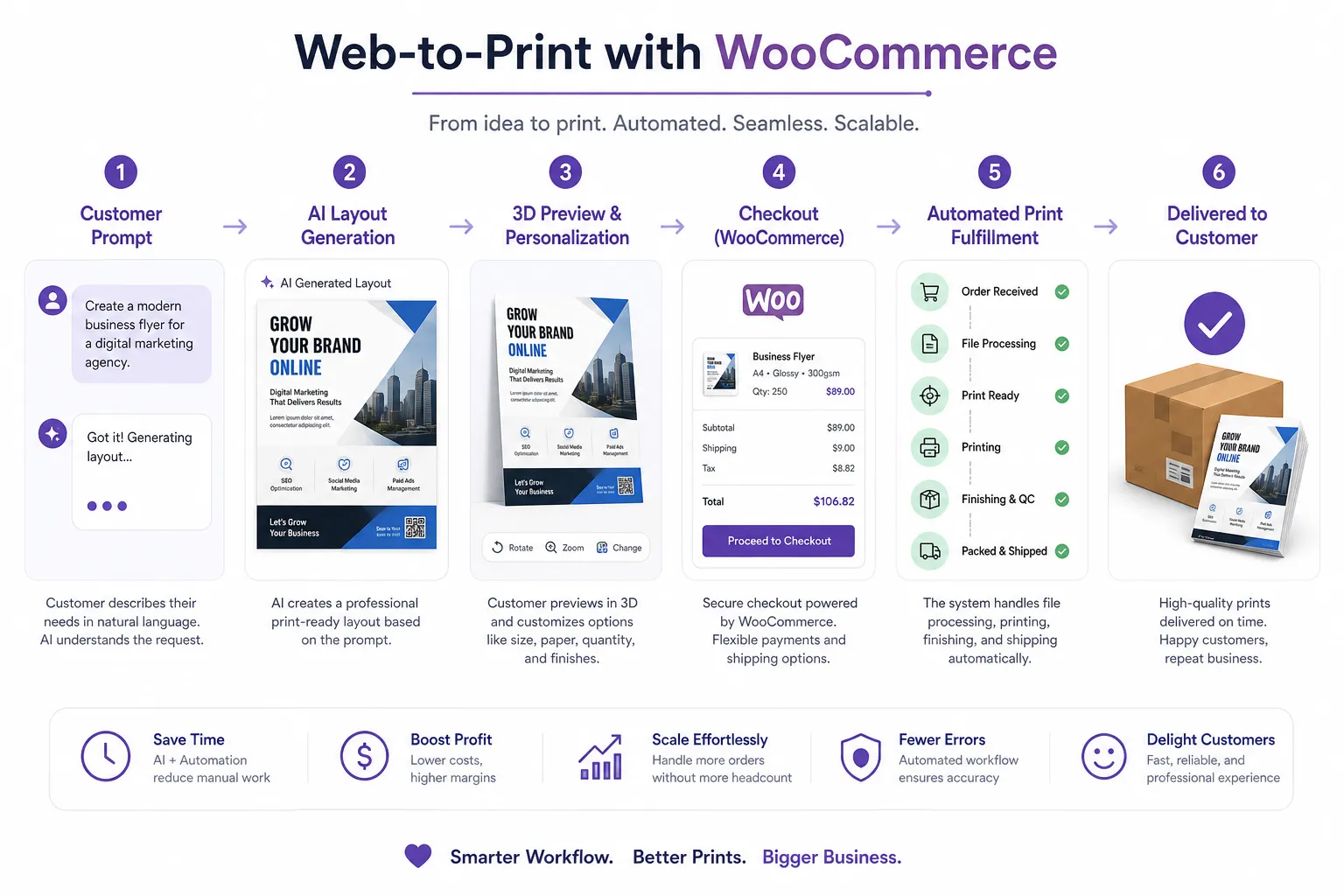
The ideal workflow for faster store growth
The best web-to-print WooCommerce stack should compress the customer journey without sacrificing quality.
Recommended growth workflow
Stage | Legacy Approach | Modern AI-Powered Approach |
|---|---|---|
Inspiration | Customer browses static products | Customer sees personalized possibilities instantly |
Creation | Manual editor with many tools | Natural-language prompt plus optional uploads |
Layout | Customer arranges assets manually | AI generates layout automatically |
Preview | Flat mockup | Photorealistic 3D and AR preview |
Approval | Manual proof cycle | Real-time visual confirmation |
Checkout | Standard ecommerce flow | Standard ecommerce flow with lower hesitation |
Production | Manual prep | Automated print-ready preparation |
Fulfillment | Separate vendor process | Global premium printer network automation |
Where Media Rex Alliance fits best
Media Rex Alliance is especially compelling for businesses that want to modernize their print offering without building the technology stack internally.
Best-fit business types
Small studios and photographers
These businesses often need premium presentation without enterprise engineering resources. A white-label AI experience can help them sell higher-value personalized products while keeping their own brand front and center.
New print-on-demand brands
Early-stage brands need speed, low overhead, and the ability to test quickly. An on-demand model with automated production and conversational product creation reduces launch friction.
Mid-size print brands
These companies often outgrow simple plugins. They need stronger automation, better mobile UX, and more scalable personalization flows to increase margin and reduce manual service work.
Regional print players
Regional leaders can differentiate by offering advanced customer-facing technology while continuing to leverage local market trust and logistics advantages.
Established photo book companies
This group may have aging editors or clunky legacy flows. Media Rex Alliance provides a path toward AI-powered creation, automatic layouts, and richer previews without forcing customers into outdated interfaces.
Smart Customizer and similar tools: what they prove
Tools like Smart Customizer highlight a real market truth: there is strong demand for dynamic product variations, design editors, automated print files, and interactive previews in WooCommerce environments.
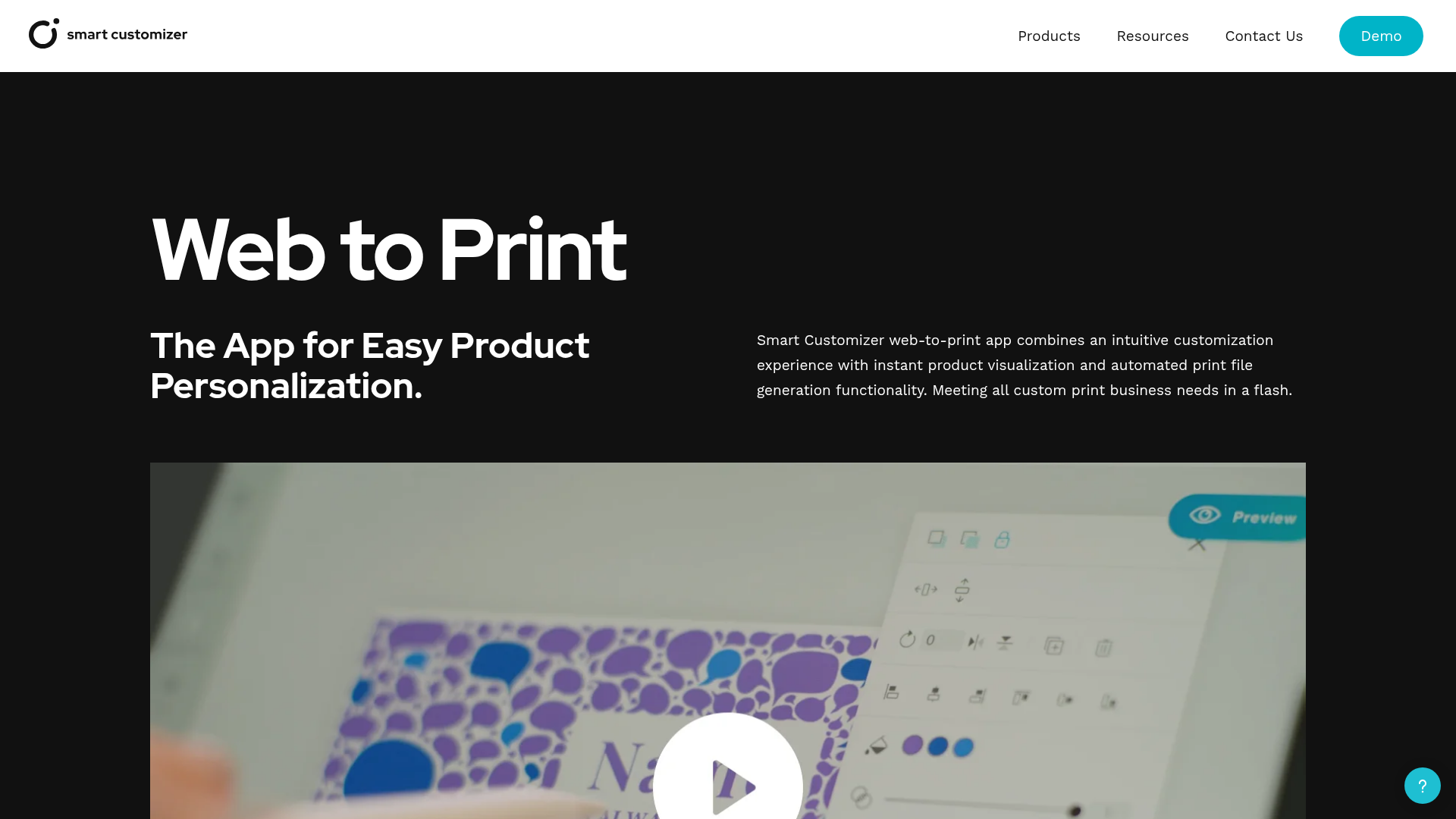
That validates the category.
But the next strategic leap is moving from “editor-driven customization” to AI-guided creation. The difference is important:
Editors ask customers to design
AI asks customers to describe
That shift makes personalization faster, broader, and more conversion-friendly.
Why AI changes the economics of web-to-print
AI is not just a shiny feature in this category. It changes the economics.
Lower support costs
A simpler creation flow means fewer customer questions, fewer abandoned sessions, and fewer interventions from your team.
Faster product launches
New product templates, seasonal campaigns, and niche collections can be introduced with less manual setup.
Greater personalization at scale
Instead of offering just editable text fields, brands can support richer, more emotionally resonant product creation experiences.
Better margin structure
Reducing inventory, minimizing manual proofing, and automating production handoffs can improve profitability even before considering conversion gains.
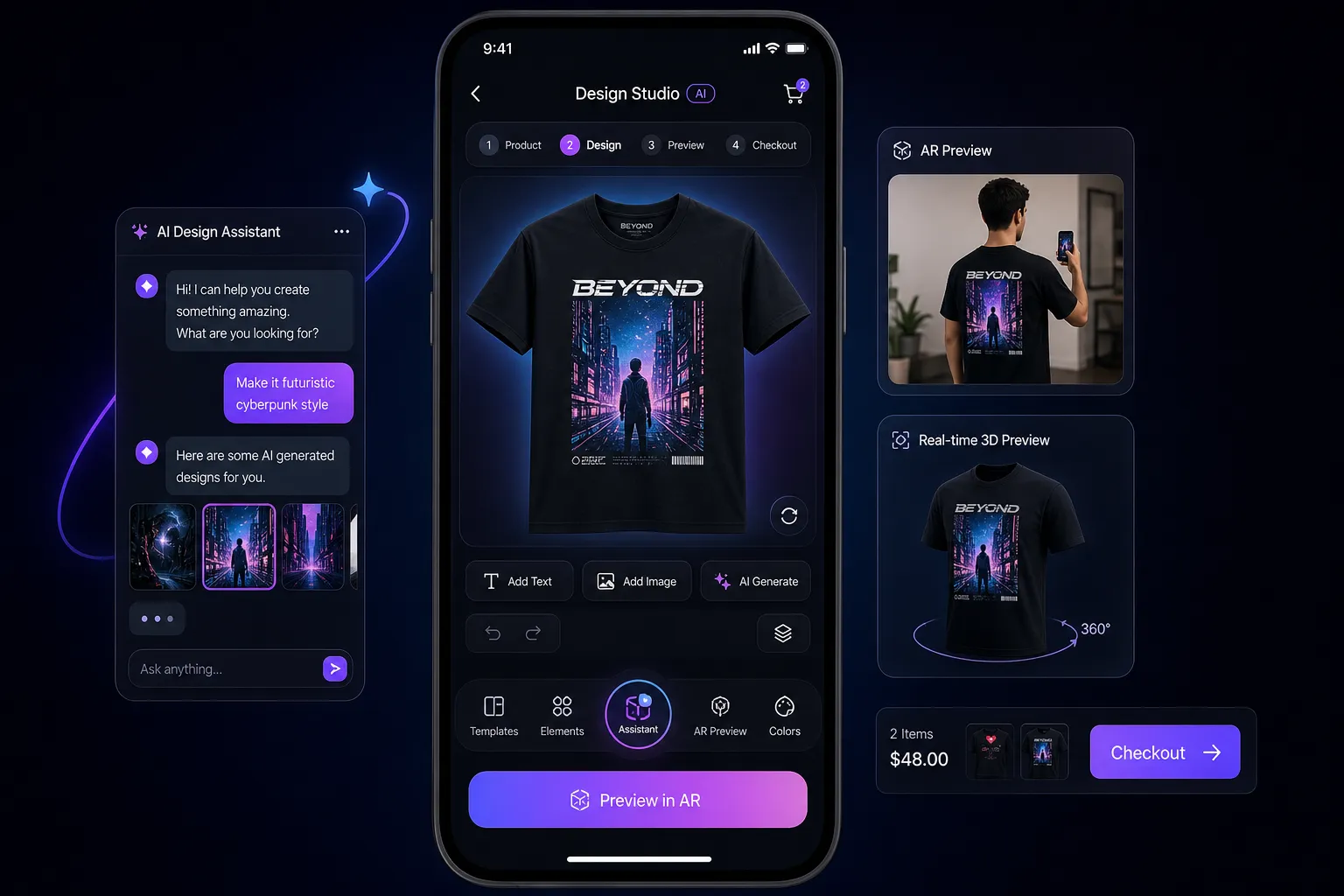
Mobile-first design is no longer optional
A surprising number of print experiences still feel desktop-only. That is a major weakness.
If a shopper discovers your store through social, taps into a product page, and lands in a clumsy editor, the sale is at risk. Media Rex Alliance is built around a mobile-first web app experience that runs in the browser with no installation required. That matters because many purchase journeys begin casually and need to be completed instantly.
White-label matters more than most brands realize
One of the biggest strategic mistakes print businesses make is outsourcing the customer experience too visibly.
When shoppers are redirected into someone else’s environment, brand trust weakens and long-term equity suffers. A fully white-label platform allows you to:
keep your own domain and visual identity
own the customer relationship
preserve brand consistency
create a more premium perception
avoid teaching customers to trust another platform instead of yours
Media Rex Alliance is positioned specifically for this need.
Questions to ask before choosing a web-to-print solution
Before you commit, evaluate your stack with rigor.
Use this checklist
Question | Why It Matters |
|---|---|
Can non-designers complete an order easily? | Simplicity drives conversion |
Does the solution support mobile-first workflows? | Mobile friction kills growth |
Are previews realistic enough to build trust? | Confidence affects checkout rates |
Can it operate under our brand? | White-label protects equity |
Does it automate print-ready output? | Manual prep slows scale |
Can it integrate with our storefront or app? | Reduces migration risk |
Does it support cloud continuity across devices? | Important for modern shopping behavior |
Can it scale from small runs to enterprise volume? | Future-proofs investment |
Does it reduce inventory and overhead? | Protects margin and flexibility |
Is fulfillment automated across quality print partners? | Supports operational efficiency |
Common mistakes print brands make
Even strong businesses often slow their own growth by making avoidable technology decisions.
Mistake 1: Choosing features instead of outcomes
A long list of editor tools does not automatically create a better customer experience. The goal is completed purchases, not maximum interface complexity.
Mistake 2: Ignoring mobile behavior
If customization works beautifully on desktop but poorly on mobile, growth is capped.
Mistake 3: Underestimating visual trust
Flat previews are not always enough for personalized products. Rich 3D and AR can help buyers feel more certain about what they are purchasing.
Mistake 4: Accepting manual bottlenecks
If staff members still need to clean up orders, validate layouts, and route production manually, margin will suffer over time.
Mistake 5: Sacrificing brand control
Redirecting users or relying on generic third-party interfaces weakens the premium feel of your business.
A practical roadmap to modernizing your WooCommerce print store
You do not need a full rebuild to improve your print experience.
Phase 1: Audit the current journey
Review your product pages, editor usability, mobile performance, abandonment points, and order handoff workflow.
Phase 2: Prioritize the biggest friction points
Usually these are:
creation complexity
weak previewing
poor mobile experience
proofing delays
manual production processes
Phase 3: Layer in AI-powered creation
This is the fastest way to shift from tool-heavy customization to conversion-oriented personalization.
Phase 4: Introduce richer previews
Use photorealistic 3D and AR to reduce uncertainty and improve confidence.
Phase 5: Automate fulfillment
Connect the experience to a reliable production network so growth does not create backend chaos.
Phase 6: Scale under your own brand
Deploy the experience in a white-label format so all growth compounds into your brand equity, not someone else’s.
Final verdict: the future of print commerce is guided, visual, and AI-native
Web to print WooCommerce is no longer just about adding a customization plugin to a store. In 2026, it is about designing a purchase journey that removes friction, increases confidence, and automates complexity from prompt to production.
That means the winning model is not simply “more tools.” It is:
easier creation
smarter automation
stronger previews
cleaner mobile UX
white-label brand control
scalable on-demand fulfillment
Media Rex Alliance represents that next-generation approach. It helps print businesses transform conversational prompts into premium physical products, all within a branded, browser-based, mobile-first experience. With automated layouts, photorealistic 3D and AR previews, local and cloud project sync, no-stock operational efficiency, and global fulfillment through premium printers, it gives growing print brands a faster route to modernization without building the infrastructure themselves.
If your goal is to grow faster, reduce friction, and future-proof your print ecommerce experience, Media Rex Alliance is not just another add-on. It is the strategic layer that turns WooCommerce into an AI-powered web-to-print growth engine.
FAQ
How to speed up WooCommerce website?
Start by improving hosting, image optimization, caching, and limiting bloated plugins. For print stores, also reduce on-page friction with a mobile-first, browser-based customization flow that loads quickly and avoids forcing users into complex design tools or app downloads.
Can WooCommerce handle 50,000 products?
Yes, WooCommerce can handle large catalogs when the site is well-optimized and supported by the right hosting, database structure, and workflow automation. For web-to-print businesses, success at that scale also depends on streamlining personalization, previews, and fulfillment so operations do not become a bottleneck.
Is WordPress outdated in 2026?
No. WordPress remains highly relevant in 2026 because it offers ownership, flexibility, and strong SEO control, especially when paired with WooCommerce. What matters is modernizing the experience around it with AI-powered creation, realistic previews, and better mobile UX.
Which one is better, Shopify or WooCommerce?
It depends on your goals, but WooCommerce is often better for print businesses that want deeper customization, stronger content control, and more ownership of the customer experience. When combined with a white-label AI print platform like Media Rex Alliance, it becomes especially powerful for scalable web-to-print growth.