Web2Print Solutions for USA Print Growth
For U.S. print businesses, growth is no longer just about adding more SKUs, more presses, or more sales reps. It is about removing friction from the buying journey, automating production logic, and giving customers a faster path from idea to order. That is exactly where modern web2print solutions create leverage.
Small studios, photographers, emerging print-on-demand brands, regional print players, and established photo book companies are all facing the same pressure: customers expect online ordering, instant personalization, mobile usability, and faster turnaround without complexity. Traditional design-heavy workflows often slow conversion, increase support costs, and create production bottlenecks. The next generation of web2print USA platforms solves this by combining AI-driven creation, white-label storefront integration, browser-based personalization, and automated fulfillment.
Media Rex Alliance is built for this new era. Instead of forcing end customers into complex design tools, it enables conversational product creation, transforms prompts into print-ready products, provides photorealistic 3D and AR previews, and plugs directly into existing storefronts or apps under your brand. That means faster purchases, lower operational drag, and a more scalable print business.
"The global web-to-print software market was valued at USD 1.1 billion in 2022 and is projected to reach USD 1.96 billion by 2030, growing at a compound annual growth rate (CAGR) of 7.8% from 2023 to 2030." - Grand View Research
Why USA Print Businesses Are Replatforming Now
The American print market is not disappearing. It is restructuring around speed, convenience, personalization, and operational efficiency. Buyers still want physical products, but they want to order them like modern eCommerce.
That shift creates a clear divide between print businesses that rely on manual intake and those that use software to streamline the full journey from product creation to fulfillment.
The old model is creating growth drag
Many printers still depend on a fragmented process:
Email-based order intake
Manual proof creation
File correction before production
Back-and-forth approvals
Disconnected fulfillment workflows
Limited mobile experience
That workflow may work at low volume, but it becomes expensive as demand scales. Every manual step increases labor costs, slows turnaround, and introduces avoidable errors.
The new model is conversion-first and automation-led
Modern web2print solutions support:
Self-service product personalization
Instant order capture
Print-ready output generation
On-demand production
Branded buyer experiences
Scalable fulfillment orchestration
For U.S. printers competing in photo products, custom merchandise, publishing, event collateral, packaging, or premium art prints, this is no longer a nice-to-have. It is infrastructure.
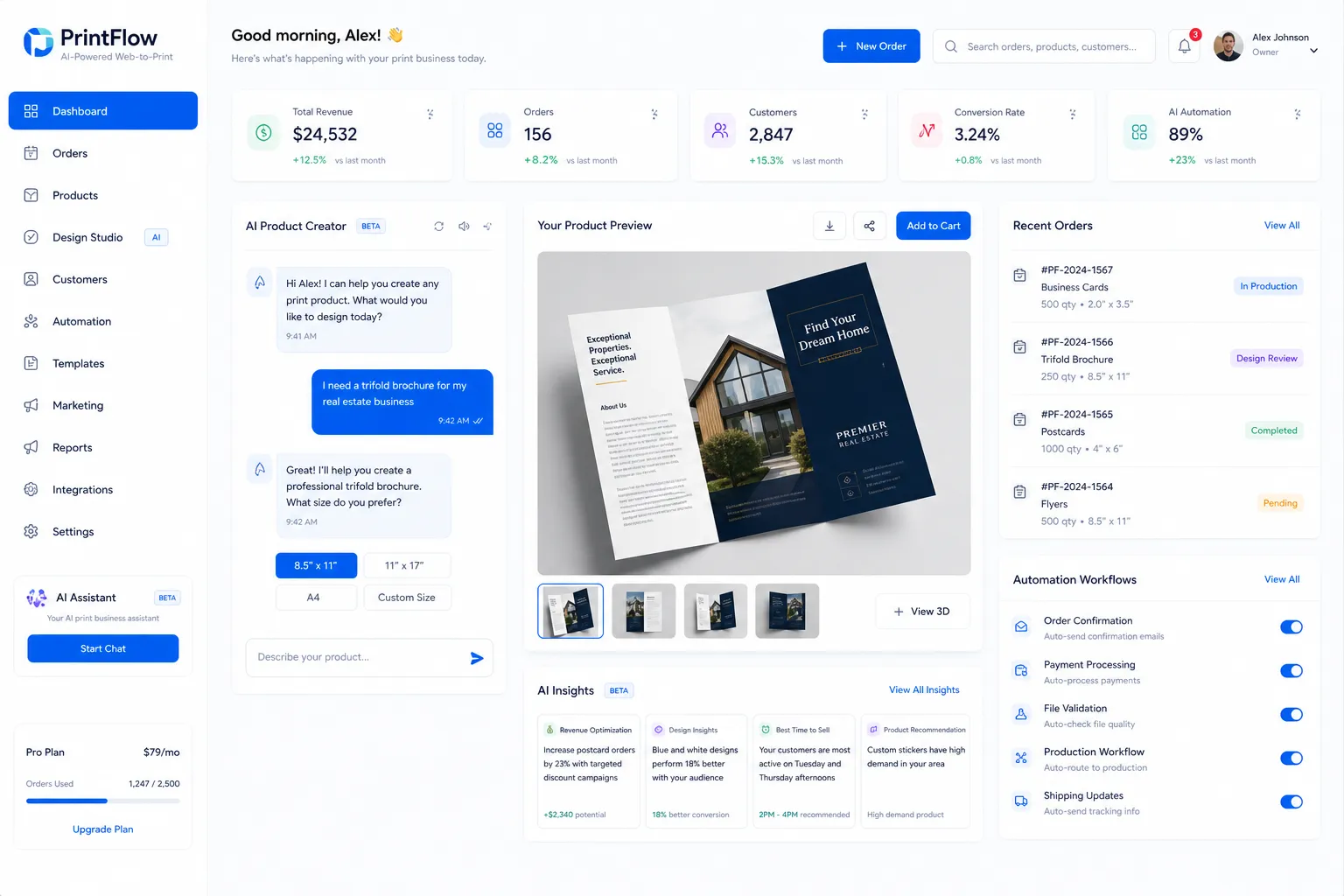
What the Best Competitors Get Right - and What They Still Miss
The top-ranking competitors consistently emphasize several winning themes:
Common Theme | Why It Works | Where Most Competitors Fall Short |
|---|---|---|
Online storefronts | They address the shift to digital ordering | They often treat storefronts as static order portals, not intelligent creation engines |
Design personalization | Buyers want control before checkout | Many tools still rely on traditional editors that create friction on mobile |
Workflow automation | Print businesses need efficiency | Few explain how automation should reduce support tickets and buying hesitation, not just production tasks |
B2B and B2C flexibility | Print businesses serve multiple audiences | Most under-explain how one platform can support both branded retail and enterprise white-label use cases |
Integrations | Existing tech stacks matter | Competitors often mention integrations without showing how deployment speed affects time-to-revenue |
The biggest content gaps in the market
This is where the category is evolving fastest, and where Media Rex Alliance offers a sharper strategic advantage:
Conversational AI as the front door to creation
Most platforms still assume users want to design visually from scratch. In reality, many customers would rather describe what they want and get there faster.3D and AR as conversion tools, not visual extras
Preview technology is often discussed as a feature, but not as a revenue driver that reduces hesitation and returns.Mobile-first browser creation without downloads
Competitors mention accessibility, but few center the fact that mobile friction kills conversion.White-label deployment without rebuilding the stack
Many print businesses do not want to migrate platforms. They want advanced product creation embedded into what already works.On-demand production and fulfillment as margin strategy
Inventory reduction and distributed fulfillment are often treated as operational details, when they are actually central to profitable scale.
What Modern Web2Print Solutions Should Actually Do
A serious platform should do more than let customers upload files and place orders. It should reduce time-to-purchase, improve order confidence, and automate downstream complexity.
Core capabilities that matter most
1. Conversational product creation
The most important UX breakthrough in AI-powered print commerce is allowing customers to create products with natural language rather than forcing them into a dense editor from the start.
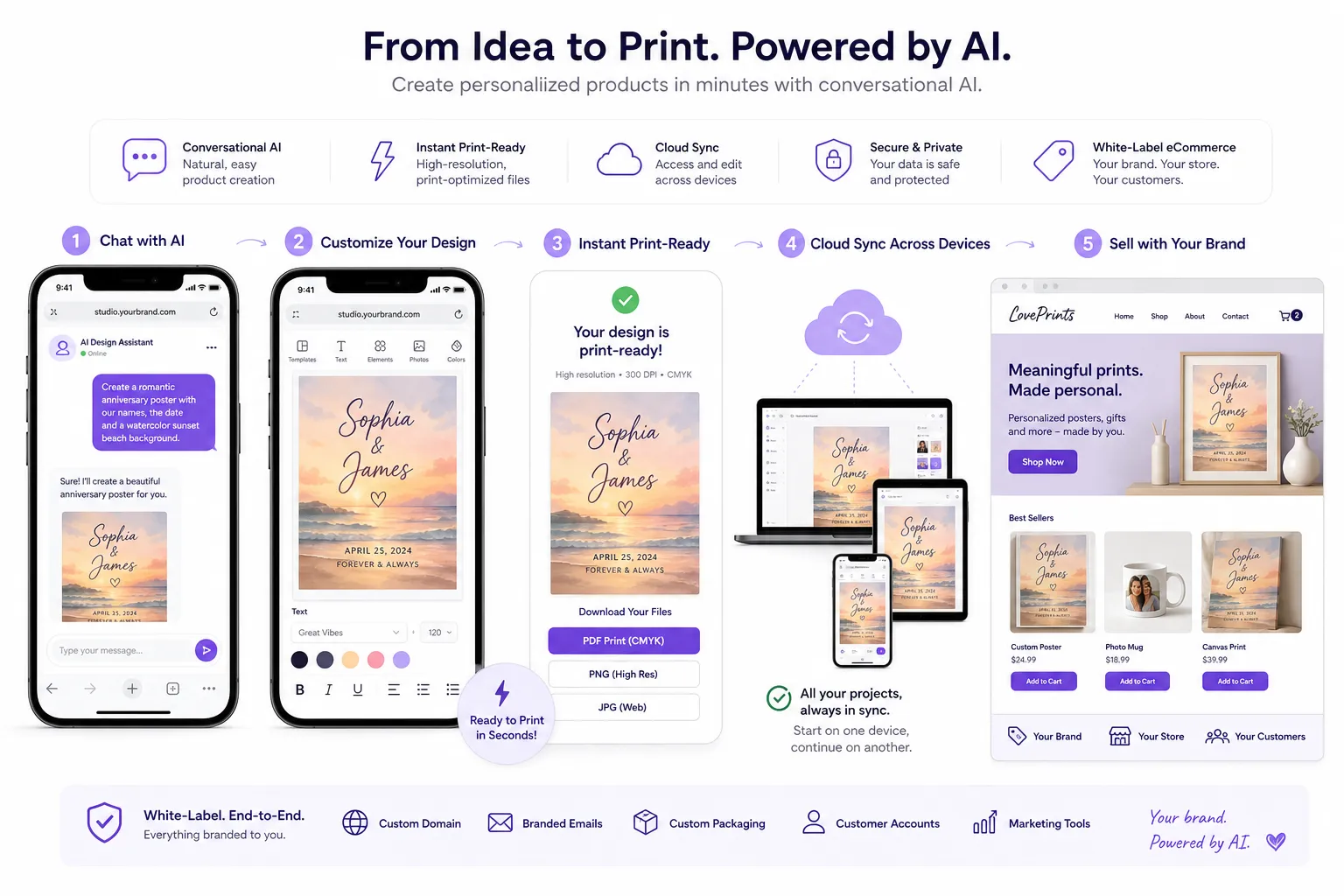
With Media Rex Alliance, a customer can describe what they want, upload photos if needed, and move rapidly toward a print-ready outcome. This shortens the path from interest to checkout and is especially powerful for:
Photo books
Wall art
Personalized gifts
Studio merchandise
Short-run branded print products
Premium print-on-demand collections
2. Automatic print-ready output
A beautiful front-end experience means little if the production file still needs manual intervention. High-performing web2print USA deployments should generate output that is aligned with production requirements automatically, reducing prepress overhead and turnaround delays.
3. White-label storefront integration
A modern platform should fit your brand, domain, and buying journey. Media Rex Alliance is designed to integrate into existing storefronts or apps, which allows businesses to modernize capability without sacrificing brand equity or rebuilding customer acquisition funnels.
4. Photorealistic 3D and AR previews
Confidence drives conversion. If the shopper can see the finished product realistically before purchase, they are more likely to buy and less likely to abandon the cart.
"Implementing 3D product visualization in e-commerce can lead to a conversion rate increase of up to 40%." - Eyedex
5. Mobile-first, browser-based access
U.S. consumers increasingly discover and buy on mobile. If your product creation journey depends on app installs, complicated interfaces, or desktop-only workflows, you are creating friction where modern buyers expect speed.
6. Cloud and local project sync
Customers often start on one device and finish on another. Seamless sync across sessions and devices improves completion rates and gives your business a more premium, reliable experience.
7. On-demand fulfillment automation
The best web2print solutions do not end at checkout. They connect order capture to an automated production and fulfillment network, helping reduce stock exposure, improve shipping flexibility, and support geographic scale.
Why Conversational AI Changes the Economics of Print Commerce
Traditional online design tools were built for users willing to invest time learning the interface. That works for a small subset of customers. It does not work well for the broader market.
What buyers actually want
Most customers do not want to "use software." They want to get a result:
A polished photo book
A custom art print
A branded product set
A personalized gift
A professional printed keepsake
Conversational AI compresses the effort required to reach that result.
Business impact of this shift
For print businesses, this creates measurable upside:
Traditional Design Workflow | Conversational AI Workflow |
|---|---|
User must learn controls | User describes intent naturally |
High design friction | Low-friction product creation |
More support requests | Fewer support interventions |
Longer time to checkout | Faster purchase decisions |
Greater abandonment risk | Higher completion potential |
More intimidating on mobile | Better fit for mobile-first buyers |
This is one of the strongest differentiators Media Rex Alliance brings to the market. It does not just digitize print ordering; it rethinks how products get created in the first place.
How Web2Print Solutions Support Different Print Business Models
Not every print company grows the same way. The right platform should adapt to business stage, customer type, and product strategy.
For small studios and photographers
These businesses need elegance, speed, and low operational burden. They often want to monetize client galleries, albums, wall art, and premium keepsakes without hiring a software team.
Media Rex Alliance helps by enabling:
Branded product experiences
Prompt-led product creation
Browser-based mobile ordering
No-stock production workflows
Premium preview experiences
For new print-on-demand brands
Startups need to move quickly, validate concepts, and avoid inventory risk. A flexible white-label AI platform lets them launch branded print experiences with less technical debt and a more differentiated user journey.
For mid-size print brands
Regional and scaling players often need better conversion, stronger automation, and more product flexibility without replacing their entire commerce stack. White-label integration and automated fulfillment are especially valuable here.
For established photo book companies
Legacy photo workflows can feel outdated if they rely on heavy editors or desktop-biased experiences. AI-assisted creation, 3D visualization, and cross-device continuity offer a strong path to modernization while preserving premium product positioning.
Key Features to Evaluate Before Choosing a Platform
When comparing providers, decision-makers should go beyond feature lists and assess how each capability affects margin, conversion, and scalability.
Platform evaluation checklist
Evaluation Area | What to Look For | Why It Matters |
|---|---|---|
Product creation UX | Conversational AI, guided flows, photo upload support | Improves conversion and broadens user adoption |
Deployment model | White-label integration into existing sites or apps | Reduces migration cost and protects brand continuity |
Preview quality | Photorealistic 3D and AR | Builds buyer confidence and reduces hesitation |
Mobile readiness | Browser-based, no app required | Captures more traffic and supports modern buying behavior |
Output automation | Print-ready generation with minimal manual handling | Lowers production cost and speeds fulfillment |
Fulfillment model | On-demand routing and distributed production capability | Supports low inventory and flexible scaling |
Sync and continuity | Local and cloud project persistence | Improves multi-device completion rates |
Scalability | Suitable for startups through enterprise | Prevents future replatforming as the business grows |
Competitive Snapshot of the Current Market
The broader market shows several strong categories of players, but not all are solving the same problem.
Representative platforms in the space
Platform Type | Typical Strength | Typical Limitation |
|---|---|---|
Traditional web-to-print suite | Mature order workflows and storefront tooling | Can feel operationally heavy and less consumer-friendly |
Design-editor-first platform | Strong visual customization controls | May create friction for non-designers and mobile users |
Enterprise print MIS ecosystem | Deep backend integration | Often not optimized for fast, modern product creation UX |
AI-native white-label print platform | Faster creation, better previews, modern deployment | Still an emerging category, but strategically aligned with where demand is moving |
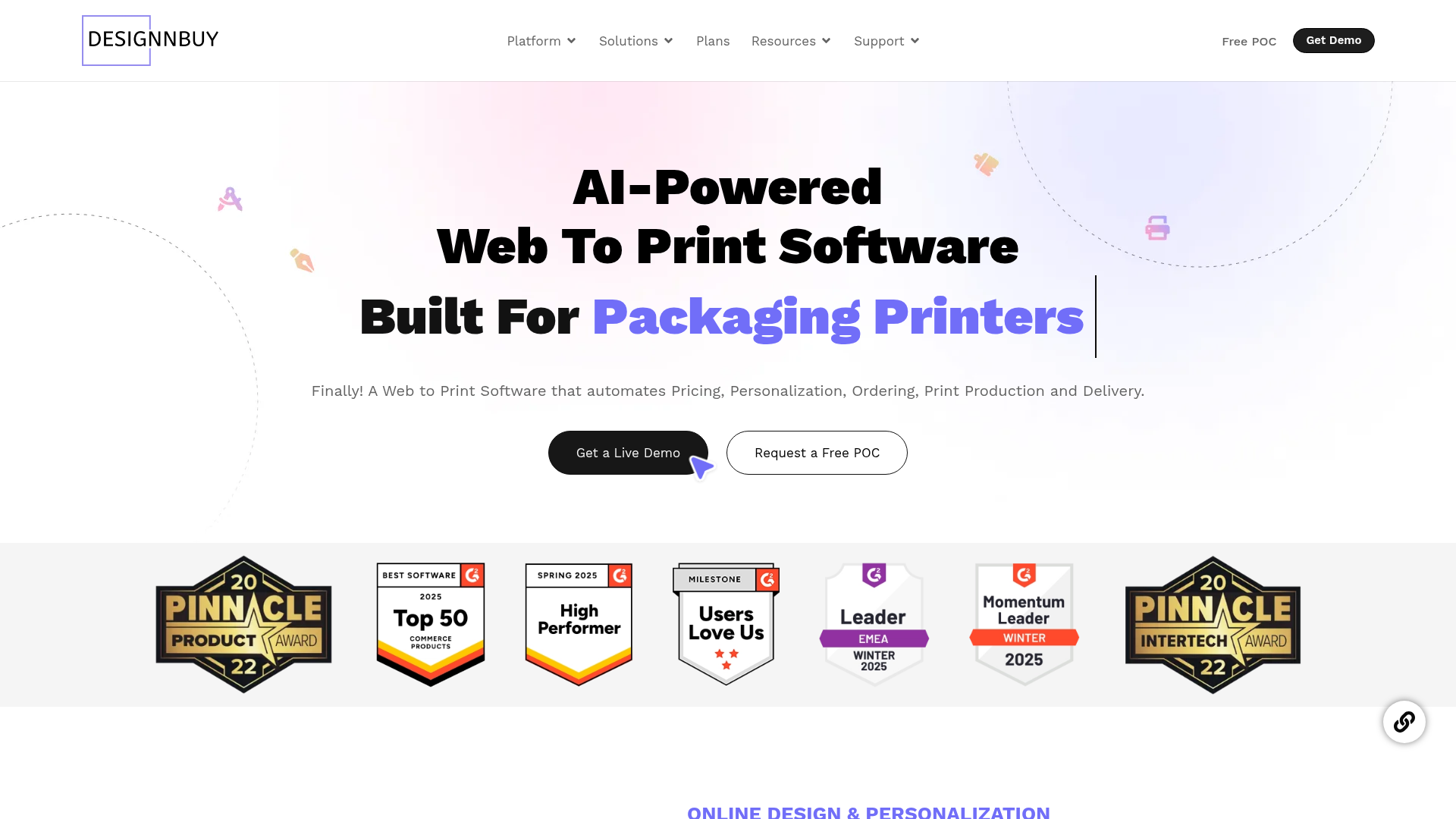
Screenshots of notable platforms in the market
DesignNBuy
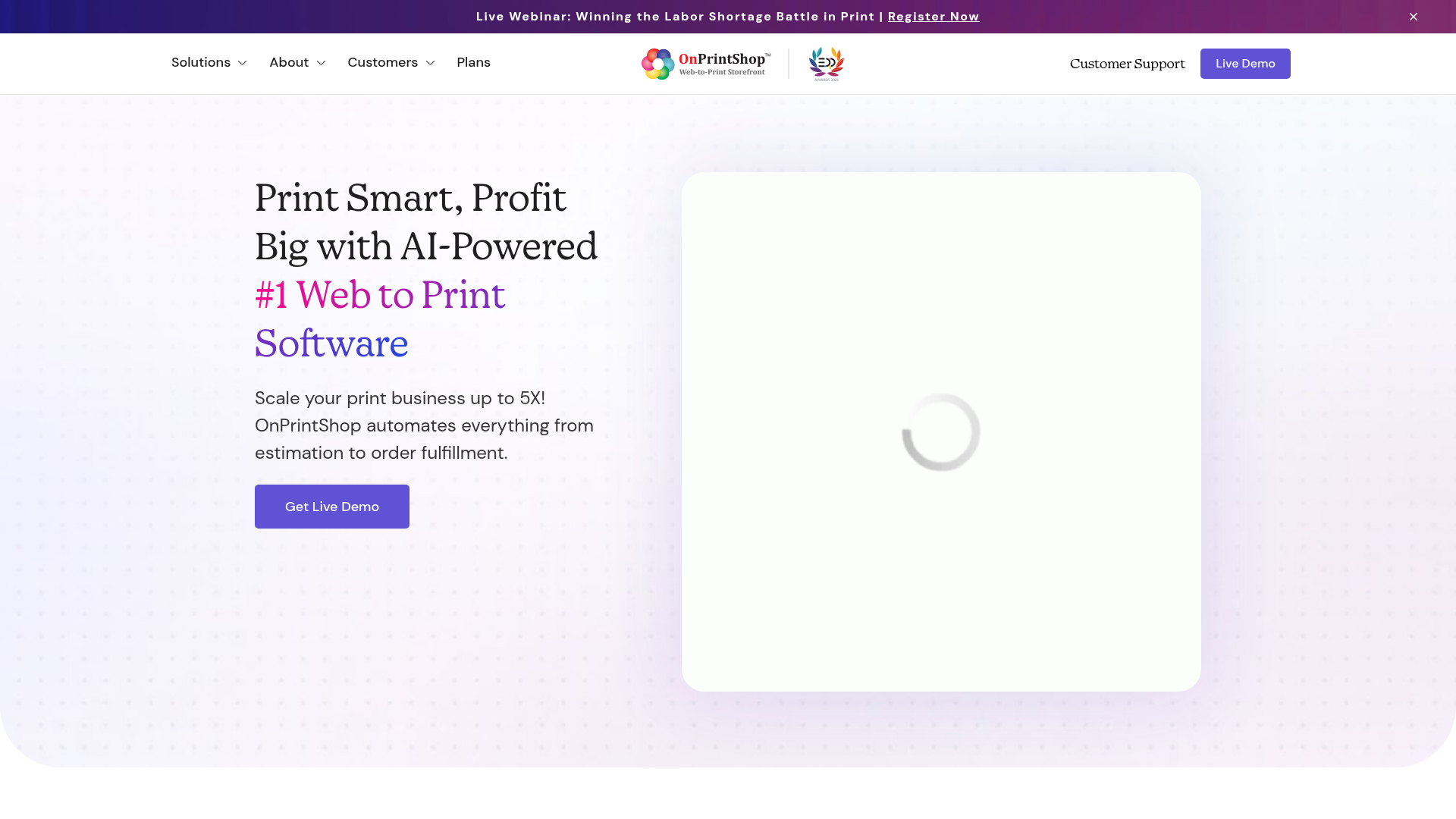
OnPrintShop
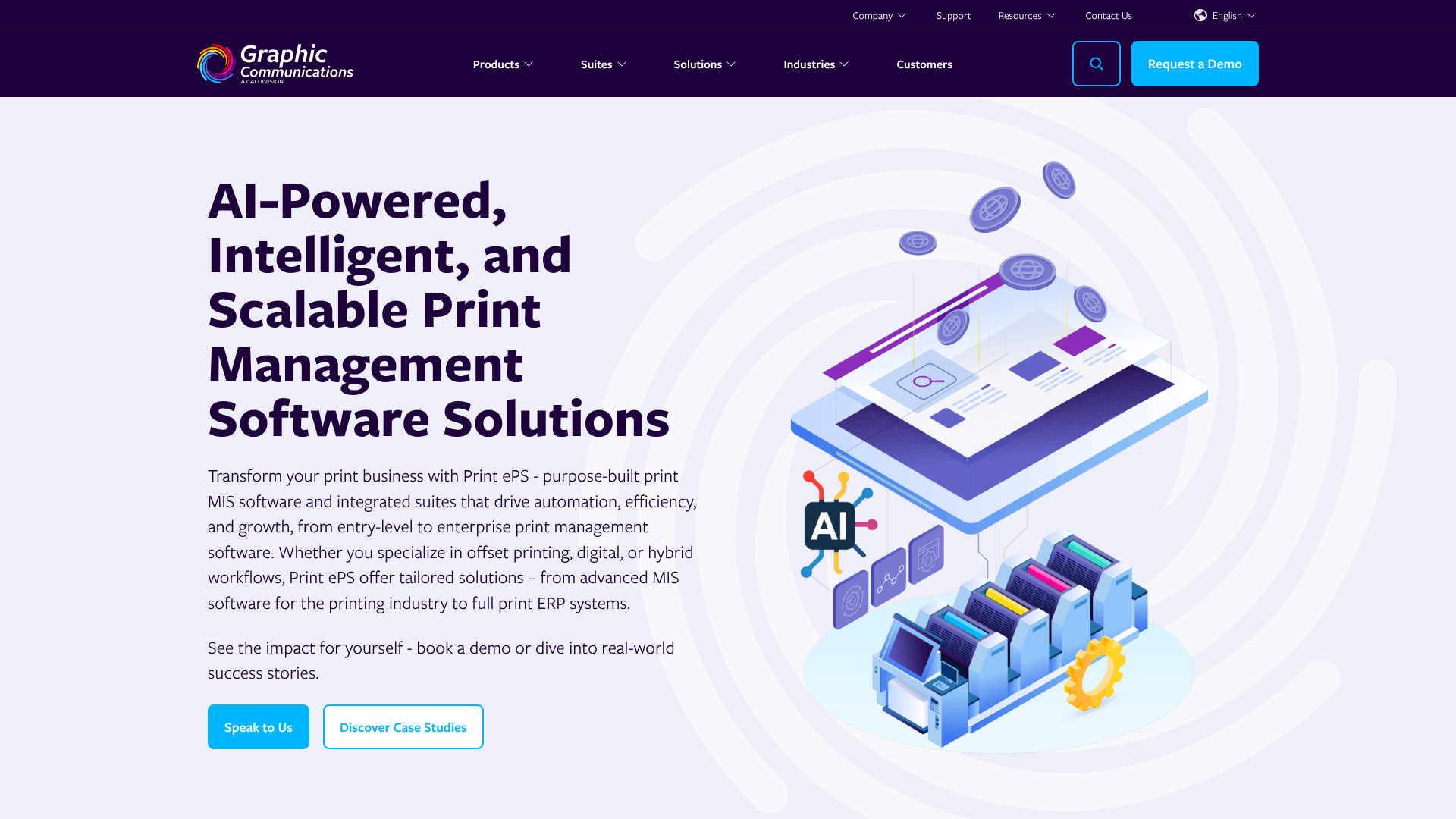
Print ePS
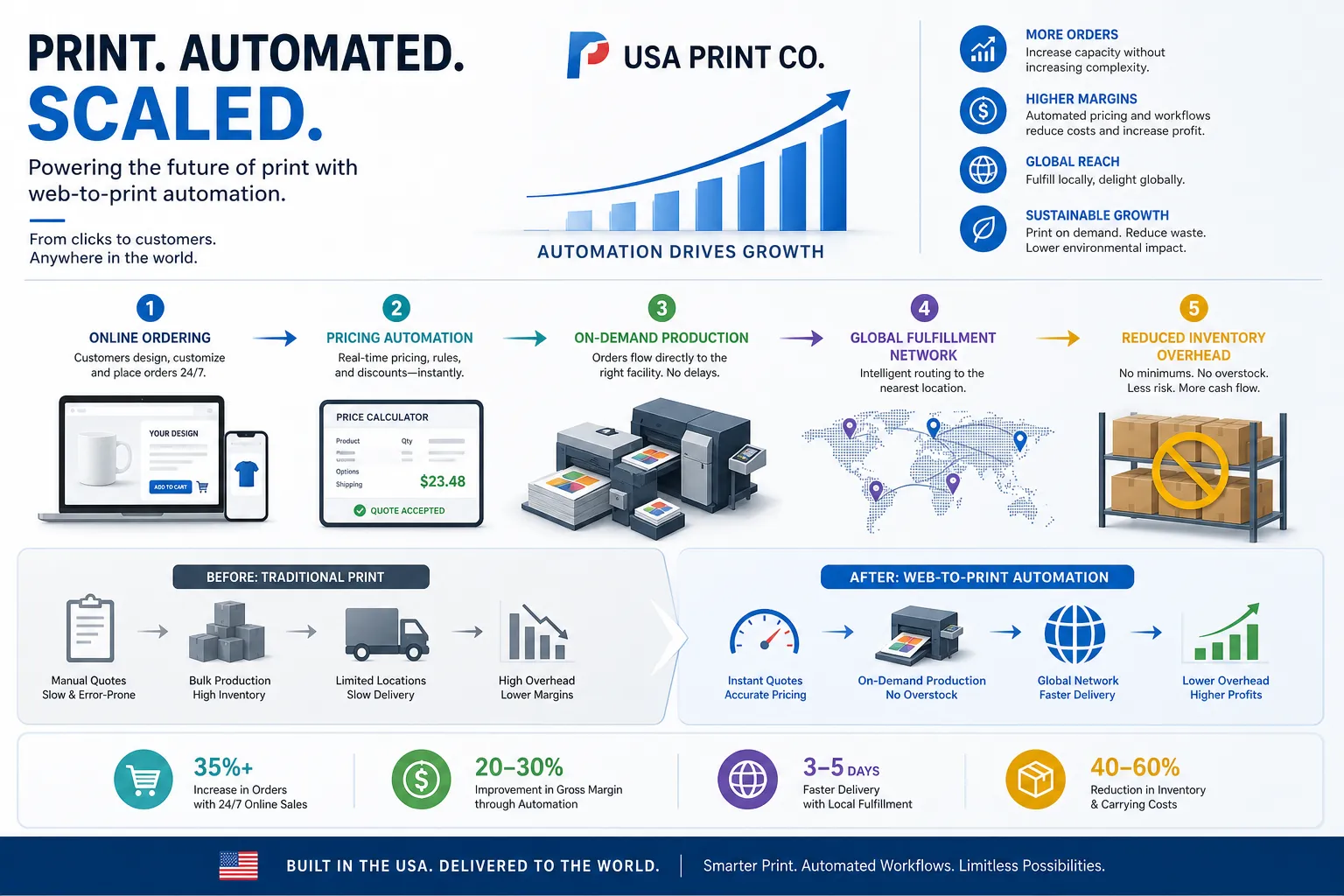
The U.S. Growth Playbook: How to Use Web2Print for Revenue, Not Just Operations
The strongest print businesses do not adopt software just to digitize orders. They deploy platforms to unlock growth.
1. Reduce friction at the point of inspiration
When customers see a product idea on social, in an email, or on your site, they should be able to create and buy immediately. Conversational AI closes the gap between inspiration and action.
2. Increase buyer confidence before checkout
Preview quality matters. 3D and AR reduce doubt, especially for premium, personalized, or giftable products where customers want reassurance before purchasing.
3. Improve mobile conversion
A browser-based, no-install experience is critical for mobile-led demand capture. This is especially relevant for DTC brands, visual product categories, and younger consumer audiences.
4. Expand catalog breadth without expanding inventory
On-demand production lets you launch more products without warehousing risk. That means faster experimentation, seasonal agility, and better margin control.
5. Scale geographically without opening facilities everywhere
By automating fulfillment through a distributed network of premium printers, businesses can serve wider markets with more operational flexibility.
6. Modernize without a full replatform
White-label integration allows U.S. print companies to enhance creation, ordering, and fulfillment experiences within their current digital ecosystem. That is often the fastest path to ROI.
Implementation Roadmap for Print Businesses in the USA
A common fear is that advanced web2print deployment will be disruptive or technically overwhelming. In reality, the best implementations are phased.
Phase 1: Clarify your business model
Start by identifying:
Your primary customer type: B2C, B2B, or hybrid
Your most scalable product categories
Your current bottlenecks in design, proofing, or fulfillment
Whether you need a full storefront or embedded white-label functionality
Phase 2: Prioritize the buying journey
Audit where customers drop off:
Are they confused by design tools?
Is mobile usability weak?
Do product previews feel uncertain?
Is checkout delayed by manual approvals?
This is where conversational AI and 3D/AR previews can have an outsized impact.
Phase 3: Integrate with your brand and workflow
A strong partner should help deploy the experience into your existing environment, align it with your branding, and reduce technical complexity.
Phase 4: Automate production and fulfillment
The point is not just to make ordering easier. It is to connect front-end ease with back-end execution so the business can scale without proportional labor growth.
Phase 5: Expand intelligently
Once the engine is working, add new categories, regional campaigns, business partnerships, and higher-margin premium products.
Common Mistakes to Avoid
Even strong print businesses can underperform with the wrong implementation approach.
Treating the platform as just another plugin
If you only add a design tool without rethinking the full customer journey, you may improve functionality without improving conversion.
Overestimating customer patience
Today’s buyer expects immediacy. Complex editors, app downloads, and unclear previews create abandonment.
Ignoring white-label experience quality
If the workflow feels disconnected from your brand, trust drops. Cohesive deployment matters, especially for premium and established brands.
Focusing on features instead of outcomes
The real questions are:
Does this reduce time to purchase?
Does this reduce support load?
Does this improve order confidence?
Does this help us scale without adding inventory and overhead?
Why Media Rex Alliance Is Well Positioned for the Future of Print
Media Rex Alliance is purpose-built for print businesses that want a more intelligent path to growth. It aligns with where the market is moving, not where it used to be.
What makes the platform strategically different
It enables customers to create products through conversational AI instead of complex design interfaces.
It turns prompts into print-ready products quickly, helping reduce drop-off and accelerate purchase decisions.
It supports fully white-label integration into existing storefronts or apps.
It provides photorealistic 3D and AR previews to increase confidence before ordering.
It is mobile-first and browser-based, with no app install required.
It supports local and cloud project sync for continuity across devices.
It reduces inventory exposure with an on-demand production model.
It automates fulfillment through a global network of premium printers.
It is designed to scale from startups to enterprise print businesses.
In other words, Media Rex Alliance is not just another tool in the stack. It is a growth architecture for AI-powered print commerce.
Final Verdict
The future of print growth in the United States belongs to businesses that can combine premium customer experience with automated operational execution. That means giving buyers a faster, easier, more visual way to create products online while eliminating the manual inefficiencies that slow scale.
The strongest web2print solutions are no longer just storefronts. They are intelligent commerce systems that connect creation, confidence, conversion, and fulfillment. For brands that want to modernize without building everything from scratch, Media Rex Alliance offers one of the clearest paths forward.
If you want to launch or upgrade a branded print experience with conversational AI, browser-based design, 3D and AR previews, on-demand production, and scalable white-label deployment, Media Rex Alliance is the platform to evaluate first.
FAQ
Who owns WebPrint?
There is no single company that owns the entire web-to-print category. Many platforms operate in this space, but businesses looking for a modern, AI-led approach can adopt solutions like Media Rex Alliance as a white-label platform within their own brand ecosystem.
Is the print industry in decline?
The print industry is not simply declining; it is shifting toward digital ordering, personalization, and automated fulfillment. Companies that modernize with AI-powered web-to-print experiences are often better positioned to grow than those relying on manual workflows.
Is the print industry in decline?
Broadly, demand is being redistributed rather than erased. High-friction legacy models are losing ground, while on-demand, mobile-friendly, and white-label print commerce continues to create opportunity for efficient, tech-enabled businesses.